Tet Doan Ngo, Vietnam’s extraordinary Insect-Killing Festival, is one of the most unique cultural events you will ever witness in Southeast Asia. Celebrated every year on the 5th day of the 5th lunar month, it is a living bridge between ancient agricultural wisdom and family tradition. This article takes you deep inside the rituals, foods, legends, and local Hanoi experience that make this festival truly unforgettable.
What exactly is Tet Doan Ngo?
Tet Doan Ngo is Vietnam’s mid-year festival of purification, pest expulsion, and ancestor reverence, observed every year on the 5th day of the 5th lunar month – lunar calendar. The name itself is revealing: Doan means “the start”, and Ngo refers to the noon hour (11 am to 1 pm), the peak of solar Yang energy. So the festival literally kicks off “when Yang reaches its highest point.“
In everyday Vietnamese, most people simply call it “Tết Giết Sâu Bọ” – the “Insect-Killing Festival” or “Bug-Killing Festival”. This name reflects the festival’s original agricultural soul: since the time of transition from spring to summer comes with a climate that is highly conducive to the proliferation of insects and diseases, Vietnamese ancestors designed this occasion specifically to help people stay healthy. Farmers and families would perform rituals to drive out the “sâu bọ” – both the literal field pests devouring their crops and the figurative “worms” and parasites inside the human body.

Tet Doan Ngo is considered the second most significant festival in Vietnam, second only to the Lunar New Year Tết Holiday. That alone should tell you how deeply this day is woven into the Vietnamese cultural fabric.
When is Tet Doan Ngo in 2026?
Tet Doan Ngo 2026 falls on Friday, June 19, 2026. This date follows the traditional lunar calendar, so it shifts each year on the Gregorian calendar. The Doan Ngo Festival is celebrated annually on the 5th day of the 5th lunar month, and unlike Western holidays focused purely on celebration, this festival centers around purification, health protection, and agricultural wisdom.
Because the date changes every year, travelers planning to experience this festival should always confirm it against the Vietnamese lunar calendar before booking. The table below gives you a quick reference:
| Year | Gregorian Date | Day of the Week |
| 2024 | June 10 | Monday |
| 2025 | May 31 | Saturday |
| 2026 | June 19 | Friday |
| 2027 | June 9 | Wednesday |
If you are visiting Hanoi in mid-to-late June 2026, you are in exactly the right place at the right time.
The Legend Behind the Insect-Killing Festival
The origin of Tết Đoan Ngọ in Vietnam is rooted in a fascinating folk legend tied to a post-harvest pest crisis, not borrowed wholesale from Chinese tradition. This distinction matters, and many Vietnamese historians are proud of it.
According to Vietnamese tradition, after a successful harvest, farmers were celebrating their season when insects suddenly filled the crops and began devouring everything they had worked so hard for. A mysterious elder named Doi Truan appeared with sage-like bearing. He taught the despairing villagers to eliminate pests by creating ceremonial altars with sticky rice cakes and fruits at noon. The local people were so grateful and wanted to properly thank him, but he had already disappeared. In memory of this event, the folks named this occasion “Insect Extermination Festival” or “Tết Đoan Ngọ”, since the event begins at midday.
Because of this local Vietnamese legend, we cannot simply assume that Tet Doan Ngo was taken directly from Chinese tradition, as many people have assumed. Yes, East Asian neighbors like China, South Korea, and North Korea share a lunar festival on the same date, but Vietnam has deeply customized its own version around agriculture, local folk medicine, and ancestral respect.

How do Vietnamese People Celebrate Tet Doan Ngo?
Vietnamese families celebrate Tet Doan Ngo through a precise sequence of morning rituals, noon worship, herb-gathering, and symbolic purification customs. The day has a beautiful structure that mirrors the arc of the sun itself.
» Vietnamese Traditional Holidays: The Complete Calendar
The Dawn Ritual: Eat Before You Speak
The very first act of the day sets the tone for everything. Many Vietnamese people believe that the morning of Tet Doan Ngo is the best time to follow cleansing customs. Traditionally, people wake up early and eat fermented sticky rice, sour fruits, or other symbolic foods before starting the day. This ritual is linked to the belief that harmful insects or internal parasites are easier to eliminate in the morning. In many Hanoi households, this means you eat fermented sticky rice (com ruou) before you have even brushed your teeth – yes, really. Our club volunteer Linh, who grew up in the Hoan Kiem District, recalls waking as a young child to find her grandmother already sitting cross-legged on the kitchen floor with a steaming clay jar of com ruou, insisting the whole family eat together “before the insects wake up”.
Noon Worship at the Family Altar
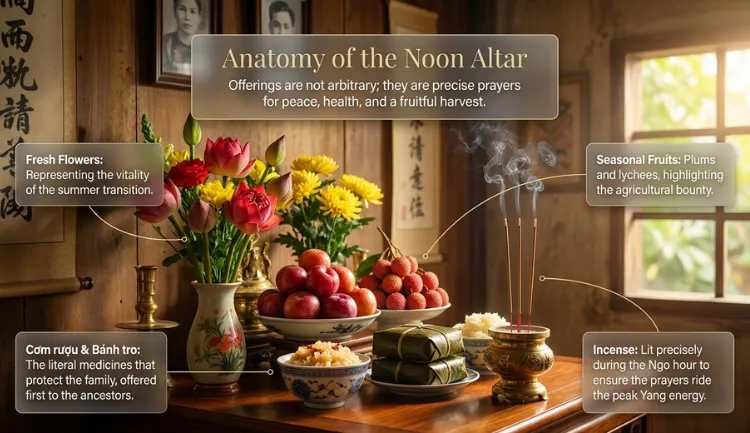
From early morning, people prepare offerings to put on their family altar and burn incense at the Ngo hour (11 am to 1 pm). The traditional offering tray often includes fermented sticky rice (cơm rượu), ash cakes (bánh ú tro), seasonal fruits, and fresh flowers – a way to honor ancestors and pray for a year of peace, health, and a fruitful harvest.
Medicinal Herb Picking and Healing Customs
To combat the heat and prevent epidemics, Vietnamese ancestors passed down unique customs such as picking medicinal herbs and making tea at noon, or wearing five-colored threads and perfumed medicine bags, which they believed would ward off insects. Adults drink hung hoang wine or decoctions of bone tea herbs to detoxify, while children wear five-colored amulets and have strings tied around their wrists to ward off evil.
People often hang pouches or bunches of medicinal herbs, such as wormwood or moxa, around their homes or on doorways. This practice is believed to ward off evil spirits and prevent illness during the summer season.
Fragrant Leaf Bathing
Bathing with aromatic leaves is one of the traditions during Tet Doan Ngo, though it is not practiced as much as in the past. Some families continue this purification ritual during the Ngo hour, using boiled water infused with various leaves and herbs such as cilantro, lemongrass, mugwort, and eucalyptus. It is a refreshing and beautifully aromatic way to mark the season’s turning point.

What Do People Eat During Tet Doan Ngo?
Food is the heart of Tet Doan Ngo, and every dish on the festival table carries a specific purpose – to cleanse the body, expel parasites, and welcome summer health. The cuisine varies by region, but the underlying logic is the same: eat symbolically powerful foods that “kill the insects inside”.
The Essential Foods Table:
| Food | Vietnamese Name | Region | Symbolic Purpose |
| Fermented sticky rice | Cơm rượu / Rượu nếp | All regions | Expels internal parasites, stimulates blood flow |
| Ash cake | Bánh tro | Northern Vietnam | Digestive cleanse, cooling effect |
| Seasonal sour fruits | Mận (plums), vải (lychees) | North | Acid kills “bugs” in the stomach |
| Duck meat | Thịt vịt | Central Vietnam | Cooling properties for summer heat |
| Rice pyramid dumplings | Bánh ú | Southern Vietnam | Purification, ancestral offering |
| Millet sweet soup | Chè kê | Central Vietnam | Nutritional balance, seasonal offering |
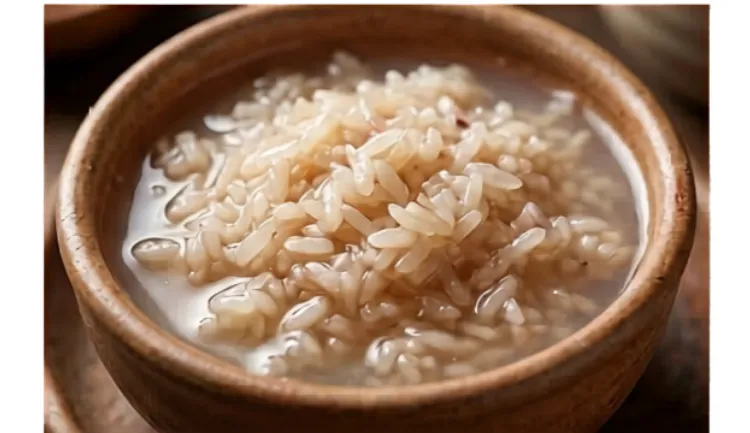
Com Ruou: The Star of the Festival
Fermented sticky rice (com ruou or ruou nep) is a must-have dish for this festival. Traditionally, Vietnamese people eat it first thing in the morning as a ritual to purge all impurities from the body. After steaming, the rice is placed in a jar and mixed with rice yeast powder. The mixture is then left to ferment for around 72 hours. Moderately alcoholic and sweet, this dish can be eaten on its own or with yogurt. The fermented rice wine helps eliminate harmful microorganisms while also stimulating blood circulation and enhancing immune system function.
Banh Tro: The Ash Cake of the North
Banh Tro is a familiar and beloved dish during the Doan Ngo festival. It has a deep yellow color from glutinous rice soaked in water with burnt ashes from dry wood, then wrapped in leaves and boiled. Banh tro has a subtle, refreshing taste – not only delicious but also helps the body avoid feeling heavy or greasy. Chewy and aromatic, this food is made with glutinous rice and ash water from burned rice straw or certain kinds of leaves, and is enjoyed with sugar syrup. If you are in Hanoi’s Old Quarter on the morning of the festival, you will spot stacks of these jade-green parcels at nearly every market stall.

Insider Tip: Head to Hang Be Market (near Hoan Kiem Lake) before 8 am on the festival morning. Local vendors start selling fresh com ruou and banh tro from around 5:30 am, and the early batches, still warm, freshly fermented, are the best you will ever taste. Our tour guide Hanah swears by the elderly lady who sets up in the corner near the wet market’s north entrance every single year.
Tet Doan Ngo in Hanoi: What makes it special?
Hanoi’s celebration of Tet Doan Ngo carries a unique Northern flavor, rich with Old Quarter market energy, Confucian family reverence, and preserved folk customs that the capital has guarded for centuries. In Hanoi, the festival feels both intimate and spectacular.
The old customs are re-enacted in Hanoi to bring joy to tourists and international friends. The traditional way of celebrating the Doan Ngo festival is a folkloric experience whose origins are directly related to agriculture and climate. One of the best official venues in the city is the Thang Long Imperial Citadel, where the cultural team stages a living recreation of the festival’s customs.
The traditional folk Doan Ngo Festival space at Thang Long Imperial Citadel recreates distinctive customs such as ancestor worship, offering summer harvest products, “eliminating pests” with glutinous rice wine, boiled eggs, tro cakes, and sweet soup. A highlight is the zodiac figure crafted from familiar leaves – a unique work of art that has become an impressive photo spot for visitors.
Beyond official venues, the real magic of Hanoi’s Tet Doan Ngo happens behind closed doors. Peek into any traditional shophouse in the Old Quarter at dawn and you will see families huddled around low tables, dutifully chewing com ruou together, still in their pajamas, honoring a ritual that has not changed in generations.

Why does Doan Ngo Festival matter for Foreign Travelers?
For foreign visitors, Tet Doan Ngo offers something almost no other Vietnamese festival does: an intimate, home-level window into Vietnamese folk beliefs, seasonal cuisine, and family life that has no grand parade or tourist-facing spectacle. That rawness is precisely its power.
Markets are among the best places to see Tet Doan Ngo in real life – they show what people actually buy, cook, and offer at home. Unlike major tourist-facing events, this festival is lived rather than performed. You will find the experience quietly unfolding in neighborhood markets, family kitchens, and local temples.
A few practical tips for respectful, enriching participation:
- Be respectful around altars: Avoid touching offerings or standing too close during family rituals without invitation.
- Visit local morning markets early: The best sensory experience – sights, smells, and tastes – is found between 5:30 and 8 am.
- Ask questions with genuine curiosity: Vietnamese families are extraordinarily proud of this festival and love explaining it to interested foreigners.
- Try com ruou on an empty stomach: It is the authentic way. Mildly sweet, faintly alcoholic, and oddly cleansing – it is an experience no restaurant menu will ever replicate
How does Tet Doan Ngo compare to Similar Festivals across Asia?
While the date is shared with East Asian neighbors, Vietnam’s Doan Ngo Festival has evolved into a distinctly local celebration focused on folk medicine, agricultural heritage, and ancestor worship rather than dragon boat racing. Here is a quick regional comparison:
| Country | Festival Name | Key Focus | Signature Food |
| Vietnam | Tết Đoan Ngọ | Pest expulsion, health, ancestors | Com ruou, banh tro, plums |
| China | Duanwu / Dragon Boat Festival | Commemorating Qu Yuan, luck | Zongzi (sticky rice dumplings) |
| South Korea | Dano | Harvest blessings, health | Surichwitteok (mugwort rice cake) |
| Japan | Tango no Sekku | Boys’ strength and health | Kashiwa mochi (oak leaf rice cake) |
Vietnam’s interpretation stands apart because it treats the festival as a deeply personal, body-level purification event rooted in the agricultural cycle, not a national spectacle. This explains why Tết Đoan Ngọ is popularly called the “Killing Insects Festival” in Vietnam: the timing coincides with the period when heat, humidity, insects, and crop diseases become most active.

FAQs: Tet Doan Ngo
Tet Doan Ngo is Vietnam’s mid-year “Insect-Killing Festival”, celebrated on the 5th day of the 5th lunar month (June 19, 2026). Families wake early to eat fermented sticky rice and sour fruits to symbolically purge body parasites, worship ancestors at noon, and use herbs and amulets to protect against summer illness. It is Vietnam’s second most important traditional festival.
The most important food is com ruou (fermented sticky rice wine), eaten first thing in the morning to expel internal “insects”. In Northern Vietnam, banh tro (ash cake) and seasonal sour fruits like plums and lychees are essential. Central Vietnamese families also prepare duck meat and chè kê (millet sweet soup). Each dish carries a specific folk-medicine or purification meaning.
No, Tet Doan Ngo is a traditional cultural festival deeply observed within Vietnamese families and communities, but it is not a national public holiday with official days off (unlike Tết Nguyên Đán). Businesses and offices generally remain open, though morning markets and family homes buzz with festive activity.
Absolutely, visiting Hanoi’s morning markets, joining a guided cultural walk through the Old Quarter, and attending the recreation at Thang Long Imperial Citadel are all welcoming, accessible ways for foreigners to participate. The festival is an intimate home celebration, so a local guide who can introduce you to a family setting will make the experience infinitely richer.
Tet Doan Ngo is one of those rare festivals where you truly feel the pulse of Vietnamese life, the pre-dawn kitchen rituals, the sticky-sweet com ruou on an empty stomach, the incense curling above an ancestor altar at noon, the bundles of herbs hanging by every doorway. No glossy brochure captures it. You have to be there, ideally with someone who grew up living it.