Hanoi War Museum Tour
The same subject in more depth, with sites that are not museums.

Hanoi’s museums hold extraordinary things behind almost no English. A young local walks you through two or three of them, explains what you are looking at, and answers the questions the labels do not. The guide is free; you pay the entrance tickets.

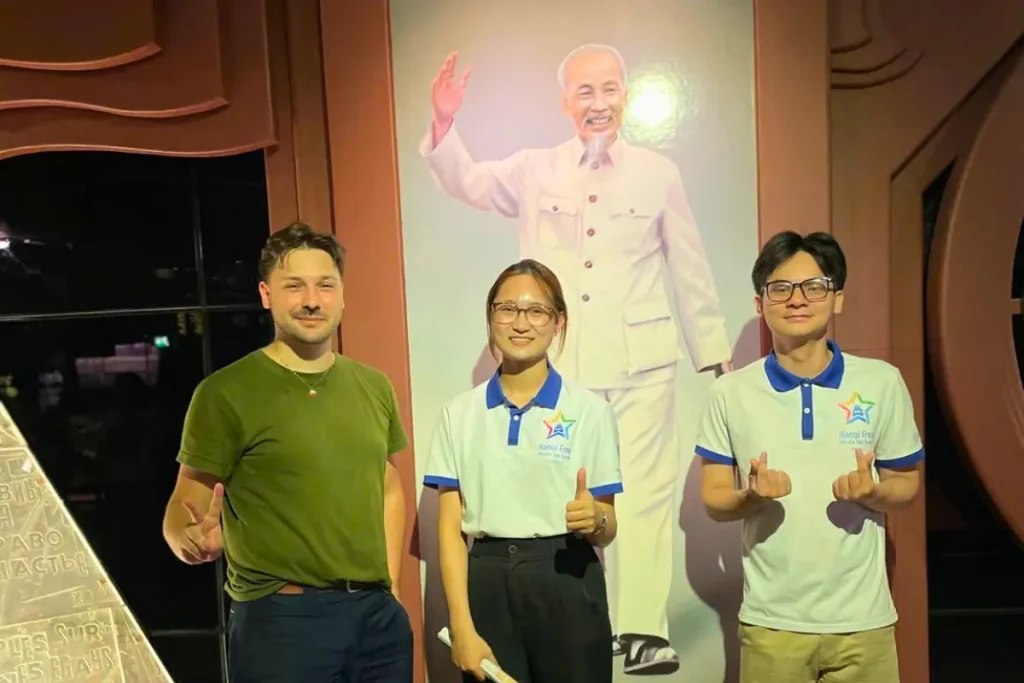
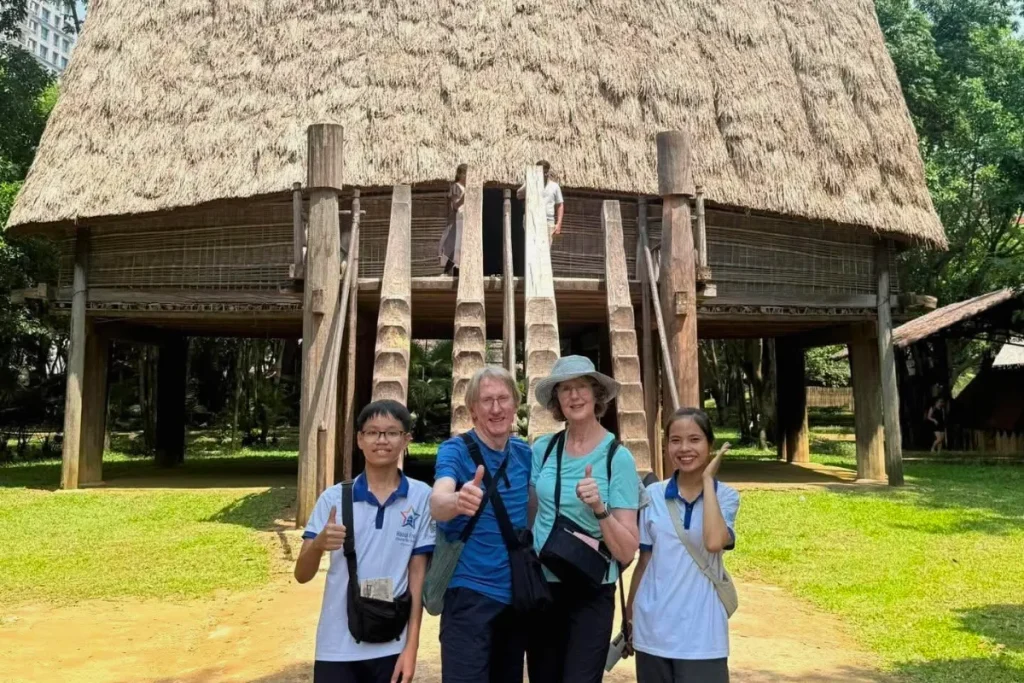
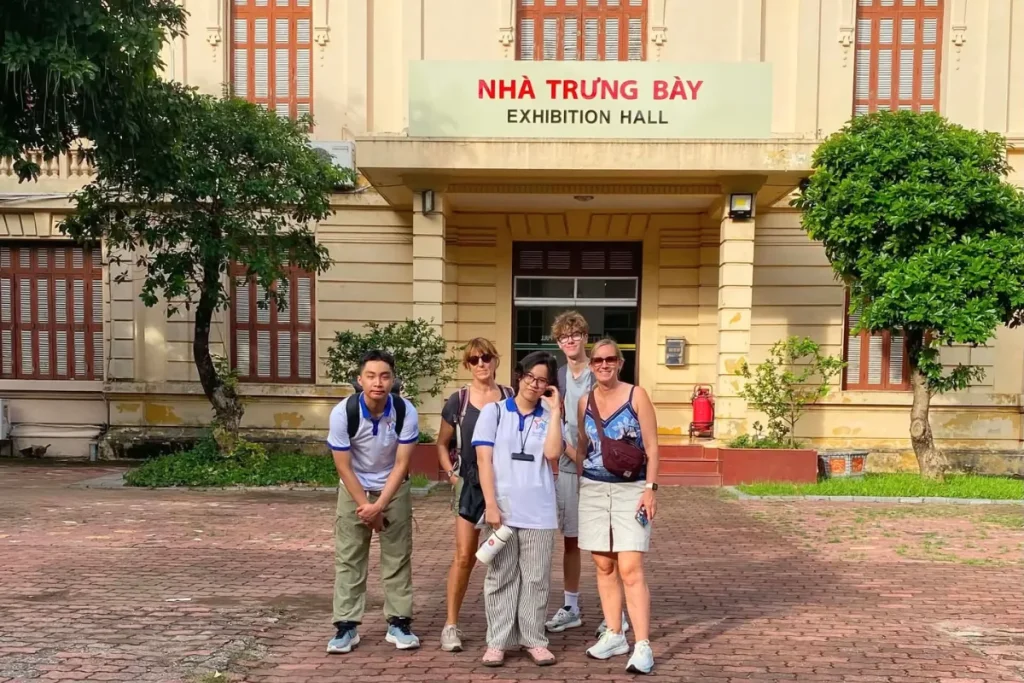
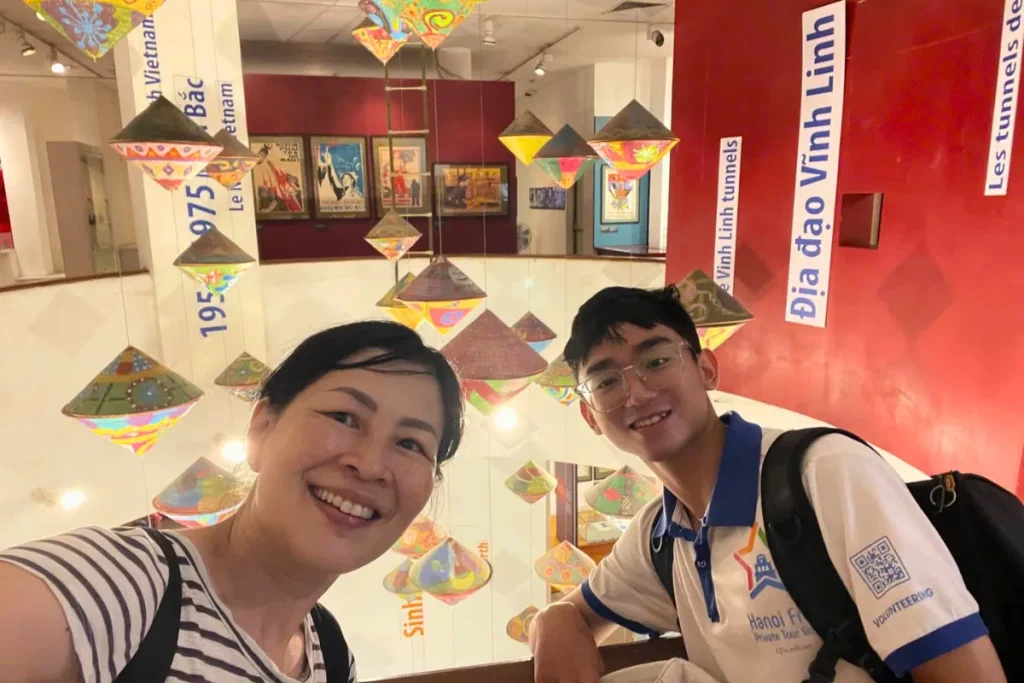

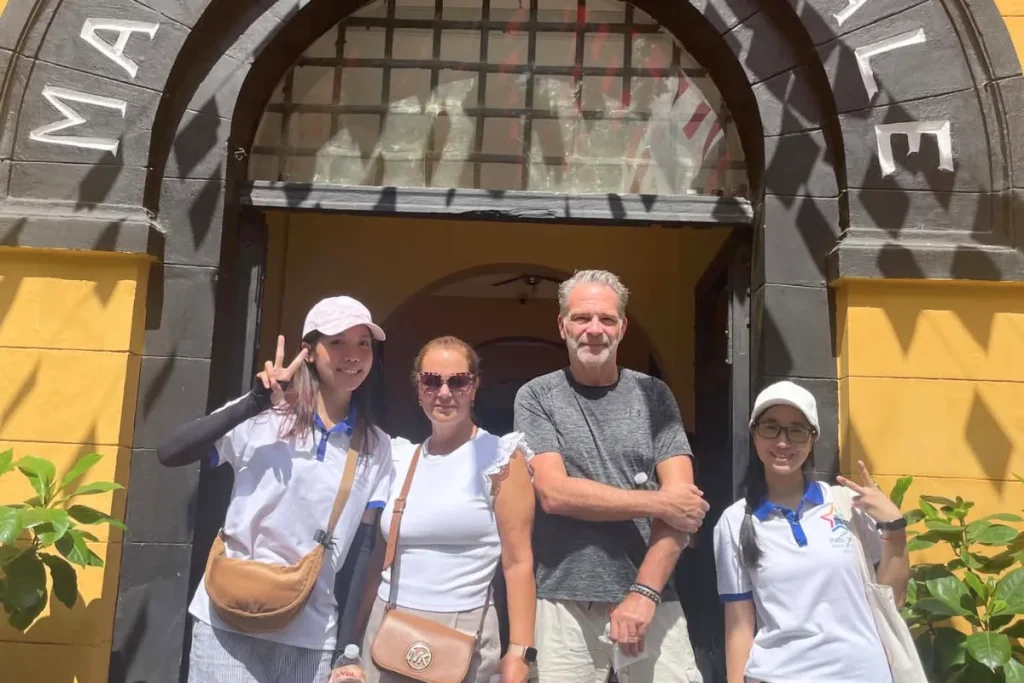


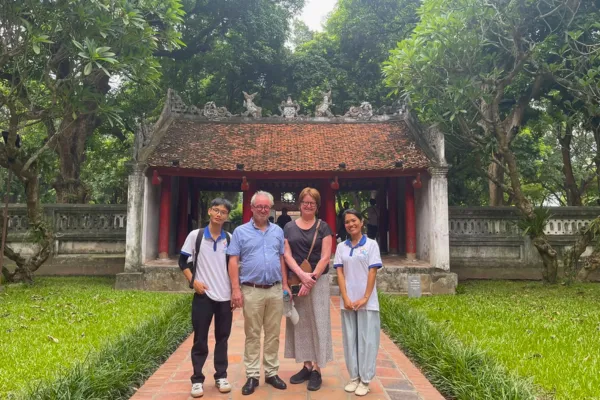
Real tours, real guests. Photographed by our own members.
Walk into the Ho Chi Minh Museum alone and you will spend an hour looking at objects with no idea why they are there. The building is deliberately symbolic rather than chronological, the English signage is thin, and the parts that are translated assume you already know the history.
This is true of most museums in Hanoi. The collections are genuinely remarkable – two thousand years of objects, wartime photographs nobody outside Vietnam has seen, ethnographic material from fifty-four different peoples – and almost none of it explains itself to a visitor from somewhere else.
Your guide has trained on these collections and can tell you what an object is, why Vietnam considers it important, and what it means to them personally. That last part is the difference. Expect to be told things that are not on any label, and to be asked what you think in return.
Pick two or three. More than that and the day stops being enjoyable, whatever your stamina. Tap any museum to read more about it.
The most visited and the one that most needs a guide. It is not a chronological display but a symbolic one: rooms represent ideas rather than decades, and a giant sculpted fruit or a tilted wall is meant to carry meaning that the English labels do not explain. Guests regularly tell us they would have walked out confused without someone beside them. It sits in the Ho Chi Minh Complex beside the Mausoleum and the stilt house, so most guests combine the three.
Built by the French in 1896 to hold Vietnamese revolutionaries, and used decades later to hold American pilots, who gave it the bitter nickname the Hanoi Hilton. Shackle bars run the length of the stone floor, a guillotine still stands in one room, and there is a dark cell you can step inside if you want to know what complete darkness feels like. The exhibition tells the story from the Vietnamese side, which is not the version most Western visitors arrive with. Guests tend to go quiet in here, and it is the stop people most often mention afterwards.
The surprise of most people’s trip, and the museum our guests rate highest. Four floors covering women in family life, in history and in the ethnic minority communities of the north. You will find wedding customs that vary completely between neighbouring peoples, a floor on women in wartime that is more direct than anything in the military museums, and a section on the street vendors still working outside the door. It is also the best-labelled museum in the city, which means your guide can spend the time on stories rather than translation.
Two thousand years in one building, and the building is half the reason to come. It was designed in the 1920s by Ernest Hebrard, a French architect who tried to invent a style that was neither European nor Vietnamese but both at once. Inside are bronze Dong Son drums cast two and a half thousand years ago, Champa stone sculpture from the old kingdoms of the centre, and the wooden stakes driven into the bed of the Bach Dang river to sink an invading fleet in 1288.
Moved in 2024 to an enormous new building west of the centre, and it is now one of the largest museums in the country. Outdoors there are aircraft, tanks and helicopters you can walk among, including wreckage arranged as it fell. Indoors the display runs from the earliest resistance to the French through to reunification. It is roughly ten kilometres from the Old Quarter, so it needs a car rather than a walk, and it deserves two hours rather than one.
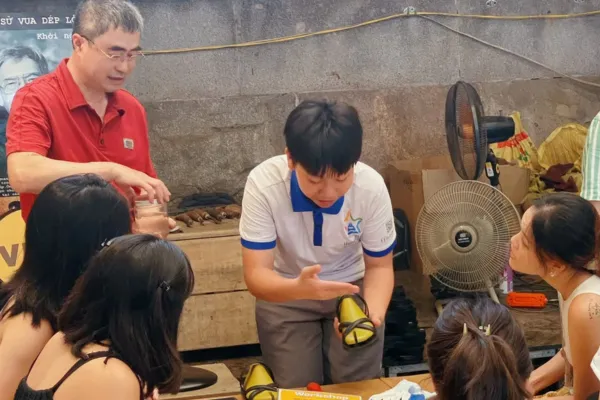
Not a museum, but it belongs on this tour. Rubber sandals cut from worn tyres carried an entire army down the Ho Chi Minh Trail, and one workshop in Hanoi still makes them by hand. After a morning of reading about the war behind glass, watching a craftsman cut a sole from a tyre puts the object in your hands. The guide is free; the workshop charges its own fee.
You choose which museums and how long to spend in each. If a room grabs you, stay in it. If a floor does not, walk through. Your guide has no schedule to keep and no group waiting outside.
Your guide will message you on WhatsApp the day before to agree which museums and to check opening days, which matter more here than on any of our other tours. Several close on Mondays and the Mausoleum has its own restricted hours.
One thing worth knowing. If your interest is specifically the wars, the hanoi war museum tour covers that ground more thoroughly and adds sites that are not museums. If you want museums as part of a wider day out, take the private Hanoi city tour instead.
The museums fall into two groups that are ten kilometres apart, so a sensible day stays on one side of the city rather than crossing between.
This is the combination most guests choose, and the only one with no travel time.
Must start in the morning: the Mausoleum closes at 11am and does not open on Mondays or Fridays.
Send your dates and we will reply by email within 24 hours with the name of your guide, and check the opening days for you.
This is the question we are asked most, so it is worth answering plainly.
Our guides are not paid a wage. A guide spends three to five hours explaining Vietnamese history in English, answering unpredictable questions from someone who grew up in a completely different country. That is the most valuable practice they could get, and it cannot be bought in a classroom. You get a local companion. They get the afternoon they need.
There is no commission and no upsell at the end. Tips are optional.
| Museum | Price per person |
|---|---|
| Hoa Lo Prison | 50,000 VND · about $1.90 |
| Ho Chi Minh Museum | 40,000 VND · about $1.50 |
| Vietnamese Women’s Museum | 40,000 VND · about $1.50 |
| National Museum of Vietnamese History | 40,000 VND · about $1.50 |
| Vietnam Military History Museum | 40,000 VND · about $1.50 |
| Ho Chi Minh Mausoleum and stilt house grounds | Free |
Guests also cover their guide’s ticket. Three museums in the city centre for one traveller and one guide comes to about 260,000 VND, roughly $10 for the whole afternoon, with no transport to pay for. Adding the Military History Museum means a car as well.
Not a tour company employee. Your guide is a young Hanoian who joined a volunteer club to practise English with visitors, and who trained for two and a half months before being allowed to lead anyone anywhere.
Some are still at school or university. Some graduated years ago and kept coming back. Some fit tours around a full-time job at a company in the city. What they share is that they grew up here, and that nobody pays them a wage to be here with you.
Ten weeks on two things at once: English, and the history behind the objects. Museum guides rehearse each collection with senior members before they lead alone, because explaining a room full of unlabelled artefacts is harder than describing a street.
Our guides are often the first Vietnamese person a visitor talks to at length about the wars. Expect an honest answer rather than a rehearsed one, and expect to be asked what you were taught about it at school.
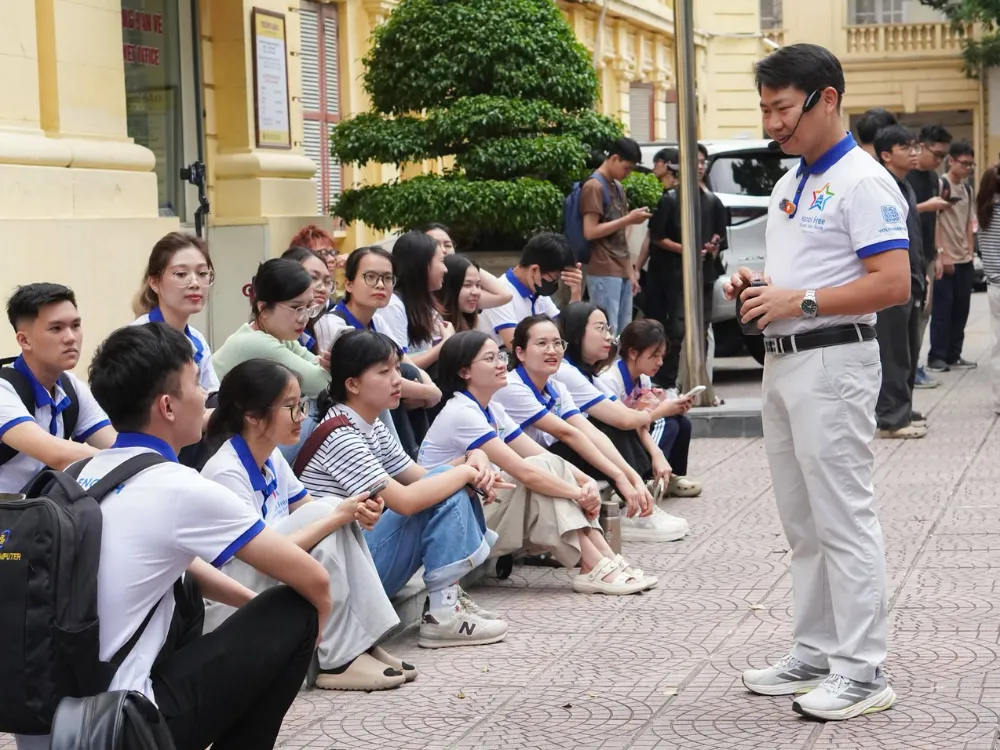
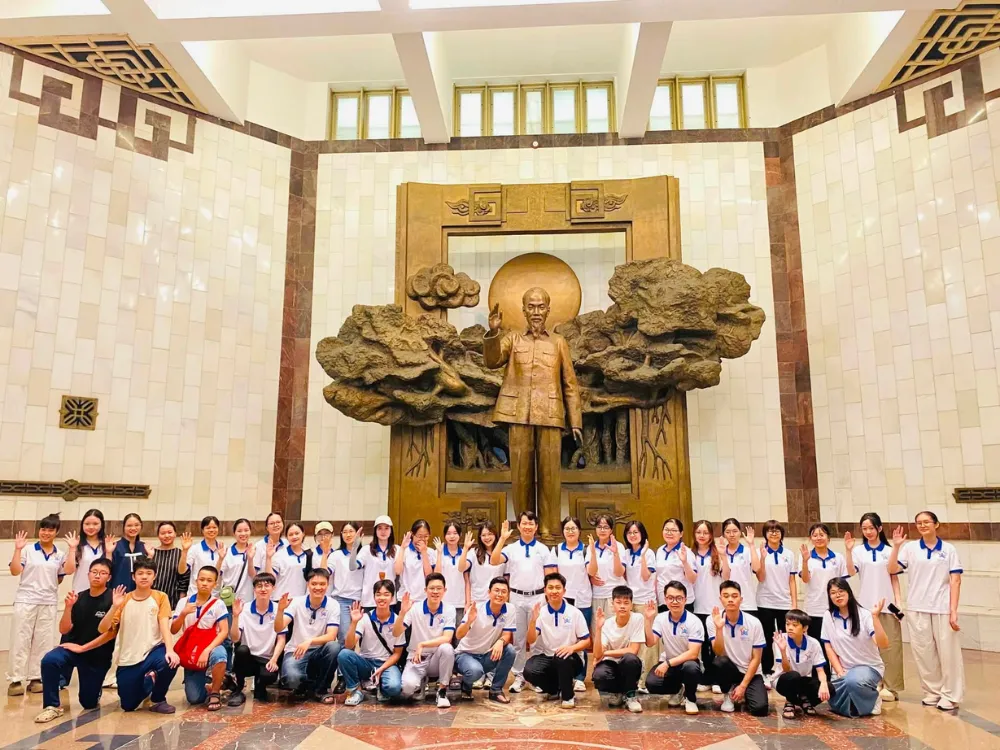
If your hotel is inside the Old Quarter, your guide comes to the lobby. If you are heading west to the Ho Chi Minh Complex, it is often simpler to meet at the museum gate, and your guide will send a photo of the exact spot the night before.
The guide is free and tips are optional. You pay your own entrance tickets and your guide’s. Museums are 40,000 VND each and Hoa Lo Prison is 50,000 VND, so three museums in the city centre for one traveller and one guide comes to about 260,000 VND, roughly $10 for the whole afternoon.
Three stand out for different reasons. The Vietnamese Women’s Museum is the one guests most often say surprised them. Hoa Lo Prison is the most affecting. The Ho Chi Minh Museum is the one that most needs explaining, because its layout is symbolic rather than chronological. The National History Museum is the best single building, and the Military History Museum is the largest.
Some, and not enough. The Women’s Museum is well translated; the Ho Chi Minh Museum is not, and its symbolism is not explained in any language. This gap is the reason this tour exists. Guests regularly tell us they would have understood almost nothing on their own.
Sometimes. Our guides are often at the Ho Chi Minh Museum and will offer a tour to visitors arriving at the door, which is how a good number of our reviews start. But it depends entirely on whether someone happens to be there. Booking a day ahead is the only way to be sure, and it also lets us check which museums are open.
Two or three. Each deserves an hour, the Military History Museum deserves two, and by the fourth almost nobody is still absorbing anything. Your guide will say so honestly rather than march you round a fourth for the sake of it.
Several are closed, and the Ho Chi Minh Mausoleum is closed on Mondays and Fridays as well as being mornings only. This catches out more visitors than anything else. Send us your dates and your guide will check each museum before you plan the day around it.
At the Ho Chi Minh Complex, yes, and it is enforced at the gate: covered shoulders and knees, no tank tops, no shorts above the knee. The other museums have no dress code, but comfortable shoes matter since you will be standing for hours.
Young Hanoians. Some are still at school or university, some have graduated, and some fit tours around a full-time job. Every new member trains for two and a half months in English and in Vietnamese history and culture, and museum guides rehearse each collection with senior members before leading alone.
Send your dates and which museums interest you. We reply by email within 24 hours with the name of your guide.
The same subject in more depth, with sites that are not museums.
One museum as part of a wider day across both halves of the city.