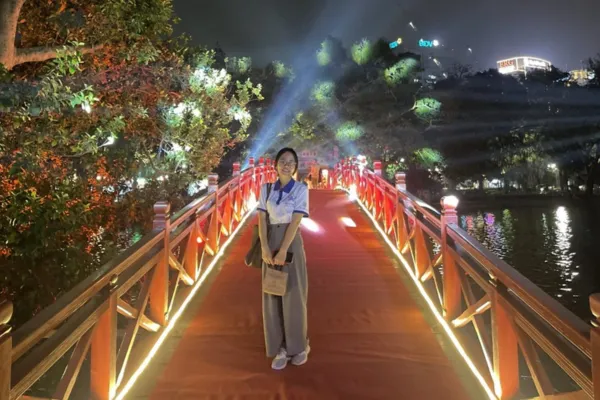
Hanoi Street Food Tour
The same conversation, with better food and a reason to keep moving.

No monuments, no tickets, no itinerary. You spend an afternoon with Vietnamese students who want to practise English, and you ask each other whatever you like. This is the simplest thing we do and the one guests write to us about afterwards.
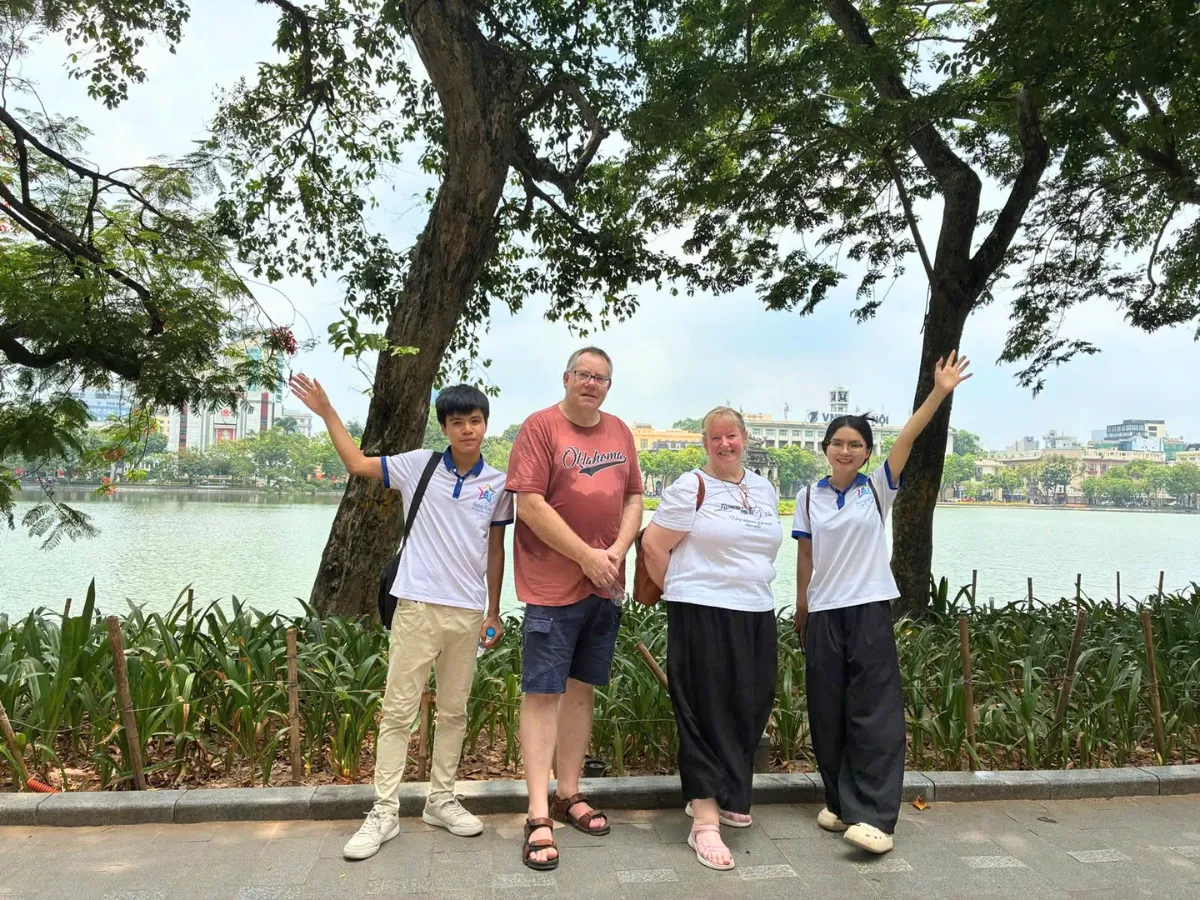

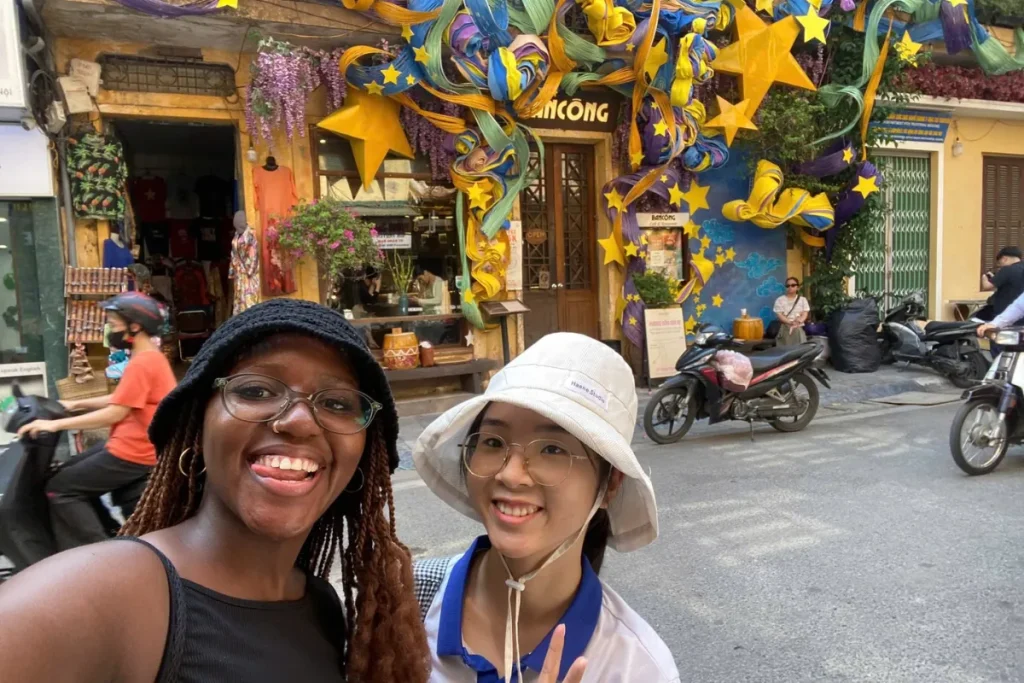
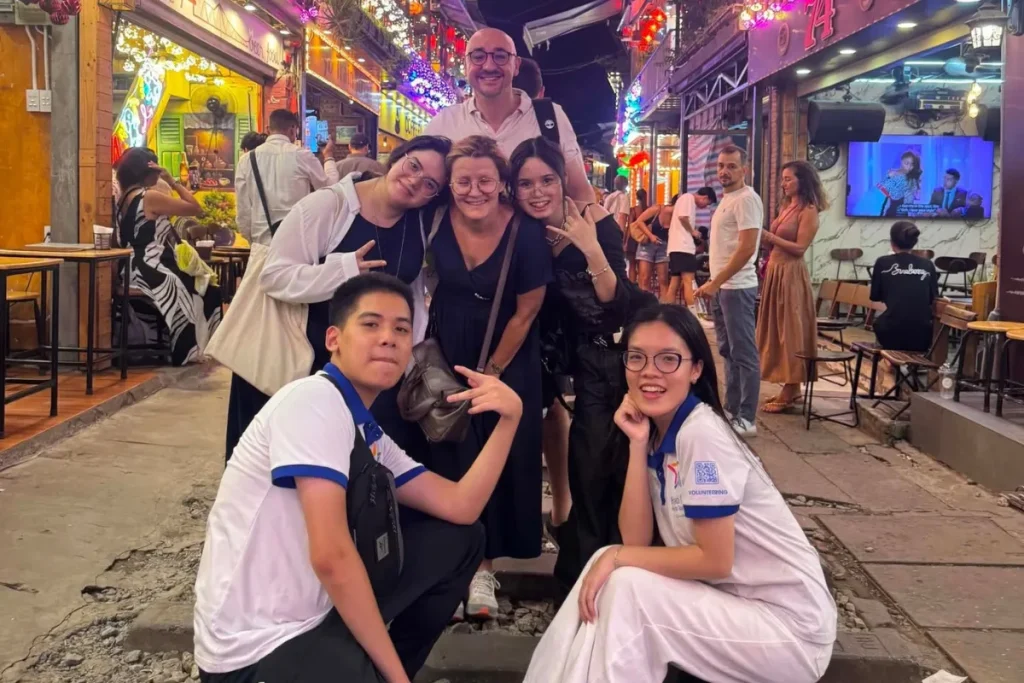
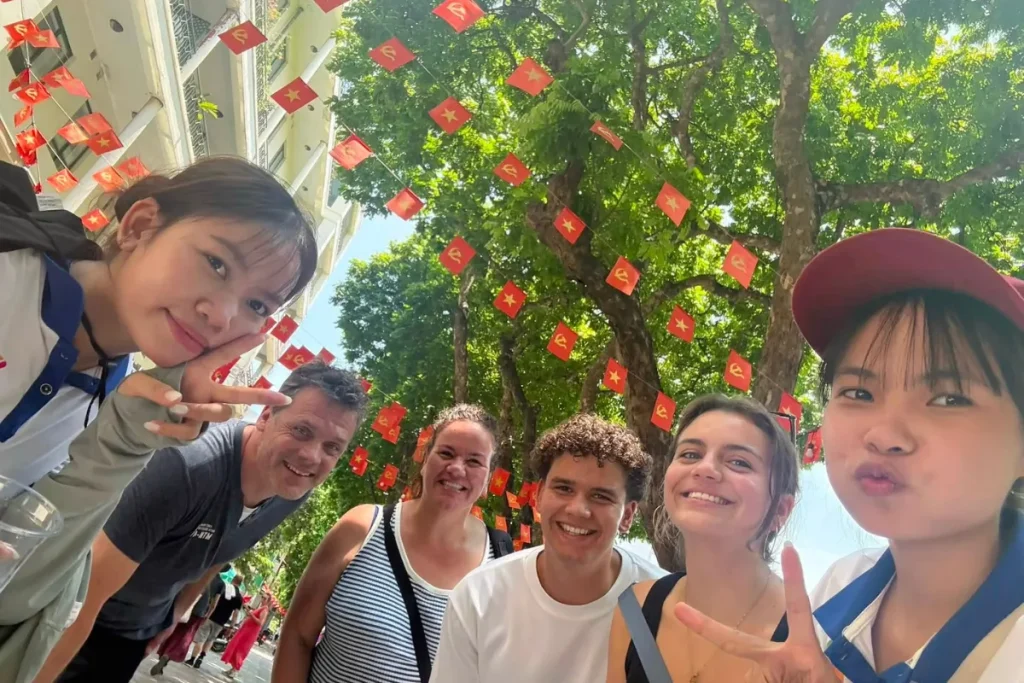
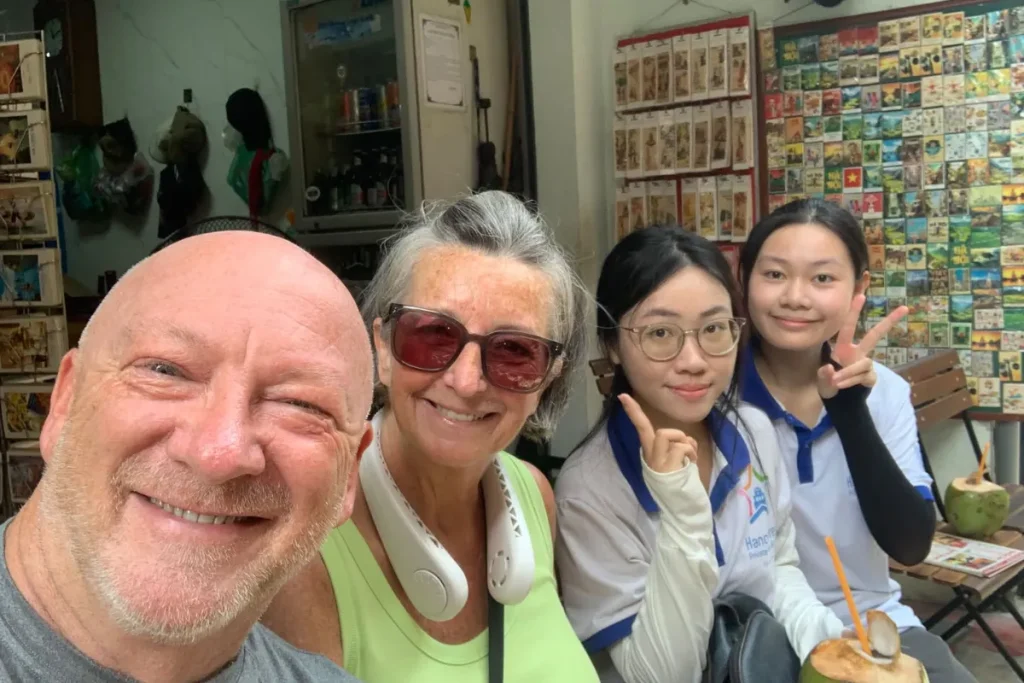
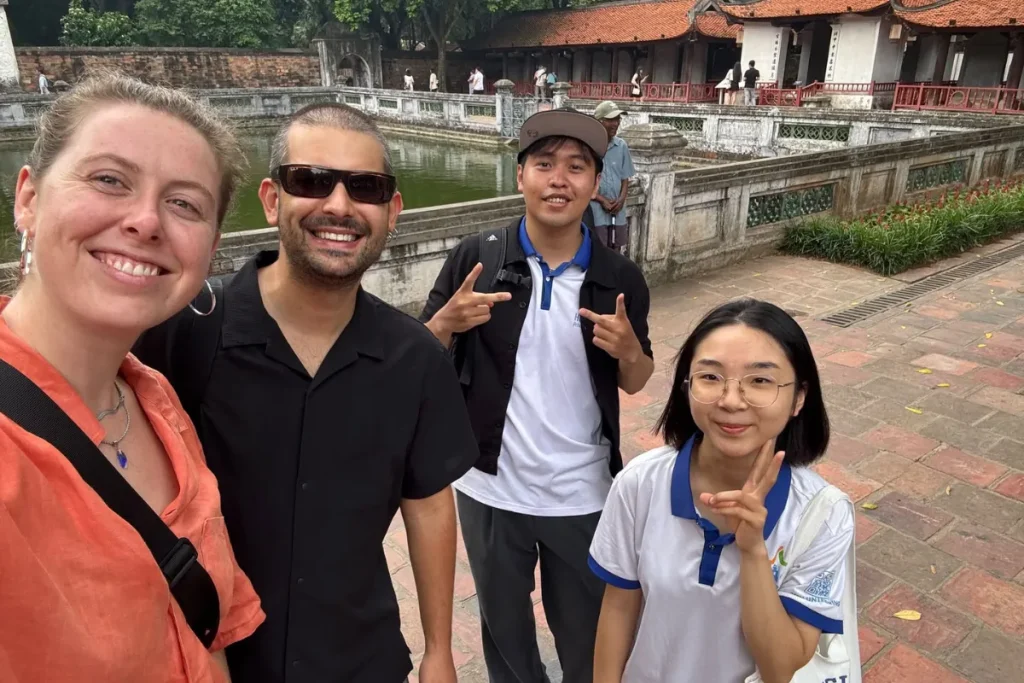
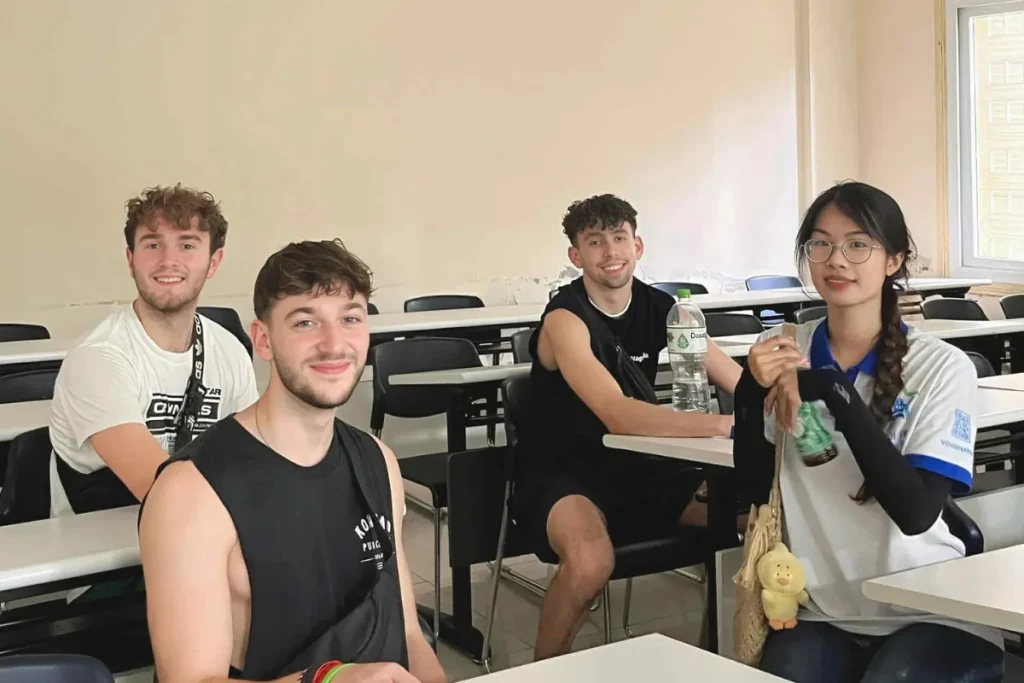
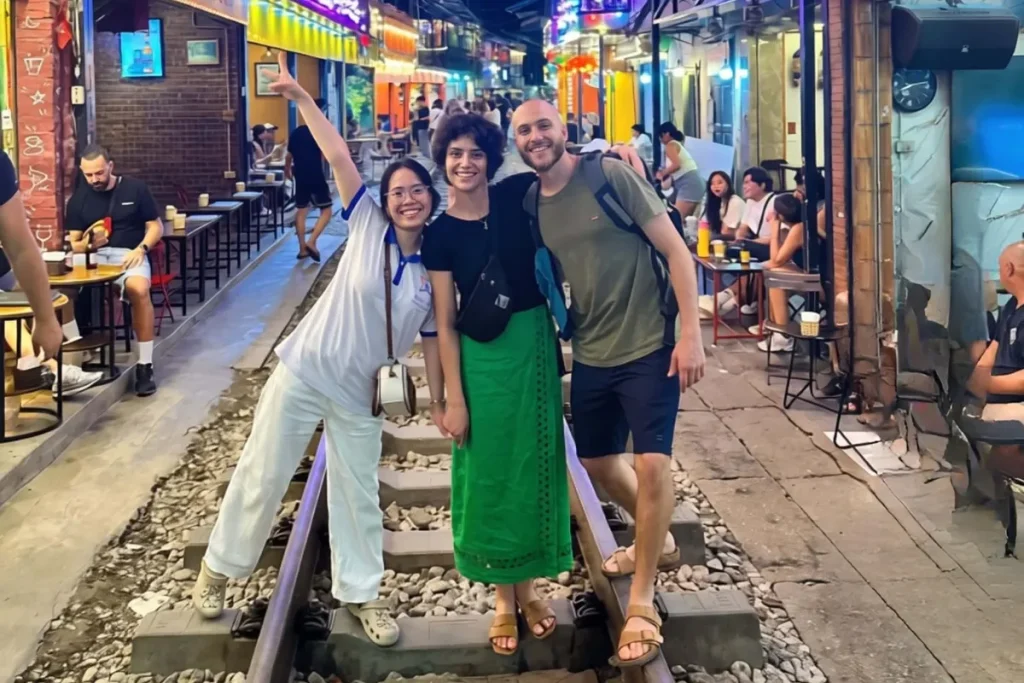
Real tours, real guests. Photographed by our own members.
Every other tour we run has an excuse attached. A temple, a market, a museum, a bowl of noodles. The excuse is what makes it comfortable to spend four hours with a stranger.
This one removes the excuse. There is nothing to look at and nothing to tick off. You sit down with two or three Vietnamese students, usually somewhere with plastic stools and iced tea, and you talk. Then you walk to wherever they normally eat, and you keep talking.
It exists because this is what our members actually want. Our guides join this club to practise English with people from other countries, and the tours are the structure we built around that. Cultural exchange is the same thing with the structure taken away. If you have ever wondered what a twenty-year-old in Hanoi thinks about their future, their parents, or your country, this is the afternoon where you find out.
There is no fixed programme, but most afternoons include some version of these. Tap any part to read more about it.
Usually on plastic stools at a tra da stall, the iced tea shops that function as the social infrastructure of student life in Hanoi. A glass costs three thousand dong and buys you as long as you want to sit there. This is where most of the afternoon happens. Two or three students, you, and no agenda. The section below lists what people actually end up talking about, because that is the question everybody asks before booking.
Vietnamese universities look nothing like European or American ones: motorbike parking the size of a football pitch, open corridors instead of buildings, canteens serving full meals for twenty thousand dong. Your guides show you where they study, queue and waste time. We walk the grounds and the public areas only – classes are not interrupted and lecture rooms are not entered.
Not the Old Quarter. The residential lanes around the universities, where a rented room costs a couple of million dong a month and four people share it. This is the part of Hanoi that visitors never see because there is no reason to walk down these alleys unless somebody who lives there takes you. You will see how laundry, cooking, studying and sleeping fit into one room.
Not the dishes on the street food tour. This is what people eat on a student budget: banh mi, mixed rice, fried snacks on a skewer, sticky rice from a basket in the morning, and enormous quantities of iced tea. Nothing costs more than fifty thousand dong and most costs half that. You pay for your own and for your guides’, which is the one expense of the afternoon.
The exchange runs both ways, and most guests end up asking. Vietnamese has six tones and the difference between them changes the word completely, which is why your first attempt at thank you will probably make everyone laugh. Getting the tones wrong in a friendly way is a good hour of anybody’s afternoon. Bring nothing; you will forget most of it by the next day and that is fine.
Guests who bring photographs of home, a coin, a postcard or a packet of sweets from their own country get a completely different conversation out of the afternoon. Photographs of snow, of your kitchen, of your commute – the ordinary things – work far better than photographs of landmarks. This is not expected and costs nothing, but it is the single easiest thing you can do to make the exchange feel mutual.
This is the question everybody asks, and the old version of this page never answered it. Here is what actually comes up, drawn from what our guides report after these afternoons.
Money and family come up quickly. Neither is a rude subject here.
Our guides are used to direct questions and prefer them to polite ones.
Send your dates and we will reply by email within 24 hours with the names of the students you will meet.
Two to four hours of speaking English with somebody who did not grow up speaking Vietnamese. That is the whole arrangement, and on this tour more than any other it is worth being direct about it.
An English class in Hanoi costs money and gives a student perhaps ten minutes of actual speaking. An afternoon with you gives them two hours of unpredictable conversation, in an accent they have not heard before, about subjects no textbook covers. There is no way to buy that. It is why this club has more than two thousand active members and why nobody is paid.
So yes: you are their English practice. They are your afternoon in Hanoi. Both sides know it, and knowing it is what makes the conversation honest rather than performed. There is no commission, no shop stop, and nothing to sign up to afterwards. Tips are optional.
| Item | Price per person |
|---|---|
| Glass of tra da, iced tea | 3,000 to 5,000 VND · about $0.15 |
| Banh mi or a bowl of mixed rice | 25,000 to 40,000 VND |
| Fried snacks on a skewer | 5,000 to 15,000 VND each |
| Vietnamese coffee | 20,000 to 35,000 VND |
| A whole afternoon of student food and drinks | 100,000 to 200,000 VND · about $4 to $8 |
You pay for your guides’ food and drinks as well, which on a student budget adds very little. This is the cheapest thing we run. An afternoon with two students, including everything everybody eats and drinks, rarely passes 400,000 VND, about $15, and it is usually half that.
On this tour, more than any other, the people are the product. You will usually meet two or three students rather than one guide, because the conversation works better with more than one voice on each side.
Some are still at school or university. Some graduated years ago and kept coming back. Some fit tours around a full-time job at a company in the city. What they share is that they grew up here, and that nobody pays them a wage to be here with you.
Every new member spends ten weeks on two things at once: English, and the history and culture behind each site. On this tour the training matters less than the willingness to be asked anything, which is why we send the members who volunteer for it.
A fair number of these afternoons end with contact details exchanged, and guests write to us months later saying they are still in touch. That is not something we can promise, but it happens often enough to be worth mentioning.
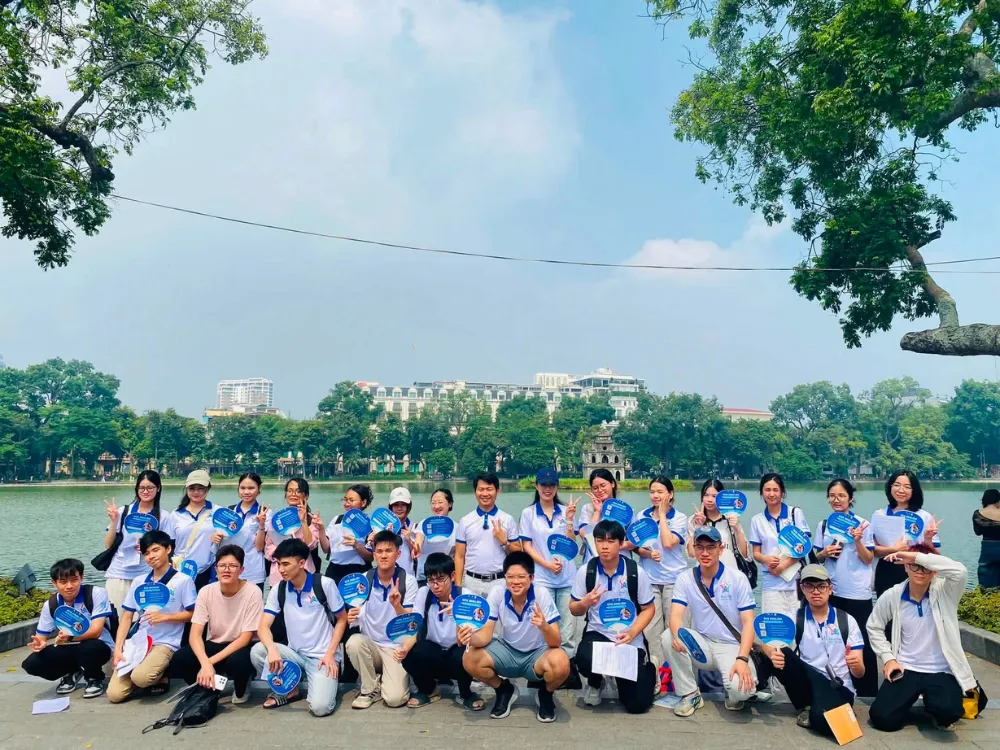
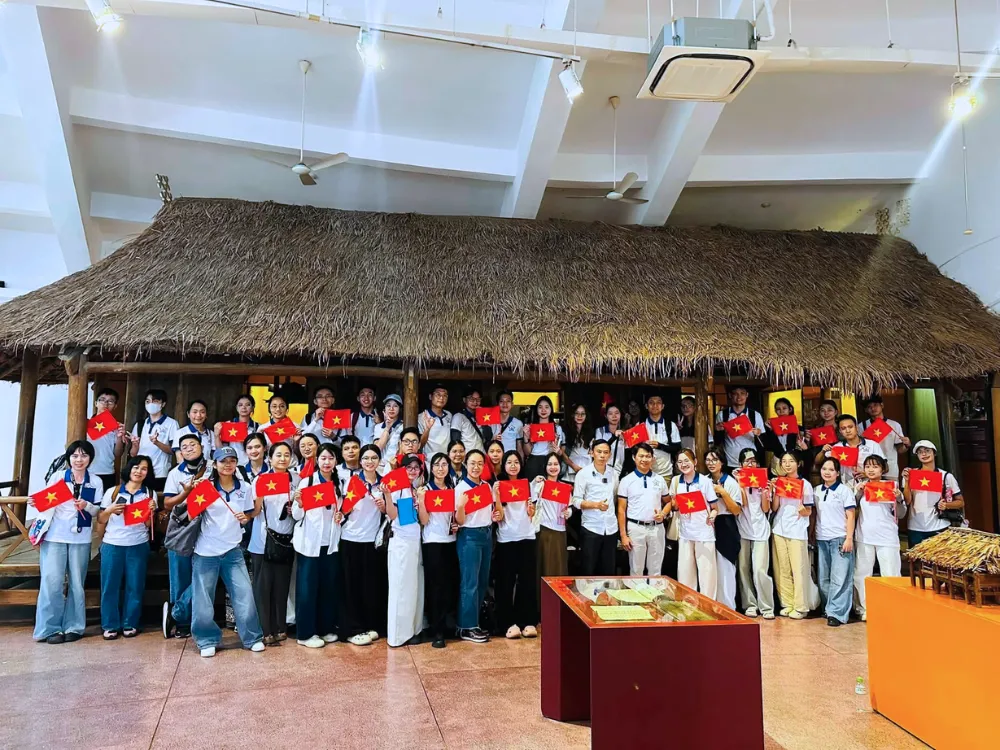
If your hotel is inside the Old Quarter, your guides come to the lobby. Since much of this afternoon happens near a campus rather than in the centre, it is sometimes simpler to meet there instead, and they will send a photo of the exact spot the night before.
More than you expect, and the students will start it if you do not. Money, family, and what you were taught about Vietnam come up within the first twenty minutes. Our guides will ask what a flat costs where you live, whether you moved out at eighteen, and what your country thinks of Vietnamese food. You can ask them about living with their parents, what their families expect of them, how the war is taught here, and what it is like being twenty in a country changing this fast. Nothing on that list is a rude question in Vietnam.
Yes, and that is the arrangement. An English class gives a student ten minutes of speaking; an afternoon with you gives them two hours of unpredictable conversation in an accent they have never heard. There is no way to buy that, which is why the tour costs you nothing. Both sides know what the exchange is, and knowing it is what makes the conversation honest rather than polite.
It is the tour we most often recommend to solo travellers. You meet two or three people rather than one, the whole afternoon is conversation, and nobody has to pretend to be interested in a monument. Several of our solo guests have said it was the part of their trip where they stopped feeling like a tourist.
No, we do not interrupt lessons. Campus visits cover the grounds, canteens and public study areas, which is where student life actually happens anyway. If an individual guide arranges something more with their own teacher, that is their arrangement and not something we promise in advance.
The students are free and tips are optional. You pay for food and drinks, yours and theirs, and student food in Hanoi is very cheap: expect 100,000 to 200,000 VND per person, about $4 to $8, for a whole afternoon of snacks and iced tea. An afternoon with two students including everything everybody eats rarely passes 400,000 VND.
Cash in small notes, and if you have room, something from where you live. Photographs of ordinary things – snow, your kitchen, your commute, your dog – open a far better conversation than photographs of landmarks. A coin, a postcard or a packet of sweets from your country works the same way. None of it is expected.
For the first ten minutes, sometimes. Then somebody asks how much you pay in rent and it stops being awkward. It helps that the students are the ones who volunteered for this rather than being assigned to it, and that there are two or three of them, so no single person has to carry the conversation.
Yes. Some guests add a walk through the Old Quarter or a few street food stops, which works well since the conversation carries on regardless of where you are. Tell us when you book and we will build the afternoon around both.
Send your dates and anything you want to talk about. We reply by email within 24 hours with the names of the students you will meet.
The same conversation, with better food and a reason to keep moving.
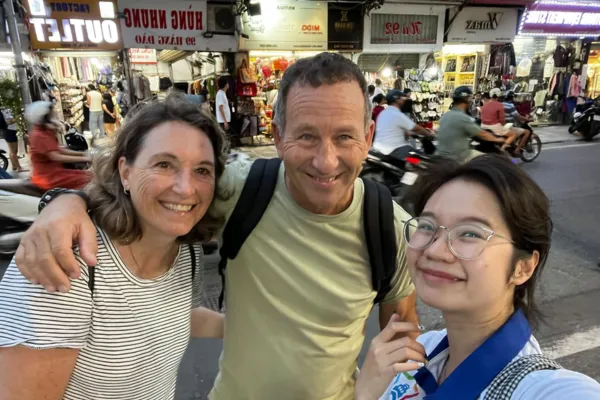
The 36 trading streets, if you would rather have something to look at.