Hanoi Old Quarter Walking Tour
The 36 streets, Dong Xuan Market and Bach Ma Temple, on foot with a local.

A private Hanoi city tour led by a young local who walks the route with you. Choose half a day or a full day, pick your stops from the Ho Chi Minh Complex, Temple of Literature, Hoa Lo Prison and the Old Quarter, and pay nothing for the guide.


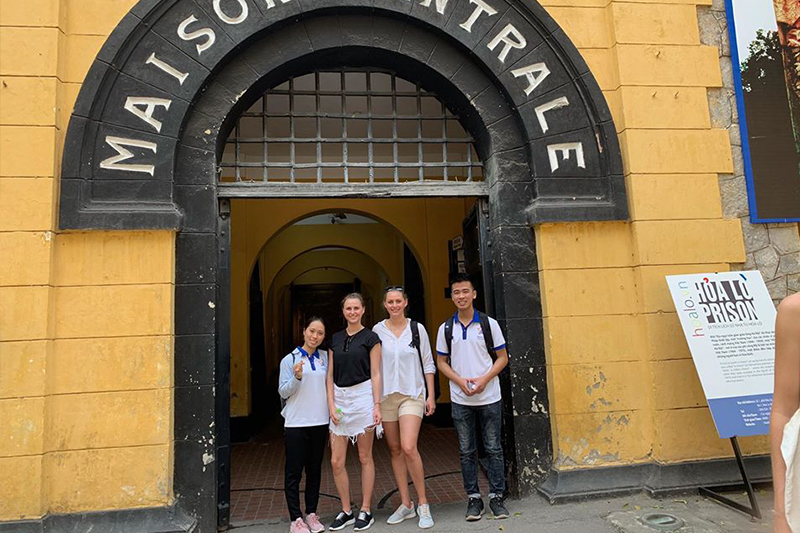

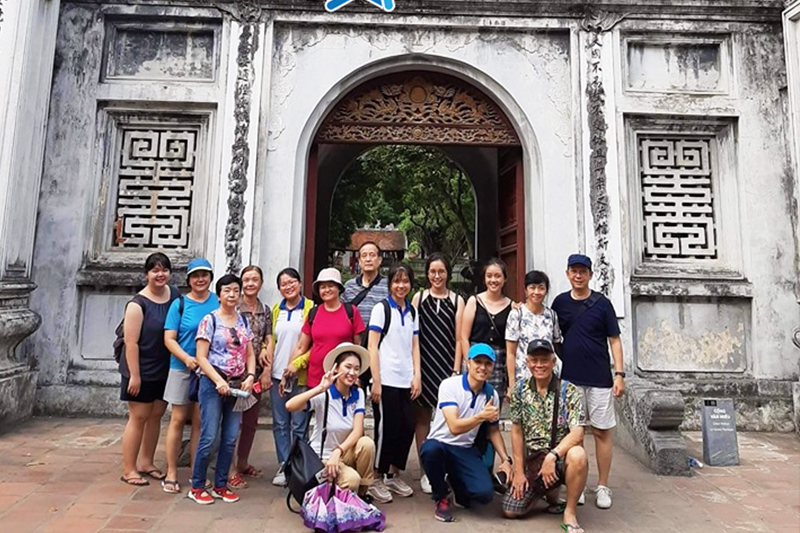
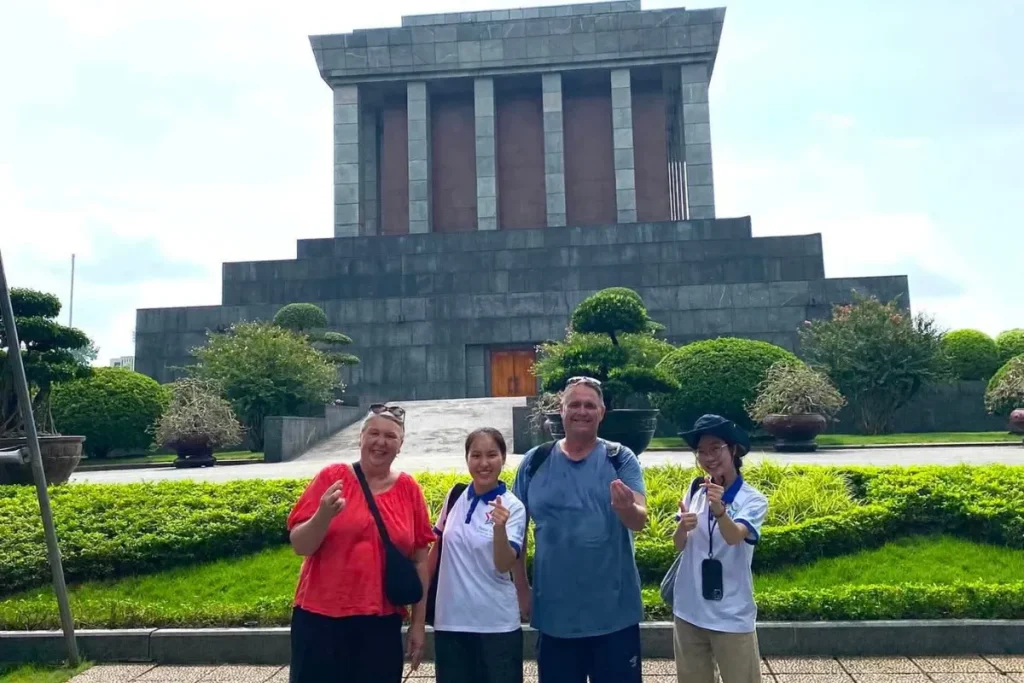
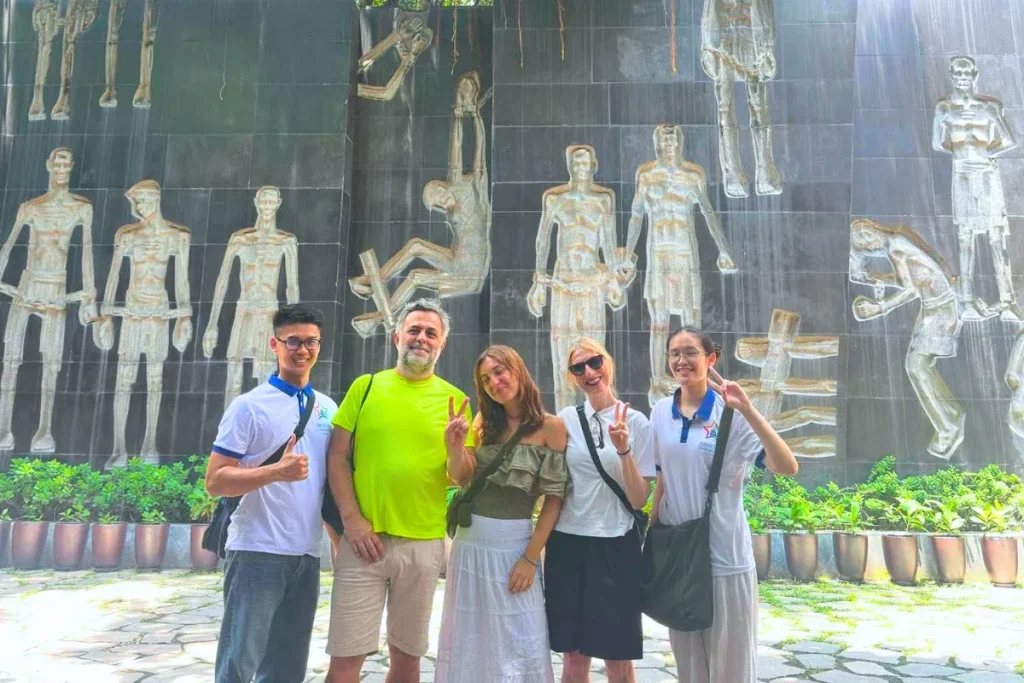

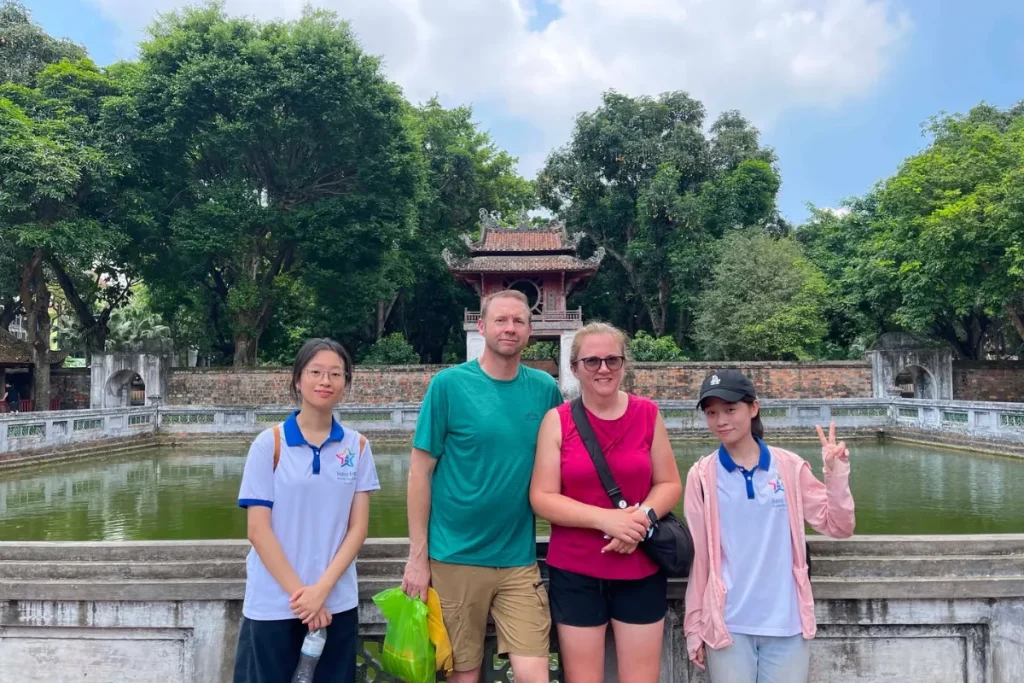
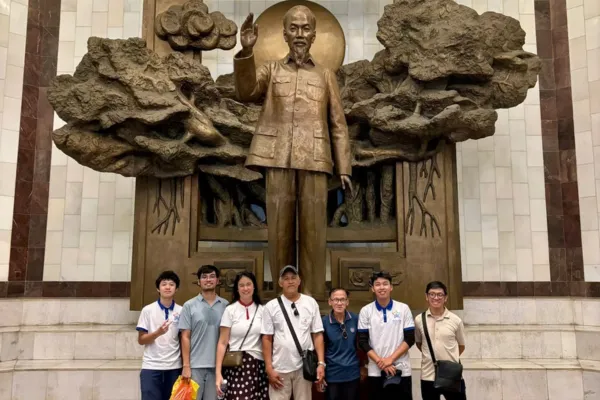
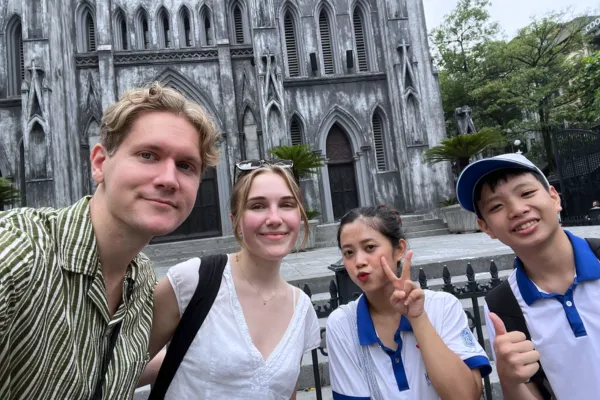
Real tours, real guests. Photographed by our own members.
Tailored, not fixed
Most city tours hand you a route. This one starts with a question: which of these places do you actually want to see?
Your guide is a young Hanoian. A student, a recent graduate, or someone fitting tours around a full-time job. They have trained in the history of these sites, and they lead tours to practise English with visitors. That changes the dynamic. There is no clock to keep, no shop stop, and no commission on anything you buy. If a conversation runs long inside Hoa Lo Prison, it runs long.
It also means the day can be built around your own interests. Some guests want the Ho Chi Minh Complex and nothing else. Others skip the museums entirely and spend four hours in the Old Quarter. Both are a normal day for us.
These are the stops we recommend. Pick three for a half day, five or six for a full day, or do them all if you have the energy. Tap any stop to read more about it.
Three separate sites in one compound, and the contrast between them is the point. The Mausoleum is grey granite, guarded by soldiers in white, and completely silent. You file past in a single line and nobody speaks. A few hundred metres away stands the Presidential Palace, a mustard-yellow French colonial building that Ho Chi Minh refused to live in. He had a wooden stilt house built beside the fish pond instead. Two rooms and a desk, and that is where he worked until he died. The Ho Chi Minh Museum next door fills in the rest. The Mausoleum opens mornings only and closes on Mondays and Fridays.
Vietnam’s first university, founded in 1070, and still the calmest place in the city. You walk through five walled courtyards, each quieter than the last, until you reach the hall where the country’s scholars were taught. In the third courtyard stand 82 stone steles. Each one rests on the back of a stone tortoise, and each is carved with the names of men who passed the royal examinations between 1442 and 1779. Come on a weekend in early summer and the courtyards fill with graduates in red gowns and ao dai, photographing each other in the same spot where their predecessors were honoured six hundred years ago.
Built by the French in 1896 to hold Vietnamese revolutionaries, and used decades later to hold American pilots, who gave it the bitter nickname the Hanoi Hilton. The cells are preserved as they were. Shackle bars run the length of the stone floor, a guillotine still stands in one room, and there is a dark cell you can step inside if you want to know what complete darkness feels like. The exhibition tells the story from the Vietnamese side, which is not the version most Western visitors arrive with. Guests tend to go quiet in here. It is the stop people most often say afterwards they were glad they made.
Hanoi’s living room. In the legend, a fifteenth-century emperor was given a magic sword to drive out an invading army. After the victory, a golden turtle rose from this lake and took the sword back. At five in the morning the paths belong to people doing tai chi. By evening they belong to couples, students, and anyone selling ice cream. The bright red Huc Bridge, whose name means the place where morning sunlight rests, leads to Ngoc Son Temple on a small island. Inside, preserved in a glass case, is a giant softshell turtle that lived in this lake until 2016. A great many Hanoians still believe it was the one from the story.
A thousand years of trade compressed into a grid of narrow streets. Most are still named after whatever was sold there: Hang Bac is silver, Hang Ma is paper offerings, Hang Chieu is sleeping mats. The buildings are tube houses, two metres wide and up to thirty metres deep, because tax was once charged on how much street frontage you occupied. There is no quiet moment here. Motorbikes, cooking fires, and people eating breakfast on plastic stools twenty centimetres off the ground. Your guide will take you into the alleys that look like somebody’s front door and are in fact streets.
Two thousand years in one building, and the building is half the reason to come. It was designed in the 1920s by Ernest Hebrard, a French architect who tried to invent a style that was neither European nor Vietnamese but both at once. The result is an ochre octagonal hall that looks like nothing else in the city. Inside are bronze Dong Son drums cast two and a half thousand years ago, Champa stone sculpture from the old kingdoms of the centre, and the wooden stakes driven into the bed of the Bach Dang river to sink an invading fleet in 1288.
Rubber sandals cut from worn-out tyres carried an entire army down the Ho Chi Minh Trail, and one workshop in Hanoi still makes them by hand. The craftsman will show you how a single tyre becomes a sole, let you cut and thread your own pair, and explain why a design this crude outlasted everything the other side was issued. You walk out wearing them. The guide is free; the workshop charges its own fee, paid on the day.
You choose which of the stops above to visit, in whatever order suits you, starting at whatever time of day works for your trip. Do all of them, do three, or swap one out on the day because you would rather sit somewhere and eat. Adding a food stop or a coffee break is normal and costs you nothing extra in guide time.
There are two moments to shape the plan. Your guide will message you on WhatsApp the day before, which is the easiest time to say what you are interested in. Or leave it until you meet – the first thing your guide does is sit down with you and agree the route.
One thing worth knowing. This is a city tour, so the stops are inside Hanoi. If you have your heart set on a pottery village or a day among the silk weavers, that belongs on our hanoi craft village tour. If you want four museums rather than one, take the hanoi museum tour instead. And if you would rather stay entirely within the 36 streets, there is a hanoi old quarter walking tour for exactly that.
The honest difference is not distance, it is museums. Each one deserves an hour, and two museums plus two outdoor stops fills a morning completely.
Typical: Hoa Lo Prison, Temple of Literature, Old Quarter.
The Mausoleum only opens 7:30am to 11am and closes on Mondays and Fridays, so tell your guide if you want to include it.
Send your dates and we will reply by email within 24 hours with the name of your guide. Free to cancel if your plans change.
This is the question we are asked most, so it is worth answering plainly.
Our guides are not paid a wage. A guide spends four to eight hours speaking English continuously, answering unpredictable questions from someone who grew up in a completely different country. That is the most valuable practice they could get, and it cannot be bought in a classroom. You get a local companion. They get the afternoon they need.
There is no commission, no shop stop, and no upsell at the end. Tips are optional.
| Site | Price per person |
|---|---|
| Hoa Lo Prison | 50,000 VND · about $1.90 |
| Temple of Literature | 70,000 VND · about $2.70 |
| Ho Chi Minh Museum | 40,000 VND · about $1.50 |
| Mausoleum, Old Quarter, Sword Lake | Free |
| All three paid sites, per person | 160,000 VND · about $6.10 |
Guests also cover their guide’s ticket where a site charges admission. So one traveller visiting all three paid sites, with one guide, pays 320,000 VND, about $12.20 for the whole day. That is the only cost attached to having a guide, and it is less than most paid city tours charge per hour.
More than 2,000 active guides
Not a tour company employee. Your guide is a young Hanoian who joined a volunteer club to practise English with visitors, and who trained for two and a half months before being allowed to lead anyone anywhere.
Some are still at school or university. Some graduated years ago and kept coming back. Some fit tours around a full-time job at a company in the city. What they share is that they grew up here, and that nobody pays them a wage to be here with you.
Every new member spends ten weeks on two things at once: English, and the history and culture behind each site. They rehearse with senior members and shadow real tours before they are allowed to lead one alone.
Our guides are often the first Vietnamese person a visitor has a long conversation with. They take that seriously. Expect honest answers about history, family, work and daily life, not a rehearsed script about temples.
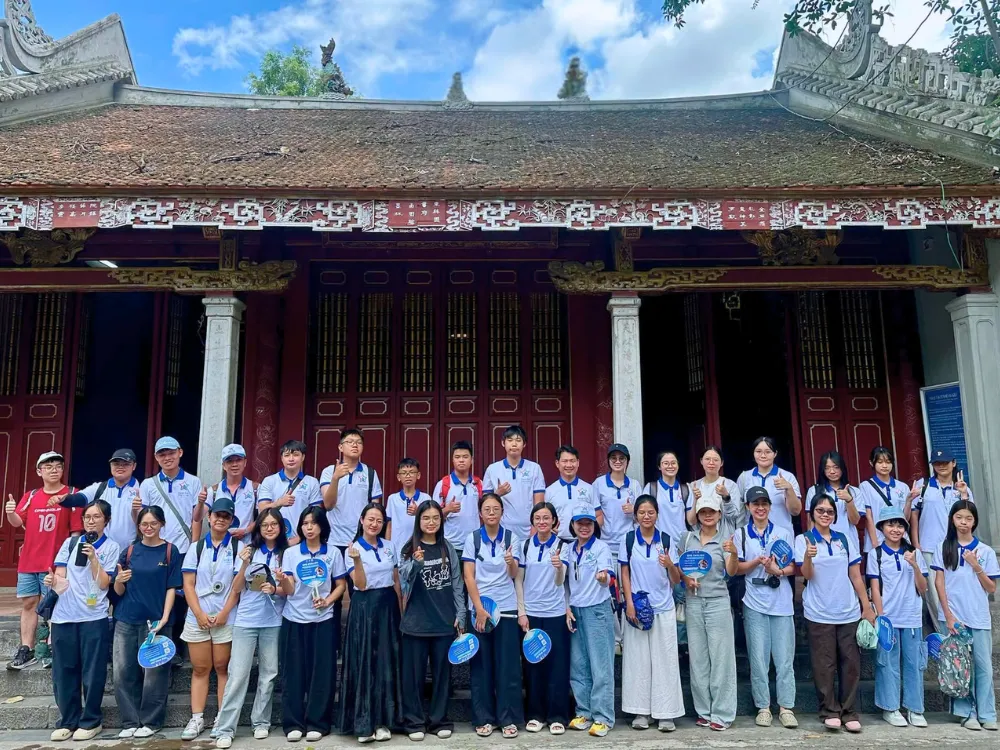
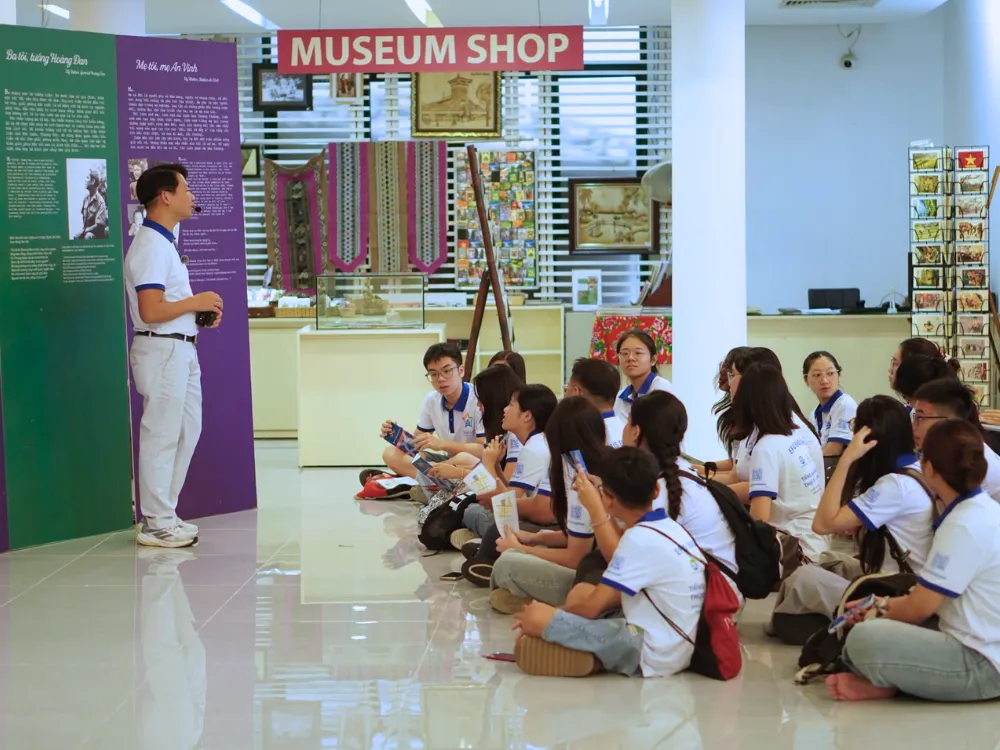
If your hotel is inside the Old Quarter, your guide comes to the lobby at the agreed time. If you are staying elsewhere in Hanoi, we meet at an easy landmark around Hoan Kiem Lake and your guide sends a photo of the exact spot the night before.
Yes, and not only because ours costs nothing. A private guide adapts the day to you: skipping a museum you are not interested in, staying longer somewhere you are, and handling the parts that go wrong such as closed roads or sudden rain. One of our guests wrote about an afternoon when seven taxis cancelled, which is the honest version of what that is worth.
Yes to both. Pick whichever of the recommended sites interest you, in any order, and start at whatever time of day suits your trip. Add a food stop if you want one. Your guide will message you on WhatsApp the day before, or you can decide together when you meet. The stops stay within Hanoi city – for craft villages or a museum-only day we run separate tours.
The guide is free and tips are optional. You pay your own entrance tickets and your guide’s, plus food, drinks and transport. Visiting all three paid sites costs 160,000 VND per person, so one traveller with one guide pays about 320,000 VND, roughly $12.20 for the day.
Take the half day if Hanoi is one stop on a longer trip: three sites around Hoan Kiem Lake, about four hours, roughly 4 km on foot. Take the full day if you want the Ho Chi Minh Complex as well, since that sits three kilometres west. Note that the Mausoleum only opens from 7:30am to 11am and closes on Mondays and Fridays.
Young Hanoians. Some are still at school or university, some have graduated, and some fit tours around a full-time job. Every new member trains for two and a half months in English and in Vietnamese history and culture, rehearses with senior members, and shadows real tours before leading one alone.
English. Our guides join the club to practise their English with visitors, which is why the tour is free, so English is the language of every tour.
Spiritual and official sites including the Ho Chi Minh Complex, the Temple of Literature and any pagoda require covered shoulders and knees. No tank tops, no shorts above the knee. Comfortable shoes matter more than anything else, as you will walk between 4 and 7 kilometres.
Yes, free of charge, for hotels inside the Old Quarter. If you are staying elsewhere we agree a meeting point around Hoan Kiem Lake instead, which is a short taxi ride from most of the city.
Send your dates and preferred start time. We reply by email within 24 hours with the name of your guide.
The 36 streets, Dong Xuan Market and Bach Ma Temple, on foot with a local.
The Opera House, St Joseph’s Cathedral and the colonial villas behind them.