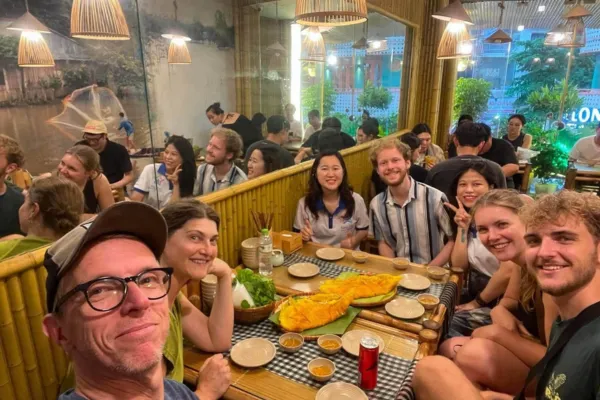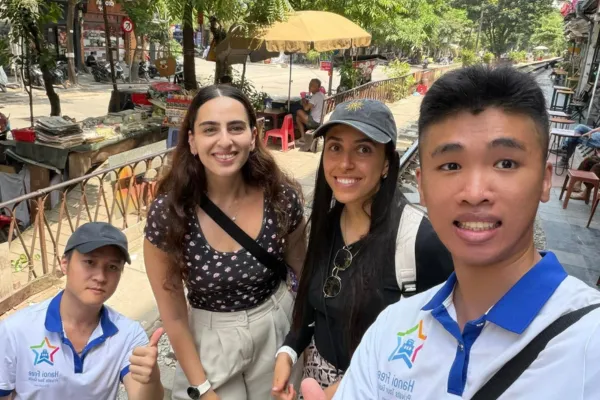
Private Hanoi City Tour
Both sides of the city in one day, including the Ho Chi Minh Complex.

Thirty-six streets, each one named after what it used to sell. A young local walks you through the alleys, temples and markets of the oldest part of Hanoi, and stops for egg coffee on the way. The guide costs nothing.
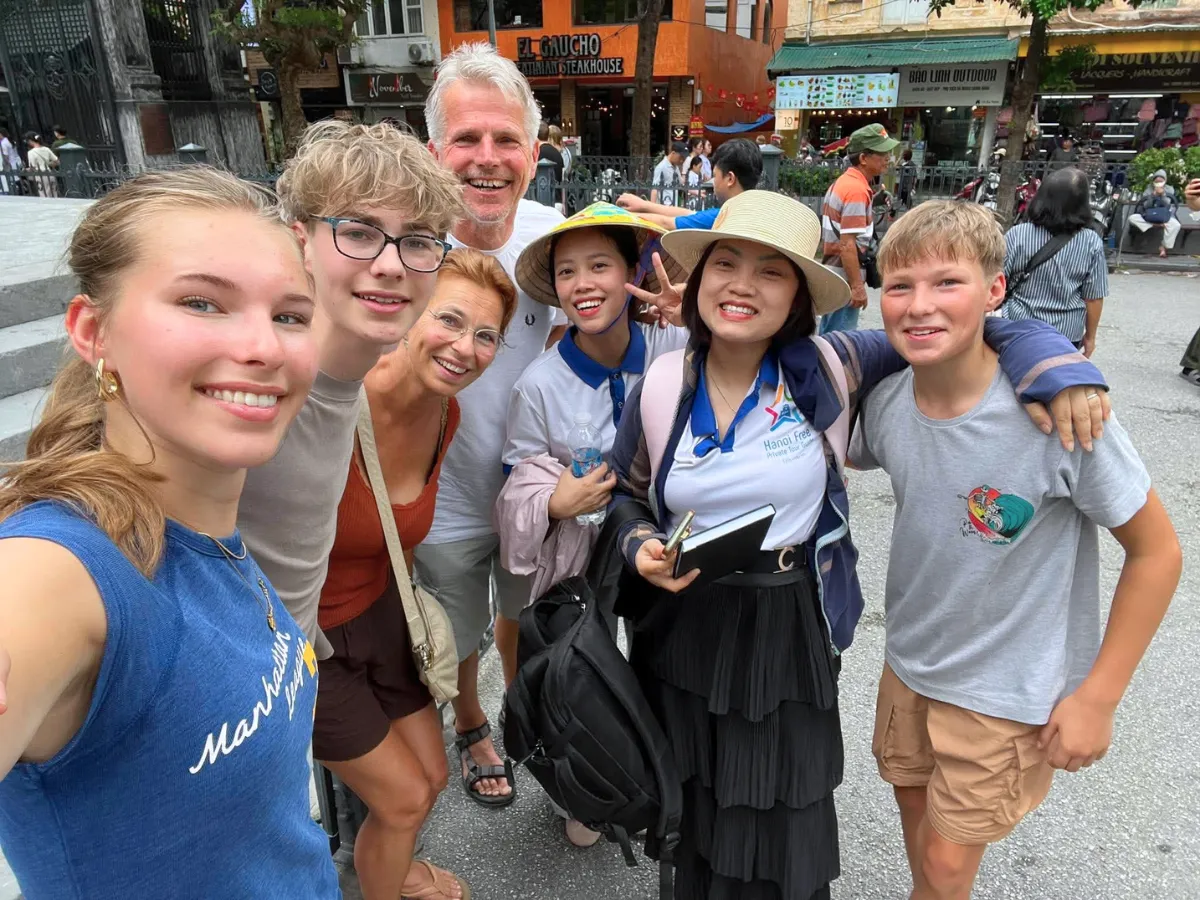
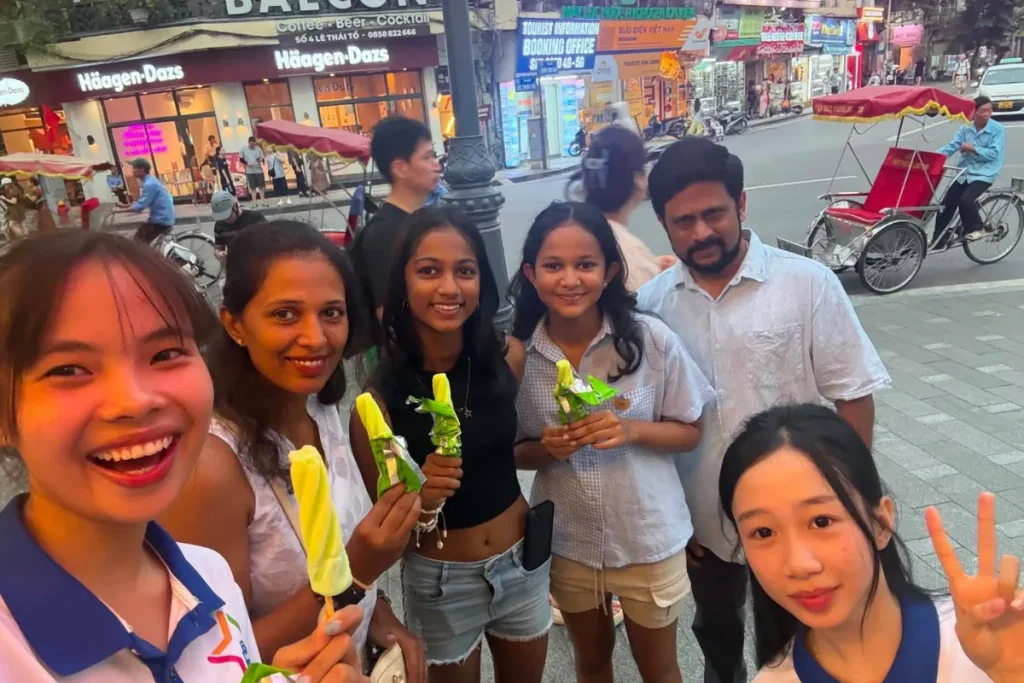
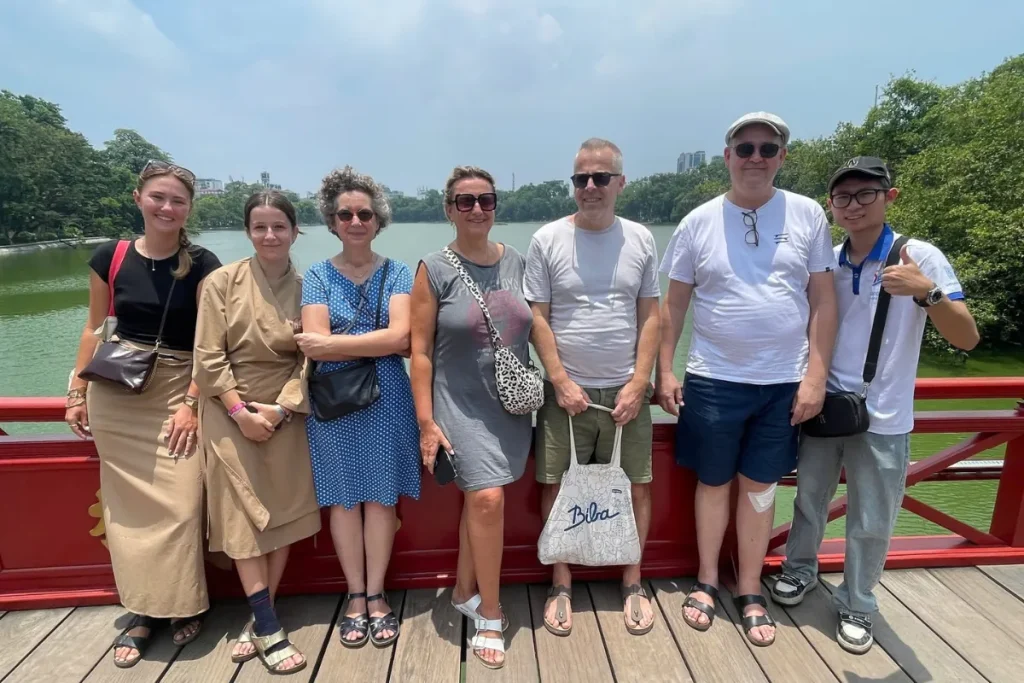
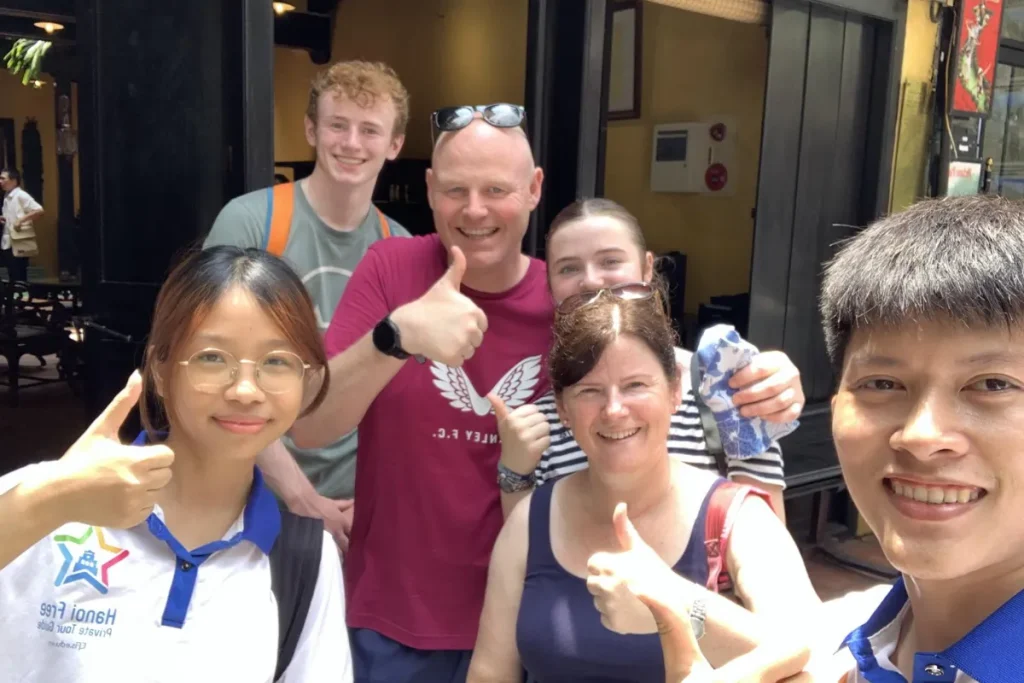
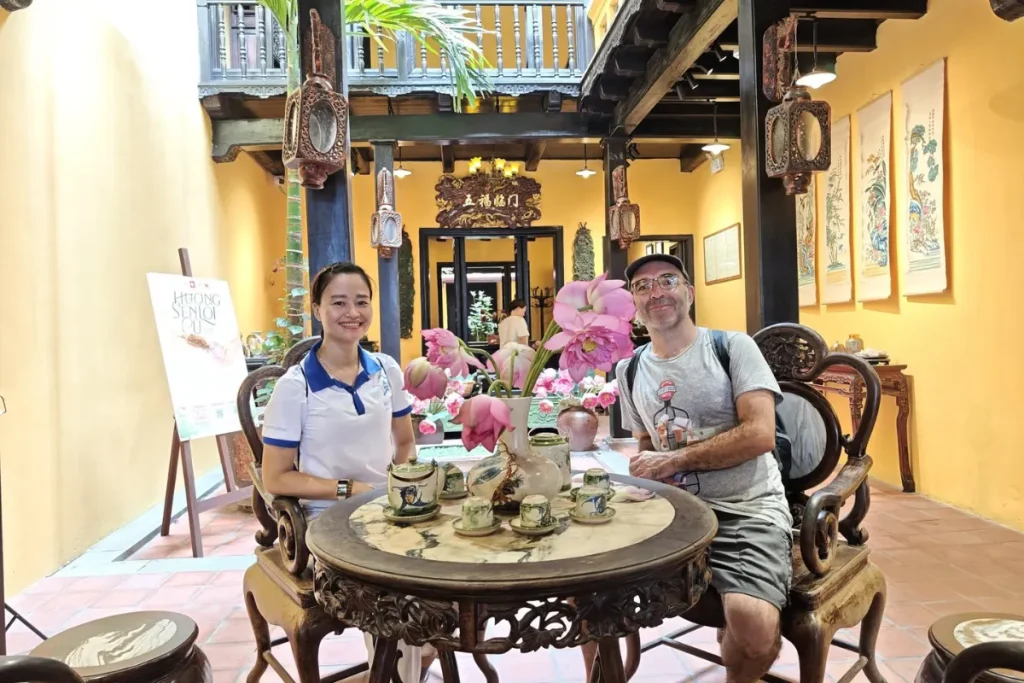

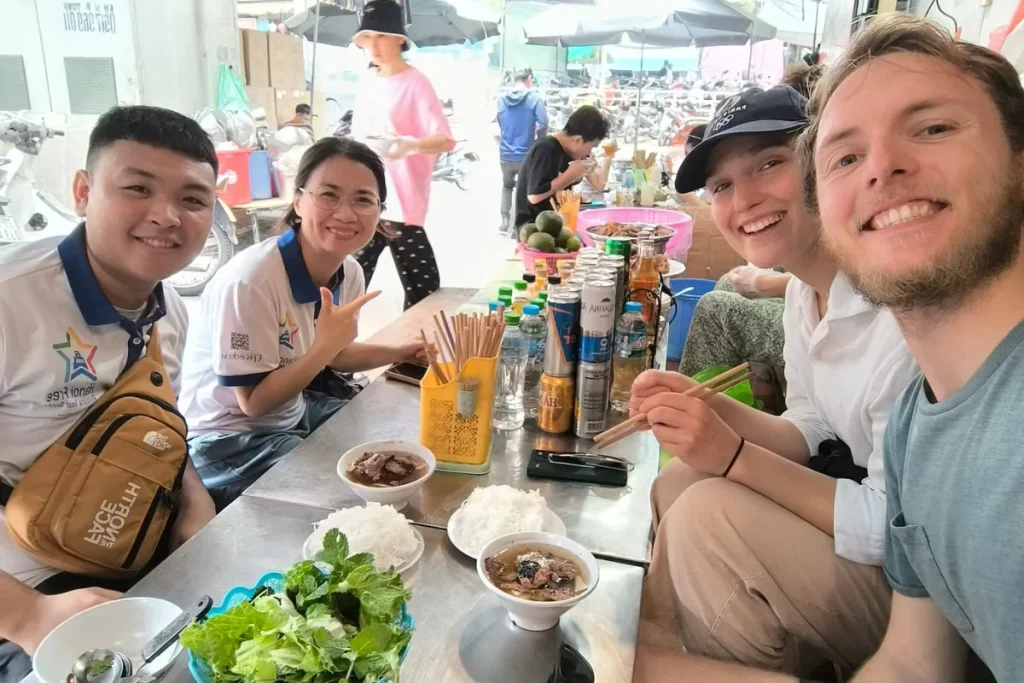
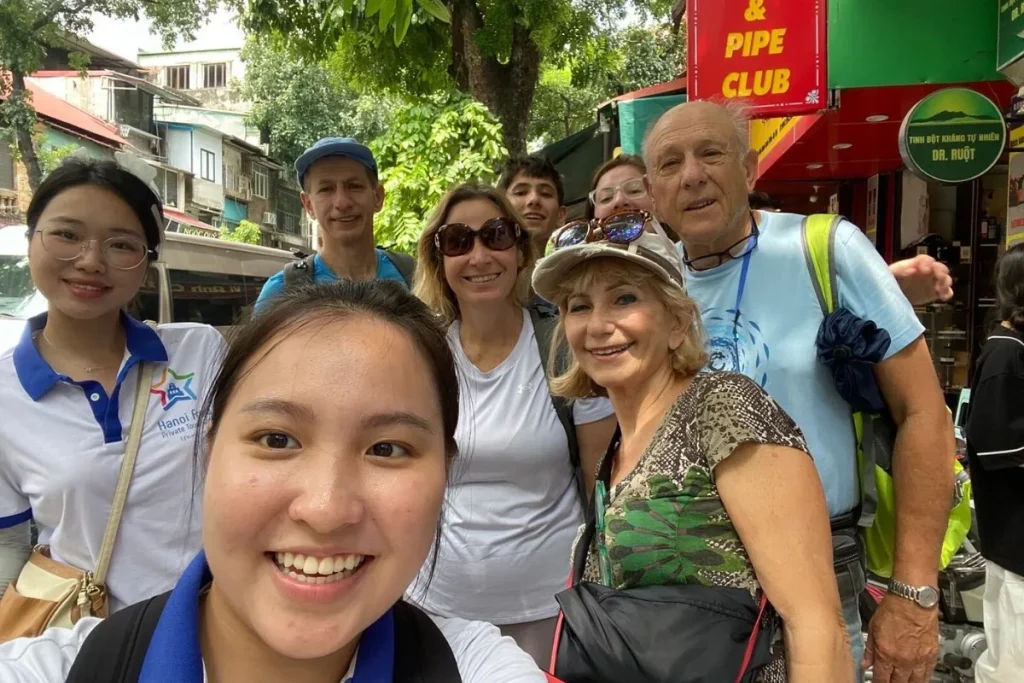
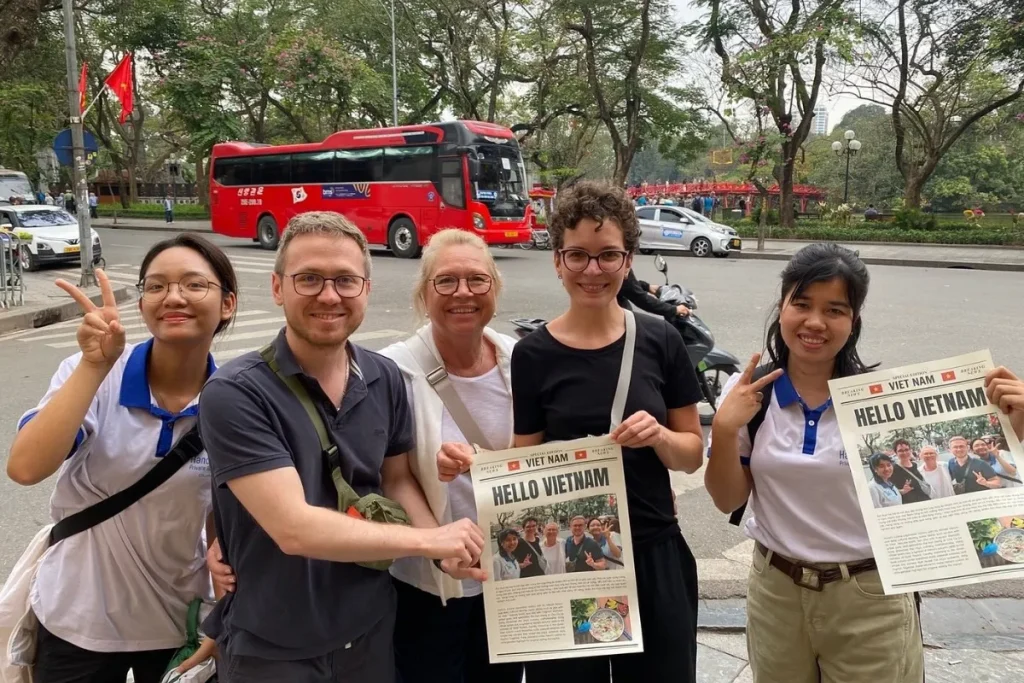
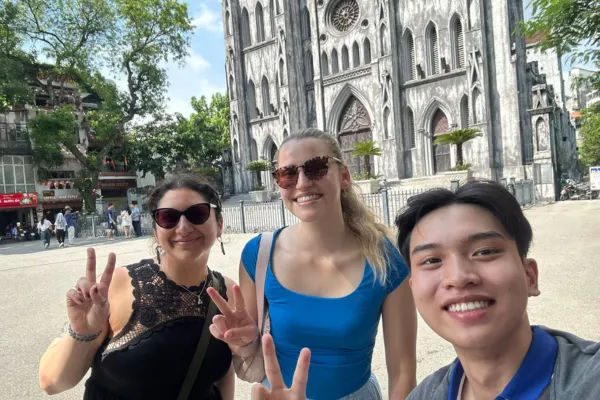
Real tours, real guests. Photographed by our own members.
You can walk the Old Quarter alone. Most people do. They come back with photographs of narrow buildings and no idea what they were looking at.
These streets have been a working merchant district since the eleventh century, and almost every name still tells you what was sold there. Hang Bac is silver. Hang Ma is paper offerings for the dead. Hang Chieu is sleeping mats. The guilds that gave the streets their names came from villages outside the city, settled together, and built temples to the gods of their own trades. Some of those temples are still there, wedged between shops, and you would walk past every one of them.
Your guide grew up with this as an ordinary neighbourhood rather than a heritage site. They know which doorway leads to a courtyard, which stall the office workers queue at, and which of the tourist coffee shops the locals avoid.
Seven stops inside an area you could cross in twenty minutes, plus two evening options if you want to stay out. Tap any stop to read more about it.
Hoan Kiem Lake is where the Old Quarter ends and the rest of Hanoi begins, so most tours start here. In the legend, a fifteenth-century emperor was given a magic sword to drive out an invading army, and after the victory a golden turtle rose from the water and took it back. The red Huc Bridge crosses to Ngoc Son Temple on a small island, where a giant softshell turtle that lived in this lake until 2016 is preserved in a glass case. A great many Hanoians still believe it was the one from the story.
The heart of the tour, and the part with no fixed route. Each street was once a single trade, and the word hang at the start of every name simply means merchandise. Some still do exactly what they always did: Hang Ma is still paper offerings, and in the weeks before a festival the whole street turns red and gold. The buildings are tube houses, two metres wide and up to thirty metres deep, because tax was once charged on street frontage. There is no quiet moment here. Motorbikes, cooking fires, and people eating breakfast on plastic stools twenty centimetres off the ground.
Number 87 Ma May is a merchant’s house from the late nineteenth century, restored in the 1990s and left furnished as it would have been. Walking through it is the clearest way to understand how a tube house works: shop at the front, courtyard in the middle for light and air, family rooms behind, and a wooden staircase to the floor above. It costs 20,000 dong to go in, about seventy-five cents, and it is the only ticket on this tour.
Two temples on the same street, fifty metres apart, and most visitors walk past both. Bach Ma at number 76 Hang Buom is the oldest temple in the Old Quarter and one of the four that once guarded the four directions of the city. Quan De at number 28 was built by Chinese merchants who settled on this street. Both are still working temples with incense burning, not museums, so you will usually find someone praying while you are there.
The largest covered market in Hanoi, three floors of it, and almost entirely wholesale. This is not a souvenir market. It is where the shops in the rest of the city buy their stock, which is why the aisles are stacked to the ceiling with identical things. Go in the morning when it is busiest. Your guide will bargain on your behalf if you want something, which changes the price considerably.
A narrow house on a shopping street, easy to walk straight past. In the last days of August 1945, Ho Chi Minh stayed in an upstairs room here and wrote Vietnam’s Declaration of Independence, which he read out in Ba Dinh Square on the second of September. The room is preserved with the table he worked at. It is free to enter and takes fifteen minutes, and it is the single most historically significant address in the Old Quarter.
Egg yolk whisked with condensed milk until it becomes a thick sweet foam, poured over strong Vietnamese coffee and served warm. It was invented in Hanoi in the 1940s, when milk was scarce and someone tried egg instead. Giang Cafe, down an alley on Nguyen Huu Huan, is run by the family of the man who is credited with the idea. Dinh Cafe, up a staircase above a shop on Dinh Tien Hoang, has a balcony over the lake. Your guide has a strong opinion about which is better.
A form of chamber music that goes back to the fifteenth century, performed by a singer, a lute player and a drummer in a room small enough that you sit a few metres away. UNESCO lists it as intangible heritage in urgent need of safeguarding, which is a polite way of saying very few people still perform it. Shows run some evenings in the Old Quarter. Tickets are sold separately and your guide will tell you what is on that week.
Puppeteers stand waist-deep behind a screen and work wooden figures across the surface of a pool, accompanied by a live orchestra. The art began in the flooded rice fields of the Red River Delta, where villagers performed on the paddy itself. The Thang Long theatre by Hoan Kiem Lake runs several shows a day, and it is the one performance in Hanoi that works regardless of whether you speak Vietnamese. Tickets are sold separately.
You choose which of the stops above to visit, in whatever order suits you, starting at whatever time of day works for your trip. Do all seven, do four, or spend the whole three hours in the streets themselves. Stopping to eat is normal and costs you nothing extra in guide time.
There are two moments to shape the plan. Your guide will message you on WhatsApp the day before, which is the easiest time to say what you are interested in. Or leave it until you meet – the first thing your guide does is sit down with you and agree the route.
One thing worth knowing. This tour stays inside the old streets. If you want the boulevards and the opera house on the other side of the lake, that is the hanoi french quarter walking tour. If you want to eat your way through rather than walk through, take the hanoi street food tour. And if you want both halves of the city plus the Ho Chi Minh Complex, take the private Hanoi city tour.
The Old Quarter is two different places depending on when you walk it. Neither is better. They are worth knowing about before you pick a time.
Most guests choose morning. It is also the only time the market makes sense.
The weekend walking streets are the easiest time to cross a road in Hanoi.
Send your dates and we will reply by email within 24 hours with the name of your guide. Free to cancel if your plans change.
This is the question we are asked most, so it is worth answering plainly.
Our guides are not paid a wage. A guide spends three to four hours speaking English continuously, answering unpredictable questions from someone who grew up in a completely different country. That is the most valuable practice they could get, and it cannot be bought in a classroom. You get a local companion. They get the afternoon they need.
There is no commission, no shop stop, and no upsell at the end. Tips are optional.
| Item | Price per person |
|---|---|
| Ma May Ancient House ticket | 20,000 VND · about $0.76 |
| Egg coffee | 25,000 to 40,000 VND |
| Bowl of pho or bun | 40,000 to 60,000 VND |
| Ca Tru or water puppet show, if you add one | sold separately, ask your guide |
| Streets, temples, market, 48 Hang Ngang | Free |
Guests also cover their guide’s ticket where a site charges admission. A three-hour tour with one guide, entering the ancient house and stopping for egg coffee, comes to about 110,000 VND per person, roughly $4.20. This is the cheapest of our tours, because almost everything in the Old Quarter is free to walk into.
Not a tour company employee. Your guide is a young Hanoian who joined a volunteer club to practise English with visitors, and who trained for two and a half months before being allowed to lead anyone anywhere.
Some are still at school or university. Some graduated years ago and kept coming back. Some fit tours around a full-time job at a company in the city. What they share is that they grew up here, and that nobody pays them a wage to be here with you.
Every new member spends ten weeks on two things at once: English, and the history and culture behind each site. They rehearse with senior members and shadow real tours before they are allowed to lead one alone.
Our guides are often the first Vietnamese person a visitor has a long conversation with. They take that seriously. Expect honest answers about history, family, work and daily life, not a rehearsed script about temples.
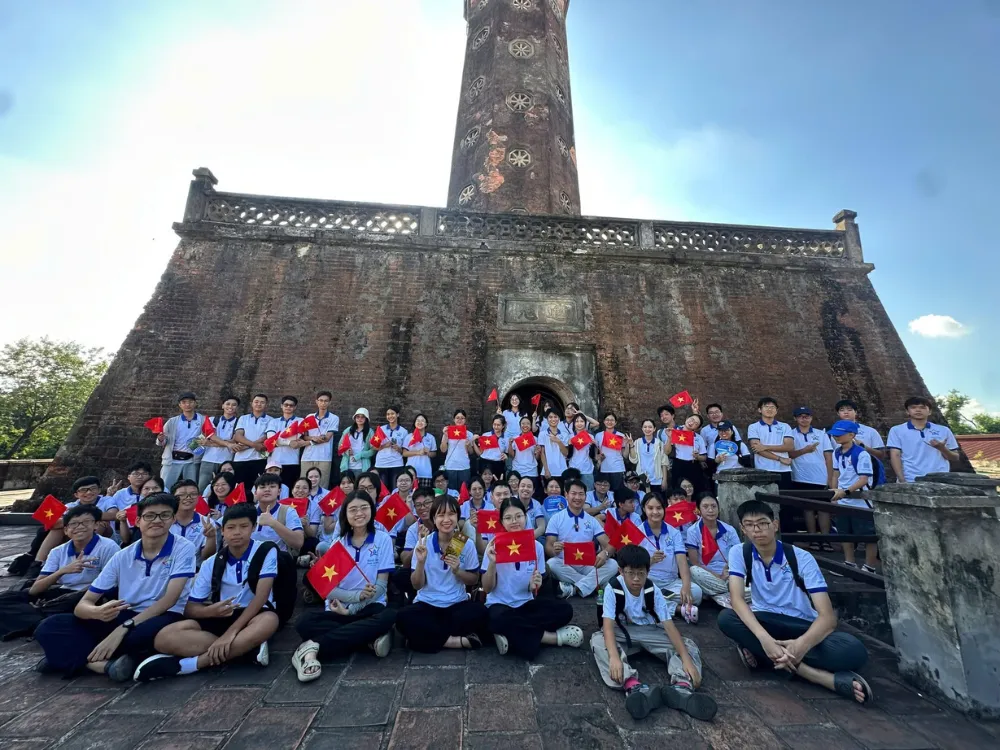
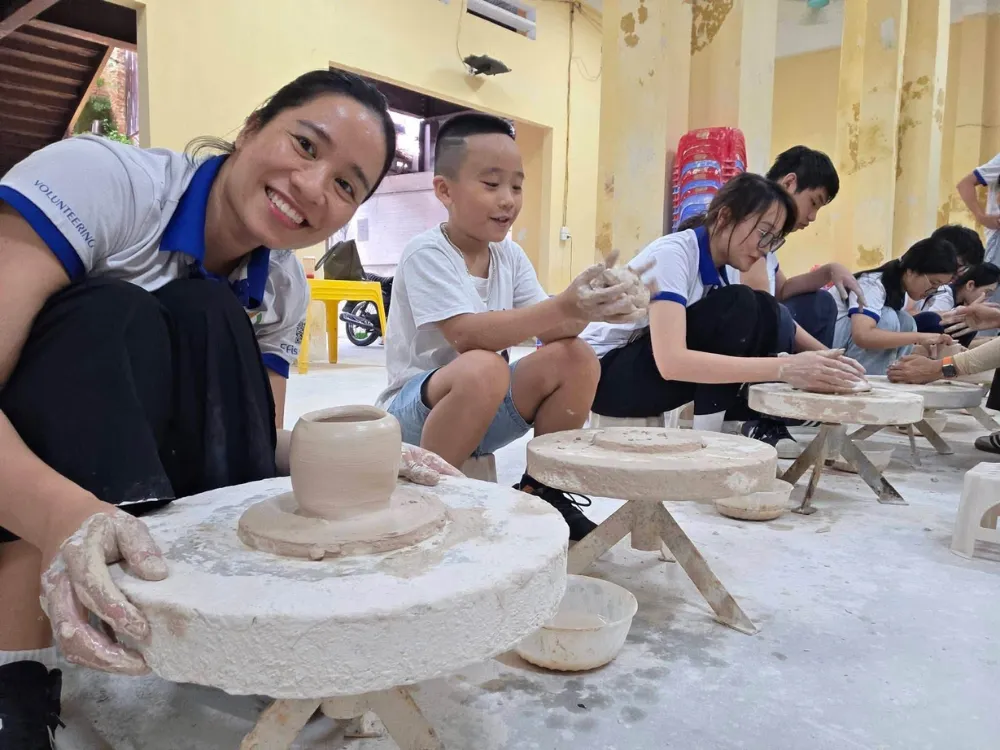
This is the one tour where almost everybody is already in the right place. If your hotel is inside the Old Quarter, your guide comes to the lobby and walks you back at the end. If you are staying elsewhere in Hanoi, we meet at an easy landmark around Hoan Kiem Lake and your guide sends a photo of the exact spot the night before.
The guide is free and tips are optional. The only ticket on the whole route is the Ma May Ancient House at 20,000 VND, about seventy-five cents. Everything else you spend is on what you eat and drink. A three-hour tour comes to around 110,000 VND per person including your guide’s coffee and ticket.
Morning if you want to see the quarter working: Dong Xuan Market is busiest early, the temples are quiet, and it is cooler. Evening if you have daytime plans, or if you want to add a Ca Tru or water puppet show afterwards. From Friday to Sunday the streets around the lake close to traffic in the evening, which makes walking much easier.
Around three kilometres over three to four hours, all of it flat, but the pavements are uneven and often full of parked motorbikes, so you will walk in the road at times. Tell your guide when you book if anyone in your group has mobility concerns.
Yes, and the pace adapts to whoever is slowest. Two practical points: the traffic is constant, so keep young children close and let your guide lead when you cross; and strollers are difficult on these pavements, so a carrier works better.
The Old Quarter is a thousand years old, built by Vietnamese trade guilds, and made of narrow streets and tube houses two metres wide. The French Quarter was laid out after 1883 on the other side of Hoan Kiem Lake, with wide boulevards, villas and an opera house. They meet at the lake, and we run a separate tour for each.
October to April, when it is cooler and less humid. May to September is hot and wet, and an afternoon downpour is common. If you are here in summer, start in the morning and let your guide build in more indoor stops.
Young Hanoians. Some are still at school or university, some have graduated, and some fit tours around a full-time job. Every new member trains for two and a half months in English and in Vietnamese history and culture, rehearses with senior members, and shadows real tours before leading one alone.
Yes, free of charge, for hotels inside the Old Quarter, and we walk you back at the end. Since this tour takes place in the Old Quarter itself, most guests are already inside the pickup area.
Send your dates and preferred start time. We reply by email within 24 hours with the name of your guide.
Both sides of the city in one day, including the Ho Chi Minh Complex.
The boulevards, opera house and villas on the other side of the lake.