
Hanoi Museum Tour
Hanoi’s museums in general, including the Women’s Museum and the National History Museum.

Part of a B-52 bomber still lies in a small lake between houses in Hanoi, where it fell in December 1972. A young local takes you there and to the prisons and museums around it, and tells you how the wars are remembered by the people who live here now.

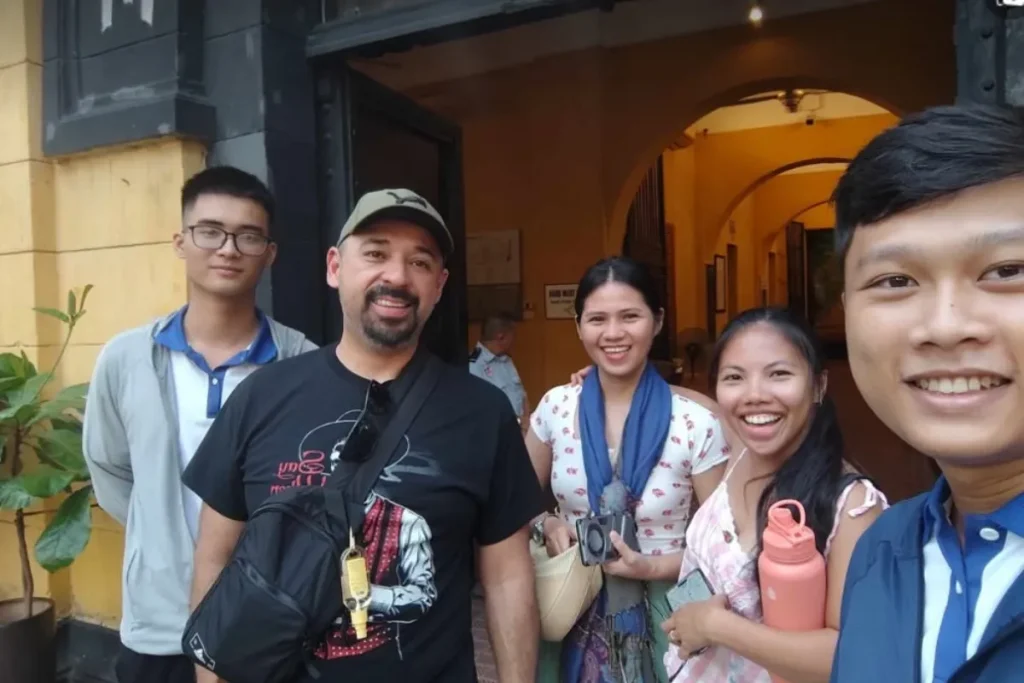




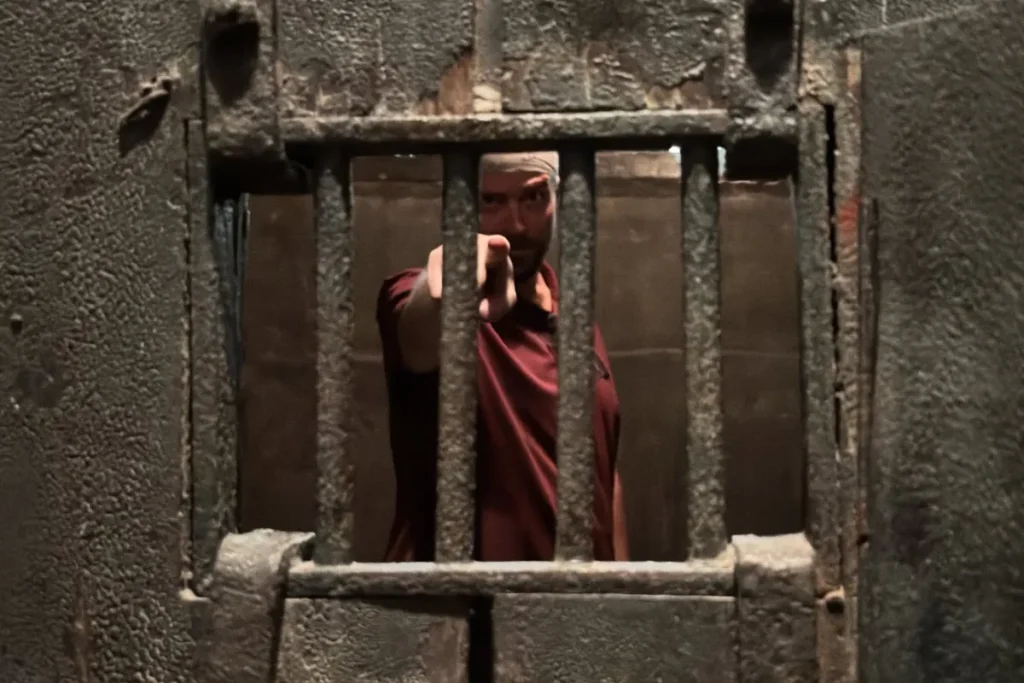

Real tours, real guests. Photographed by our own members.
Most war tours in Hanoi are museum tours. This one includes places that were never turned into anything: a lake with an aircraft in it, a street where houses were rebuilt after they were destroyed, a prison that held two different sets of prisoners fifty years apart.
The other difference is who you hear it from. Vietnam spent three decades at war, from 1945 to 1975, against the French and then the Americans, and the version taught in Vietnamese schools is not the version taught in American or European ones. Neither is complete. Hearing the Vietnamese telling from a twenty-year-old who grew up with it is a different thing from reading a label.
Our guides are not there to argue with what you were taught. Several of our regular guests have been American veterans, and the conversations have been among the best this club has had. Ask whatever you want to ask. You will be asked things in return.
Three main sites make a half day. Add from the optional list if you want a longer one. Tap any site to read more about it.
On the night of 27 December 1972 a B-52 came down over Ngoc Ha, a flower-growing district of Hanoi, and part of it landed in a pond the size of a tennis court. It is still there. Nobody moved it, nobody built a visitor centre, and the houses around the water were rebuilt right up to the edge. You reach it down an alley barely wide enough for a motorbike, and you come out beside a lake with landing gear and a section of fuselage sticking out of green water while somebody’s laundry dries ten metres away. There is no ticket and almost no signage. This is the stop guests remember.
One building, two wars, and the exhibition is split between them. The larger part covers the French period from 1896 onwards, when this held Vietnamese political prisoners; the shackle bars, the guillotine and the sewer the escapees used are all from that era. A smaller section covers the American pilots held here from 1964, who named it the Hanoi Hilton, and it presents their captivity as comfortable in a way most Western visitors find hard to accept. Your guide will tell you that the two accounts do not match. That conversation is worth more than the exhibit.
Moved in 2024 into an enormous new building, and now the clearest place to follow the whole arc in order: the resistance against the French, Dien Bien Phu in 1954, the division of the country, and the war that followed. Outdoors there are aircraft, tanks and artillery you can walk among, including wreckage arranged as it was found. It is ten kilometres from the Old Quarter so it needs a car, and it deserves two hours rather than one.
Useful on this tour for the political context rather than the military one: how a colony became a country, and how one man came to stand for that. The display is symbolic rather than chronological, so rooms represent ideas instead of decades, and very little of that is explained in English. It sits beside the Mausoleum and the stilt house, five minutes from the B-52 lake, so it fits naturally into the same half day.
Devoted entirely to twelve days in December 1972, when American bombers attacked Hanoi and Haiphong and Vietnam calls the outcome Dien Bien Phu in the Air. The yard holds a reassembled B-52 alongside the SAM missile launchers and radar units used against it, which is an unusual thing to see side by side. Smaller and quieter than the main military museum, and the natural companion to the lake.
An open field of aircraft: MiG fighters, transport planes, helicopters, and the personal aircraft of senior figures, most of which you can walk right up to and some of which you can climb into. Less curated than the other museums and better for it if you came for the machines rather than the narrative. Popular with children for the same reason.
Rubber sandals cut from worn tyres carried an entire army down the Ho Chi Minh Trail, and one workshop in Hanoi still makes them by hand. After a morning of looking at war behind glass, watching a craftsman cut a sole from a tyre and then making a pair yourself changes the register completely. The guide is free; the workshop charges its own fee.
You choose the sites and the pace. Some guests want the whole arc from 1945; others come for one specific thing, usually the lake or the prison, and want to spend an hour there rather than twenty minutes. Both are normal.
Your guide will message you on WhatsApp the day before to agree the route and check opening days, which matter here: several of these museums close on Mondays.
Two things worth knowing. If you want museums generally rather than the wars specifically, the hanoi museum tour covers the Women’s Museum and the National History Museum as well. And if you want the workshop on its own rather than as an add-on, there is a separate tour for the tire sandal workshop.
The sites sit in two groups. Most of them are in Ba Dinh, west of the Old Quarter and close together. The main military museum is a further eight kilometres out, which is what turns a half day into a full one.
Most guests choose this, and the lake is almost always the part they talk about afterwards.
Start in the morning. The Mausoleum closes at 11am if you want to include it.
Send your dates and we will reply by email within 24 hours with the name of your guide, and check the opening days for you.
This is the question we are asked most, so it is worth answering plainly.
Our guides are not paid a wage. A guide spends three to eight hours explaining Vietnamese history in English, answering unpredictable questions from someone who grew up in a completely different country. That is the most valuable practice they could get, and it cannot be bought in a classroom. You get a local companion. They get the day they need.
There is no commission and no upsell at the end. Tips are optional.
| Site | Price per person |
|---|---|
| Hoa Lo Prison | 50,000 VND · about $1.90 |
| Vietnam Military History Museum | 40,000 VND · about $1.50 |
| Ho Chi Minh Museum | 40,000 VND · about $1.50 |
| B-52 Victory Museum | 40,000 VND · about $1.50 |
| B-52 wreck in Huu Tiep Lake | Free |
Guests also cover their guide’s ticket. A half day with the lake, Hoa Lo and one museum, for one traveller and one guide, comes to about 180,000 VND per person, roughly $7 plus a couple of short taxi rides. The site most people come for costs nothing to see.
Not a tour company employee. Your guide is a young Hanoian who joined a volunteer club to practise English with visitors, and who trained for two and a half months before being allowed to lead anyone anywhere.
Some are still at school or university. Some graduated years ago and kept coming back. Some fit tours around a full-time job at a company in the city. What they share is that they grew up here, and that nobody pays them a wage to be here with you.
Ten weeks on two things at once: English, and the history and culture behind each site. Guides on this tour rehearse the difficult parts with senior members, because explaining a war to someone from the other side of it is not something you improvise.
Our guides are often the first Vietnamese person a visitor talks to at length about the wars. They are not there to correct you, and they are not reciting a script. Expect a real answer, and expect to be asked what you were taught.


If your hotel is inside the Old Quarter, your guide comes to the lobby. Most of this tour is in Ba Dinh, so it is sometimes simpler to meet at the first site instead, and your guide will send a photo of the exact spot the night before.
The guide is free and tips are optional. You pay your own entrance tickets and your guide’s, plus short taxi rides between the sites. A half day with the B-52 lake, Hoa Lo Prison and one museum comes to about 180,000 VND per person, roughly $7, for you and your guide together. The lake itself is free.
Yes. Part of a B-52 that came down on 27 December 1972 is still in the water, in a small lake in the Ngoc Ha area of Ba Dinh. There is no ticket, no fence and almost no signage, and houses stand right up to the edge of the water. You reach it down an alley. It is one of the few places in the city where the war is simply still there rather than displayed.
No, and several of our regular guests have been American veterans. Our guides are twenty-year-olds who grew up long after 1975, and what they mostly want to know is what you were taught. They will tell you the Vietnamese version, they will tell you when it differs from yours, and they will not argue with you about it.
Several close on Mondays, and the Ho Chi Minh Mausoleum is closed on Mondays and Fridays as well as being mornings only. This catches out more visitors than anything else. Send us your dates and your guide will check each site before you plan the day around it.
Expect two to three kilometres on foot plus short taxi rides between sites, since most of them are in Ba Dinh rather than in one walkable cluster. The Military History Museum is ten kilometres out and needs a car each way. Taxis are not included in the tour.
The Air Force Museum is excellent for children, since the aircraft are out in the open and some can be climbed into. Hoa Lo Prison is not: the shackles, the guillotine and the dark cell upset some adults. Tell your guide the ages in your group and they will build the day accordingly.
The museum tour covers Hanoi’s museums in general, including the Women’s Museum and the National History Museum, and stays indoors. This tour focuses on the wars and includes places that were never made into museums, above all the B-52 wreck in the lake. Hoa Lo and the Military History Museum appear on both.
Young Hanoians. Some are still at school or university, some have graduated, and some fit tours around a full-time job. Every new member trains for two and a half months in English and in Vietnamese history and culture, and guides on this tour rehearse the difficult sections with senior members before leading alone.
Send your dates and which sites interest you. We reply by email within 24 hours with the name of your guide.
Hanoi’s museums in general, including the Women’s Museum and the National History Museum.

Make a pair of the sandals that carried an army down the Ho Chi Minh Trail.

Both sides of the city in one day, with Hoa Lo as one stop among several.