
Duong Lam Ancient Village Tour
A 900-year-old village of laterite houses, 45 km west of the city.

Ten kilometres outside Hanoi, whole villages still make one thing and have done for centuries. Ceramics, silk, incense, conical hats. A young local takes you there, translates, and helps you make something yourself.



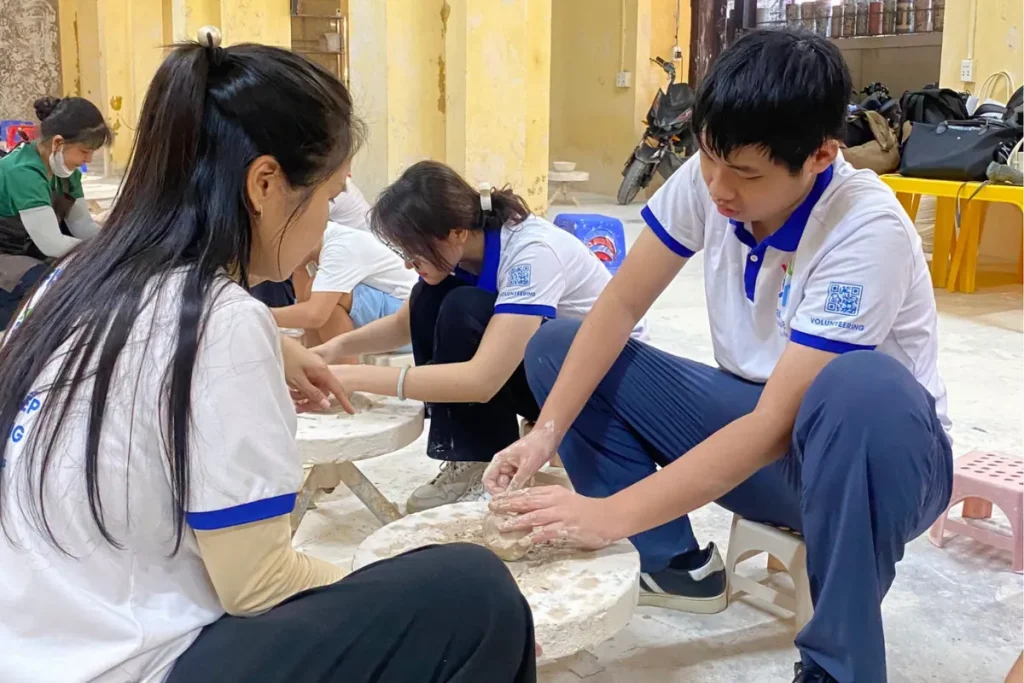

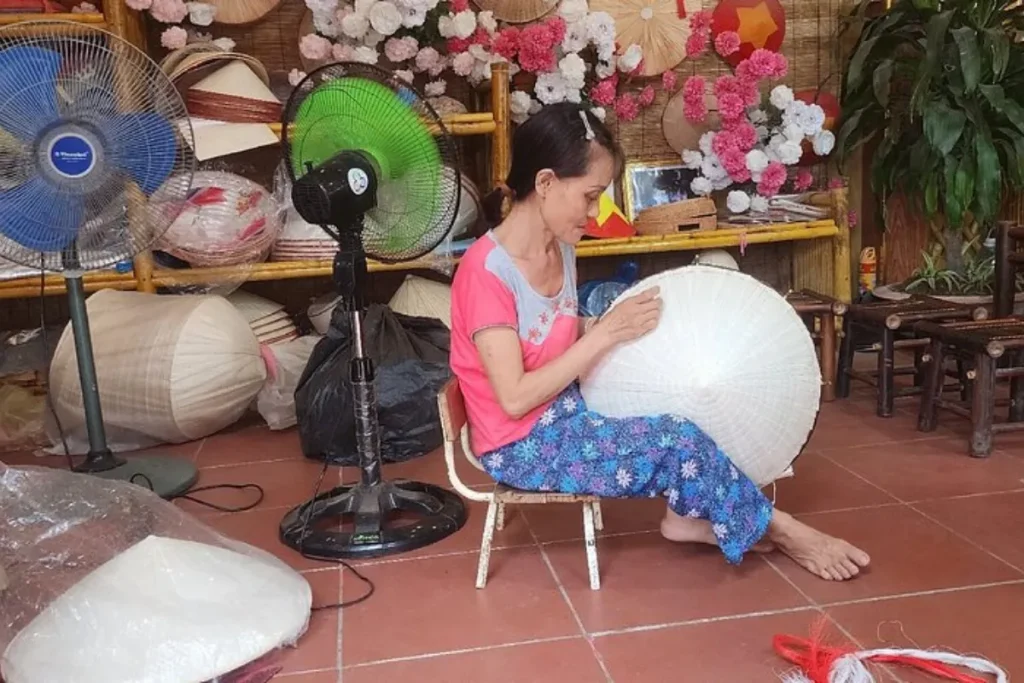

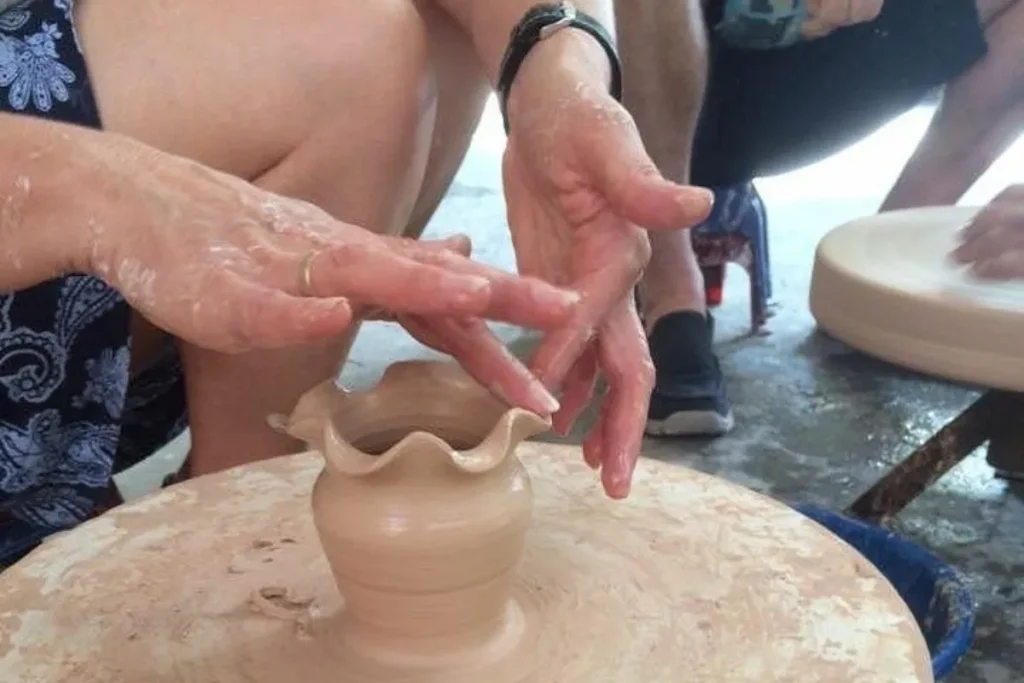
Real tours, real guests. Photographed by our own members.
Vietnam has a village system that does not really exist anywhere else in Asia at this scale. Whole communities specialise in a single craft, pass it down through families, and have done so for five hundred years or more. Hanoi alone has more than a thousand of them within an hour’s drive.
Most are not set up for visitors. There is no ticket office, no English signage and no gift shop with a card machine. You walk down a lane past open workshops where people are working, and whether that becomes an experience or an awkward twenty minutes depends entirely on whether someone can introduce you.
That is what your guide does. They ask the artisan if you can watch, translate what is happening, negotiate the price if you want to buy something, and arrange the hands-on part where you sit down and try it yourself. They also work out the transport, which is the other thing that stops most visitors from going.
Pick one for a half day, or two or three in the same direction for a full day. Tap any village to read more about it.
The most visited and the easiest to reach, about half an hour from the Old Quarter. Bat Trang has been making pottery for around seven hundred years, and the whole village is workshops, kilns and shops selling what comes out of them. You can sit at a wheel and throw your own bowl for a small fee, leave it to be fired, and collect it later or have it sent to your hotel. There is also a ceramic museum, a modern spiral building that looks like stacked pottery wheels and is worth seeing on its own. This is the village that works best for families with children.
If you have seen one photograph of a Vietnamese craft village, it was probably this one. Bundles of incense sticks, dyed bright pink and red, are fanned open in the courtyards to dry in the sun, and from above they look like enormous flowers. The village has made incense for more than a century, mostly for temples and family altars across the north. The drying yards are at their best in the hour or two before sunset, and the villagers are used to visitors photographing them, but ask your guide to ask first. This is the furthest of the villages and the one that most rewards the drive.
The closest village to the city, in Ha Dong, and the one with the longest literary reputation – Ha Dong silk appears in Vietnamese poetry and songs the way Irish linen does in English ones. Silk has been woven here for more than a thousand years. You can watch the looms working, see the process from cocoon to finished cloth, and buy directly from the weavers. Bring your guide if you intend to buy: telling real silk from polyester is genuinely difficult, and the test involves burning a thread, which is easier to ask about in Vietnamese.
The non la, the conical leaf hat, is the single most recognisable Vietnamese object in the world, and Chuong village has been making them for centuries. Hats from here were once sent to the royal court as tribute. Sit with a maker and you will see how long it actually takes: the palm leaves are flattened, dried, sorted, stretched over a bamboo frame and stitched by hand, and a good hat is hundreds of stitches. You can try the stitching yourself, and you will almost certainly be worse at it than the eighty-year-old sitting opposite. Quieter than Bat Trang, with far fewer visitors.
Technically in Bac Ninh province rather than Hanoi, about an hour away, and usually combined with Bat Trang since both lie east of the city. Dong Ho prints are woodblock folk paintings made on paper coated with crushed seashell, using colours ground from leaves, charcoal and rust. They were traditionally bought at Tet and pasted on the wall for the new year, and the subjects are cheerful and slightly rude: fat pigs, a mouse wedding, children holding carp. Only a handful of families still make them the old way. You can press your own print from a carved block.
You choose which villages, and you choose the time of day. The one real constraint is geography: the villages lie in different directions from Hanoi, so combining two that are far apart wastes most of the day in a car. Your guide will tell you honestly which pairings work.
Your guide will message you on WhatsApp the day before to agree the plan and sort out transport, which matters more on this tour than on any of our others. Tell them then if you want to buy something, because the villages worth buying from are not always the ones worth photographing.
Two things worth knowing. If you want Duong Lam ancient village, that is a separate tour – it is a preserved village rather than a craft village, and it sits 45 km west on its own. And if you want to make something with your hands without leaving the city, the tire sandal workshop in Hanoi takes an afternoon rather than a day.
This decision is about direction rather than time. The villages sit on two separate axes out of Hanoi, and a sensible full day follows one of them rather than crossing between.
Bat Trang is the usual choice, and the easiest with children.
The southwest route ends at the incense village, which is the right way round: those drying yards are best in late afternoon light.
Send your dates and which villages interest you. We reply by email within 24 hours with the name of your guide, and they will sort out the transport with you.
This is the question we are asked most, so it is worth answering plainly.
Our guides are not paid a wage. A guide spends four to eight hours speaking English continuously, answering unpredictable questions from someone who grew up in a completely different country. That is the most valuable practice they could get, and it cannot be bought in a classroom. You get a local companion. They get the day they need.
There is no commission from any workshop or shop we take you to. If your guide helps you negotiate the price of a piece of pottery, they are negotiating on your side. Tips are optional.
| Item | Approximate cost |
|---|---|
| Grab car to Bat Trang or Van Phuc, each way | 150,000 to 200,000 VND for the car |
| Private car for a full day, further villages | 800,000 to 1,200,000 VND for the car |
| Pottery workshop at Bat Trang | 50,000 to 130,000 VND per person |
| Printing your own Dong Ho painting | around 50,000 VND per person |
| Lunch in a village | 50,000 to 100,000 VND per person |
| Entering the villages themselves | Free |
Transport is shared across the whole group including your guide, so it costs the same whether you are one person or four. A half day to Bat Trang for one traveller and one guide, with a pottery workshop and lunch, comes to roughly 550,000 VND, about $21 – most of it the car. This is our most expensive tour to run, and the only one where the transport costs more than everything else combined.
Not a tour company employee. Your guide is a young Hanoian who joined a volunteer club to practise English with visitors, and who trained for two and a half months before being allowed to lead anyone anywhere.
Some are still at school or university. Some graduated years ago and kept coming back. Some fit tours around a full-time job at a company in the city. What they share is that they grew up here, and that nobody pays them a wage to be here with you.
Every new member spends ten weeks on two things at once: English, and the history and culture behind each site. They rehearse with senior members and shadow real tours before they are allowed to lead one alone.
We take no commission from any workshop or shop. If your guide helps you agree a price for a piece of silk or pottery, their only interest is that you pay what a Vietnamese buyer would pay.

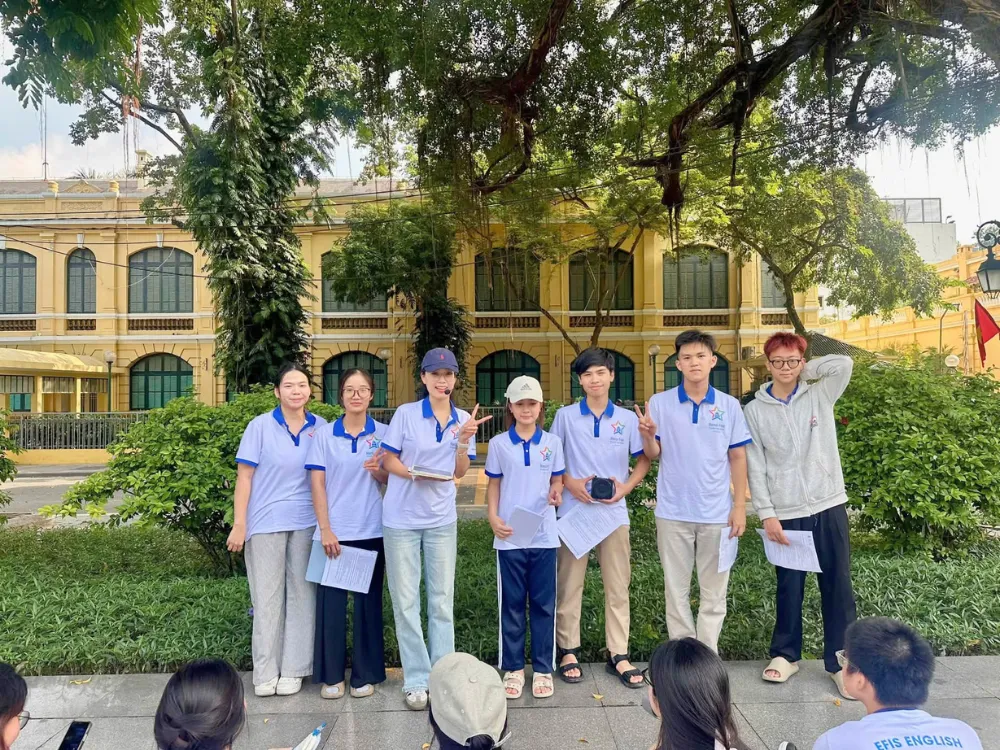
Your guide comes to your hotel lobby inside the Old Quarter, and you travel out to the village together. If you are staying elsewhere in Hanoi, we agree a meeting point that makes sense for the direction you are heading, which your guide will suggest when you book.
No, and this is the main cost of the tour. The villages are 10 to 35 km from the Old Quarter, so you cover a Grab, a private car or a bus for yourself and your guide. A return Grab to Bat Trang costs around 300,000 to 400,000 VND for the car; a private car for a full day is 800,000 to 1,200,000 VND. Your guide will arrange whichever option suits you and the cost is the same for one person or four.
Yes, if they are in the same direction. Bat Trang and Dong Ho both lie east of the city. Van Phuc, Chuong and Quang Phu Cau lie along one road to the southwest. Combining villages from opposite sides means spending most of the day in a car, so your guide will steer you towards one axis or the other.
Yes, small ones, paid directly to the artisan. Throwing your own pot at Bat Trang is roughly 50,000 to 130,000 VND depending on what you make, and printing a Dong Ho painting is around 50,000 VND. The guide remains free either way. Entering the villages themselves costs nothing.
Bat Trang. It is the closest, the pottery wheel is the most engaging thing on any of these tours for a child, and there is a museum to walk around when they have had enough. Chuong village is also good for older children who have the patience to try the stitching.
Late afternoon, in the last two hours before sunset. The bundles are fanned out to dry in the courtyards and the low light is what makes the colours photograph the way you have seen online. Go at midday and you will find the same yards in flat, harsh light.
Yes, and this is one of the more practical reasons to bring one. Telling real silk from polyester is difficult for a visitor, and prices in the villages are negotiable in a way they are not in the city. We take no commission from any shop, so your guide is negotiating for you rather than for a cut.
Young Hanoians. Some are still at school or university, some have graduated, and some fit tours around a full-time job. Every new member trains for two and a half months in English and in Vietnamese history and culture, rehearses with senior members, and shadows real tours before leading one alone.
At least one day. Unlike our city tours, this one needs transport arranged and workshops confirmed, so same-day requests are difficult. Two or three days ahead is better if you want a specific village on a specific afternoon.
Send your dates and which villages interest you. We reply by email within 24 hours with the name of your guide.
A 900-year-old village of laterite houses, 45 km west of the city.
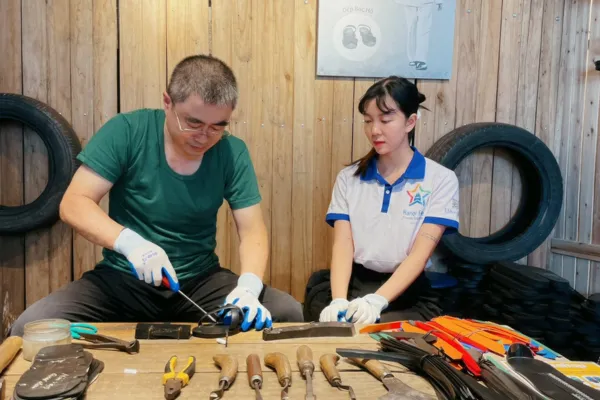
Make a pair of sandals like those worn on the Ho Chi Minh Trail, without leaving the city.

No itinerary at all. Just an afternoon of conversation with local students.