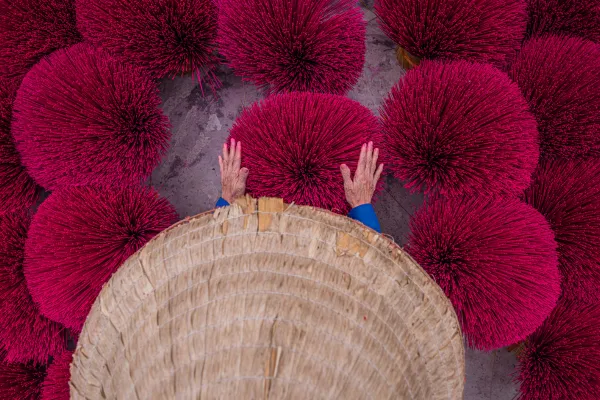
Hanoi Craft Village Tour
Villages that make one thing: ceramics, silk, incense, conical hats.

Forty-five kilometres west of Hanoi there is a village built out of laterite, a porous red-brown stone cut from the ground beneath it. Nearly a thousand old houses, two kings born here a century apart, and soy sauce fermenting in jars in the courtyards. A young local takes you round it.
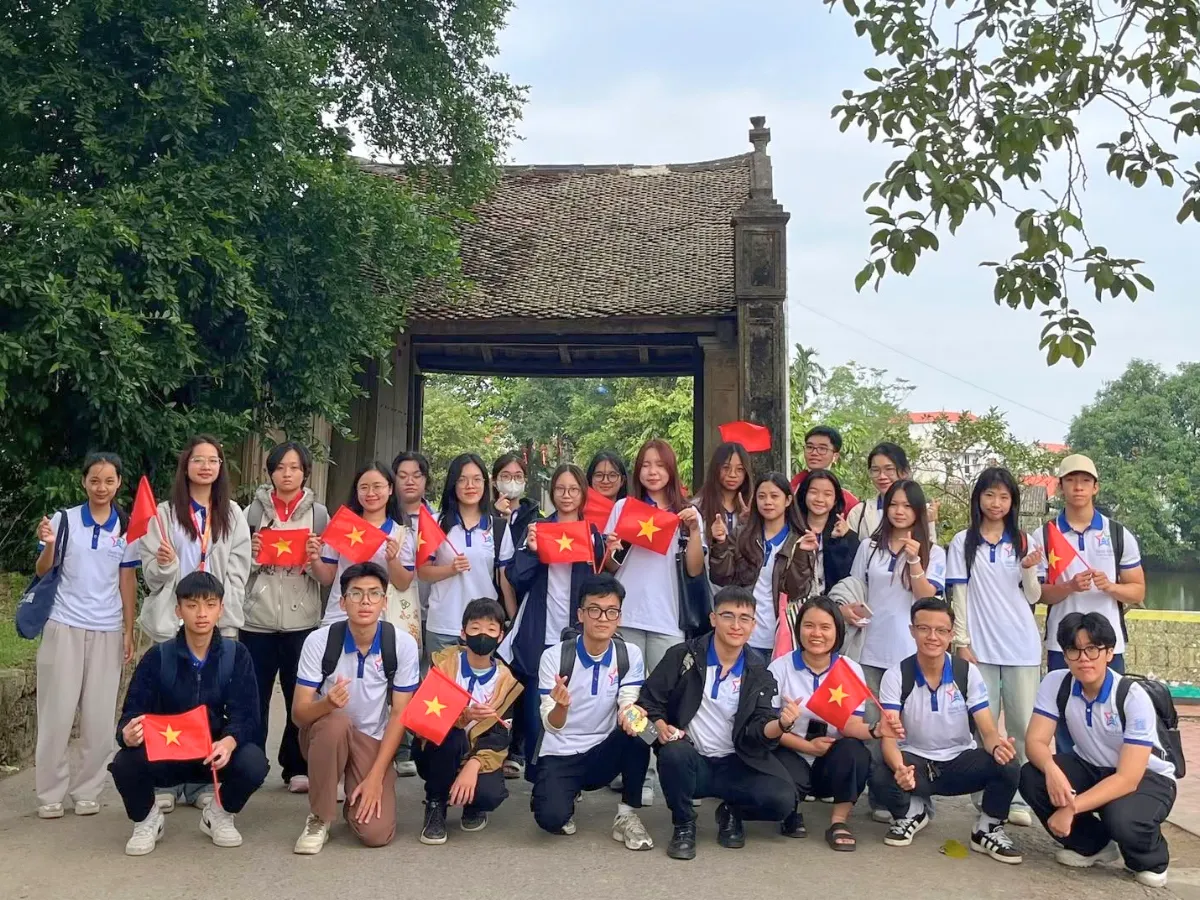
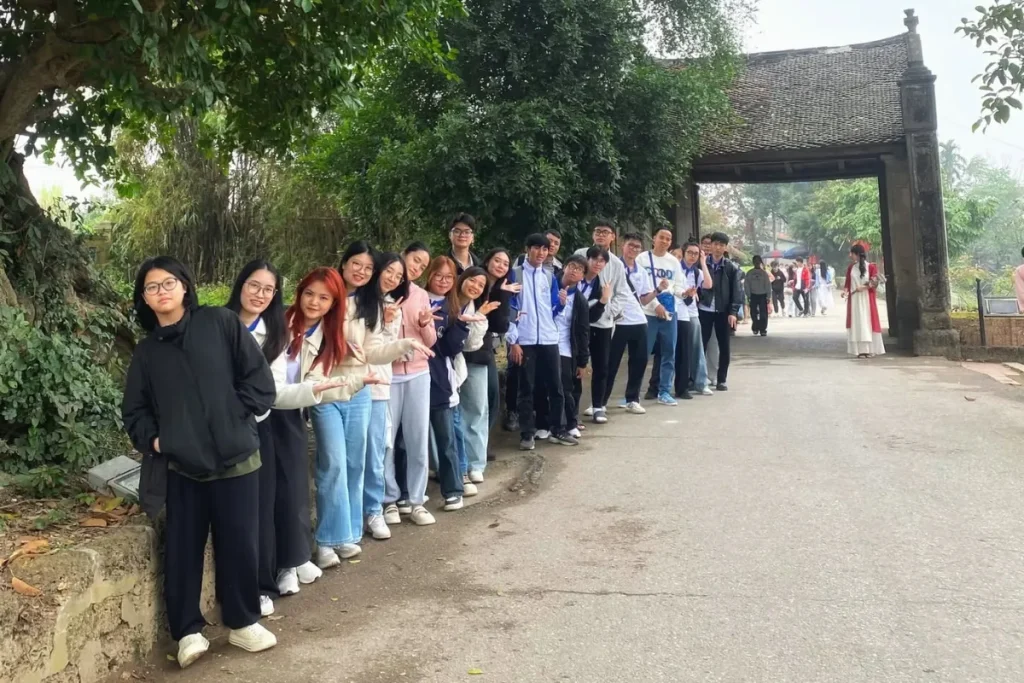

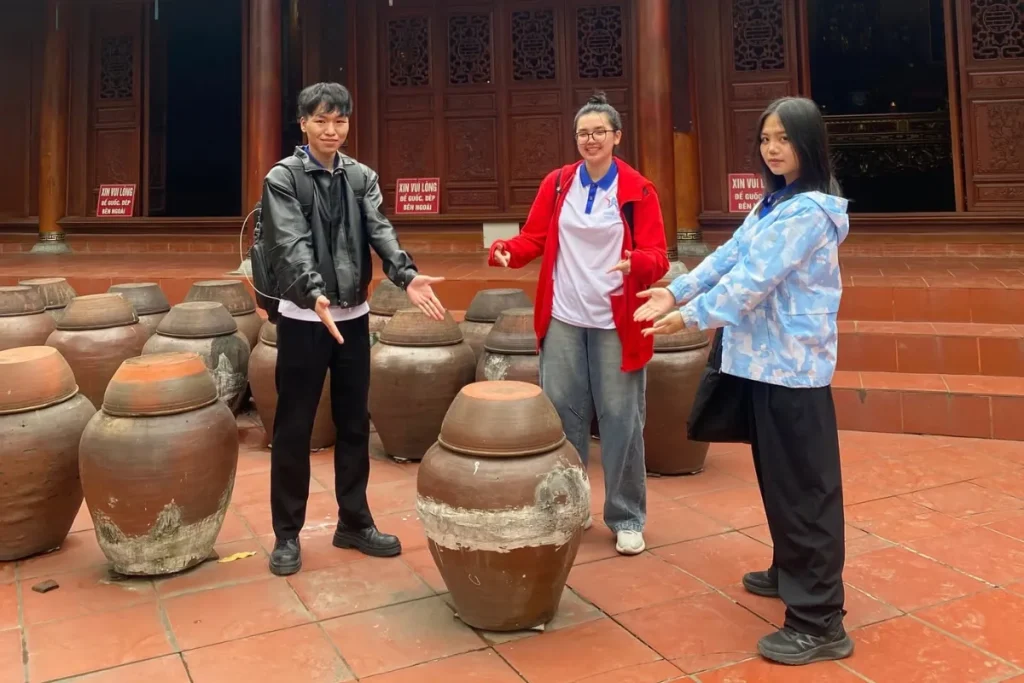
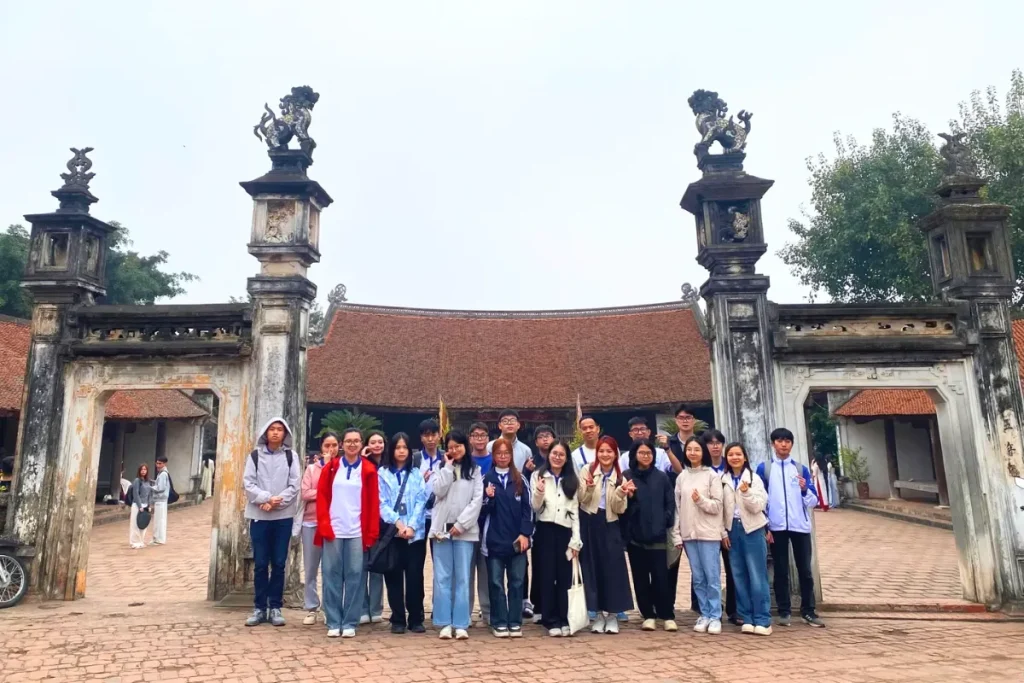

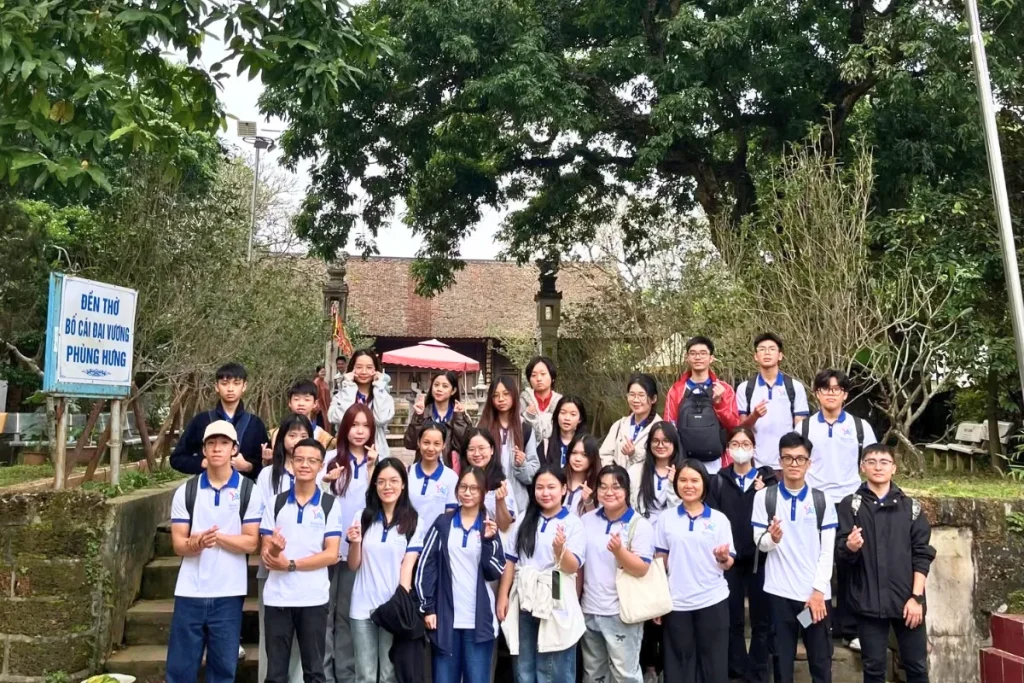
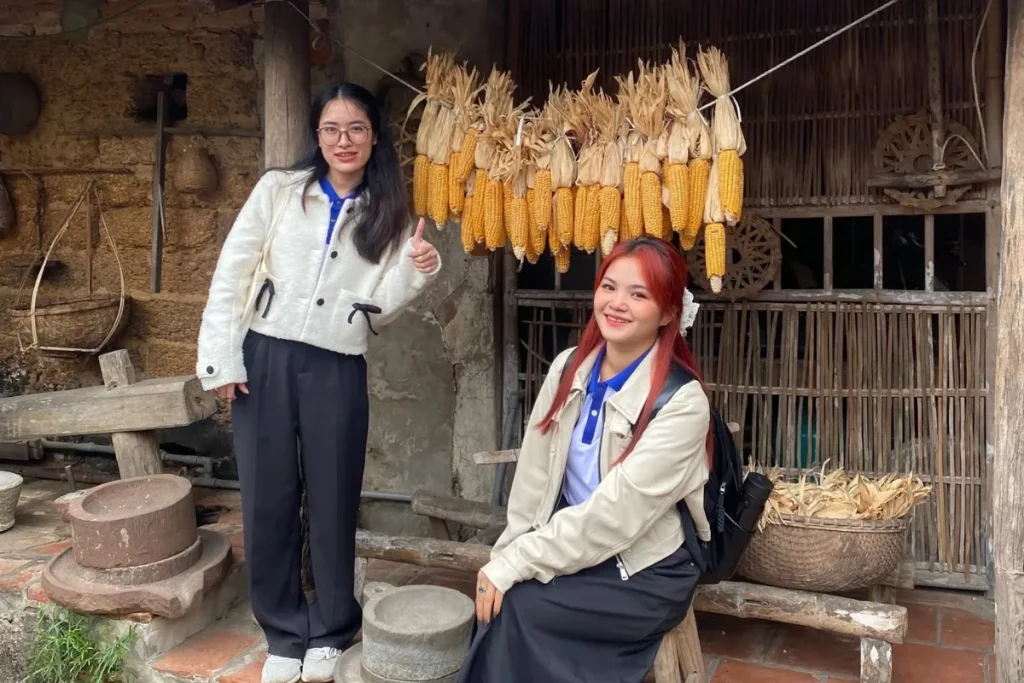

Real tours, real guests. Photographed by our own members.
Most preserved villages in Asia have been emptied of the people who lived in them. Duong Lam was not. It was the first village in Vietnam listed as a national historic relic, and roughly ten thousand people still live inside the listing, in the houses, on the same lanes, doing much the same things.
What makes it look unlike anywhere else is the stone. The walls, the gates, the lane surfaces and the well linings are all laterite: a porous rust-coloured rock that is soft enough to cut when you dig it out and hardens in the air. Whole streets are built of it, and it gives the village a colour you will not find in the Red River Delta anywhere else.
The catch is that almost nothing is explained, and almost nobody speaks English. The houses that are open are people’s homes. Whether you spend an afternoon looking at brown walls or an afternoon being invited into a courtyard to taste soy sauce out of the jar depends entirely on whether somebody can introduce you.
Everything here is within about two kilometres, so the day is unhurried. Tap any stop to read more about it.
The oldest surviving village gate in the Red River Delta, and the image every visitor takes away. A low laterite arch with a banyan tree beside it and a pond in front, which is the classic arrangement of a northern Vietnamese village: gate, tree, water, communal house. It was built in the seventeenth century and the buffalo still walk through it. Come in the late afternoon and the stone turns the colour of rust.
The dinh, the communal house, is the building where a northern village made its decisions, held its festivals and worshipped the guardian spirit of the place. This one is about three hundred and fifty years old, built on wooden pillars with no nails, and the carving on the beams is the sort of thing you would queue to see in a museum. The floor is deliberately lower than the courtyard outside, which your guide will explain has to do with water and with luck.
Nearly a thousand old houses survive here, and a handful are dated to the seventeenth century. Several families open their doors to visitors, and this is the part of the day that depends most on having a guide: these are homes, not exhibits. Inside you will find the same layout each time – an ancestral altar facing the door, a courtyard for drying, a wooden frame assembled without nails – and an owner who will tell you which ancestor built it if somebody can translate.
Duong Lam soy sauce is made from sticky rice and soy beans, fermented in earthenware jars that sit in the courtyard in the sun with a conical lid on top. Rows of these jars are one of the things you notice first walking round. The families who make it will let you taste it from the jar, which is sweeter and thicker than the bottled kind, and they sell it in old plastic bottles for very little. It travels badly in hand luggage, so buy it on the way home rather than at the start.
A few minutes from the village gate, and the reason many art historians come here at all. The pagoda holds close to three hundred statues in clay, wood and lacquer, packed into the halls in a way that feels less like a display than a crowd. Some of them are considered among the finest religious sculpture in northern Vietnam. It is a working temple, so cover your shoulders and knees, and take your shoes off where the sign shows you to.
Duong Lam is known in Vietnamese as the land of two kings, because two men who became rulers were born in this one village more than a century apart. Phung Hung led a rising against Chinese rule in the eighth century. Ngo Quyen defeated a Chinese fleet on the Bach Dang river in 938 and ended a thousand years of northern rule, which makes him one of the most important figures in Vietnamese history. Both have temples here, and Ngo Quyen has a tomb, set among a grove of old trees outside the village.
Several families cook for visitors in their own courtyards, and this is worth arranging in advance rather than hoping. The local dishes are thit quay don, pork belly roasted around a bamboo pole so the skin crackles, and che lam, a chewy sticky rice sweet with ginger and peanuts that is sold in slabs. Ask your guide to book it when you confirm the tour, because the family has to shop for it that morning.
Bicycles rent locally for thirty to fifty thousand dong, and the flat lanes between the villages and the paddy are the best reason to take one. In May and again in September the rice is high and green; in June and October it has just been cut and the fields are full of people working. Outside the village there is almost no traffic, which makes this one of the few places near Hanoi where cycling is genuinely relaxing.
You choose the stops and the pace. Some guests want every temple; others want one house, one jar of soy sauce and three hours on a bicycle. The village is small enough that nothing is far from anything.
Book at least a day ahead. Your guide needs time to arrange transport, and if you want lunch cooked in an ancient house the family has to be told the morning before. Your guide will message you on WhatsApp to sort both out.
One thing worth knowing. Duong Lam is a preserved village rather than a craft village. If what you want is to watch something being made and make one yourself, that is the hanoi craft village tour, which goes to the pottery, silk and incense villages instead. The two trips are in opposite directions, so they cannot be combined.
The village itself is walkable in an afternoon. The decision is really about whether you want to leave it and see the farmland around.
Most guests walk, and it is enough for a first visit.
In midsummer the heat makes this harder than it looks. Start early if you want to cycle in July.
Book at least a day ahead and say so, and your guide will arrange it with the family. We reply by email within 24 hours.
This is the question we are asked most, so it is worth answering plainly.
Our guides are not paid a wage. A guide spends a whole day, including three hours in a car, speaking English continuously with someone who grew up in a completely different country. That is the most valuable practice they could get, and it cannot be bought in a classroom. You get a local companion and a translator. They get the day they need.
There is no commission from any house, restaurant or shop in the village. If your guide helps you agree a price for soy sauce or a bicycle, they are negotiating on your side. Tips are optional.
| Item | Approximate cost |
|---|---|
| Village entrance ticket | 20,000 VND per person · about $0.76 |
| Private car for the day, return | 900,000 to 1,300,000 VND for the car |
| Bus to Son Tay, then a short taxi | around 100,000 VND per person, return |
| Lunch cooked in an ancient house | 150,000 to 250,000 VND per person |
| Bicycle hire for the afternoon | 30,000 to 50,000 VND per person |
Transport is shared across the whole group including your guide, so a car costs the same for one person or four. A day by private car for one traveller and one guide, with tickets and lunch in a village house, comes to roughly 1,500,000 VND, about $57, most of it the car. Taking the bus instead brings it under 500,000 VND but adds about an hour each way.
Not a tour company employee. Your guide is a young Hanoian who joined a volunteer club to practise English with visitors, and who trained for two and a half months before being allowed to lead anyone anywhere.
Some are still at school or university. Some graduated years ago and kept coming back. Some fit tours around a full-time job at a company in the city. What they share is that they grew up here, and that nobody pays them a wage to be here with you.
Every new member spends ten weeks on two things at once: English, and the history and culture behind each site. They rehearse with senior members and shadow real tours before they are allowed to lead one alone.
Almost nobody in Duong Lam speaks English, and almost nothing is labelled. On this tour the guide is less a commentator than an introduction: to the family who opens their house, to the woman selling soy sauce, to the man who knows which beam is original.
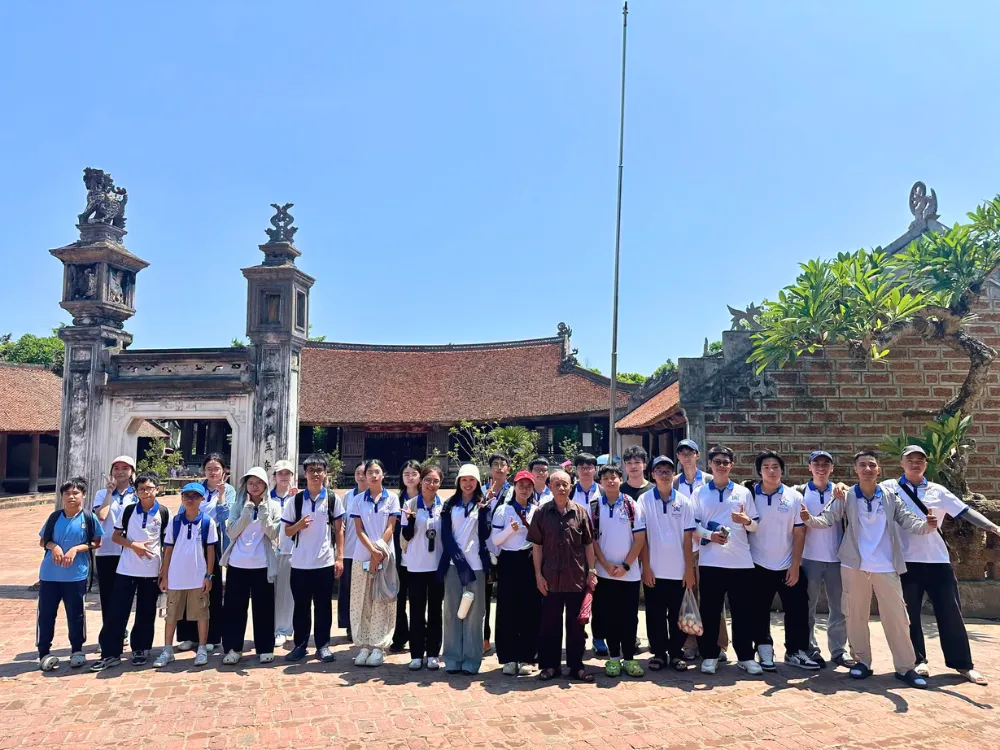

Your guide comes to your hotel lobby inside the Old Quarter and you travel out together. If you are taking the bus, it leaves from My Dinh station on the west side of the city, so it is sometimes simpler to meet there. Your guide will say which makes sense once you have chosen how to travel.
About 45 km west, roughly 90 minutes by car. Transport is not included, and you cover it for yourself and your guide. A private car for the day is 900,000 to 1,300,000 VND for the whole car, shared by everyone. The cheaper option is a bus to Son Tay and a short taxi from there, around 100,000 VND per person return, which adds about an hour each way.
Yes, 20,000 VND per person, less than a dollar, paid at the gate and used for conservation. You also cover your guide’s ticket. Everything else in the village – the gate, the lanes, the communal house – is free to walk around.
Yes, and it is the best meal on any of our tours, but it has to be arranged in advance. Several families cook in their own courtyards. Ask when you book, because they shop for it that morning. Expect thit quay don, pork belly roasted around a bamboo pole, and che lam, a chewy ginger and peanut sweet. Budget 150,000 to 250,000 VND per person.
The village is small and every lane is worth walking, so most guests walk. Hire a bicycle if you want the rice fields and the outlying temples, which is where the landscape opens up. Bikes cost 30,000 to 50,000 VND. From May to September the heat makes cycling harder than it looks; October to April is ideal.
Three things. It was the first village in Vietnam listed as a national historic relic. It is built from laterite, a rust-coloured stone quarried underfoot, which gives it a colour no other village in the delta has. And it is called the land of two kings, because Phung Hung in the eighth century and Ngo Quyen in the tenth were both born here.
Duong Lam is a preserved village: you go to see how people lived and still live. The craft village tour goes to working villages that each make one thing – ceramics, silk, incense, conical hats – where you watch the work and make something yourself. They are in opposite directions from Hanoi and cannot be combined in a day.
Yes, particularly if you hire bicycles. The lanes are traffic-free, the buffalo are usually somewhere nearby, and the soy sauce courtyards are more interesting to a child than another temple. The car journey is the hard part: 90 minutes each way is a long time for a small passenger.
At least one day, and two or three if you want lunch in an ancient house. Unlike our city tours, this one needs transport arranged and a family told in advance, so same-day requests are difficult.
Send your dates and whether you want lunch in a village house. We reply by email within 24 hours with the name of your guide.
Villages that make one thing: ceramics, silk, incense, conical hats.


No itinerary at all. Just an afternoon of conversation with local students.