
Hanoi Old Quarter is one of Southeast Asia’s most extraordinary living historical districts, and if you only have one day in Vietnam’s capital, this is exactly where you need to spend it. For over a thousand years, these narrow, winding streets have pulsed with trade, culture, and the irreplaceable energy of daily Vietnamese life. This guide covers everything, from the layered history of the famous 36 streets to the street food you absolutely cannot leave without trying.
A Living, Breathing Piece of History
The Hanoi Old Quarter is not a museum frozen in time. It is an ancient district that continues to live, breathe, and evolve with every passing decade. The history of the Old Quarter stretches back to the Lý and Trần dynasties, when people from various villages around the Red River Delta gathered here, creating the busiest part of the capital. Over subsequent centuries, the area developed into a dense network of craft guilds, each occupying its own street and trading in a single specialized product.
The Old Quarter, also known as “36 Streets”, is where centuries-old architecture meets bustling street life. This ancient district encompasses a maze of streets, each traditionally named after the specific trade once conducted there. The Vietnamese name for this area, Phố Cổ (Pho Co), simply means “Old Street” or “Ancient Town”, and that is exactly what it feels like the moment you step into its narrow lanes.

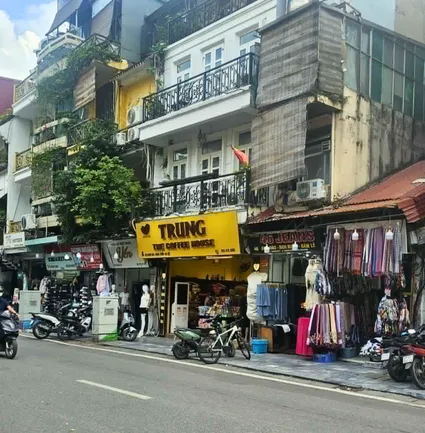
The architecture is another distinctive feature that defines the Old Quarter’s charm, with its tube houses, sloping tile roofs, and shopfronts for business, mostly built in the 18th and 19th centuries. Strolling past these narrow facades, you begin to understand why this district is unlike any other urban neighborhood on earth: it is commerce, community, history, and daily life stacked on top of each other, street by street.
What are the Famous Hanoi 36 Streets?
The “36 Streets” is the most iconic feature of the Hanoi Old Quarter, and it refers to the original guild-based organization of the district. The term “Hanoi 36 Streets” refers to a historic network of streets in the Old Quarter that were originally organized by guilds, each specializing in a particular craft, trade, or product. Most of these streets begin with the word “Hàng”, which translates to “goods” or “merchandise”, followed by the item that was traditionally sold there.
The number 36 is actually symbolic rather than literal. Nine multiplied by the four directions makes 36, which simply means “plenty” or “many”. Today, the Old Quarter contains well over 70 streets, but the names and the spirit of the old guild system remain powerfully intact. Walking Hang Bac, you still find silverware shops glittering in the sunlight; on Hang Gai, silk bolts cascade from shopfront displays; on Hang Ma, the street blazes with the colors of paper offerings and festival decorations.
Key Streets and Their Traditional Trades
| Street Name | Vietnamese Meaning | Traditional / Current Trade |
| Hang Bac | Silver Street | Silverware, jewelry |
| Hang Gai | Hemp / Silk Street | Silk, embroidery, tailoring |
| Hang Ma | Paper Offerings Street | Festival decorations, party supplies |
| Hang Duong | Sugar Street | Sweets, dried fruits, confectionery |
| Hang Dao | Peach Street | Fabric, fashion clothing |
| Hang Buom | Sail Street | Food products, snacks |
| Hang Bo | Basket Street | Basketware, handicrafts |
| Hang Thiebac | Tinware Street | Metal goods, hardware |
| Hang Quat | Fan Street | Lacquerware, religious items |
| Cha Ca | Grilled Fish Street | Cha Ca La Vong restaurants |
After independence, many guilds disappeared or moved, replaced by general shops, tailors, food stalls, and later, tourism services. Despite this transformation, the street names, layout, and layered history still preserve the soul of the original guild streets.
Top Attractions in the Hanoi Old Quarter
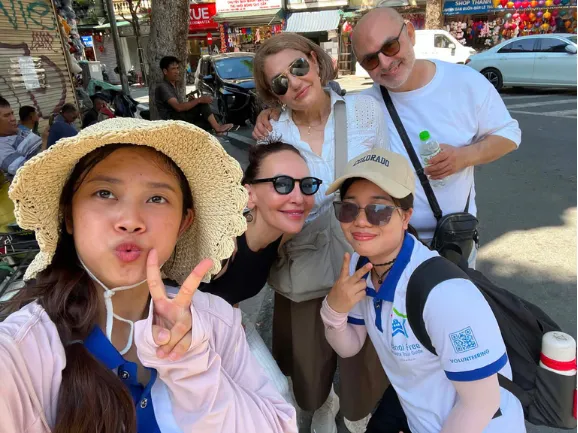
The Hanoi Old Quarter is densely packed with historical and cultural landmarks. Walking between them requires no itinerary, just curiosity and comfortable shoes. Reading about the quarter is one thing; being walked through it is another, which is why our members offer a hanoi old quarter walking tour shaped around whichever streets interest you most.
- Bach Ma Temple
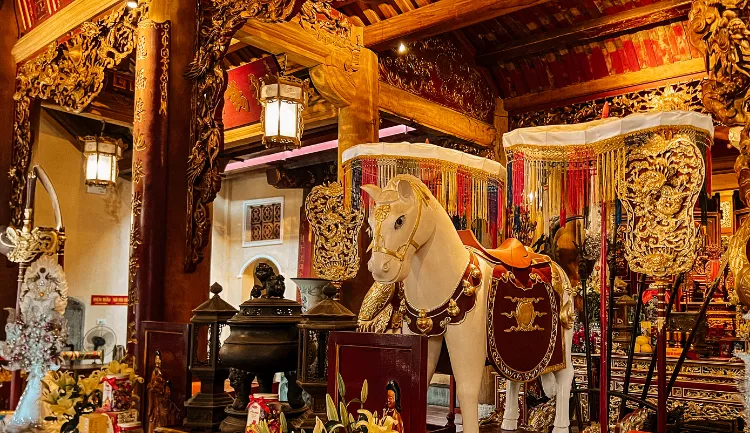
Bach Ma Temple on Hang Buom Street stands out as one of the four sacred temples of old Thang Long and is one of the most atmospheric sites in the entire district. Dating back over a thousand years, it is dedicated to the White Horse spirit, the guardian of the city’s eastern rampart. The temple’s interior, with its glazed-tile ceiling and golden dragon statues on the rooftop ridge, rewards visitors who make time to step inside.
- Dong Xuan Market
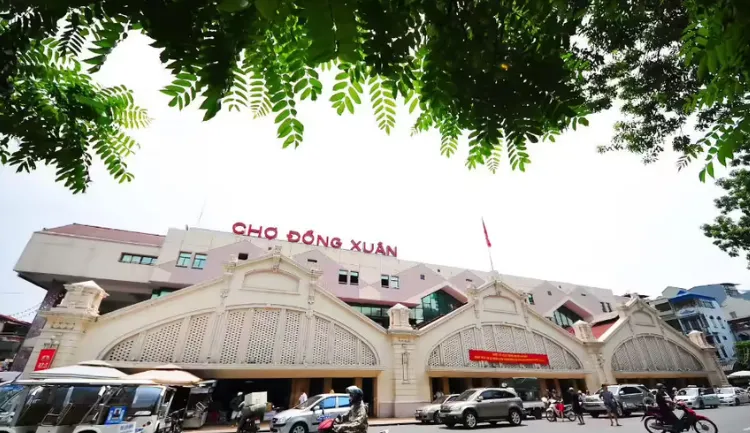
Located at the northern end of the district, Dong Xuan Market is the Old Quarter’s great commercial anchor. Built in 1889 during the French colonial period, this covered market has three floors packed with wholesale goods, from fresh produce on the ground level to clothing and household items above. The surrounding streets burst into life on weekend evenings as vendors spill out onto the pavement, making it one of the best spots for souvenir hunting and people-watching.
- Ma May Ancient House (87 Ma May Street)
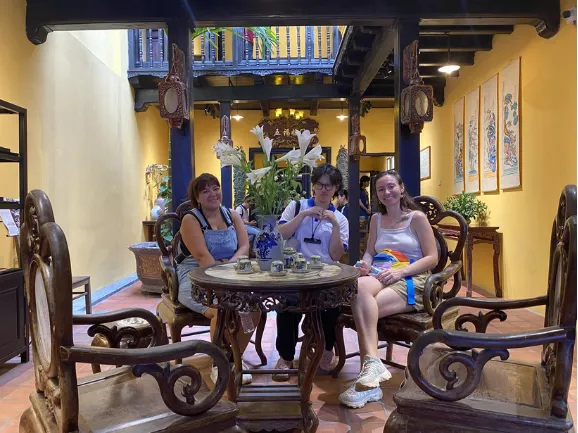
In the Old Quarter of Hanoi, there are 14 ancient homes. When you walk down the street, you can see the building and culture of Hanoi in the late 19th and early 20th centuries, particularly in the home at No. 87, which has been preserved. Now open as a museum, Ma May Ancient House offers a rare glimpse into a complete traditional tube house: a long, narrow courtyard dwelling that belonged to a merchant family. The visit is free, short, and genuinely fascinating.
- The Old City Gate (Cua O Quan Chuong)
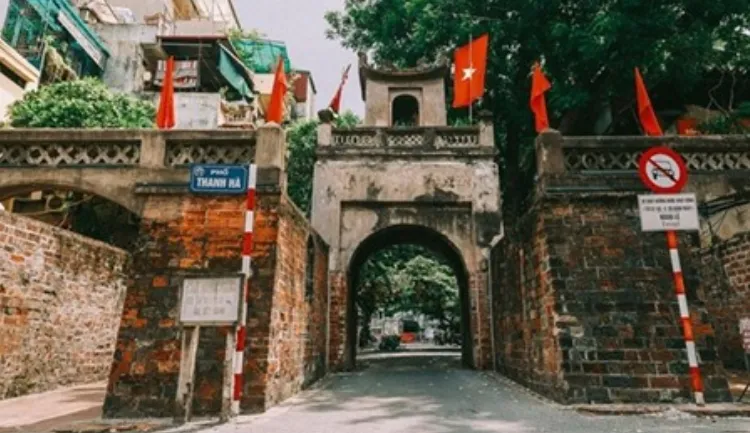
Standing at the eastern entrance of the Old Quarter, O Quan Chuong is the only city gate from the old Thang Long Citadel that still survives. Built in 1749, this modest but moving structure is a tangible connection to Hanoi’s fortified past. The best photographs are taken in the early morning, before motorbike traffic fills the frame.
- Historical Relic House 48 Hang Ngang
This unassuming townhouse on Hang Ngang Street holds one of the most important rooms in Vietnamese history. It was here that Ho Chi Minh drafted the Declaration of Independence of the Democratic Republic of Vietnam in September 1945. The house is now a historical site open to visitors and carries a quiet, reverential atmosphere that surprises many who wander in expecting just another shop-house.

Navigating the Hanoi Old Quarter is an adventure in itself, and the best approach is deliberate aimlessness. Walk in a general direction, let side streets pull you in, and never worry too much about getting lost; the district is compact enough that you will always resurface at a familiar landmark.
The best mode of transportation is to walk for convenience when navigating through narrow streets, or rent a motorbike, cyclo, or taxi for longer distances. Many visitors choose to hire a cyclo (the traditional three-wheeled bicycle taxi) for a leisurely circuit of the major streets, an experience that feels comically, wonderfully out of time.
Practical navigation tips from our club volunteers:
- Early mornings (6:00-8:00 AM): Streets are quiet, locals are doing their morning exercises around Hoan Kiem Lake, and the light is golden. Ideal for photography and the best pho breakfasts.
- Late afternoons (4:00-7:00 PM): The district shifts into evening gear. Shops are fully stocked, street food stalls fire up, and the energy becomes electric.
- Weekend evenings: Every weekend (Friday to Sunday) from around 19:00 to midnight, a night market transforms Hang Dao Street and the surrounding lanes into a car-free pedestrian zone buzzing with food, crafts, and music.
The district is officially bounded: the North is Hang Dau Street, to the West is Phung Hung Street, and the South includes Cau Go, Hang Gai, Hang Bong, and Hang Thung streets.
Book our free tour guide!

Hanoi Old Quarter Walking Tour
❤❤❤❤❤ (TripAdvisor / GetYourGuide)
Historical Tour – Walking Tour – Small Group
⚑ 3 – 4 hours
✎ Free Tour – Free Cancellation

Hanoi Street Food Tour
❤❤❤❤❤ (TripAdvisor / GetYourGuide)
Food & Drink – Walking Tour – Small Group
⚑ 3 – 4 hours
✎ Free Tour – Free Cancellation
What to Eat in the Hanoi Old Quarter: A Street Food Lover’s Map
The Hanoi Old Quarter is arguably the best square kilometer of street food on earth. Every corner, every narrow alley, every plastic-stool establishment hides something extraordinary.
Essential Dishes to Try:
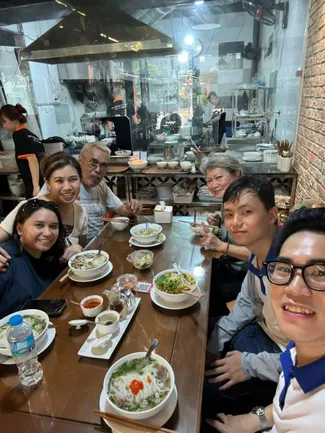
Pho Bo (Beef Noodle Soup): Hanoi’s most iconic dish is a morning ritual. Look for small, packed noodle shops with no English menus; these are the best ones. A bowl costs roughly 40,000-60,000 VND (under USD 3).
If you need proof that a great bowl of pho speaks every language, look no further than Pho Ly Quoc Su at 40 Dinh Liet Street, right in the heart of the Hanoi Old Quarter. On the evening of April 23, 2026, South Korean President Lee Jae Myung and his wife Kim Hae Kyung slipped away from their official schedule, strolled around Hoan Kiem Lake, and chose this tiny 15-square-meter, five-table shop for dinner. The group ordered 17 bowls of pho and 2 servings of beef fried rice. Knowing that many Koreans are not fond of cilantro, owner Thieu Van Mui thoughtfully prepared the bowls with only finely chopped green onions. The broth, made from 30 kilograms of beef bones simmered for 18 to 20 hours, left such an impression that President Lee later remarked: “In Vietnam, you can find delicious food at any restaurant you go to.” The shop went viral overnight across both Vietnamese and South Korean social media, and the table where the presidential couple sat is now a must-photograph spot for visitors. Locals now affectionately call it “Pho Tong Thong” (Presidential Pho). Come early, because the queue starts before sunrise.
Bun Cha: Grilled pork with noodles, herbs, and dipping sauce offers smoky perfection and is considered the quintessential Hanoi lunch. It famously attracted global attention when Anthony Bourdain shared a bowl with President Obama in 2016.
Cha Ca La Vong: Cha ca la vong is a magical blend of fish chunks marinated in turmeric and spices, grilled and served with soft rice noodles, dill and crunchy peanuts. The dish originated in the Old Quarter and has its own dedicated street (Cha Ca Street). It is Hanoi dining at its most theatrical and most delicious.
Egg Coffee (Ca Phe Trung): Don’t leave without sampling the original egg coffee at Cafe Giang. This thick, custard-like drink was invented in the 1940s when milk was scarce and has become one of Hanoi’s most celebrated culinary inventions. The original Cafe Giang is tucked into a narrow alley off Hang Gai Street.
Banh Mi: The Vietnamese baguette sandwich is a legacy of French colonial influence, reinvented with pate, pickled vegetables, fresh herbs, and grilled meats. At 25,000-40,000 VND, it is one of the best value meals in Asia.
Bia Hoi (Fresh Draft Beer): At the junction of Ta Hien and Luong Ngoc Quyen streets, known informally as “Beer Corner,” you can sit on a tiny plastic stool and drink freshly brewed bia hoi for as little as 7,000 VND per glass. It is one of the great equalizing social institutions of Hanoi: tourists, locals, backpackers, and businesspeople all crowded together at pavement level.
Insider Tip: After dark on weekends, Hang Dao street turns into a night market where you can taste unusual Hanoian street food, such as snail meatballs, grilled quail, and cured pork sausage. These are dishes you will not find in any restaurant guide; they are purely for the locals who know when and where to show up.

Shopping in the Hanoi Old Quarter: What to Buy and Where
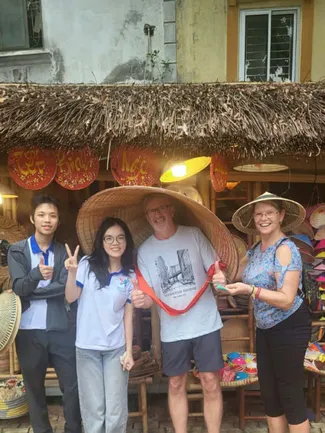
Shopping in the Hanoi Old Quarter is a sensory experience. The district is organized not by mall but by street, and knowing which street to target saves you hours of wandering.
Hang Dau, Ly Quoc Su, Ta Hien, and Hang Da streets are lined with stores selling clothing, bags, shoes and sportswear targeted at tourists. For a more curated selection, try the minimalist boutiques on Chan Cam street, or the small natural beauty shops on Hoi Vu street. If you love embroidery and textiles, Tan My Design gathers fabulous fabrics from Vietnamese designers in their airy boutique on Hang Gai.
Best souvenirs to bring home:
- Silk scarves and ao dai fabric from Hang Gai
- Lacquerware and traditional paintings from Hang Khay
- Hand-embroidered tablecloths and linens
- Handmade lanterns and paper-craft goods from Hang Ma
- Vietnamese coffee and tea blends from Hang Duong
Always bargain politely and with good humor. A smile and a counter-offer of 50-60% of the asking price is a perfectly normal opening move. Cash is strongly preferred, and smaller denominations make transactions much smoother.
Why the Hanoi Old Quarter Is Unlike Any Other Historic District in Asia
The Hanoi Old Quarter stands apart from other famous historic Asian neighborhoods because it has never been turned into a theme park. It remains genuinely inhabited, genuinely commercial, and genuinely alive.
If you make your way through the Old Quarter’s network of alleys, you will notice a common sight of elderly couples sitting and drinking their tea, youngsters smoking cigarettes on balconies, stray domestic animals, residents chatting with the next-door neighbor, the clutter of open-air fish markets, and tinsmiths loudly banging metals as they go about their craft. This is not a recreation; it is simply Tuesday morning in Pho Co.
The tube houses themselves are architectural wonders. These long, narrow dwellings were built to maximize street frontage while minimizing the land tax imposed on street-facing plots during the guild era. These houses may appear small and cramped at first glance, but they are cleverly and efficiently arranged to meet the residents’ needs, showcasing the resourcefulness typical of Hanoi streets. Some extend 50 to 60 meters deep into the block, with internal courtyards providing light and air.
The Old Quarter is steeped in a thousand years of rich cultural history, with around 100 ancient architectural structures, including communal houses, temples, pagodas, and guild halls. Most of these are unmarked and unguarded, hidden behind wooden doors, discoverable only if you know where to look or are lucky enough to wander in. This is precisely why a knowledgeable local companion transforms a good visit into an extraordinary one.
Practical Travel Information: Everything You Need to Know
| Detail | Information |
| Location | Hoan Kiem District, central Hanoi |
| Best time to visit (season) | September-November and March-April |
| Best time of day | Early morning (6-8 AM) or late afternoon/evening |
| Night Market hours | Friday-Sunday, 19:00-midnight (Hang Dao area) |
| Getting there from airport | Taxi or bus from Noi Bai Airport (~35-45 km, 45-60 min) |
| Getting around | Walking (best), Grab motorbike, cyclo, or taxi |
| Currency | Vietnamese Dong (VND); cash preferred |
| Average meal cost | 40,000-150,000 VND (USD 1.60-6.00) |
| Dress code for temples | Cover shoulders and knees |
| Safety | Generally safe; be mindful of pickpockets in crowds |
| Nearest landmark | Hoan Kiem Lake (5-minute walk south) |
The most ideal time to visit Hanoi is from September to November or March to April, when the weather is cool, sunny, and dry, which is perfect for walking around and taking photos. Summer months (June-August) bring heat and heavy rain; winter (December-February) can be surprisingly cool and damp.
Safety: Keep your phone secure in traffic (snatch-and-grab thefts from motorbikes happen occasionally) and you’ll be fine. The Old Quarter is one of Hanoi’s safest areas for tourists, but standard urban awareness applies.
Experience the Hanoi Old Quarter With a Free Expert Guide
You have the map, the street list, and the food guide. But nothing replaces walking these lanes with someone who grew up here, who knows which temple door is always unlocked, which noodle stall only opens at 5 AM, and which rooftop cafe has the best view of the tile rooftops at sunset.
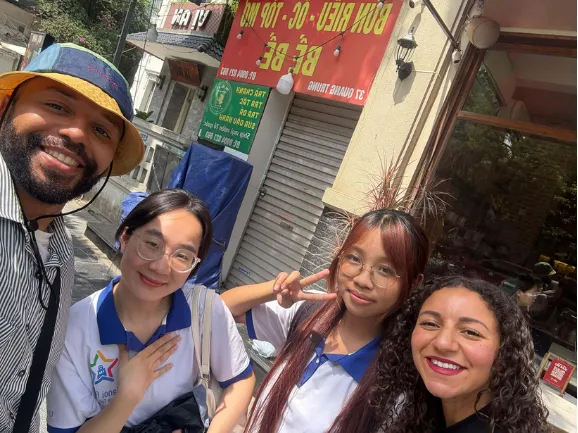
The Hanoi Free Private Tour Guide club is one of the most trusted tourism initiatives in Vietnam, with over 5,000 official volunteer members who have collectively provided more than 100,000 free walking tours for foreign visitors and earned over 5,200 five-star reviews on TripAdvisor. Every tour is completely free, tailored to your interests (history, architecture, street food, local life, or any combination), and designed around your schedule. You’ll be matched with a passionate young Vietnamese guide eager to share their city and practice their English in the best possible classroom: the streets of Pho Co themselves.
FAQs: Hanoi Old Quarter
The Hanoi Old Quarter (known in Vietnamese as Phố Cổ or Pho Co) is a historic urban district in Hoan Kiem District, central Hanoi. It is a dense network of streets, originally organized as craft guild quarters, where each street was dedicated to a specific trade. The area dates back to the Ly and Tran dynasties (11th-13th centuries) and today functions as a vibrant mix of traditional commerce, cultural landmarks, street food, and accommodation for visitors.
Officially, the Old Quarter contains well over 70 streets today, though the popular name “36 Streets” (36 Pho Phuong) refers to the original symbolic number of guild-based trading streets. The number 36 is not literal but symbolic in Vietnamese culture, representing “many” or “plenty”. The most famous streets all begin with “Hang”, the Vietnamese word for “merchandise”.
Yes, the Hanoi Old Quarter is generally very safe for tourists. The main precautions are to keep your phone and valuables secured in crowded areas, be alert when crossing streets (traffic does not stop for pedestrians in the traditional sense), and watch for occasional overpricing at tourist-facing shops. Bargaining is expected and entirely normal in the market areas.
The best way to explore the Hanoi Old Quarter is on foot, ideally starting early in the morning when the streets are quieter and the light is beautiful. Begin at Hoan Kiem Lake, walk north through the major craft streets, visit Bach Ma Temple and Dong Xuan Market, and let yourself get pleasantly lost in the side alleys. For deeper cultural context, joining a free guided walking tour with a local volunteer guide transforms the experience entirely.
The must-try dishes in the Hanoi Old Quarter include pho bo (beef noodle soup) for breakfast, bun cha (grilled pork with noodles) for lunch, cha ca la vong (turmeric fish with dill) for dinner, and ca phe trung (egg coffee) at any time of day. For evening snacks, the weekend night market on Hang Dao Street offers grilled skewers, stuffed sticky rice, and dishes you will not find anywhere else.
The Hanoi Old Quarter is a place that rewards patience, curiosity, and a willingness to follow your nose down an unmarked alley. It is a district where every building carries a story, every street name is a history lesson, and every meal is an argument for moving to Vietnam permanently. Whether you come for the silk on Hang Gai, the temples hidden behind wooden doors, or a steaming bowl of pho at a street-side stall at dawn, the Old Quarter delivers in ways that itineraries cannot predict and photographs cannot fully capture. Plan at least two full days here, lace up your most comfortable shoes, and let yourself be surprised.
Written by the Hanoi Free Private Tour Guide Club. Our volunteer guides are local experts passionate about sharing the real Hanoi with visitors from around the world.