Vietnamese traditional holidays unlock the soul of a country that runs on two calendars, two rhythms, and a thousand years of unbroken ceremony. If you want to truly understand Vietnam, its spirituality, its food, its family bonds, you need to understand its festivals. This guide is your definitive reference for every major celebration on the Vietnamese lunar calendar, written by someone who has spent years walking Hanoi’s temple alleys, pagoda courtyards, and festival streets with curious travelers from every corner of the world.
Why Does Vietnam Have Two Calendars ?
Vietnam uses both the Gregorian (solar) calendar for work, business, and official holidays, and the lunisolar calendar for its traditional cultural and religious life. This dual system means that most Vietnamese traditional holidays do not fall on fixed Gregorian dates, they drift by several weeks from year to year, exactly like Lunar New Year. For travelers, this is the single most important thing to understand before booking flights.
The lunisolar calendar tracks both the moon’s phases and the sun’s position. A lunar month begins on the new moon and peaks on the full moon (the 15th day). Many festivals are tied to specific full moons, specific numbered days within a month, or both. When Vietnamese people say “the 5th of the 5th” or “Ram Thang Bay”, they are speaking in lunar time, a language that every visitor to Hanoi quickly starts to learn.
The practical consequence for you: temples are packed, streets are lit with lanterns, and special foods appear in the markets during festival seasons. Miss the dates and you miss the magic. Get them right and you will witness scenes that no guidebook photograph can fully prepare you for.

The Vietnamese Festival Calendar: An Overview Table
The table below gives you the complete picture at a glance. All lunar dates are fixed; the corresponding Gregorian dates change annually.
| Festival Name | Vietnamese Name | Lunar Date | Approx. Gregorian Window | Key Highlight |
| Lunar New Year | Tết Nguyên Đán | 1st day, 1st month | Late Jan – mid Feb | Vietnam’s Lunar New Year; biggest holiday of the year |
| First full moon | Rằm Tháng Giêng | 15th day, 1st month | Feb – Mar | First full moon; biggest temple day of the year |
| Tet Han Thuc | Tết Hàn Thực | 3rd day, 3rd month | Late Mar – Apr | Cold Food Festival; families make sticky rice balls |
| Hung Kings’ Commemoration Day | Giỗ Tổ Hùng Vương | 10th day, 3rd month | Apr | National ancestors’ day; public holiday |
| Tet Doan Ngo | Tết Đoan Ngọ | 5th day, 5th month | Jun | “Insect-Killing Festival”; fermented rice and sour fruits |
| That Tich | Thất Tịch | 7th day, 7th month | Aug | Vietnamese Valentine’s Day; red bean dessert tradition |
| Vu Lan | Lễ Vu Lan | 15th day, 7th month | Aug – Sep | Buddhist “Mother’s Day”; Month of Wandering Souls |
| Mid-Autumn Festival | Tết Trung Thu | 15th day, 8th month | Sep – Oct | Mid-Autumn Festival; mooncakes and children’s lanterns |
Tet Nguyen Dan: The Heart of All Vietnamese Traditional Holidays
Tet Nguyen Dan is Vietnam’s Lunar New Year and the single most important event in the entire cultural calendar. The official public holiday lasts five days by law, but the celebrations, family gatherings, ancestor worship, temple visits, and festive street decorations, extend for weeks before and after. In 2026, the first day of Tet falls on Tuesday, February 17, with the official holiday period running from February 14 to February 22.
The name itself tells you everything. “Nguyen” means “first” or “beginning” and “Dan” means “morning” or “dawn”, together, the first morning of the new year. According to scholar Tran Van Giap, Tet has been celebrated in Vietnam since at least the first century AD, though legends of the Hung Kings era suggest even earlier origins. This is not just a holiday; it is an annual reset of the entire spiritual and social order.
For travelers, Tet is a double-edged sword. On one hand, Hanoi in the days just before Tet is electric, markets overflow with kumquat trees and peach blossoms, incense smoke rises from every doorway, and the entire city hums with anticipation. On the other hand, the first days of Tet itself can feel eerily quiet, as millions of residents return to their hometowns, restaurants close, and even the usually chaotic Old Quarter falls still. Both experiences are unforgettable, just in very different ways.
Insider tip from our volunteers: The most magical Tet moment in Hanoi is the countdown at Hoan Kiem Lake on New Year’s Eve (Giao Thua). Thousands of locals gather, fireworks light up the Turtle Tower, and for a few minutes the whole city holds its breath together. Our tour guides can show you exactly where to stand for the best view, and more importantly, how to get home safely afterward through the celebrating crowds.
Ram Thang Gieng: Why the First Full Moon is the Biggest Temple Day of the Year
Ram Thang Gieng, the full moon of the first lunar month, is the most spiritually powerful day of the Vietnamese temple calendar. A Vietnamese proverb sums it up: “Praying to Buddha all year round is not as important as the full moon of the first lunar month”. In 2026, this day falls on Tuesday, March 3.
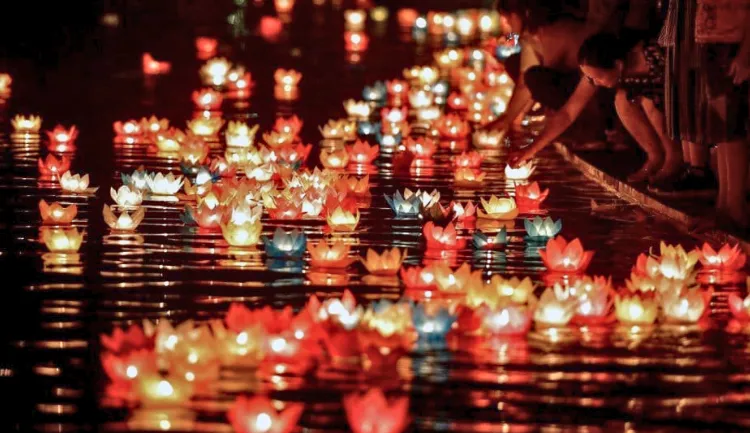
This festival, also known as Tet Nguyen Tieu or Tet Thuong Nguyen, sits at a unique intersection of Buddhism and ancestor worship. Vietnamese people visit pagodas to offer prayers to Buddha and return home to prepare offering trays for their ancestors, the same day serves both spiritual obligations at once. The Lantern Festival character it carries (influenced by Buddhist and Taoist traditions) means that pagodas across Hanoi are lit up beautifully, with incense smoke pouring out into the cool early-spring air.
For travelers who visit Hanoi shortly after Tet, Ram Thang Gieng offers a second, quieter chance to experience the spiritual side of Vietnamese culture. The crowds at Phu Tay Ho Temple on West Lake and at Tran Quoc Pagoda on this night are deeply moving, not tourist spectacles, but real acts of devotion by ordinary Hanoians seeking blessings for the new year.
Tet Han Thuc: Vietnam’s Cold Food Festival and the Story of the Sticky Rice Balls
Tet Han Thuc is celebrated on the 3rd day of the 3rd lunar month, falling on April 19 in 2026, and is one of the most intimate and family-centered of all Vietnamese traditional holidays. The name “Han Thuc” means “cold food”, reflecting the ancient Chinese custom of abstaining from fire on this day in memory of the loyal advisor Gioi Tu Thoi, who died in a fire set by his own king.
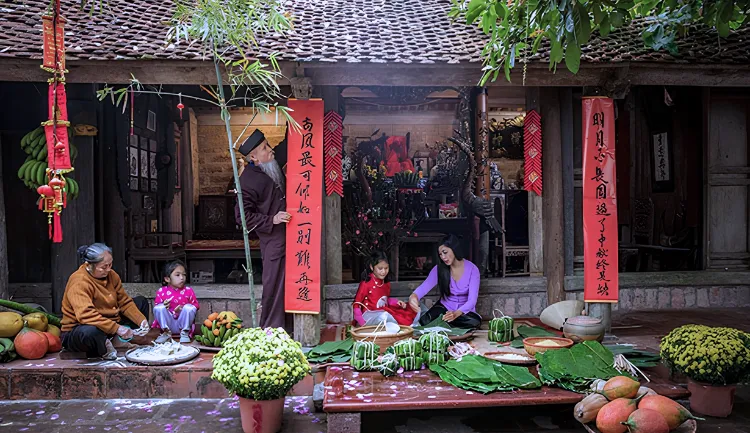
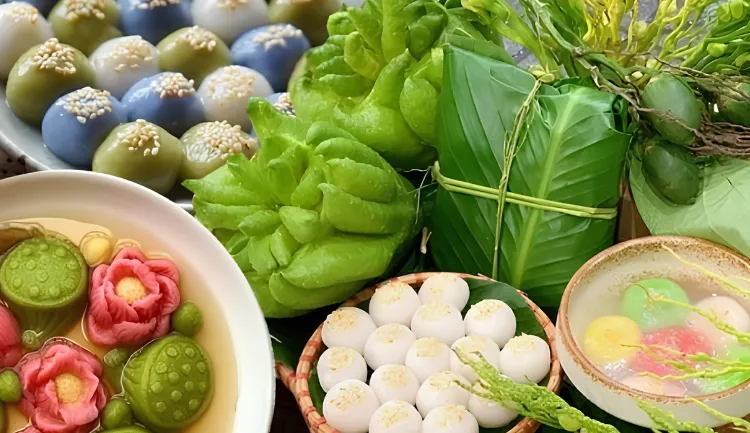
But in Vietnam, the festival has evolved beautifully away from its Chinese origins. Rather than mourning, it centers on an act of creation: families gather to hand-roll Banh Troi (small white glutinous rice balls filled with dark palm sugar) and Banh Chay (slightly larger rice dumplings filled with mung bean paste). The rolling itself is the ritual. Children sit beside grandmothers, flour on their hands and cheeks, watching the white spheres bob to the surface of boiling water as the signal that they are cooked. In the words of one Vietnamese cultural writer, this is “not a holiday of rules, but a day of memories”.
Tet Han Thuc is particularly beloved in northern Vietnam, including Hanoi. You will find banh troi sold at street stalls and market corners in the days around the 3rd of the 3rd month. The round white balls stacked neatly on green banana leaves are one of Hanoi’s most photogenic, and most delicious, seasonal sights.
Gio To Hung Vuong: Honoring the Mythical Founders of Vietnam
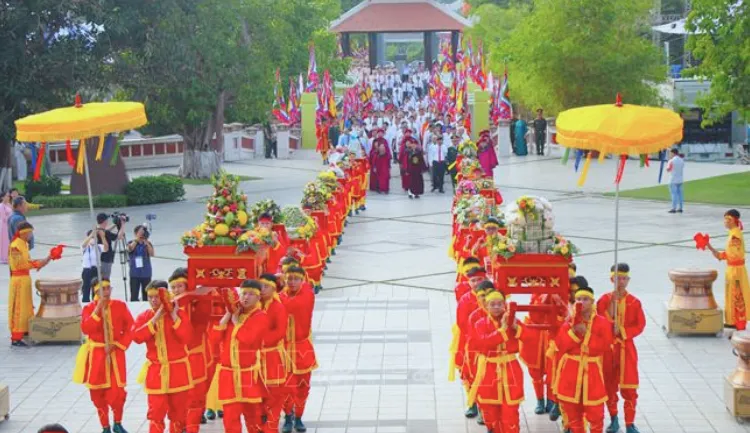
Gio To Hung Vuong – Hung Kings’ Commemoration Day, observed on the 10th day of the 3rd lunar month, is a national public holiday honoring the Hung Kings, the legendary founding rulers of Vietnam. In 2026, it falls on April 28. This is the only traditional holiday in Vietnam with the status of a modern public holiday, reflecting the depth of ancestor veneration in Vietnamese culture.
The main pilgrimage site is the Hung Kings Temple on Nghia Linh Mountain in Phu Tho Province, about two hours from Hanoi by road. Hundreds of thousands of Vietnamese make the journey each year. In Hanoi itself, temples across the city hold smaller ceremonies, and schools often teach children about the legends of the Hung Kings in the days surrounding the holiday.
What is Tet Doan Ngo and Why do Vietnamese People Try to “Kill Insects” in the Middle of the Year?
Tet Doan Ngo falls on the 5th day of the 5th lunar month and is one of the most distinctive of all Vietnamese traditional holidays. In 2026, it falls on June 19. Informally called the “insect-killing festival”, it marks the hottest midpoint of the year when parasites, insects, and disease were historically at their most dangerous.
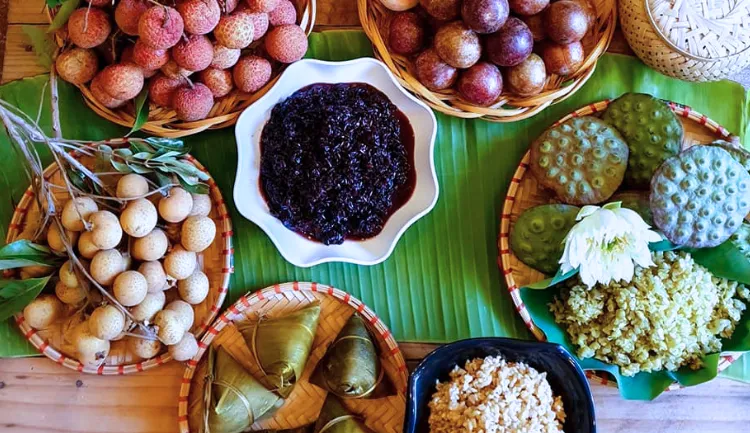
The “killing” is done by eating, not by pesticide. Traditional foods include fermented glutinous rice wine (ruou nep), sour fruits, and yellow sticky rice. The belief is that consuming these acidic, fermented, and sharp-tasting foods on this specific morning, ideally first thing, before brushing your teeth, will drive out the “insects” (parasites and bad energy) living in the digestive system. It sounds unusual until you try it, and then it sounds like a very good tradition.
The holiday also has roots in the Doan Ngo (Summer Solstice) astronomical event and carries strong connections to the Chinese festival associated with the poet Qu Yuan. In central and southern Vietnam, duck dishes are particularly common on this day. In Hanoi, the morning street markets fill up with baskets of plum, lychee, and fermented rice, and many families follow the ritual of eating before dawn while the body is at its most “receptive”.
That Tich: Vietnam’s Star-Crossed Valentine’s Day on the Seventh Night
That Tich, celebrated on the 7th day of the 7th lunar month, is the Vietnamese version of the pan-Asian Qixi Festival, a celebration of love inspired by one of Asia’s most enduring celestial myths. In 2026, That Tich falls on August 19.
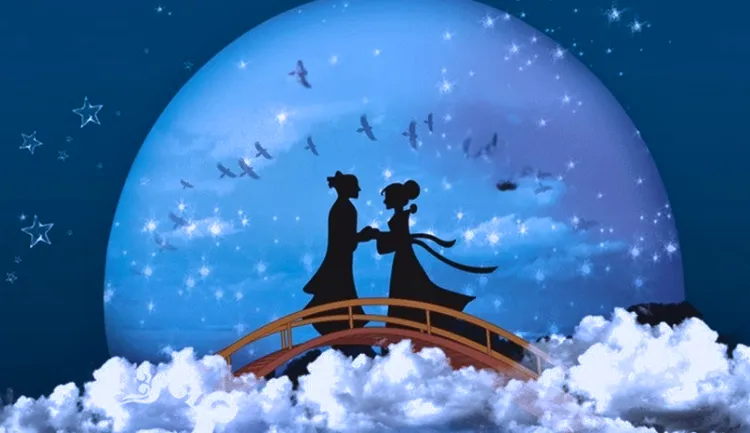
The story tells of Nguu Lang (the Cowherd) and Chuc Nu (the Weaver Girl, seventh daughter of the Jade Emperor), two star-crossed lovers separated by the Milky Way, called Ngan Ha in Vietnamese. So consumed were they by love that they neglected their heavenly duties, angering the Jade Emperor, who banished them to opposite banks of the silver river. But moved by their grief, a flock of ravens assembles each year to form the O Thuoc Bridge across the sky, allowing the lovers one annual reunion on the seventh night of the seventh month. Vietnamese people believe the seasonal rains that often fall at this time of year, mua ngau, are the joyful tears of Nguu Lang and Chuc Nu meeting again.
In contemporary Hanoi, That Tich has been revived among younger generations as a day to visit Ha Temple (Chua Ha) in Cau Giay District, one of Hanoi’s most famous temples for love prayers. Singles pray to find a partner, couples pray for lasting love, and newlyweds pray for a happy marriage. A modern tradition has also taken hold: eating red bean dessert (che dau do) on That Tich, believed to bring luck in love. The lanes around Chua Ha fill with young couples holding hands and vendors selling the sweet red dessert from carts.
Vu Lan Festival: Vietnam’s Buddhist Mother’s Day and the Month of Wandering Souls
Vu Lan, falling on the 15th day of the 7th lunar month, is Vietnam’s second-largest annual traditional festival after Tet Nguyen Dan. In 2026, it falls on August 27. The entire 7th lunar month carries spiritual weight, and Vu Lan is its emotional peak.
The festival’s Buddhist origin traces to the monk Muc Kien Lien (Maudgalyayana in Sanskrit), who used spiritual powers to discover that his deceased mother was suffering in the hungry ghost realm. Unable to save her alone, he gathered a community of monks and devotees to pray collectively on the 15th day of the 7th moon. Their combined prayer freed not only his mother but many other wandering souls. This act of collective filial devotion became the template for the annual Vu Lan ceremony.
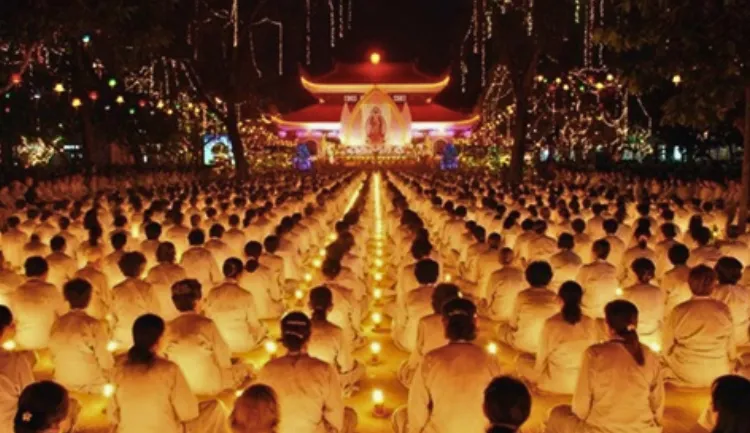
One of the most moving Vu Lan customs is the rose-pinning tradition: people who still have their mothers alive wear a red rose; those whose mothers have passed wear a white one. Walk through Hanoi on Vu Lan day and you will see this small gesture everywhere, on motorbikes, in coffee shops, at office desks, a quiet, powerful reminder of what the day means. Across the city, pagodas hold ceremonies of chanting and offering, and families prepare vegetarian feasts both as acts of merit and as spiritual food for wandering ancestors.
If you find yourself in Hanoi during the Ghost Month (the entire 7th lunar month), you will also notice unusual behaviors: some locals avoid swimming, refuse to move house, and leave small offerings of food or paper goods at sidewalk shrines after dark. These are gestures toward the wandering souls believed to roam the earth during this month, seeking rest.
Tet Trung Thu: The Mid-Autumn Festival and Hanoi’s Most Magical Night for Children
Tet Trung Thu falls on the 15th of the 8th lunar month, from the night of the 14th through the full moon of the 15th, and is one of the most visually spectacular of all Vietnamese traditional holidays. In 2026, it falls on September 25. While the festival has deep agricultural and astronomical roots, it has evolved in Vietnam into primarily a children’s festival, also called Tet Thieu Nhi or Tet Tre Con.
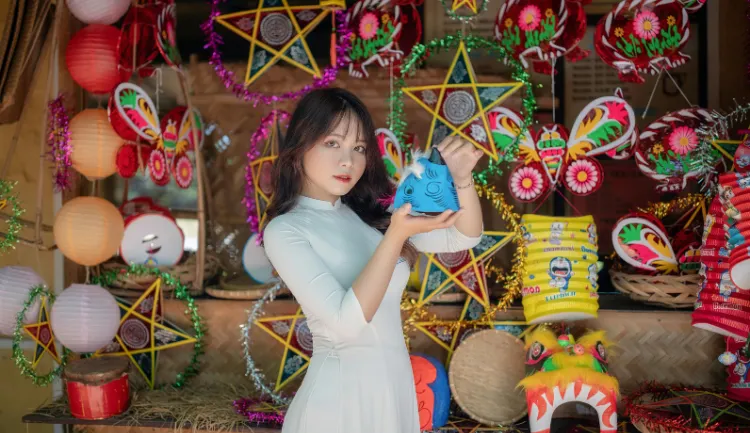
The preparations begin weeks in advance. Mooncake shops appear on every corner of the Old Quarter, stacked with gift boxes of the dense, intricately decorated cakes filled with lotus seed, egg yolk, mung bean paste, or mixed nuts. Children parade through neighborhoods carrying star-shaped, fish-shaped, and rabbit-shaped paper lanterns. Lion and unicorn dancers weave through the narrow alleyways of Hanoi’s 36 Streets. The sound of drums echoes until past midnight.
Two legends animate the festival’s spiritual core. The first is Chi Hang Nga (the Moon Goddess), who floated to the moon after drinking an immortality potion and is seen as a beautiful, melancholy figure gazing down at the earth. The second is Chu Cuoi, a man carried to the moon on a magic banyan tree, who still sits there today. Children carry lanterns partly to light the way for Chu Cuoi to see the earth and feel less lonely.
In Hanoi, the streets of Hang Ma and Luong Van Can in the Old Quarter transform entirely in the weeks before Trung Thu, packed with lantern sellers, mooncake vendors, and the noise of children choosing their favorite shapes. This is one of Hanoi’s most beloved seasonal spectacles, and it is best experienced on foot, slowly, with someone who knows where to find the hand-crafted traditional lanterns versus the mass-produced imports.
How to Plan Your Trip Around Vietnamese Traditional Holidays
Planning around Vietnamese traditional holidays requires three things: knowing the lunar dates, converting them to the correct Gregorian year, and understanding what each holiday means for travel logistics.
- During Tet Nguyen Dan (late January or February): Book accommodation months in advance. Many restaurants and small businesses close for 3-7 days around the holiday’s start. Domestic transport is extremely crowded in the days before Tet as Vietnamese return to their hometowns. The flip side: Hanoi’s Old Quarter becomes unusually peaceful and photogenic on the first days of Tet itself.
- During Ram Thang Gieng, Vu Lan, and Gio To Hung Vuong: Expect significant crowds at major pagodas and temples. Phu Tay Ho, Tran Quoc, and Quan Su Pagoda in Hanoi all see long queues. Plan temple visits for early morning.
- During Tet Trung Thu (September or October): Hanoi’s Old Quarter is at its most atmospheric. Book a hotel in or near the Old Quarter to be within walking distance of the lantern streets and lion dance parades.
- During Tet Doan Ngo (June): This is largely a family/home celebration rather than a public festival, so there are no large public events to plan around. But do visit a morning market to sample the seasonal fermented rice and sour fruits, it is a truly local experience.
2026 and 2027 Gregorian Dates for Vietnamese Traditional Holidays
| Festival | Lunar Date | 2026 Gregorian | 2027 Gregorian |
| Tet Nguyen Dan | 1/1 | Feb 17 | Feb 6 |
| Ram Thang Gieng | 15/1 | Mar 3 | Feb 20 |
| Tet Han Thuc | 3/3 | Apr 19 | Apr 9 |
| Gio To Hung Vuong | 10/3 | Apr 26 | Apr 16 |
| Tet Doan Ngo | 5/5 | Jun 19 | Jun 9 |
| That Tich | 7/7 | Aug 19 | Aug 9 |
| Vu Lan | 15/7 | Aug 27 | Aug 17 |
| Tet Trung Thu | 15/8 | Sep 25 | Sep 15 |

FAQs: Vietnamese Traditional Holidays for Travelers
The five most impactful for travelers are: Tet Nguyen Dan (Lunar New Year, biggest holiday, affects all transport and business), Tet Trung Thu (Mid-Autumn Festival, most visually spectacular), Vu Lan (most spiritually moving, rose-pinning custom), Ram Thang Gieng (best temple atmosphere), and Tet Doan Ngo (most unique food customs). Each falls on a different lunar date, so check the corresponding Gregorian dates for your travel year.
Yes, significantly during Tet Nguyen Dan. In the week before Tet, Hanoi’s bus and train stations become extremely crowded. Many shops, restaurants, and services close for 3-5 days around the holiday’s start. For all other festivals, city life continues normally, but major temples see large crowds on the day itself.
Each festival has its own dishes: banh chung (square sticky rice cake) at Tet; banh troi and banh chay (glutinous rice balls) at Tet Han Thuc; fermented rice wine and sour fruits at Tet Doan Ngo; mooncakes at Tet Trung Thu; vegetarian feasts at Vu Lan; and red bean dessert (che dau do) at That Tich. Trying the seasonal food is the fastest way to understand what each holiday is really about.
The two peak festival windows are: January to March (covering Tet Nguyen Dan and Ram Thang Gieng) and September to October (covering Vu Lan, That Tich, and Tet Trung Thu). September is particularly recommended for first-time visitors, the weather is pleasantly cooling, Trung Thu fills the Old Quarter with lanterns, and tourist crowds are lower than in summer.
Explore Vietnamese Traditional Holidays with a Local Who truly knows them
Understanding Vietnamese traditional holidays from a guidebook is one thing. Living them in the streets of Hanoi’s Old Quarter, a pagoda courtyard, or a family’s kitchen on a festival morning is something else entirely. That is what the Hanoi Free Private Tour Guide club has been offering for years, and always completely free of charge.
Our club has over 5,000 official volunteer members and has proudly organized more than 100,000 free tours for visitors from around the world, earning over 5,200 five-star reviews on TripAdvisor. Every tour is fully personalized to your interests, whether that means deep-diving into history and temple customs, following the festival food trail through the Old Quarter, or understanding the rituals and family traditions that make each holiday unique.
Beyond the tours themselves, the club gives Vietnamese university students an extraordinary environment to practice their English, share their culture, and connect with global citizens. When you book a tour with us, you are not just getting an insider’s guide to Hanoi’s festivals, you are becoming part of an exchange that benefits both sides.