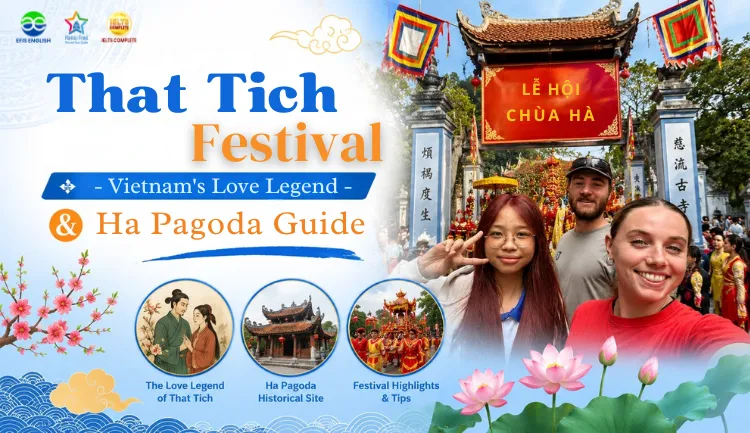
That Tich Festival, Vietnam’s answer to Valentine’s Day, arrives on the seventh night of the seventh lunar month, and in 2026 that date lands on Wednesday, August 19. It is the day Vietnamese legend says two star-crossed lovers are allowed to reunite for a few precious hours after a year of forced separation. This guide walks you through the full legend, how Hanoians actually celebrate it today, and the pagoda where thousands go each year to pray for love.
What Is That Tich and Why Do Vietnamese People Call It a Valentine’s Day?
That Tich is a lunar festival held on the 7th day of the 7th lunar month that celebrates the one annual reunion of two mythical lovers separated by the Milky Way. It is often nicknamed Vietnam’s Valentine’s Day because, like its Western counterpart, it has become a day for romantic gestures, pagoda prayers for love, and couples spending time together. Unlike Valentine’s Day, though, its roots are not commercial. They come from a genuinely old East Asian legend about longing, sacrifice, and the price of neglecting your duties for love.
The name itself comes from the Chinese Qixi Jie (七夕节), which literally translates to “the night of the seventh”. The festival travelled from China into Korea (where it became Chilseok), Japan (Tanabata), and Vietnam over many centuries of shared cultural exchange across the region. In Vietnam, people also call it Ong Ngau Ba Ngau (“Mr. and Mrs. Ngau”), a homegrown nickname tied directly to the seasonal rains that tend to fall around this time of year. Both names point to the same story underneath: a cowherd, a weaver girl, and a bridge in the sky.
That Tich 2026: Quick Facts
| Detail | Information |
| Lunar date | 7th day, 7th lunar month |
| 2026 Gregorian date | Wednesday, August 19, 2026 |
| Lunar year | Binh Ngo (Year of the Horse) |
| Chinese equivalent | Qixi Jie (七夕节) |
| Vietnamese nickname | Ong Ngau Ba Ngau |
| Top Hanoi ritual site | Ha Pagoda, Cau Giay |
| Signature food | Che dau do (red bean sweet soup) |
Because That Tich Festival is set by the lunar calendar rather than the Gregorian one, its Western date shifts every year, sometimes landing in early August, sometimes closer to September. If you are planning a Hanoi trip around Vietnam’s full festival calendar, our Vietnamese Traditional Holidays guide lays out every major lunar date through 2027.
The Legend Behind That Tich: Nguu Lang, Chuc Nu and the Bridge of Magpies
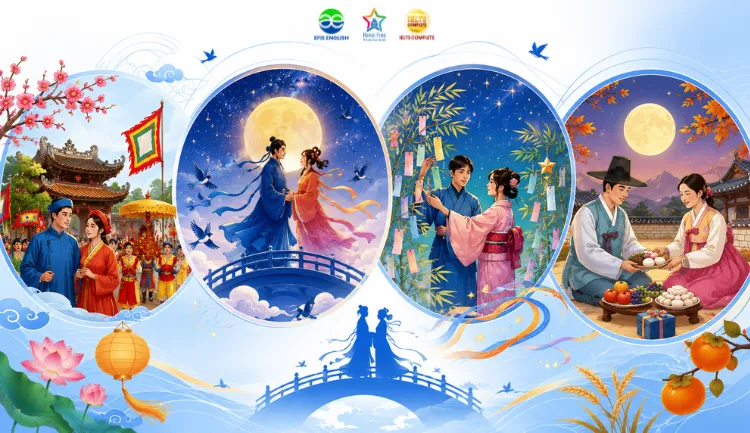
The That Tich legend tells of Nguu Lang, a humble cowherd, and Chuc Nu, the seventh daughter of the Jade Emperor and a gifted weaver of celestial cloth. The two fell in love, married, and had children together, but their happiness came at a cost. Chuc Nu stopped weaving the clouds she was responsible for, and Nguu Lang let his cattle wander untended, so the Jade Emperor grew furious at their neglected duties.
As punishment, the Jade Emperor banished the couple to opposite banks of the Milky Way, which real stargazers can still trace as the star Chuc Nu (Vega) and the star Nguu Lang (Altair) sitting on either side of the galaxy’s bright band. Moved by their grief, he eventually softened and allowed them one reunion each year, on the 7th day of the 7th lunar month. Since there was no bridge across the Ngan Ha, a flock of magpies and crows is said to gather every year to form a living bridge with their own bodies, known as the O Thuoc Bridge, so the lovers can cross and meet.
Vietnamese folklore adds a charming detail you will not find in the Chinese original: the birds that build the bridge come back each year with their heads a little more ragged, worn down from the yearly crossing. Locals half-jokingly say this is why crows and magpies look scruffy around the crown in early autumn. It is a small, funny footnote to a story that is otherwise about heartbreak and devotion, and it is exactly the kind of detail our volunteer guides love pointing out to guests who assume they already know the legend.

Why Does It Always Seem to Rain During That Tich?
Rain around That Tich Festival is explained in Vietnamese folklore as the tears Nguu Lang and Chuc Nu shed at their brief reunion and painful farewell. This rain even has its own name, mua ngau, and it is the reason the festival’s homegrown nickname is Ong Ngau Ba Ngau. Early August also happens to sit in the heart of northern Vietnam’s monsoon season, so meteorology and mythology conveniently line up almost every year.
For couples hoping to spot the Nguu Lang and Chuc Nu stars glowing on either side of the Milky Way that night, clouds and rain often get in the way. Older Hanoians read this two ways: a downpour is the lovers weeping, while a rare clear sky is taken as a good omen for anyone’s love life in the coming year. Either way, pack an umbrella if you are heading out to a pagoda or a rooftop cafe to watch the sky that evening.
How Do Vietnamese People Celebrate That Tich Today?
Modern celebrations of That Tich center on three things: praying at pagodas for love, sharing a bowl of red bean dessert, and quietly avoiding weddings that day. Unlike Tet or Trung Thu, there is no single nationwide ritual everyone follows, and much of it plays out as small, personal gestures rather than public spectacle. That informality is part of the charm, and it makes That Tich one of the more low-key yet emotionally rich dates on the Vietnamese calendar.
Praying for Love at Ha Pagoda in Hanoi
Ha Pagoda, tucked down a narrow lane in Hanoi’s Cau Giay area, is where thousands of singles, couples, and newlyweds go to pray on That Tich Festival. Its formal name is Thanh Duc Tu, and legend holds that King Ly Thanh Tong prayed here in the 11th century for a son, who was later born to the queen, prompting the king to rebuild and rename the pagoda. Despite that royal origin story having nothing to do with romance, Ha Pagoda has become one of Vietnam’s most trusted places for love prayers, largely through generations of word-of-mouth belief.
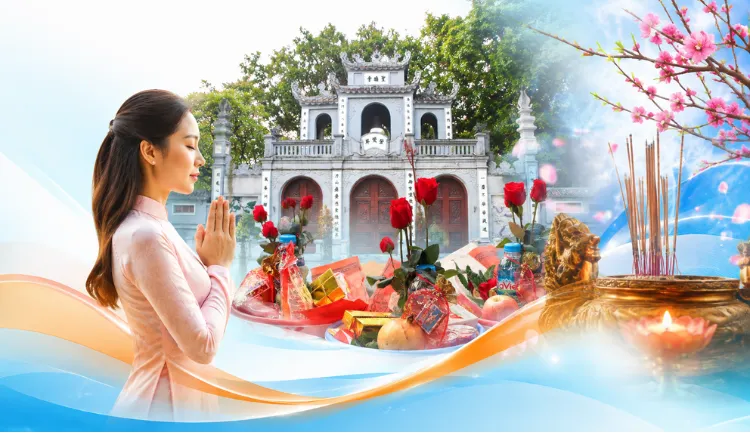
Inside, the central altar honors the Tam Toa Thanh Mau, the Three Palace Mother Goddesses of Vietnamese Mother Goddess worship, who are believed to tie the “red thread of fate” that connects future partners. One of our club volunteers once walked a solo traveler from Australia through the ritual on a That Tich afternoon: three separate trays for the Tam Bao (general peace), the Duc Ong (career and fortune), and the Mau (love and relationships), each requiring its own short prayer before you move to the next. The traveler left half-joking that she had just proposed to three different deities in one visit, which is roughly how most first-timers feel.
Is Che Dau Do an Ancient That Tich Tradition, or a Modern Trend?
Eating Che Dau Do, a sweet red bean soup, on That Tich is a genuinely modern trend rather than an ancient custom, and it barely predates the 2010s in Vietnam. It appears nowhere in the original Nguu Lang and Chuc Nu legend. The idea likely grew out of a mix-up with the Chinese “hong dau” or lovesick bean, a small red seed long tied to romantic longing in Chinese poetry, which Vietnamese social media users adapted into red bean dessert since it was a familiar, easy-to-find ingredient.
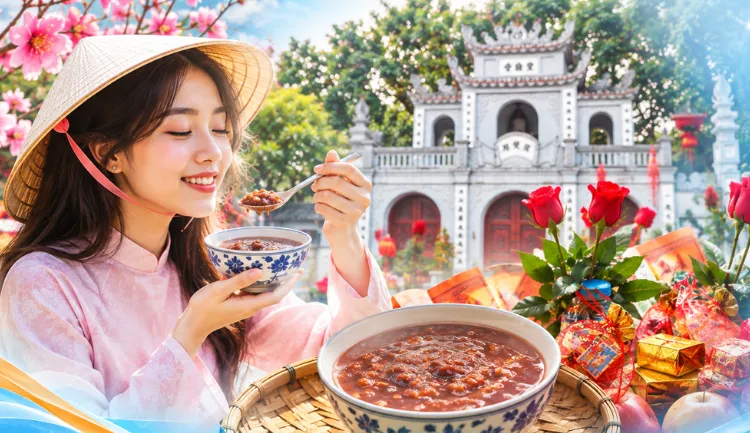
That does not make it any less fun. Every year around That Tich, young Hanoians flood social media with posts about eating che dau do to “escape single life”, and vendors near Ha Pagoda do brisk business selling it from carts to the crowds queuing for pagoda prayers. Good local reporting is honest about this custom’s recent origins, and we think that honesty is part of what makes the tradition endearing rather than diminishing it: it shows a living culture still adding new chapters to an old story.
Why Do Some Vietnamese Couples Avoid Getting Married on That Tich?
Many Vietnamese families deliberately avoid choosing That Tich as a wedding date because Nguu Lang and Chuc Nu’s story is fundamentally one of separation, not lasting union. Even though the festival gets marketed as a romantic holiday, the underlying legend is about a couple who see each other for one day a year and spend the rest of it apart in tears. For a culture that puts heavy weight on choosing auspicious dates for weddings, that symbolism is considered a bad match for a day meant to launch a lifelong marriage, so couples typically save That Tich for date nights and pagoda visits instead.
That Tich vs Qixi vs Tanabata vs Chilseok: How Do Asia’s Lovers’ Festivals Compare?
That Tich shares its origin story and lunar date with China’s Qixi, Japan’s Tanabata, and Korea’s Chilseok, but each country layered its own local customs on top of the same legend. Vietnam is the one country in this group where the festival’s original “begging for skill” ritual disappeared almost entirely, replaced instead by pagoda visits focused purely on romance. The table below breaks down how the four festivals differ today.
| Country | Local Name | Calendar Used | Signature Custom |
| China | Qixi Jie (七夕节) | 7th day, 7th lunar month | Young women pray to Zhinu for weaving and needle skill (qi qiao) |
| Japan | Tanabata | Mostly 7 July, solar calendar | Writing wishes on tanzaku paper strips tied to bamboo branches |
| South Korea | Chilseok | 7th day, 7th lunar month | Eating wheat-flour dishes and bathing to wash away bad luck |
| Vietnam | That Tich | 7th day, 7th lunar month | Praying for love at Ha Pagoda and eating che dau do |
Notice that Japan is the outlier on timing, since most regions celebrate Tanabata on a fixed solar date rather than following the lunar calendar. Vietnam, China, and Korea all keep the original 7th day of the 7th lunar month, which is exactly why That Tich’s Gregorian date moves every year the same way Tet does.
A Local’s Guide to Visiting Ha Pagoda During That Tich Festival
Visiting Ha Pagoda on That Tich Festival is straightforward, but a little local knowledge goes a long way toward avoiding the biggest crowds and making sure your offerings follow the right etiquette. The pagoda sits on Chua Ha Street in Hanoi’s Cau Giay area, open daily from roughly 8:00 AM to 6:00 PM, with earlier openings and later closings on the day of the festival itself.
Dress modestly with shoulders and knees covered, since this is an active place of worship rather than a tourist attraction. Common offerings include five red roses, betel leaves and areca nut, sweets, candles, and sometimes a spool of red thread symbolizing the connection you are praying for. If you want the full experience without the guesswork, a written prayer sheet (called a so) can usually be arranged with the elderly scribes stationed just outside the pagoda gate.
Our single most useful insider tip: skip the festival day itself if you want a peaceful visit. Ha Pagoda is at its most packed on the 1st and 15th of every lunar month, on Valentine’s Day, and especially on That Tich, when queues can stretch well beyond the pagoda courtyard. Early mornings on an ordinary weekday give you the same rituals with none of the crowd, and our guides are always happy to time a visit around whichever mood you are looking for, whether that is quiet reflection or the full, buzzing festival energy.
Planning Your Hanoi Trip Around That Tich Festival
That Tich is not a public holiday, so Hanoi’s shops, offices, and transport all run completely as normal on the day. The only real disruption you will notice is around Ha Pagoda itself, where the surrounding lanes get genuinely crowded with visitors and dessert vendors from midafternoon into the evening.
That Tich also sits right at the start of the 7th lunar month, the same stretch of the calendar known as Ghost Month, which runs through to the Vu Lan festival eight days later. Travelers in Hanoi during this window get a rare chance to see two very different sides of Vietnamese spirituality within the same week: the hopeful, love-focused energy of That Tich, followed by the more solemn, family-centered rituals of Vu Lan. If you want a guide who can walk you through both without missing a beat, that is exactly the kind of custom itinerary the Hanoi Free Private Tour Guide club builds every week for visitors.
A Story Worth Experiencing in Person
That Tich Festival captures something Vietnamese culture does especially well: taking an old, imported legend and quietly making it its own, from the homegrown nickname Ong Ngau Ba Ngau to the very modern bowl of che dau do served up beside centuries-old prayers. Reading about it only gets you so far. Standing in the incense smoke at Ha Pagoda, watching strangers write their hopes onto a prayer sheet, tells you more about Hanoi’s spiritual life than any calendar entry ever could.
Frequently Asked Questions About That Tich Festival
Not exactly, though the comparison is fair. That Tich shares Valentine’s Day’s focus on romance and couples, but it comes from an older East Asian legend about the Nguu Lang and Chuc Nu, rather than any Western tradition, and it carries a bittersweet undertone of separation that Valentine’s Day does not have.
Wear modest clothing that covers your shoulders and knees, since Chua Ha is an active place of worship. Common offerings include red roses, betel leaves and areca nut, sweets, candles, and votive money, which you can also buy from stalls right outside the temple gate.
There is no evidence that eating che dau do affects your love life, and the custom itself only became popular in Vietnam within the last decade or so through social media. It is treated more as a fun, low-stakes ritual than a serious belief, and it is genuinely tasty either way.
No, That Tich is not an official public holiday. Businesses, schools, and offices in Hanoi operate normally on the day, with the main visible change being higher foot traffic around love-prayer temples like Chua Ha in the late afternoon and evening.