The Imperial Citadel of Thang Long is the most historically significant site in Hanoi, a place where over 1,300 years of Vietnamese civilization live on in stone, soil, and silence. Recognized as a UNESCO World Heritage Site in 2010, this sprawling royal complex in the heart of Hanoi is not just a tourist attraction; it is the soul of Vietnam itself.
This guide covers everything you need to know before visiting: the full history, top highlights, verified ticket prices, practical tips, and the hidden stories that most visitors miss entirely.
What is the Imperial Citadel of Thang Long?
The Imperial Citadel of Thang Long (Hoàng Thành Thăng Long) is Vietnam’s most important royal heritage complex, serving as the political and cultural capital of the country for nearly a millennium. Located in Hanoi’s Ba Dinh District, it encompasses ancient palaces, ceremonial gates, military bunkers from the 20th century, and ongoing archaeological excavations, all layered on the same sacred ground.
“Thang Long” (昇龍) translates literally as “Ascending Dragon”, a name chosen by Emperor Lý Thái Tổ in 1010 when he moved the capital here from Hoa Lu. According to historical records, the emperor saw a golden dragon rising from the earth as his royal barge arrived, and he took it as a divine omen that this land was destined for greatness. More than ten centuries later, it is hard to argue with him.
The site tells a story that no other place in Vietnam can: it bridges the Lý Dynasty (11th century) through the French colonial era, and all the way to General Võ Nguyên Giáp’s underground command bunker used during the American War. Nowhere else in Hanoi does the past feel so tangibly layered beneath your feet.

A Brief History of the Imperial Citadel of Thang Long
From Chinese Fortress to Lý Dynasty Capital (7th–11th Century)
The site’s origins predate Vietnamese independence entirely. Archaeological evidence confirms that a Chinese military citadel called Tống Bình was established here as early as the 7th century during the Tang Dynasty’s occupation of northern Vietnam. The 9th-century governor Gao Pian then expanded it as the Đại La Citadel, constructing a substantial administrative fortress along the Red River.
In 1010, the newly crowned Emperor Lý Thái Tổ made a decisive move: he relocated the capital from the mountain stronghold of Hoa Lu to this fertile, flat riverine land and renamed it Thang Long. This was not merely a strategic choice, it was a declaration of confidence in a free, prosperous Vietnamese state. The Lý Dynasty built the original palace complex, temples, and the iconic three-tiered layout of citadel walls that would define the site for centuries.
The Trần and Lê Dynasties (13th–18th Century)
The Trần Dynasty inherited the Lý citadel and expanded it, successfully defending it against three Mongol invasions in the 13th century, a feat of military resilience that still echoes in Vietnamese national pride. The Later Lê Dynasty (15th–18th century) built what remains the most architecturally striking surviving element: the Kinh Thien Palace staircase, its stone dragons still coiling magnificently up the central steps.

French Colonial Period and Modern History (19th–20th Century)
When the Nguyễn Dynasty moved the capital south to Huế in 1802, Thang Long’s role diminished. The French colonial administration later demolished much of the inner palace complex in the late 19th century to construct military barracks. This represents one of the most significant losses of Vietnamese cultural heritage, and the pain of it is still felt acutely by historians today.
The site was then used as a military headquarters by the Vietnamese army until the mid-2000s, during which time the famous D67 underground command bunker was built and used by General Võ Nguyên Giáp and the Politburo to plan major operations during the American War.
Top Highlights Inside the Imperial Citadel of Thang Long
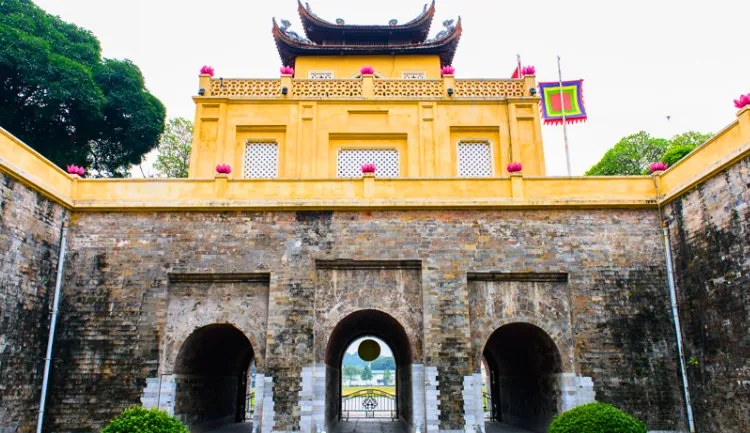
1. Doan Mon Gate (Đoan Môn): The Emperor’s Door
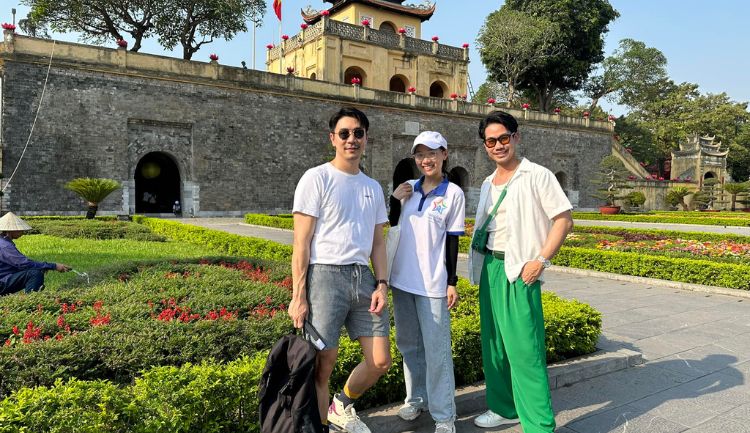
The Doan Mon Gate is the most iconic surviving structure within the citadel, and for good reason. This imposing southern gate with its five arched entrances was once the exclusive passageway for emperors, the central arch was reserved for the emperor alone, flanked by doors for high-ranking officials, and outer gates for the royal guard. Built during the Lê Dynasty and renovated in the Nguyễn period, it exemplifies the strict hierarchical order that governed every aspect of imperial life.
Standing beneath its massive stone arch and looking north toward the Kinh Thien Palace platform, you can still feel the gravitational pull of power this space once commanded. When you walk through this gate, you walk in the footsteps of twenty dynasties. Let that sink in before you rush to take photos.
2. Kinh Thien Palace: Platform and Dragon Staircases
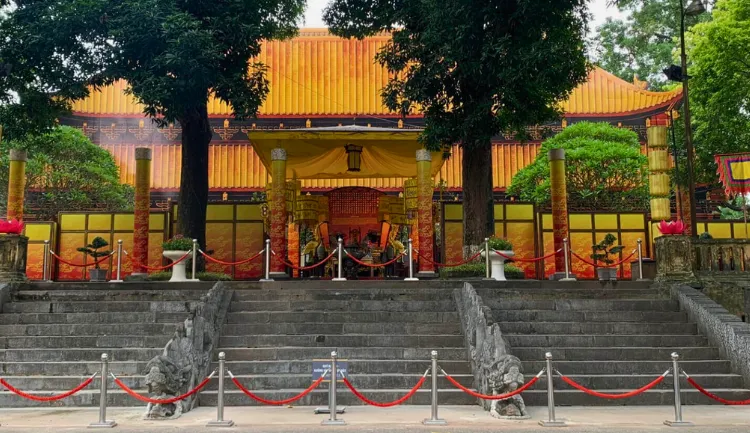
The Kinh Thien Palace (Điện Kính Thiên) is perhaps the single most important archaeological site in Vietnam. Built in 1428 by Emperor Lê Thái Tổ as the main ceremonial hall of the Later Lê Dynasty, the palace itself was tragically demolished by the French in the 19th century to make way for military structures.
What survives is extraordinarily precious: the original stone staircase, flanked by two magnificently carved stone dragons, regarded as among the finest examples of 15th-century Vietnamese sculptural art. Current archaeological excavations are actively working to reconstruct the palace’s original footprint, and a long-term project to rebuild Kinh Thien Palace is underway.
3. Hanoi Flag Tower (Cột Cờ Hà Nội)
The Hanoi Flag Tower is one of the most recognizable symbols of the capital and one of the very few structures to survive the French colonial destruction intact. Built between 1805 and 1812 during the Nguyễn Dynasty, this 40-metre tower was used as a military observation post and later became a symbol of Hanoi’s identity.
The Vietnamese national flag, red with a golden star, flies permanently from its peak. Visible from much of the surrounding Ba Dinh District, the Flag Tower is one of those rare landmarks that looks equally powerful in photographs and in person.
Important update (2025):The Flag Tower was previously managed by the Vietnam Military History Museum at 28A Dien Bien Phu Street, which relocated its entire collection to a new facility on Thang Long Boulevard (Nam Tu Liem District) in late 2024. As of January 1, 2025, the Flag Tower area has been officially transferred to the Thang Long Heritage Conservation Centre and is now integrated into the main citadel visit — access is through the citadel’s ticketing system, not as a separate free-standing stop.

4. The D67 Underground Command Bunker
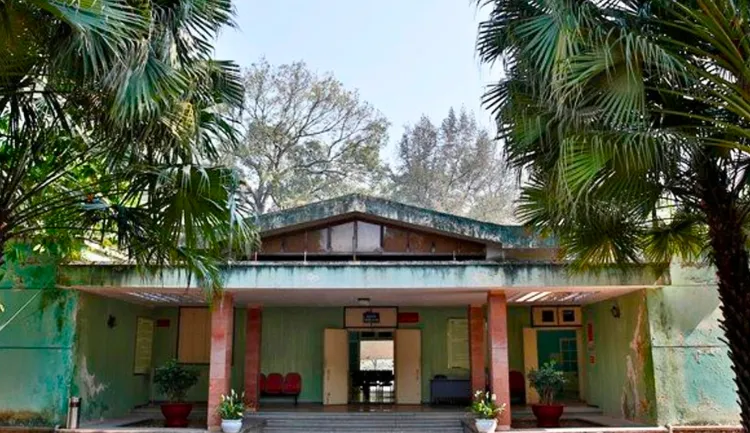
Perhaps the most surprising section of the citadel for first-time visitors, the D67 House and Bunker (Nhà và Hầm D67) is a well-preserved underground command complex built in 1967 and used by top Vietnamese military leadership during the American War. General Võ Nguyên Giáp worked from here, and several major strategic decisions, including planning for the 1972 Christmas Bombing response, were made in these very rooms.
The contrast between the ancient palace platforms above ground and this cold, functional concrete labyrinth below is genuinely arresting. It is a visceral reminder that this ground never stopped being at the center of Vietnamese history, even in the 20th century.
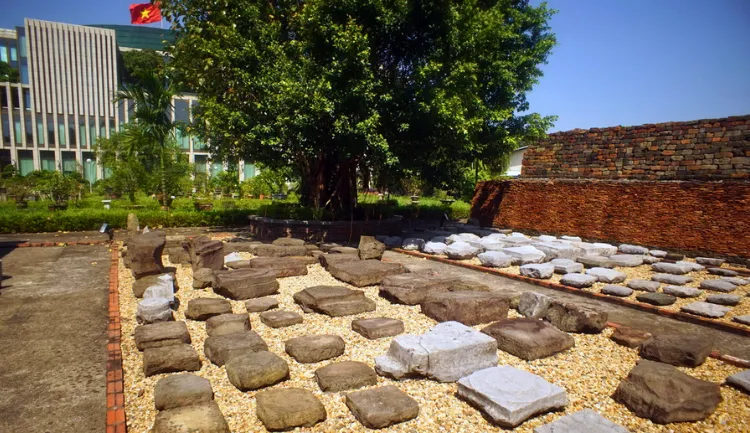
5. Archaeological Site at 18 Hoang Dieu Street
Directly across Hoang Dieu Street from the main citadel complex, the archaeological site at No. 18 Hoang Dieu is a treasure that rewards slow, curious visitors. Discovered during construction of the National Assembly building in 2002–2003, it revealed layers of occupation from the 7th century Tang period all the way through the 19th century, an extraordinarily rare stratigraphic record.
Visitors can observe active excavation areas, view thousands of recovered artifacts (tiles, ceramics, column bases, drainage systems), and get a tangible sense of how many civilizations have lived, built, and died on this exact ground.
Visitor Information & Practical Details
Complete Visitor Information Table (2026)
| Detail | Information |
| Address | 19C Hoang Dieu St, Dien Bien Ward, Ba Dinh District, Hanoi |
| Opening Hours | Tuesday–Sunday: 8:00 AM – 5:00 PM |
| Closed | Every Monday |
| Adult Ticket (from Jan 1, 2025) | 100,000 VND (~$4 USD) |
| Discounted Ticket (50%) | 50,000 VND — Vietnamese students (16+), seniors (60+) with valid ID |
| Children Under 16 | Free entry |
| Free Admission | Cultural Heritage Day (November 23) |
| Night Tour | “Decoding Thang Long” — 300,000 VND adult, 150,000 VND child (5–11) |
| Time Recommended | 2–3 hours minimum |
| Dress Code | Cover knees and shoulders (respectful attire required) |
| Photography | Permitted throughout the site |
| Online Booking | vedientu.hoangthanhthanglong.com |
| Group Bookings | Call 0904 386 156 in advance |
What Can You See? A Zone-by-Zone Guide to the Imperial Citadel of Thang Long
The citadel is divided into distinct functional zones, and understanding the layout before you arrive makes the experience dramatically richer.
| Zone | Key Feature | Historical Period |
| Doan Mon Gate Area | Main southern entrance, five archways | Lê Dynasty (15th–18th C) |
| Kinh Thien Palace Platform | Stone dragon staircases, ongoing excavations | Later Lê Dynasty (1428) |
| Hanoi Flag Tower | 40m tower, Vietnamese national flag | Nguyễn Dynasty (1805–1812) |
| D67 Command Complex | Underground war bunker, military exhibits | 1967–1975 |
| 18 Hoang Dieu (across street) | Active archaeological site, artifact displays | 7th–19th Century layers |
| Bac Mon Gate (North Gate) | Well-preserved northern gate on Phan Dinh Phung St | Early 19th Century |
How to Get to the Imperial Citadel of Thang Long
The citadel sits in Ba Dinh District, approximately 2 km northwest of Hoan Kiem Lake. Getting there is straightforward from anywhere in central Hanoi:
- By Grab/Taxi: 10–15 minutes from the Old Quarter; expect 30,000–50,000 VND. The easiest option for most visitors.
- By Public Bus: Route 22A stops directly on Hoang Dieu Street at the citadel’s main gate, the most convenient bus option. Routes 09, 45, 50, and 23 also pass the area, stopping on nearby Nguyen Tri Phuong or Phan Dinh Phung Streets with a short walk. Fares start from 8,000 VND, great value if you enjoy experiencing local city life along the way.
- On Foot from Ho Chi Minh Mausoleum: The citadel is a 5-minute walk from the Ho Chi Minh Complex, making it easy to combine both sites in one morning.
- Electric Bus: A dedicated electric bus route connects Hoan Kiem Lake directly to the Citadel, a comfortable, eco-friendly option launched in 2024.
Nearby Attractions: What to Combine with the Imperial Citadel of Thang Long
The citadel sits at the center of Hanoi’s richest historical neighborhood, the Ba Dinh District, making it easy to combine with several world-class sites in a single outing.
| Attraction | Distance from Citadel | Connection to Citadel |
| Ho Chi Minh Mausoleum & Complex | 5-min walk north | Easily combined in one Ba Dinh morning |
| Vietnam Military History Museum | Now at Thang Long Blvd, Nam Tu Liem | Relocated late 2024; old site at 28A Dien Bien Phu transferred to citadel |
| One Pillar Pagoda | 8-min walk | Lý Dynasty origin — same era as the citadel |
| Temple of Literature | 10-min drive | Also built by the Lý Dynasty in 1070 |
| Hanoi Old Quarter | 15-min drive | Contrast — the commercial heart vs. imperial heart |
Why Was the Imperial Citadel of Thang Long Named a UNESCO World Heritage Site?
The Imperial Citadel of Thang Long was inscribed on the UNESCO World Heritage List in 2010 because it meets multiple outstanding universal value criteria. The World Heritage Committee specifically recognized the site for its continuous use as a political center over more than 13 centuries, its exceptional archaeological record, and its reflection of the unique Thang Long–Hanoi civilization at the confluence of Southeast Asian and East Asian cultural traditions.
UNESCO’s inscription notes that the site “reflects a flourishing period of the history of Southeast Asia”, particularly in the way it demonstrates the development of a distinctly Vietnamese imperial civilization, one that absorbed Chinese influences while forging its own architectural language, governance structures, and cultural identity. The 2002 discovery of the 18 Hoang Dieu archaeological site was a critical factor, as it provided physical evidence of continuous layered occupation across 1,300 years, something exceedingly rare in any urban heritage context worldwide.
It is also worth noting that the citadel’s inscription came just in time. The ongoing threat from rapid urban development in Hanoi, combined with the partial demolition of structures during the French colonial period, means that what survives today requires active, urgent protection.
Insider Tip from HFPTG:The UNESCO plaque at the entrance is often overlooked by visitors rushing inside. Take a moment to read it, the exact language used by the committee to describe what makes this place special is genuinely moving.
The Night Tour: Decoding the Imperial Citadel of Thang Long After Dark
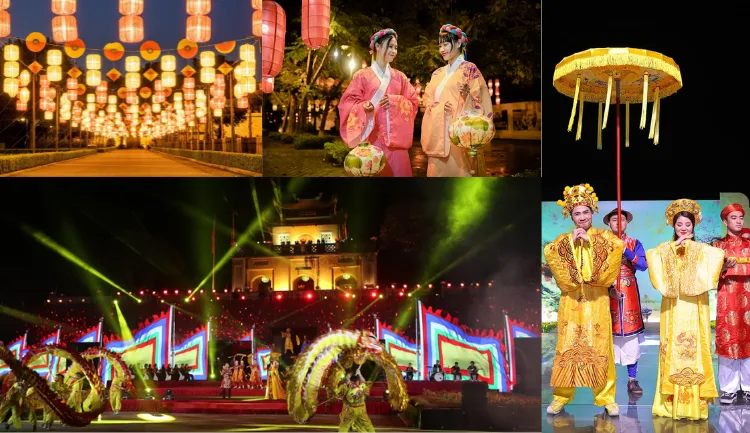
The “Decoding Thang Long Imperial Citadel“ night tour is one of Hanoi’s most immersive after-dark experiences, jointly developed by the Thang Long-Hanoi Heritage Conservation Centre and HanoiTourist. Unlike the standard daytime visit, the night tour uses atmospheric lighting, background music, and guided storytelling to bring the ancient site alive in ways that daylight simply cannot replicate.
Ticket prices for the night tour are 300,000 VND for adults and 150,000 VND for children aged 5–11. The experience typically runs for around 90 minutes and takes visitors through illuminated gates, palace platforms, and the bunker complex in an entirely different emotional register. If you are visiting Hanoi for more than two days, this is absolutely worth including in your itinerary.
How to Make the Most of Your Visit: Insider Tips from Local Guides
First, come on a weekday morning, the citadel draws large school groups and weekend crowds, particularly around Vietnamese national holidays. Arriving at opening time (8:00 AM) gives you the golden-hour light on the stone structures and genuine quiet in the palace courtyards.
Second, do not skip 18 Hoang Dieu. Most visitors enter through Doan Mon, walk to the Flag Tower, glance at the Kinh Thien steps, and leave without ever crossing the street to the archaeological site. This is a mistake. The stratigraphic layers visible in the excavation pits, each representing a different dynasty literally built on top of the last — are one of the most visually eloquent illustrations of Vietnamese history anywhere.
Third, dress appropriately. The citadel is a formal heritage site, and visitors are expected to cover their knees and shoulders. This is not strictly enforced at every entrance, but it is a matter of basic respect for a place that holds deep cultural meaning for Vietnamese people.
Insider Tip from HFPTG: Our guides always recommend spending 20 minutes just sitting in the courtyard in front of Doan Mon before moving on. Most tourists rush through in under an hour. The people who linger are the ones who leave with something they cannot fully explain.
Thinking about combining the Imperial Citadel with other nearby sites? It pairs perfectly with the Ho Chi Minh Mausoleum (5-minute walk north), the One Pillar Pagoda (8-minute walk), and the Temple of Literature (10-minute drive). Note that the Vietnam Military History Museum relocated in late 2024 to a new facility on Thang Long Boulevard in Nam Tu Liem District, it is no longer at the old Dien Bien Phu address. The former museum grounds have now been integrated into the citadel’s heritage zone. A full Ba Dinh District morning covering the citadel, Ho Chi Minh Complex, and One Pillar Pagoda remains one of the richest half-days available to any visitor in Hanoi.

FAQs Imperial Citadel of Thang Long
From January 1, 2025, the entrance fee is 100,000 VND per adult (approximately $4 USD). Children under 16 enter free. Vietnamese students aged 16 and above and Vietnamese seniors aged 60 and above pay a discounted rate of 50,000 VND with valid ID. Admission is free for everyone on Cultural Heritage Day, November 23.
Yes. The citadel is closed every Monday. Opening hours for all other days are 8:00 AM to 5:00 PM, with last entry recommended by 4:00 PM to allow sufficient time to explore. Plan accordingly if your Hanoi visit falls on a Monday.
A minimum of 2 hours is recommended to see the main highlights: Doan Mon Gate, Kinh Thien Palace platform, the Flag Tower, and the D67 Bunker. Allow 3 hours if you also want to cross Hoang Dieu Street to the archaeological site at No. 18. History enthusiasts and photographers will comfortably fill a full half-day here.
The best seasons are spring (February to April) and autumn (September to November), when Hanoi’s temperatures are mild and humidity is lower. Within a given day, weekday mornings from 8:00–10:00 AM offer the least crowded experience and the best natural light for photography. Avoid visiting during major Vietnamese national holidays when the site can become extremely busy.
The Imperial Citadel of Thang Long is not simply one of Hanoi’s top tourist sites, it is Vietnam’s royal heartbeat, a place where the full arc of the nation’s history is compressed into a few walkable hectares. From the 7th-century foundations of a Chinese military fortress, through the splendor of the Lý and Lê Dynasties, to the cold pragmatism of a Cold War bunker, this UNESCO World Heritage Site holds more stories per square meter than almost anywhere else in Southeast Asia.
If you visit only one historical landmark in Hanoi, make it this one. And if you want those stories told the way a local would tell them, with passion, context, and the personal touch of someone who genuinely loves this city, let the Hanoi Free Private Tour Guide club show you around. We have taken more than 50,000 visitors through Hanoi’s greatest landmarks, completely free, with heart.
Book our free tour guide!

Hanoi Old Quarter Walking Tour
❤❤❤❤❤ (TripAdvisor / GetYourGuide)
Historical Tour – Walking Tour – Small Group
⚑ 3 – 4 hours
✎ Free Tour – Free Cancellation

Hanoi City Tour
❤❤❤❤❤ (TripAdvisor / GetYourGuide)
Most Popular – Walking Tour – Small Group
⚑ 3 – 8 hours
✎ Free Tour – Free Cancellation