Hanoi Free Private Tour | Traveling often surprises you when you least expect it. Sometimes the most unforgettable journeys are not the ones you planned in detail but the ones you stumble upon. For me, Hanoi was exactly that. Our group of eleven friends from the Philippines had been traveling through Vietnam, and while we had seen the famous photos of Hoan Kiem Lake or the train street online, we wanted something deeper. We didn’t want to just snap pictures; we wanted to understand Hanoi’s heart.
That’s when we discovered the Hanoi Free Private Tour, a volunteer-run project where local students guide travelers through their city. Honestly, I wasn’t sure what to expect. Free tours always make me wonder — would it feel rushed, or superficial? What we experienced instead was the complete opposite. It was personal, rich in knowledge, and filled with laughter.
This is the story of how eleven Filipinos walked through centuries of Vietnamese history in just four hours, guided by two students who turned Hanoi into a living classroom.
Starting our Hanoi Free Private Tour by meeting the Guides
We met at 10 Nguyen Sieu, a spot tucked in the heart of the Old Quarter. The morning air was heavy with the aroma of coffee, mixed with the noise of motorbikes zipping through narrow streets. Two young guides introduced themselves: Shaun, our main guide, and another student who was helping him. Both smiled warmly, their enthusiasm instantly calming any doubts. They explained the purpose of the program: connecting travelers and locals through a Hanoi Free Private Tour.
Unlike commercial tours, this wasn’t about ticking boxes or rushing through sites. It was about conversation, curiosity, and cultural exchange. I glanced at my friends, and we all nodded. This was exactly the kind of experience we wanted. With our rented private car ready, we began our journey into the soul of Hanoi.
Ho Chi Minh Mausoleum: A nation’s symbol
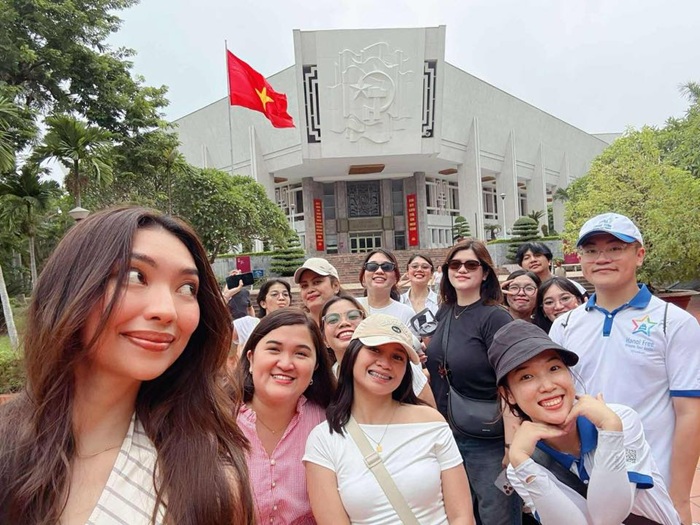
Our first stop was the Ho Chi Minh Mausoleum, perhaps the most solemn landmark in Hanoi. Standing tall in Ba Dinh Square, its gray stone façade commanded silence and respect.
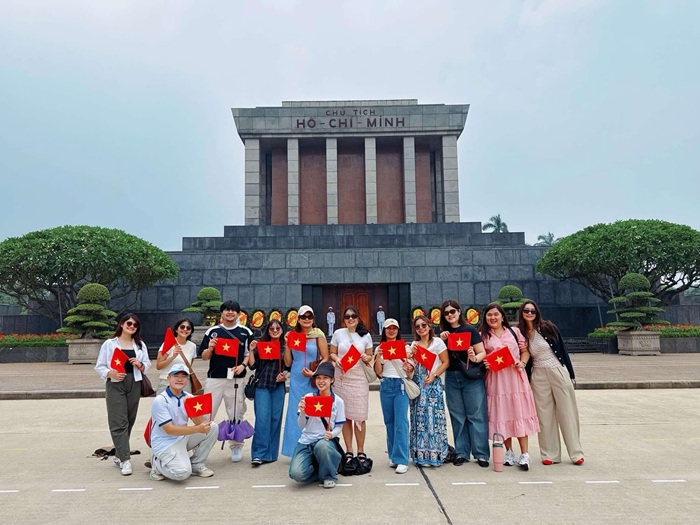
Shaun began by recounting a pivotal moment: “It was here, in 1945, where Ho Chi Minh read the Declaration of Independence.” His words carried weight, and I found myself picturing the square filled with thousands of hopeful faces listening to the birth of a new nation. That day, the square was decorated with flags, marking the 80th anniversary of independence. Curious, one of my friends asked, “Why does the Vietnamese flag have five stars?”. Shaun smiled, “Each point represents a class working together: intellectuals, farmers, workers, businessmen, and soldiers.” It was such a simple yet powerful explanation. As Filipinos, we often talk about unity, but here it was literally stitched into the national flag. I felt goosebumps. History was no longer abstract — it was right in front of me, embodied in a red flag waving in the breeze.
Hanoi Free Private Tour: The serenity of One Pillar Pagoda
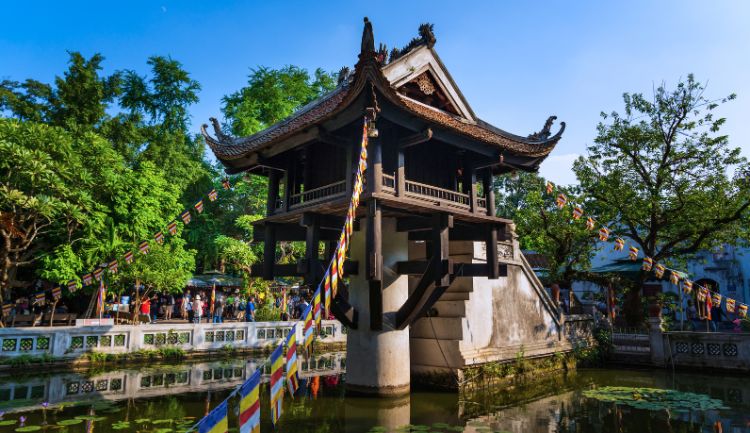
From the grandeur of politics, we shifted into spirituality at the One Pillar Pagoda. Small but iconic, the pagoda stood in the middle of a lotus pond, balanced delicately on a single stone pillar.
Our guide explained its origin: built in 1049 by Emperor Ly Thai Tong, who dreamed of a lotus rising from the water. Symbolizing purity and enlightenment, it remains one of the most unique temples in Vietnam. Shaun also spoke about karma in Buddhism, explaining how actions in life are believed to shape future outcomes. Some of my friends leaned in, asking, “So Vietnamese people really think about karma every day?” He laughed softly. “Yes, maybe not consciously every moment, but it’s part of our culture. Be kind, and kindness comes back.”
We watched as locals lit incense sticks, bowing quietly. Despite the bustle outside, the pagoda felt like a peaceful island. I remember thinking: in Hanoi, even the smallest spaces carry centuries of meaning.
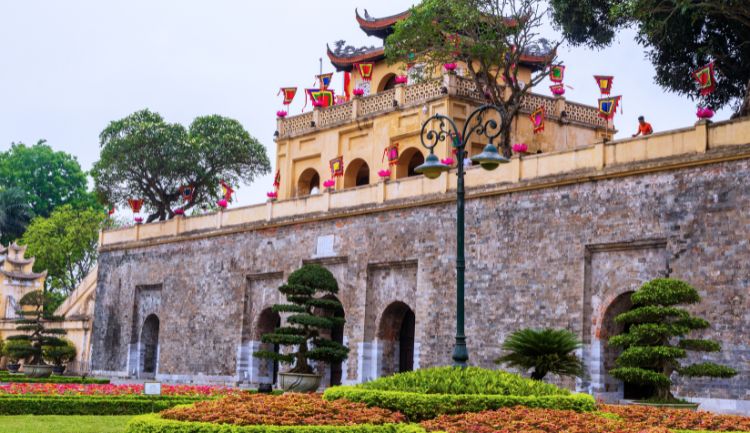
Walking through Dynasties at Thang Long Imperial Citadel
Next, we arrived at the Thang Long Imperial Citadel, a UNESCO World Heritage Site that once served as the political and cultural heart of Vietnam.
As we stepped inside, Shaun painted vivid pictures of dynasties that had ruled here for more than a thousand years. He guided us into the D67 House, a wartime bunker and command center. Inside, dimly lit rooms with maps and old communication tools told stories of strategy and survival.
One of my friends asked, “So Hanoi has always been the capital?”. Shaun nodded, “Yes, for over a thousand years, through different dynasties and governments. It’s why Hanoi is not just a city. It’s history alive.”
I couldn’t help but compare this to Manila, where colonizers had repeatedly shifted the country’s center. Vietnam’s continuity of Hanoi as a capital gave it a different kind of weight. Here, identity was deeply rooted in place. We left the citadel humbled, as if we had walked through invisible layers of time.
The Temple of Literature: Vietnam’s first university
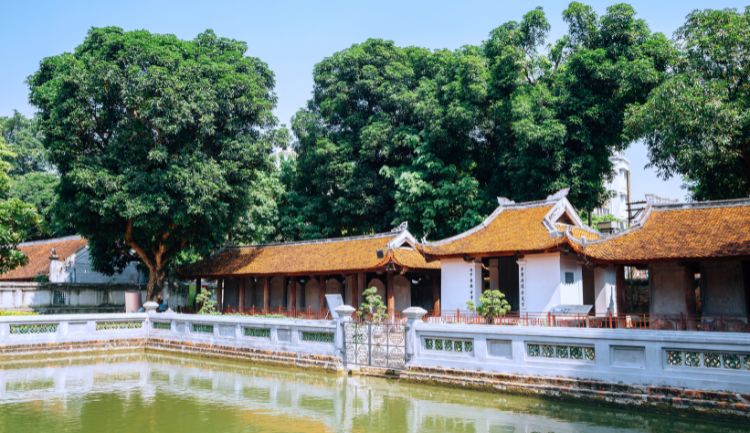
The final stop was my favorite: the Temple of Literature, Vietnam’s first university, built in 1070. Passing through its gates, I felt transported into a scholarly world where knowledge once reigned supreme.
Our guide explained how students prepared for the imperial examinations, their names carved onto stone steles if they passed. We paused by one of the ancient turtle statues carrying a stele on its back. He explained that turtles represent longevity, wisdom, and perseverance — virtues expected of scholars. Curious, I asked when the temple was built. “In 1070”, Shaun replied. “Almost a thousand years ago.”
We also learned about Vietnam’s Four Sacred Animals: the dragon for power, the phoenix for grace, the turtle for wisdom, and the unicorn for peace. Each symbol reflected values woven into Vietnamese culture.
One of my friends then asked: “Do people only hang the national flag on special days?” Shaun explained that while it’s common on holidays, many families proudly hang it year-round to show patriotism. I thought about how flags back home were mostly reserved for Independence Day. Here in Vietnam, patriotism seemed more visible in daily life.
The sun was blazing by then, but the courtyards were shaded by tall trees. For a moment, time slowed, and I imagined scholars centuries ago walking the same paths, carrying bamboo books and dreams of serving the kingdom.
Tired feet, full hearts
By the time we left the Temple of Literature, the afternoon heat had drained us. Our feet ached, but our hearts felt full. The guides recommended a restaurant near our hostel, and we gratefully followed.
Over bowls of steaming pho and cold drinks, we recounted the day’s highlights. Some loved the solemnity of the Mausoleum. Others preferred the serenity of the Pagoda. Personally, I was enchanted by the Temple of Literature.
What united us all was the realization that this wasn’t just a sightseeing tour. It was an intimate conversation with Hanoi itself — guided by locals who shared their city not as tour guides but as friends.
That day in Hanoi will always stay with me. It wasn’t just about the landmarks, though each was stunning. It was about the layers of meaning hidden in each place — meanings unlocked by our guides’ stories. If you’re traveling to Hanoi, don’t just walk its streets alone. Join a Hanoi Free Private Tour, and let locals show you the heart of their city. You’ll leave not just with photos but with a deeper understanding of Vietnam’s soul.
Why a Hanoi Free Private Tour is different ?
Looking back, what made the Hanoi Free Private Tour unforgettable was not just the sites but the connection. Our guides were students, not professionals, and that authenticity made everything feel more real. They answered our endless questions with patience and humor. They didn’t just point at landmarks; they explained why they mattered, how they connected to everyday life, and how locals saw them.
- Why were flags everywhere that day? → To celebrate 80 years of independence.
- What do the five stars on the flag mean? → Unity of intellectuals, farmers, workers, businessmen, and soldiers.
- When was the Temple of Literature built? → In 1070, nearly a thousand years ago.
With every answer, Hanoi became less of a tourist destination and more of a living, breathing city.
About Hanoi Free Private Tour Guide
Hanoi Free Private Tour Guide is a non-profit club that offers free walking tours of Hanoi. Local university students volunteer their time to share the history, culture, and hidden gems of their city. You don’t pay for the tour guide — just bring your curiosity, your questions, and maybe a small gift of gratitude. In return, you get an unforgettable experience and real local connections. Travel like a guest. Leave like a friend!
________________________________________
HANOI FREE PRIVATE TOUR GUIDE
✤ Website: Hanoi Free Private Tour Guide
✤ Adress: 158 Chua Lang, Dong Da, Hanoi
✤ Hotline: (+84) 97 63 69 796
✤ Mail: hanoifreeprivatetourguide@gmail.com
✤ English Course: Efis English
Read more
✧ Vietnamese Rice Culture: More than just a staple
✧ Khue Van Pavilion: The timeless symbol of Hanoi