When traveling through Vietnam, you’ll encounter more than breathtaking landscapes and vibrant markets, you’ll feel a quiet spiritual rhythm that flows through daily life. From incense wafting through ancient pagodas to monks chanting at sunrise, Buddhism in Vietnam is deeply rooted in the country’s identity.
Buddhism in Vietnam is more than a religion, it is a spiritual foundation and a cultural force that has quietly but powerfully shaped the Vietnamese way of life for over two millennia. From ancient dynasties to modern city streets, its influence permeates daily behavior, moral thinking, art, and even family rituals. In this article, we’ll explore how Buddhism in Vietnam influences everything from festivals and family rituals to architecture and community life. And for curious travelers, we’ll show you how explore Buddhist heritage sites with deeper insight and cultural connection.
Origins and arrival of Buddhism in Vietnam
Buddhism arrived in Vietnam very early, around the first or second century CE, through two main routes. From the south, it came via the maritime Silk Road, spreading from India and Southeast Asia. From the north, it arrived through China during the Han dynasty. The Vietnamese people, known for their syncretic and inclusive spiritual traditions, embraced Buddhism not as a foreign import but as a belief system that could blend with indigenous customs. Over time, Vietnamese monks and spiritual leaders localized the faith, integrating it with traditional ancestor worship and nature veneration. This process, guided by the Buddhist principles of khế lý (adaptation to truth) and khế cơ (adaptation to circumstance), allowed Buddhism to both retain its core philosophy and align naturally with the Vietnamese worldview.

The rise of Vietnamese Buddhism and its political role
By the 10th century, Buddhism had firmly taken root in Vietnamese society. It reached its golden age during the Lý and Trần dynasties (11th–14th centuries), where it was elevated to the status of quốc giáo (national religion). Buddhist temples flourished, Zen schools were developed, and prominent monks like Vạn Hạnh and Trần Nhân Tông played key roles not only in religious affairs but also in national governance and education. During this era, Buddhist compassion and ethics helped shape policies and inspire art, literature, and public morality.
However, the Later Lê dynasty (15th century) marked a shift, as Confucianism took precedence, and Buddhism gradually lost its political power. Despite this, it continued to thrive among the general population. Attempts to revive Buddhism, like those led by Emperor Quang Trung in the late 18th century, were short-lived but symbolic of Buddhism’s enduring relevance. In the 20th century, Buddhist reforms began again, particularly in southern Vietnam. Modernist monks such as Khánh Hòa and Thiện Chiếu revitalized the religion in urban centers, creating a foundation for Vietnam’s modern Buddhist identity.
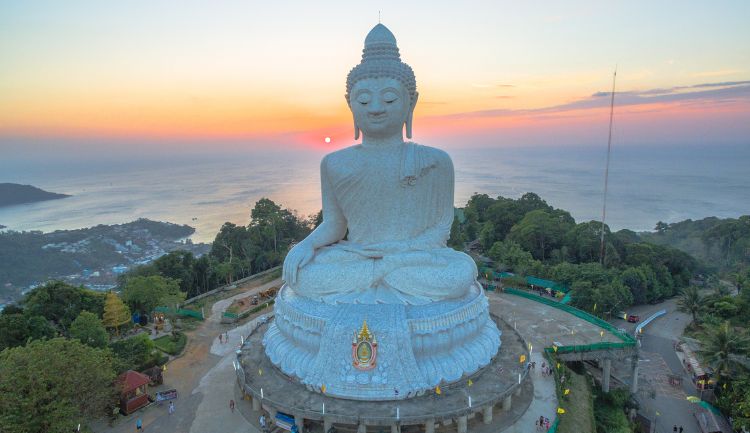
Temples, philosophy, and the cultural imprint of Buddhism in Vietnam
Perhaps the most visible expression of Buddhism’s presence in Vietnam is the pagoda, not simply as a religious structure, but as a cultural sanctuary. Unlike Western churches, Vietnamese temples often resemble peaceful gardens, with lotus ponds, incense smoke curling in the air, and bronze statues of Bodhisattvas watching serenely over worshippers. Sites like the One Pillar Pagoda and Tran Quoc Pagoda in Hanoi, Thien Mu in Hue, and the sacred peak of Yen Tu Mountain, the birthplace of Vietnamese Zen, serve not only as places of devotion, but also as community centers and historical landmarks. These pagodas, rich in symbolism and architecture, act as living museums of Vietnamese spirituality.

But Buddhism’s imprint runs deeper than architecture. It quietly shapes the Vietnamese way of thinking, even among those who don’t identify as Buddhist. Principles like compassion (từ bi), humility (khiêm tốn), and moral cause and effect (nhân quả) are ingrained in how people treat each other. Acts of merit, whether through almsgiving, temple donations, or vegetarian meals on lunar holy days, are common, not out of obligation, but from an inner sense of spiritual responsibility. Karma and the belief in reincarnation guide personal choices, from how one conducts business to how one raises a child. Even shopkeepers might light incense before opening, seeking harmony and prosperity through spiritual alignment.
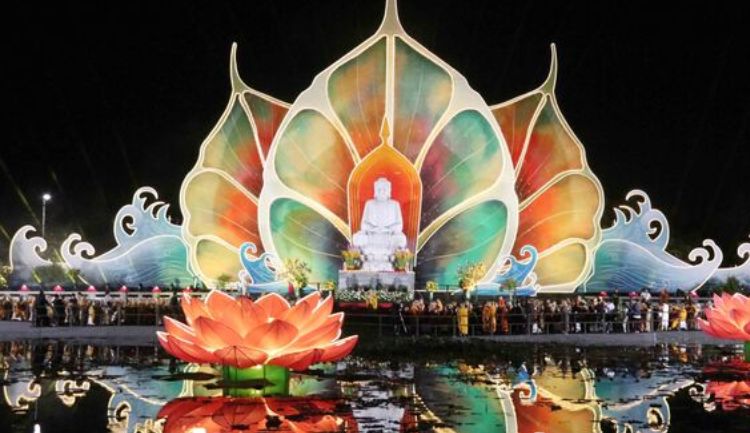
Festivals, too, reveal how deeply Buddhism flows through Vietnamese life. Vesak, Buddha’s birthday, is celebrated with colorful lanterns and flower offerings in temples across the country. The Vu Lan Festival, a powerful fusion of Buddhist and ancestral traditions, honors deceased parents and wandering souls, blending remembrance with ritual. During these times, temples overflow with people of all backgrounds, not just devout Buddhists, but families seeking connection with their heritage, and youth drawn to the values of compassion and gratitude.
Syncretism and the vietnamese spiritual framework
Vietnamese Buddhism does not exist in isolation. It interweaves seamlessly with ancestor worship and native animism, reflecting a cultural philosophy known as Tam Giáo Đồng Nguyên, the Harmony of Three Teachings: Buddhism, Confucianism, and Taoism. A single altar may feature statues of the Buddha, Confucius, and Lao Tzu, symbolizing how these philosophies jointly support moral and spiritual life.
Shrines often follow a format such as tiền Phật hậu Thần or tiền Phật hậu Mẫu, placing the Buddha at the front and local deities or Mother Goddesses at the back. This arrangement expresses both reverence for universal spiritual truths and a strong grounding in Vietnamese earth-based beliefs. One remarkable illustration is the transformation of ancient weather gods into Buddhist guardians: the Four Cloud Deities, Pháp Vân, Pháp Vũ, Pháp Lôi, and Pháp Điện, were once nature spirits, but under Buddhism, they became sacred protectors housed in temple halls and worshipped through Buddhist rituals.
» Religions in Vietnam: Harmony in Diversity
» Lunar Calendar in Vietnam: How it shapes daily life and rituals
Family life, morality, and everyday practice
In daily life, the influence of Buddhism often takes soft, familiar forms. Family altars are ubiquitous, set in living rooms or on high shelves, they carry photos of deceased relatives, incense sticks, and offerings of fruit or tea. These altars are places of memory and communication, blending Buddhist reverence with ancestral devotion. During important occasions like Tết (Lunar New Year), death anniversaries (giỗ), and Vu Lan, families make offerings not just to their ancestors, but also to the Buddha, inviting both moral guidance and spiritual protection into the household.
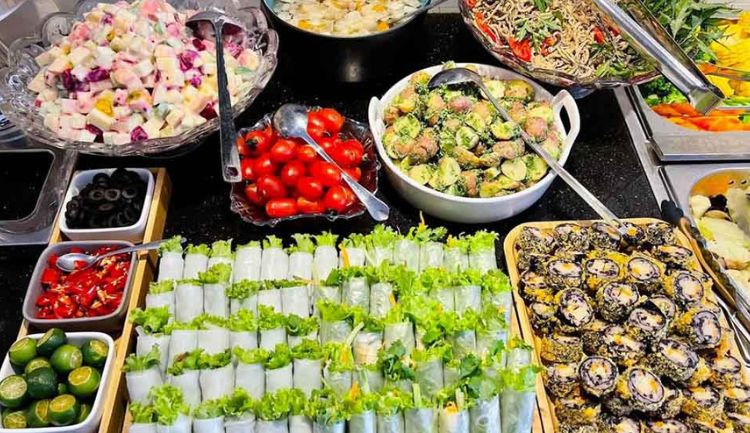
Dietary habits are another reflection. Many families, regardless of religiosity, eat vegetarian meals on the 1st and 15th days of the lunar month, not out of religious law, but as a gentle spiritual reset. Burning incense, lighting lamps, and chanting sutras are not confined to temples; they are part of the domestic spiritual rhythm, offering clarity, comfort, and connection.
Modern expressions: The case of Hòa Hảo Buddhism
A vivid example of Vietnamese Buddhism’s adaptability is found in the emergence of Hòa Hảo Buddhism in the 20th century. Founded by Huỳnh Phú Sổ in 1939 in the Mekong Delta, this sect simplified Buddhist practice, stripping away ritual excess and focusing on moral self-cultivation. Followers worship at home without monks or elaborate ceremonies. They recite prayers twice daily and live by four pillars of gratitude, to parents, country, Buddhism, and humanity. Rejecting superstition, they refrain from burning joss paper or making lavish offerings. With over two million adherents today, Hòa Hảo Buddhism demonstrates how Vietnamese spirituality remains both rooted and responsive to the times.
Art, language, and the cultural legacy of Buddhism in Vietnam
The legacy of Buddhism also flows through Vietnamese culture in subtle artistic ways. In folk tales, the character “Bụt”, a soft-spoken, benevolent version of the Buddha, often appears as a wise spirit helping the kind and punishing the cruel. This figure has become a staple of Vietnamese moral storytelling. Buddhist motifs pervade poetry, theater, and proverbs. In visual art, depictions of Quan Âm (the bodhisattva Avalokiteśvara) often wear traditional Vietnamese chignon hairstyles and áo dài, symbolizing how deeply these sacred icons have been localized.
Experiencing Buddhism in Vietnam as a Traveler
For travelers, engaging with Buddhism in Vietnam is a way to understand the country’s soul. A quiet walk through Tran Quoc Pagoda at sunset, or witnessing an offering ceremony during Vu Lan, can leave a lasting impression. But to go beyond the surface, to understand symbols, etiquette, and meanings, it helps to explore with local context. Organizations like the Hanoi Free Private Tour Guide Club connect visitors with local students, many of whom are knowledgeable about Buddhist traditions. They guide travelers through temples like Ba Da, Quan Su, or hidden pagodas in the Old Quarter, explaining stories, rituals, and beliefs that turn a tourist stop into a meaningful spiritual experience.
Buddhism and Vietnamese identity
More than a set of doctrines or formal rituals, Buddhism in Vietnam is a quiet, enduring presence, a moral compass, a source of solace, and a shared cultural language. In times of hardship, it has offered peace and resilience; in times of prosperity, it encourages humility and generosity. Whether through a family’s altar, a monk’s sermon, or the quiet act of lighting incense, Buddhism continues to nourish Vietnamese identity, not loudly, but with the gentle persistence of a bell echoing through mist.
Explore Buddhism with Hanoi Free Private Tour Guide Club
Looking to explore Buddhist sites and traditions in Hanoi? The Hanoi Free Private Tour Guide Club connects travelers with passionate local guides — for free! Their volunteer guides offer:
✅ Authentic local insights into Buddhism and Vietnamese culture
✅ Free walking tours of temples, pagodas, and historic quarters
✅ Friendly conversation and cultural exchange
👉 Book a free cultural tour today and see Hanoi through the eyes of a local.
Frequently Asked Questions (FAQ) about Buddhism in Vietnam
Buddhism came to Vietnam around the 1st–2nd century CE via both maritime and land routes, arriving from India and China. It was quickly localized by Vietnamese monks and communities.
Vietnamese Buddhism is uniquely syncretic. It blends Mahayana teachings with indigenous beliefs, ancestor worship, Taoist practices, and Confucian ethics — forming a flexible, localized expression of faith.
Yes. While not always practiced formally, Buddhist values continue to shape daily habits, moral decisions, rituals, and holidays. Even secular households often follow Buddhist customs like vegetarian days or temple visits.
Tam Giáo Đồng Nguyên means “Three Teachings in Harmony” — Buddhism, Confucianism, and Taoism. It reflects the Vietnamese way of integrating multiple philosophies into a balanced spiritual life.
Hòa Hảo is a Vietnamese Buddhist sect founded in 1939 that emphasizes simple, home-based practice without temples, rituals, or statues. It focuses on self-discipline, moral living, and social responsibility.
Yes! Most temples welcome visitors. For a meaningful experience, consider using a service like Hanoi Free Private Tour Guide, where local volunteers guide you through cultural sites with insight into Buddhism’s history and practices.
Vietnam mainly practices Mahayana Buddhism, though Theravāda Buddhism is found in the South, especially among Khmer ethnic groups.
Many do, but for others, Buddhism blends with ancestor worship, folk beliefs, and Confucian teachings. It’s more a cultural way of life than a strict religion.
Absolutely. Most temples and pagodas are open to visitors. Just dress modestly, remove shoes when required, and avoid loud behavior.
Bow gently at the altar – Burn incense respectfully – Avoid pointing feet at statues – Don’t take selfies inside main halls
________________________________________
HANOI FREE PRIVATE TOUR GUIDE
✤ Website: Hanoi Free Private Tour Guide
✤ Adress: 158 Chua Lang, Dong Da, Hanoi
✤ Hotline: (+84) 97 63 69 796
✤ Mail: hanoifreeprivatetourguide@gmail.com
✤ English Course: Efis English
Read more
✧ Vietnamese Death Anniversary: How it’s celebrated?
✧ Private Guide Hanoi: Discovering the heart of the Old Quarter