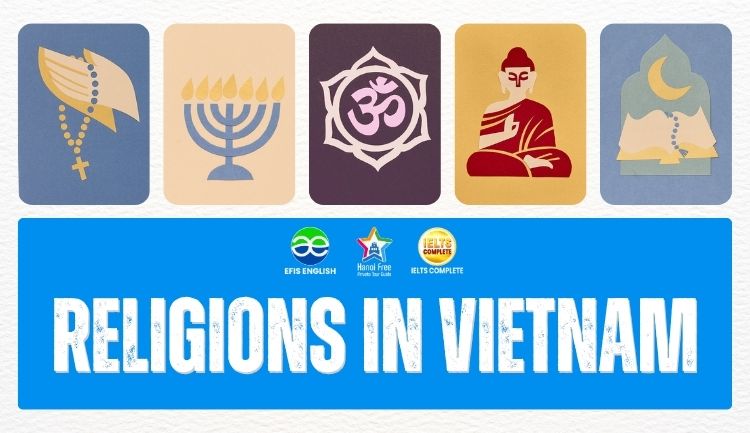
Vietnam is a land where faith is lived, not just practiced. Temples and pagodas rise beside churches, ancestral altars glow in modern homes, and incense smoke mingles with city air. In this cultural mosaic, religions in Vietnam coexist in remarkable harmony, reflecting a deep respect for spirituality, morality, and community.
Religion here is not only about worship – it’s about how Vietnamese people understand life, death, family, and destiny.
A brief historical overview of Religion in Vietnam
Vietnam’s religious identity has evolved over more than 2,000 years, blending indigenous beliefs with imported traditions like Buddhism, Confucianism, Taoism, and Christianity.
- Indigenous Roots
Before organized religions, ancient Vietnamese communities practiced animism – the belief that all things, from rivers and mountains to ancestors’ spirits, have a soul. These early spiritual practices laid the foundation for ancestor worship, which remains central to Vietnamese religious life today.
- Chinese Influence (1st – 10th Century)
During a millennium of Chinese rule, Buddhism, Confucianism, and Taoism flowed into Vietnam. Rather than replacing native beliefs, they blended to form a uniquely Vietnamese concept known as Tam Giao Dong Nguyen – “Three Teachings in Harmony.”
- Western Influence (16th Century Onward)
European missionaries introduced Christianity, especially Catholicism, in the 16th century. Later, Protestantism, Islam, and new Vietnamese-born religions like Cao Dai and Hoa Hao Buddhism appeared, enriching the nation’s spiritual landscape.
Major Religions in Vietnam
1. Buddhism – The Heart of Vietnamese Spirituality
Buddhism arrived from India and China around the 2nd century AD and soon became the dominant faith. By the Ly and Tran dynasties (11th–14th centuries), it was the national religion. Vietnamese Buddhism blends Mahayana and Theravada traditions, emphasizing compassion, mindfulness, and karma. Pagodas are everywhere – from Hanoi’s Tran Quoc Pagoda to Hue’s Thien Mu Pagoda, and the iconic Yen Tu Mountain, birthplace of Vietnamese Zen Buddhism. Even today, though not everyone identifies as Buddhist, many follow Buddhist-influenced customs: eating vegetarian on lunar days, praying for ancestors, or living with moral humility.
2. Confucianism – The Moral Framework
Confucianism is not a religion in the Western sense but a system of ethics emphasizing harmony, respect, and duty. It shaped Vietnam’s social order, education, and family values for over 1,000 years. At its heart lies filial piety – honoring parents, elders, and ancestors – the cornerstone of Vietnamese social life. You can still see Confucian influence in family altars, education rituals, and the Temple of Literature in Hanoi, built in 1070 to honor Confucius.
3. Taoism – The Mystical Harmony
Taoism entered Vietnam around the same time as Buddhism and Confucianism. Its focus on balance, nature, and spiritual flow blended seamlessly with local folk beliefs. Many Vietnamese rituals, fortune-telling practices, and traditional medicine are rooted in Taoist thought. Temples like Quan Thanh Temple in Hanoi or Ngoc Son Temple by Hoan Kiem Lake still honor Taoist deities such as Tran Vu, the God of the North.
4. Catholicism – A Faith of Devotion and Community
Introduced by Portuguese and French missionaries in the 16th century, Catholicism grew steadily, especially under French colonial rule. Today, Vietnam has one of the largest Catholic populations in Asia, with about 6–7 million followers. Cathedrals like St. Joseph’s Cathedral in Hanoi and Notre Dame Cathedral in Ho Chi Minh City are architectural landmarks, symbolizing both faith and resilience. Catholic communities are known for their unity and humanitarian work, often running schools, hospitals, and charities.
5. Protestantism – The Modern Christian Voice
Protestantism arrived in the early 20th century through American and European missionaries. It is growing rapidly, especially among ethnic minorities in the Central Highlands and northern mountainous regions. Worship services emphasize personal connection with God, Bible study, and community gatherings, reflecting a modern yet spiritual outlook.
6. Cao Dai – Vietnam’s Syncretic Religion
Founded in 1926 in Tay Ninh Province, Cao Dai unites elements from Buddhism, Taoism, Christianity, Confucianism, and even Western humanism. Its central belief is “All religions share one same divine truth.” Cao Đai followers worship both Eastern and Western saints – from Buddha and Confucius to Jesus Christ, Joan of Arc, and even Victor Hugo. The Cao Dai Holy See in Tay Ninh is a stunning, colorful temple and one of Vietnam’s most intriguing spiritual destinations.
7. Hoa Hao Buddhism – The Religion of Simplicity
Founded in 1939 by Huynh Phu So in the Mekong Delta, Hoa Hao Buddhism emphasizes simplicity, morality, and self-cultivation. Followers worship at home instead of in elaborate pagodas and reject expensive rituals or idol worship. Its philosophy — “Study the Buddha’s way, cultivate humanity” – “Học Phật, Tu Nhân” – promotes compassion and personal discipline. Today, it has over 2 million followers, mainly in southern Vietnam.
8. Islam – The Faith of the Cham People
Islam came to Vietnam through maritime trade with Arab and Malay merchants as early as the 10th century. Most Muslims in Vietnam are Cham people, concentrated in An Giang, Ninh Thuan, and Binh Thuan provinces. The Cham mosques, such as the Mubarak Mosque in An Giang, are vibrant cultural centers where Islamic traditions blend with local customs.
The harmony of Beliefs: Three Teachings from One Source (Tam Giao Dong Nguyen)
One of the most unique features of religions in Vietnam is how they blend rather than compete. This harmonious coexistence is known as “Tam Giáo Đồng Nguyên” — literally, “Three Teachings from One Source”. It refers to the deep integration of Buddhism, Confucianism, and Taoism into a single moral and spiritual framework that guides daily Vietnamese life. Rather than seeing these teachings as opposing doctrines, Vietnamese people view them as three paths leading to the same truth: how to live a virtuous, balanced, and compassionate life.
- From Buddhism, they inherit compassion, karma, and the belief that good deeds bring peace to both the living and the dead.
- From Confucianism, they learn duty, respect, and the importance of moral order – within the family, community, and society.
- From Taoism, they embrace harmony with nature, spiritual balance ying yang, and the idea that peace comes from understanding the natural flow of life.
These three teachings are not kept separate; they are woven into the same spiritual fabric. A single Vietnamese household might burn incense before an ancestor altar (Confucian), pray to Buddha for peace (Buddhist), and hang Taoist talismans to protect against bad luck. Even temples in Vietnam reflect this unity. Many pagodas such as Ngoc Son Temple by Hanoi’s Hoan Kiem Lake or Quan Thanh Temple – honor Buddha, Confucius, and Taoist deities side by side. Visitors may notice different altars within the same complex, each representing one aspect of the spiritual whole.
This harmony shows that Vietnamese people don’t think of religion in terms of “either/or.” Instead, they see spirituality as a shared moral path – a flexible, inclusive system that evolves with time while staying rooted in respect, compassion, and community.

Religion in daily life in Vietnam
In Vietnam, religion is not confined to temples or special days – it breathes through everyday life. Whether in bustling cities or quiet villages, spiritual customs shape how people eat, work, travel, and care for one another.
- In the Home
Almost every Vietnamese family has an ancestral altar – the spiritual heart of the house. Fresh flowers, fruit, candles, and incense are offered daily to honor deceased relatives. Before important decisions or family events (weddings, exams, house purchases), family members often light incense and “report” to their ancestors, seeking blessing and guidance. This practice expresses filial piety – a Confucian value – but also echoes Buddhist gratitude and Taoist respect for harmony between the living and the dead.
- In Work and Business
Religion also influences how Vietnamese people conduct business. Shops and offices frequently have small altars for the God of Wealth and the Earth God. Every morning, owners light incense and place offerings like fruit, rice wine, or cigarettes to invite prosperity. During the Lunar New Year or the God of Wealth Day (10th of the first lunar month), these rituals become even more elaborate — with the belief that honoring these deities ensures a lucky and prosperous year.
- In Community and Festivals
Religious festivals bring communities together. People gather at pagodas during Vu Lan (Ghost Festival) to pray for their parents’ souls, or at Lunar New Year to welcome ancestors home. These rituals combine Buddhist prayer, Confucian family devotion, and Taoist cosmology – showing again the blend of the Three Teachings. Even secular celebrations often have spiritual undertones: offering fruit before a journey, avoiding unlucky days for weddings or house moves, or consulting the lunar calendar for auspicious dates — all reflect deep-rooted spiritual thinking.
- In Modern Life
While many young Vietnamese today live in modern, globalized cities, religion still quietly shapes their values. Concepts like karma, merit, and respect for elders influence social behavior. Acts of charity, kindness to animals, and gratitude to parents are seen not just as good manners, but as spiritual duties. Vietnam’s spirituality is subtle yet omnipresent, it doesn’t demand strict worship, but it guides moral life and preserves cultural continuity. This balance between tradition and modernity makes Vietnam’s religious culture both dynamic and deeply humane.
Book our free tour guide!

Hanoi Old Quarter Walking Tour
❤❤❤❤❤ (TripAdvisor / GetYourGuide)
Historical Tour – Walking Tour – Small Group
⚑ 3 – 4 hours
✎ Free Tour – Free Cancellation

Hanoi French Quarter Walking Tour
❤❤❤❤❤ (TripAdvisor / GetYourGuide)
Historical Tour – Walking Tour – Small Group
⚑ 3 – 8 hours
✎ Free Tour – Free Cancellation
Experiencing Religions in Vietnam as a Traveler
As a traveler, you can immerse yourself in Vietnam’s spiritual heritage through authentic experiences:
- Visit iconic temples and pagodas: Tran Quoc Pagoda (Hanoi), Thien Mu Pagoda (Hue), and One Pillar Pagoda.
- Explore historical churches: St. Joseph’s Cathedral (Hanoi), Notre Dame Cathedral (HCMC).
- Discover Cham mosques and Cao Đài temples in southern Vietnam.
- Join local festivals: Visit during Tết or Vu Lan to witness rituals of gratitude and renewal.
- Take a free cultural walking tour with the Hanoi Free Private Tour Guide Club, where friendly student guides explain the meanings behind altars, statues, and rituals in everyday life
The story of religions in Vietnam is not one of division, but of harmony. Across centuries, Vietnamese people have learned to blend diverse faiths into a single moral rhythm – one that honors ancestors, cherishes compassion, and celebrates balance between heaven and earth. Here, spirituality is not just a belief; it’s a way of life.
Want to experience Vietnam’s spiritual heart firsthand? Join the Hanoi Free Private Tour Guide Club, where local student volunteers lead free walking tours through Hanoi’s temples, pagodas, and historical landmarks. You’ll not only explore sacred sites but also learn how religion shapes Vietnamese values, festivals, and daily rituals. Book your free cultural tour today at hanoifreeprivatetourguide.com
_____________________________________
HANOI FREE PRIVATE TOUR GUIDE
✤ Website: Hanoi Free Private Tour Guide
✤ Adress: 158 Chua Lang, Dong Da, Hanoi
✤ Hotline: (+84) 97 63 69 796
✤ Mail: hanoifreeprivatetourguide@gmail.com
✤ English Course: Efis English
Read more
✧ Votive Papers in Vietnamese Culture
✧ Tire Sandal Workshop in Hanoi: My best crafting memories