The Vietnamese New Year’s Eve ritual, known as Cúng Giao Thừa, is one of the most sacred ceremonies in Vietnamese culture. It takes place at the exact moment when the old lunar year ends and the new year begins. This ritual is not only a religious act but also a spiritual bridge between past and future, humans and deities, ancestors and descendants.
For Vietnamese families, Giao Thừa is a time of purification, gratitude, and renewal. The ritual reflects deep-rooted beliefs about fate, protection, harmony, and moral continuity. Whether performed in a modest apartment or a traditional ancestral home, its spiritual meaning remains profound.
The meaning of the Vietnamese New Year’s Eve Ritual
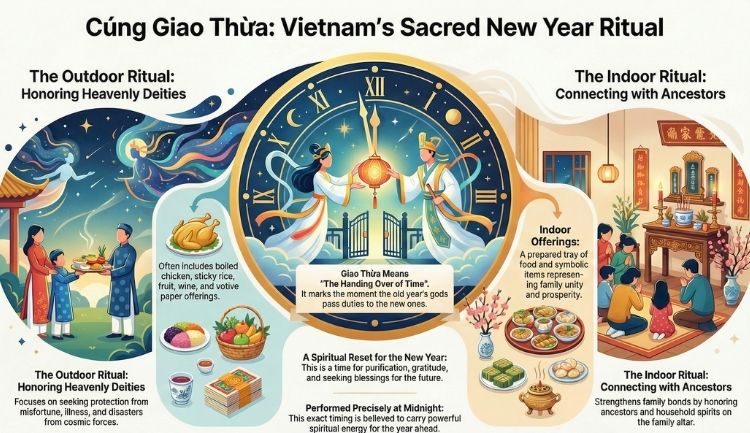
At its core, the Vietnamese New Year’s Eve ritual symbolizes transition and rebirth. The term “Giao Thừa” literally means “the handing over of time”. The word “Giao” means “to hand over”, while “Thừa” means “to receive”. Together, it represents the moment when the gods of the old year pass their duties to the gods of the new year.

This ritual expresses gratitude to the deities who protected the household throughout the past year. It also seeks blessings, peace, and prosperity for the coming year. Vietnamese people believe this moment carries powerful spiritual energy, making prayers offered at this time especially meaningful.
“Cúng Giao Thừa” also reflects the Vietnamese philosophy of harmony between heaven, earth, and humanity. It reinforces respect for cosmic order, moral conduct, and ancestral continuity.
Historical origins of Cúng Giao Thừa
The New Year’s Eve ritual has its origins in ancient East Asian cosmology and Vietnamese folk beliefs. Influenced by Taoism and indigenous spirituality, the ritual developed from the belief in Heavenly Officials who oversee human affairs year by year.
In traditional belief, each lunar year is governed by a specific deity. At midnight, the outgoing deity returns to heaven, while the incoming deity descends to assume responsibility. The ritual is performed to respectfully bid farewell to the old deity and welcome the new one.
Over centuries, this belief blended with ancestor worship and Confucian ethics, forming the ritual structure practiced in Vietnam today.
Timing and Ritual Procedure
The ritual is performed precisely at midnight, when the lunar year transitions. This exact timing is believed to be spiritually significant.
The ceremony typically begins with the outdoor ritual, followed by the indoor one. Family members dress neatly and approach the ritual with calmness and respect. Incense is lit, prayers are recited, and offerings are presented with sincerity.
Silence and focus are important, as the moment is believed to determine the household’s spiritual energy for the entire year.
Forms & Offerings used in the Vietnamese New Year’s Eve Ritual
Vietnamese New Year’s Eve rituals are traditionally divided into two complementary forms.

- The outdoor ritual addresses cosmic forces and unseen protectors. It focuses on protection from misfortune, illness, and disasters.
- The indoor ritual strengthens family bonds and ancestral connection. It seeks blessings for harmony, health, and success.
Together, these two forms reflect the Vietnamese worldview of balance between heaven and humanity, spiritual forces and family roots.
Offerings play a central role in Cúng Giao Thừa, symbolizing sincerity, respect, and abundance:
Outdoor New Year’s Eve Offerings
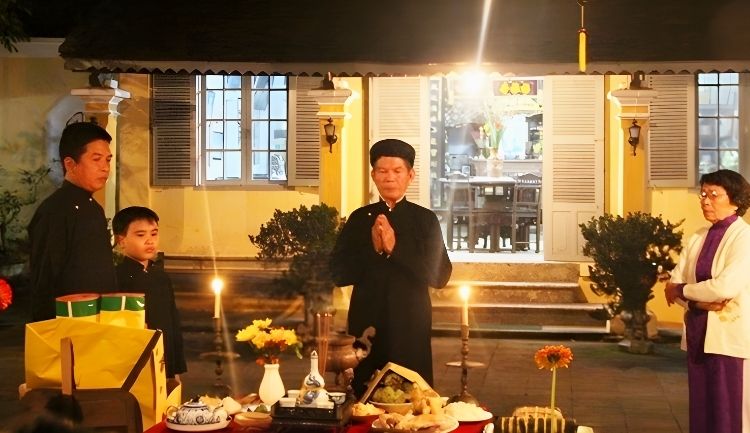
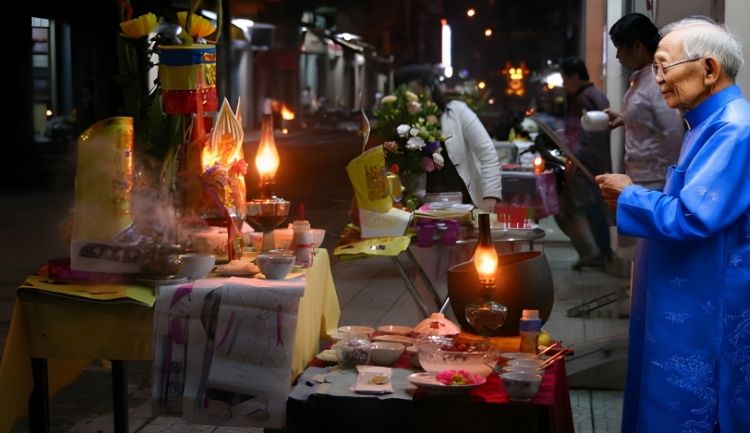
The outdoor offering is dedicated to Heavenly Deities and Year-Governing Spirits. It is usually placed in front of the house, in the courtyard, on the balcony, or near the entrance.
Typical outdoor offerings include incense sticks, candles, flowers, betel leaves, fruits, rice, salt, tea, wine, and traditional food such as boiled chicken or sticky rice. Some families also prepare votive paper offerings, symbolizing wealth and protection in the spiritual realm.
The outdoor ritual reflects respect for cosmic forces and seeks protection for the household.
Indoor New Year’s Eve Offerings
The indoor offering is dedicated to ancestors and household spirits. It is placed on the family altar inside the home.
This offering often includes a carefully prepared tray of food, fruits, incense, and symbolic items representing prosperity and family unity. The indoor ritual emphasizes filial piety and the belief that ancestors continue to guide and protect their descendants.

Prayers used during the Vietnamese New Year’s Eve Ritual
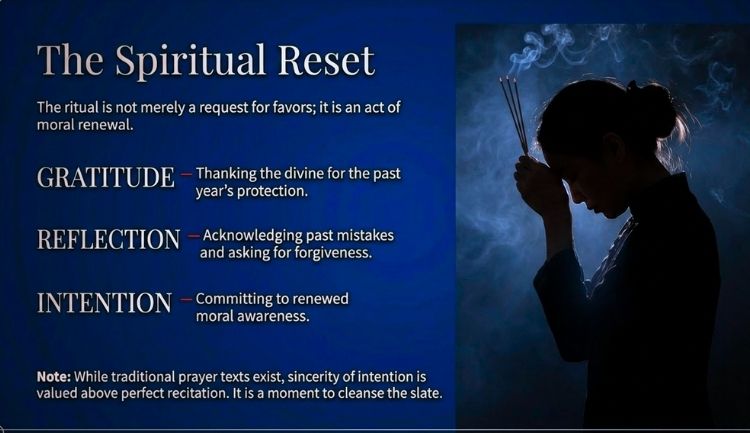
Prayers during Cúng Giao Thừa are respectful, humble, and symbolic. They express gratitude, acknowledge past mistakes, and request blessings for peace, health, and prosperity.
Although traditional prayer texts exist, many families adapt the wording to reflect personal wishes. The sincerity of intention is considered more important than perfect recitation.
Beliefs and Spiritual Faith Surrounding Cúng Giao Thừa
Vietnamese people believe that the New Year’s Eve ritual can influence luck, health, and harmony throughout the year. It is thought that families who perform the ritual sincerely will receive protection and guidance.
The ritual also acts as a spiritual reset. People reflect on past actions, forgive mistakes, and begin the new year with renewed moral awareness.
Taboos and Practices to avoid during the Ritual
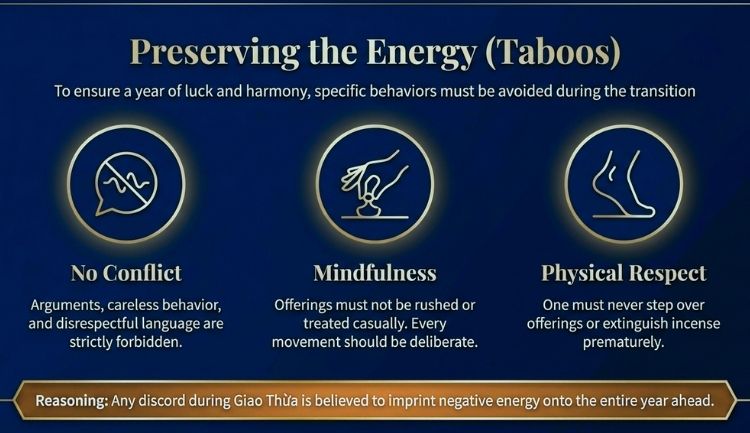
Vietnamese tradition emphasizes respect during the New Year’s Eve ritual. Arguments, careless behavior, and disrespectful language are avoided. Offerings should not be rushed or treated casually.
People also avoid stepping over offerings, extinguishing incense prematurely, or interrupting prayers. These taboos reinforce mindfulness and reverence during the sacred moment.
Regional Differences across Vietnam in New Year’s Eve Rituals
Although the core meaning remains consistent, regional variations exist.
In northern Vietnam, rituals are often more formal and symbolic, with strong emphasis on ancestral worship. Central Vietnam tends to incorporate royal and spiritual influences, while southern Vietnam emphasizes simplicity and family warmth.
These differences reflect regional histories while preserving shared cultural values.
How the ritual has changed over time
Modern lifestyles have simplified many aspects of Cúng Giao Thừa. Elaborate offerings are no longer required, and families focus more on spiritual meaning than formality.
Despite modernization, the ritual remains a powerful symbol of Vietnamese identity. Its adaptability ensures continuity across generations.
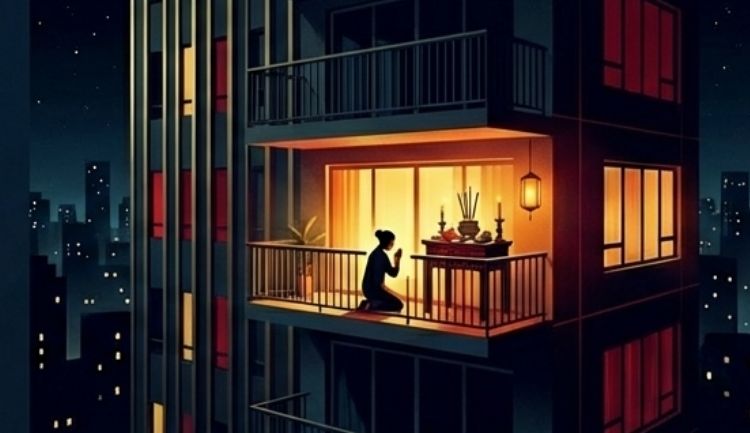
Nowadays, many families continue traditional rituals while adapting to modern living spaces. For apartment dwellers, the outdoor ritual may be conducted on a balcony or near a window facing outward. The key principles remain unchanged: respectful timing, clean preparation, sincere offerings, and mindful prayer. Simplicity is acceptable as long as the ritual is performed with genuine intention.
Experiencing Vietnamese New Year’s Eve Ritual as a Traveler
For travelers, witnessing or learning about Cúng Giao Thừa offers rare insight into Vietnam’s spiritual soul. However, understanding the deeper meanings often requires local explanation.
That is where cultural ambassadors play a vital role.
Discover Vietnamese New Year Traditions with Hanoi Free Private Tour Guide Club
If you wish to understand Vietnamese New Year rituals beyond surface observation, Hanoi Free Private Tour Guide Club offers a unique opportunity. This volunteer-based organization connects travelers with locals who act as cultural ambassadors. They explain rituals like Cúng Giao Thừa, ancestor worship, temple etiquette, and Tet customs in clear, respectful ways.
By joining a free walking tour in Hanoi, you gain meaningful cultural insight while supporting cultural exchange and local education.
Book our free tour guide!

Hanoi French Quarter Walking Tour
❤❤❤❤❤ (TripAdvisor / GetYourGuide)
Historical Tour – Walking Tour – Small Group
⚑ 3 – 4 hours
✎ Free Tour – Free Cancellation

Hanoi City Tour
❤❤❤❤❤ (TripAdvisor / GetYourGuide)
Most Popular – Walking Tour – Small Group
⚑ 3 – 8 hours
✎ Free Tour – Free Cancellation
A ritual that connects Time, Family, and Faith
The Vietnamese New Year’s Eve ritual is far more than a ceremonial practice. It is a moment of reflection, gratitude, and spiritual renewal that unites generations.
Cúng Giao Thừa represents the Vietnamese belief in harmony between heaven, earth, ancestors, and the living. In a rapidly changing world, this ritual remains a timeless reminder of cultural continuity, moral values, and collective identity.
Understanding this ritual is essential to understanding Vietnam itself.
FAQ: Vietnamese New Year’s Eve Ritual (Cúng Giao Thừa)
It is a sacred Tet ceremony performed at midnight to honor deities and ancestors, marking the transition between lunar years.
Midnight is believed to be the moment when old-year deities hand over duties to new-year guardians, carrying strong spiritual energy.
Outdoor offerings honor heavenly deities, while indoor offerings honor ancestors and household spirits.
No, but many families practice it as a cultural and spiritual tradition passed through generations.
Yes, with respect. Learning from local guides helps ensure cultural understanding and appropriate behavior.
______________________________________
HANOI FREE PRIVATE TOUR GUIDE
✤ Website: Hanoi Free Private Tour Guide
✤ Adress: 158 Chua Lang, Dong Da, Hanoi
✤ Hotline: (+84) 97 63 69 796
✤ Mail: hanoifreeprivatetourguide@gmail.com
✤ English Course: Efis English
Read more
✧ Lunar New Year 2026 in Vietnam: The Year of the Horse
✧ Hanoi Lunar New Year: Cultural Activities Tet 2026 and Beyond