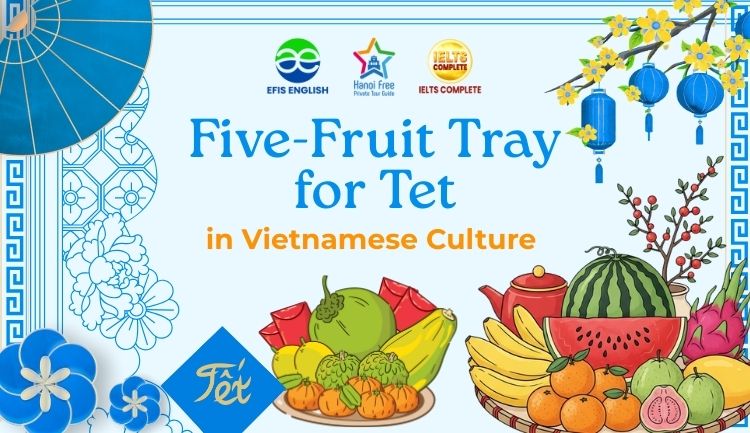
In Vietnamese culture, Tet (Lunar New Year) is not only a time for family reunions and festive meals, but also a deeply spiritual moment of gratitude toward ancestors and nature. One of the most symbolic elements of Tet is the Mâm Ngũ Quả, the Five-Fruit Tray for Tet displayed on ancestral altars. More than decoration, this fruit arrangement represents agricultural beliefs, spiritual wishes, and the Vietnamese philosophy of harmony between humans and the universe.
For foreigners visiting Vietnam during Tet, the fruit tray may look like a colorful display of seasonal produce. Yet behind each fruit lies layers of meaning tied to history, belief systems, and regional identity.
What is Mâm Ngũ Quả?
Mâm Ngũ Quả literally means “the tray of five fruits”. It originates from Vietnam’s ancient agricultural beliefs, when people depended heavily on nature and believed that Heaven, Earth, and the Five Elements governed prosperity and survival. Over time, this ritual offering evolved into an indispensable part of Tet celebrations.
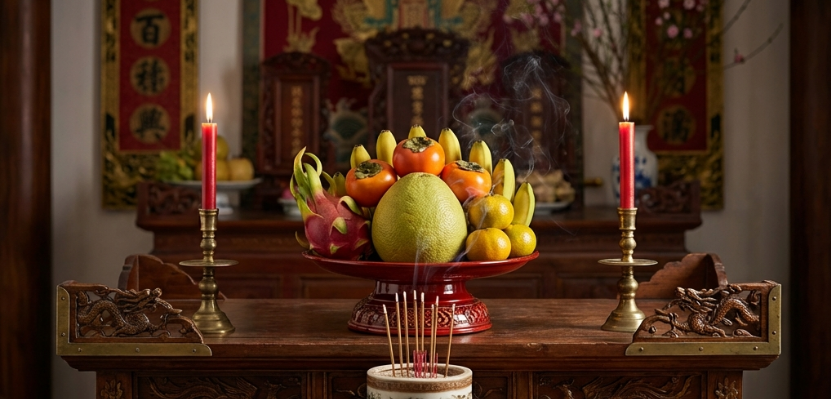
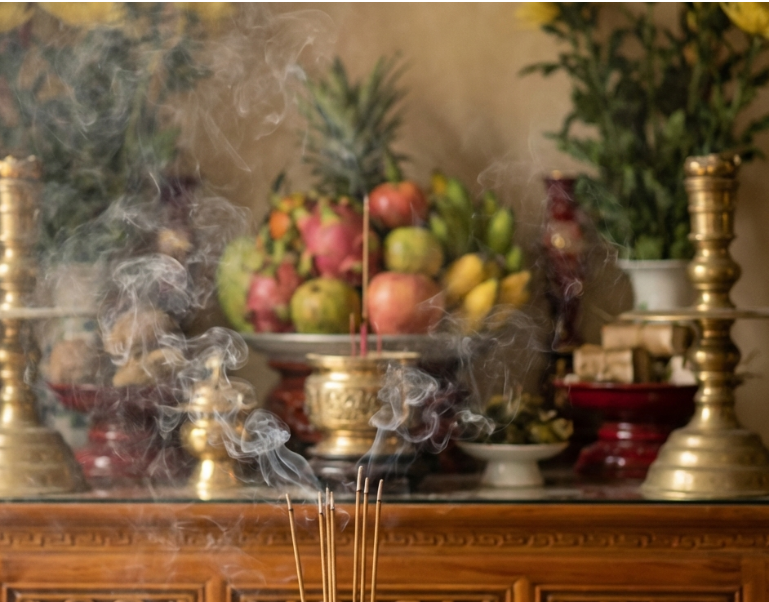
On New Year’s Eve, after cleaning and decorating their homes, Vietnamese families carefully prepare the fruit tray to place on the ancestral altar or in the main living space. This act symbolizes offering the best fruits of one’s labor to ancestors, expressing gratitude, and praying for blessings in the coming year.
Each fruit is chosen not randomly, but for its color, shape, name, and symbolic meaning -representing wishes such as wealth, health, longevity, harmony, and peace. The fruit tray transforms Tet into a sacred moment that blends family devotion with spiritual aspiration.
The origins of the Vietnamese Five-Fruit Tray
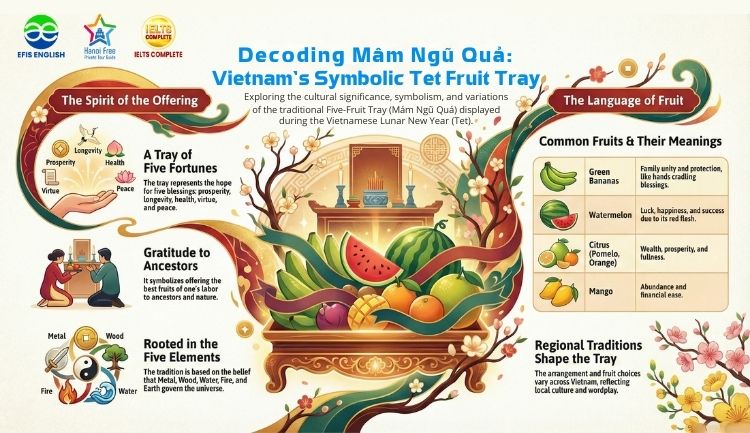
The tradition of the Five-Fruit Tray is rooted in Eastern philosophy, especially the Five Elements (Metal, Wood, Water, Fire, Earth), which are believed to govern the universe. The number five symbolizes completeness, balance, and life itself.
In Vietnamese belief, the fruit tray represents the hope that five blessings will enter the home: prosperity, longevity, health, virtue, and peace. This idea is known as “Ngũ Phúc Lâm Môn” –five fortunes arriving at the doorstep.
Historically, the fruit tray carried strong spiritual meaning. In modern times, while decorative value has increased, its cultural and emotional significance remains deeply intact – especially during Tet, when respect for ancestors is at its peak.
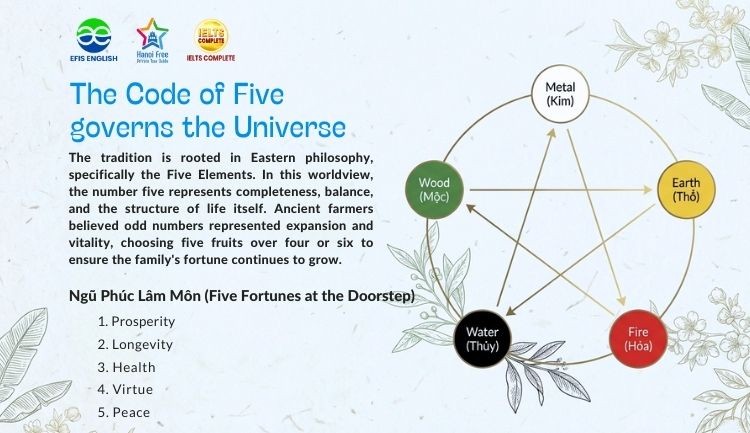
The spiritual meaning of Ngũ (Five) and Quả (Fruit)
The number five (Ngũ) symbolizes life, growth, and harmony. Ancient Vietnamese farmers believed odd numbers represented expansion and vitality, which is why five fruits – rather than four or six – were chosen. The fruit tray was even once observed to predict agricultural fortune for the coming year.
Fruit (Quả) itself symbolizes abundance and continuity. Each fruit contains seeds, representing regeneration, fertility, and the endless cycle of life. In Vietnamese thought, a fruit is a miniature universe – holding both present abundance and future potential.
Together, Ngũ Quả embodies the hope that life will continue to grow, renew, and prosper across generations.
How Vietnamese Families Prepare the Five-Fruit Tray
Preparing Mâm Ngũ Quả requires care and mindfulness. Fruits are usually selected slightly unripe so they last throughout the Tet holidays, which can span up to a week. Families choose fruits that are firm, vibrant in color, free from blemishes, and still attached to green stems.
Importantly, fruits are not washed right before arranging, as moisture can cause them to spoil quickly. Instead, they are gently wiped clean. Sharp or heavily scented fruits – such as durian or jackfruit – are traditionally avoided, as ancestral altars are sacred spaces meant to feel calm and harmonious.
The arrangement is often layered: larger fruits at the bottom for stability, smaller ones on top for balance and visual beauty.
» Vietnamese New Year’s Eve Ritual: History & Traditions
» Lunar New Year 2026 in Vietnam: About the Year of the Horse

Symbolic Fruits commonly ssed in Mâm Ngũ Quả
While fruit selection varies by region, many fruits carry shared meanings across Vietnam.
Watermelon is prized for its bright red flesh, symbolizing luck, happiness, and success. Citrus fruits like oranges and tangerines represent wealth and prosperity through their golden color. Green bananas, often placed at the base, symbolize protection and family unity – like hands gently cradling blessings.
Pomelos and Buddha’s Hand citron symbolize fullness, peace, and divine protection. Mangoes and papayas express wishes for abundance and financial ease, while coconuts symbolize completeness and resilience. Dragon fruit, with its vibrant color and seeds, represents vitality and growth.
Other fruits such as pomegranates, custard apples, persimmons, and pineapples add layers of meaning tied to fertility, harmony, and joy.
Regional variations of the Tet Fruit Tray
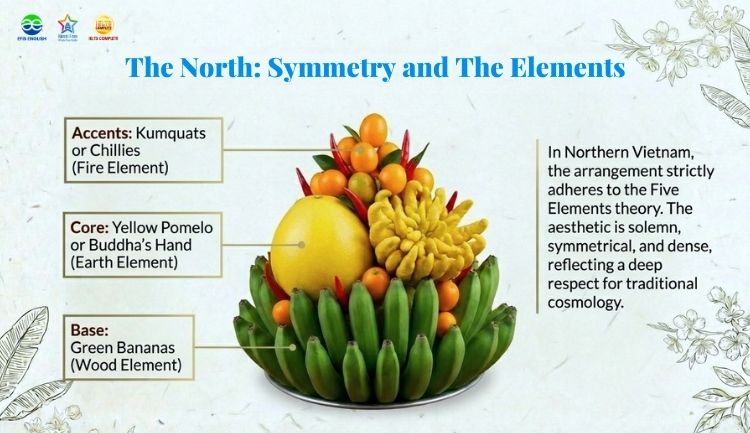
In Northern Vietnam, fruit trays emphasize balance according to the Five Elements. Green bananas often form the base, supporting pomelo or Buddha’s Hand citron, surrounded by oranges, apples, and pomegranates. The overall arrangement is symmetrical and solemn, reflecting traditional aesthetics.
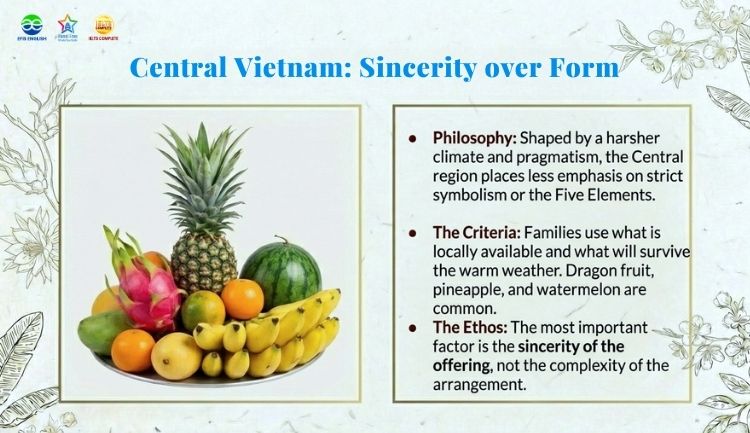
In Central Vietnam, practicality shapes tradition. Families use locally available fruits that last long in the warm climate, such as dragon fruit, pineapple, watermelon, and citrus. The emphasis is on sincerity rather than strict symbolism.
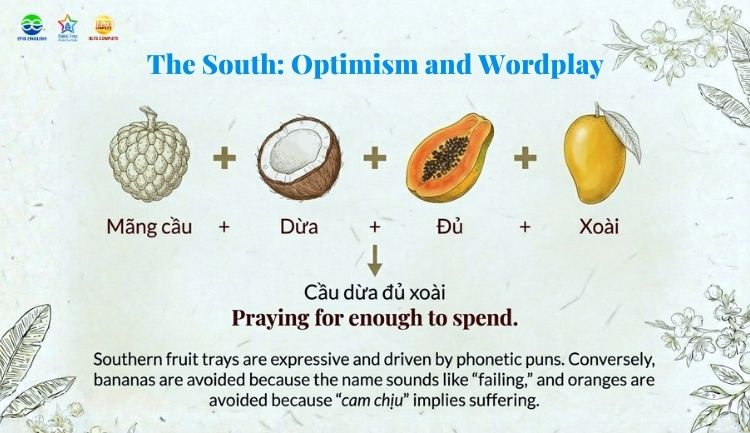
In Southern Vietnam, the fruit tray is playful and symbolic through wordplay. The popular combination of custard apple, coconut, papaya, mango, and figs sounds like a phrase meaning “may we have enough to spend and live abundantly.” Southern fruit trays are colorful, expressive, and optimistic.
Cultural values reflected in the Five-Fruit Tray
The Five Fruit Tray for Tet reflects a core Vietnamese philosophy: gratitude toward ancestors and respect for nature. By offering fruits – the result of human labor and natural harmony -Vietnamese families reaffirm the belief that prosperity is earned through balance between effort, morality, and the blessings of Heaven.
This ritual also embodies the principle of “remembering one’s roots,” reminding each generation that present happiness is built upon past sacrifices.
Experience Tet Traditions With Locals in Hanoi
Understanding traditions like Mâm Ngũ Quả goes far beyond observation – it requires cultural context. Hanoi Free Private Tour Guide Club is a volunteer-based organization where young locals act as cultural ambassadors for travelers. They offer free, personalized walking tours and can explain Tet rituals, ancestral worship, temple practices, and daily Vietnamese beliefs in a warm, accessible way.
🌸 Walk through traditional markets
🏮 Learn how Vietnamese families prepare for Tet
🍊 Discover the meanings behind fruit trays and altars
👉 Book a free cultural tour with Hanoi Free Private Tour Guide Club and experience Vietnamese traditions through authentic local stories.
Book our free tour guide!

Hanoi Street Food Tour
❤❤❤❤❤ (TripAdvisor / GetYourGuide)
Food & Drink – Walking Tour – Small Group
⚑ 3 – 4 hours
✎ Free Tour – Free Cancellation

Hanoi Cultural Exchange
❤❤❤❤❤ (TripAdvisor / GetYourGuide)
Local – Most Popular – Small Group
⚑ 3 – 8 hours
✎ Free Tour – Free Cancellation
FAQ About Five-Fruit Tray for Tet in Vietnamese Culture
Mâm Ngũ Quả is the traditional fruit tray prepared by Vietnamese families during Tet (Lunar New Year). It is placed on the ancestral altar to express gratitude to ancestors and to pray for prosperity, health, peace, and good fortune in the new year.
The number five symbolizes completeness and harmony in Vietnamese and Eastern philosophy. It is associated with the Five Elements (Metal, Wood, Water, Fire, Earth) and the belief in “Ngũ Phúc Lâm Môn” – five blessings entering the home: prosperity, longevity, health, virtue, and peace.
Yes. Each fruit carries symbolic meaning based on its color, shape, taste, or even pronunciation. For example, bananas represent protection and family unity, watermelons symbolize luck and happiness, citrus fruits signify wealth, and custard apples express wishes for fulfillment and abundance.
Traditionally, the fruits are not eaten until after the main Tet rituals are completed, usually after the first few days of the New Year. Once the offering period ends, families share the fruits among household members as a way of receiving blessings from ancestors.
Yes. Northern Vietnam emphasizes balance and the Five Elements, Central Vietnam values practicality and local produce, while Southern Vietnam often uses fruit names to form auspicious phrases wishing for abundance and financial ease. Each region reflects its climate, lifestyle, and cultural identity.
Absolutely. While tradition favors five fruits, modern families may include more or fewer fruits depending on availability and personal preference. Today, Mâm Ngũ Quả often balances cultural meaning with decorative beauty, while still maintaining its spiritual essence.
Traditionally, fruits with strong odors, sharp spikes, or that spoil quickly are avoided. Overripe fruits, wet fruits, or heavily scented fruits like durian are usually not placed on the altar to maintain a clean, respectful, and harmonious space.
Most families prepare the fruit tray on the afternoon or evening of Lunar New Year’s Eve, before the midnight transition into the new year. It is arranged carefully after the house has been cleaned and decorated.
Yes. Travelers visiting Vietnam during Tet can experience these traditions through homestays, family invitations, local markets, and cultural walking tours – especially in cities like Hanoi, where traditional customs are still strongly preserved.
the five-fruit tray – Mâm Ngũ Quả reflects core Vietnamese values such as respect for ancestors, gratitude for nature, belief in harmony, and the importance of family continuity. It is a cultural bridge connecting past generations with present and future hopes.
______________________________________
HANOI FREE PRIVATE TOUR GUIDE
✤ Website: Hanoi Free Private Tour Guide
✤ Adress: 158 Chua Lang, Dong Da, Hanoi
✤ Hotline: (+84) 97 63 69 796
✤ Mail: hanoifreeprivatetourguide@gmail.com
✤ English Course: Efis English
Read more
✧ Traditional Tet Meal: Vietnamese Lunar New Year Traditions
✧ Vietnamese Tet Meal: Essential Dishes for Tet Traditions