During the days leading up to Tet, the Lunar New Year, Vietnamese homes across the country are filled with warmth, anticipation, and the comforting aromas of traditional dishes. At the center of these preparations is the traditional Tet meal (Mâm Cơm Ngày Tết) – the New Year’s ceremonial meal. More than a festive feast, it is a deeply symbolic offering presented to ancestors and shared among family members as a way to welcome a new beginning together.
Although the dishes vary by region, every traditional Tet meal reflects shared cultural values: gratitude toward ancestors, hopes for prosperity, and the importance of family unity.
The cultural and spiritual meaning of the Traditional Tet Meal
The traditional Tet meal (Mâm Cơm Ngày Tết) is a Vietnamese Lunar New Year feast that honors ancestors and brings families together. Though dishes vary by region, its core values are gratitude, unity, and welcoming a prosperous new year.
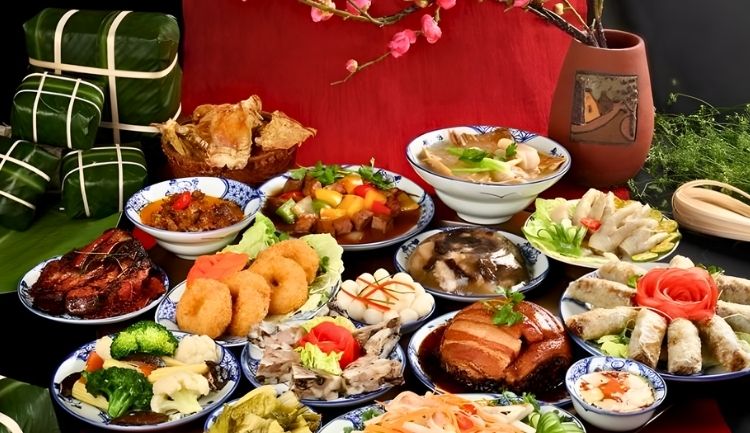
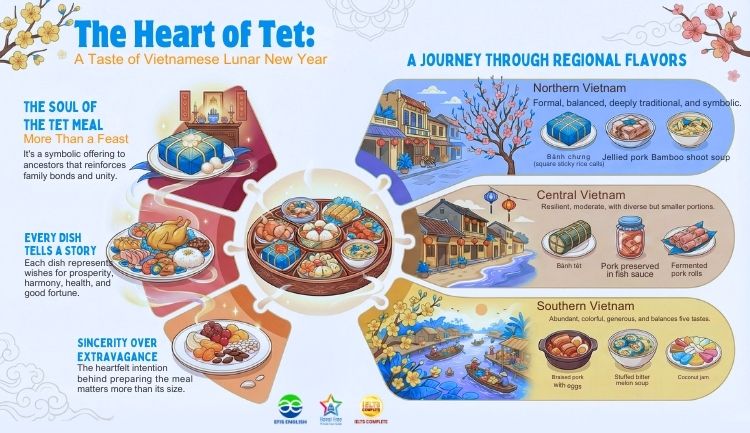
The traditional Tet meal (Mâm Cơm Ngày Tết) is not simply a celebratory feast, it is a powerful expression of Vietnamese culture, belief, and family devotion. Each dish carries symbolic meaning, representing wishes for abundance, harmony, health, and good fortune in the year ahead. Preparing the Tet meal is a way for families to show respect to their ancestors, acknowledging that present happiness is rooted in past generations.
Equally important is the emotional meaning of the meal. The act of sitting together after a year of work and separation reinforces family bonds. No matter how elaborate or simple the dishes may be, the shared intention remains unity, gratitude, and hope for a peaceful new year.
Regional diversity in the Traditional Tet Meal
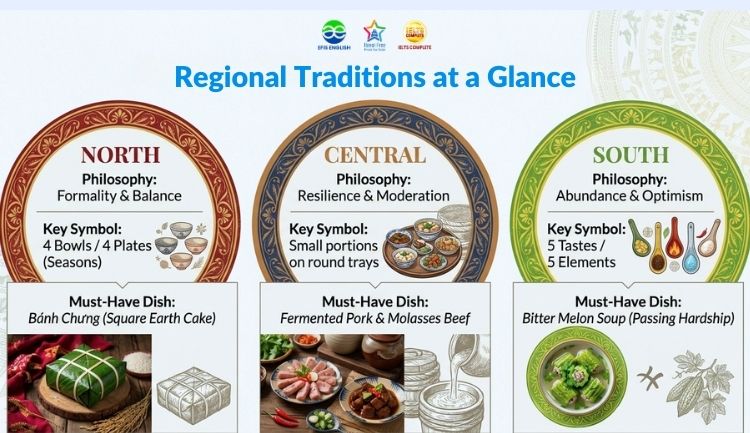
Vietnamese Tet cuisine reflects the country’s geography, climate, and local traditions. Each region – North, Central, and South – has developed its own culinary identity while preserving the shared spiritual core of the New Year meal.
» Votive Papers in Vietnamese Culture
» Lunar Calendar in Vietnam: How it shapes daily life and rituals
Traditional Tet Meal in Northern Vietnam
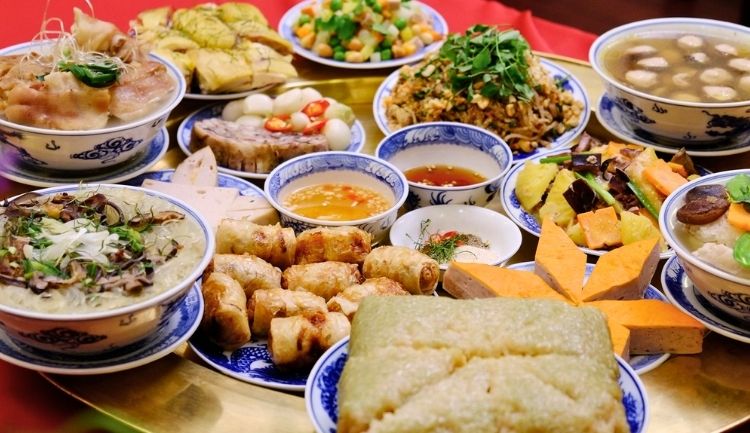
In Northern Vietnam, the traditional Tet meal is formal, balanced, and deeply rooted in tradition. Families focus on harmony in flavors, colors, and presentation. Meals often follow symbolic structures such as four bowls and four plates, representing the seasons, directions, and the balance of time. Larger gatherings may include six or eight dishes, symbolizing prosperity.
Color plays a vital role, with red, yellow, green, and white representing vitality, wealth, renewal, and purity. Dishes are served generously to express wishes for abundance.
Classic Northern dishes include jellied pork, boiled chicken, fried spring rolls, pork sausage, caramelized fish, bamboo shoot soup, glass noodle soup, pickled vegetables, and sticky rice cakes – especially bánh chưng, symbolizing the earth and gratitude toward nature.
Traditional Tet Meal in Central Vietnam
Central Vietnam’s Tet meal reflects resilience and moderation shaped by a harsher climate. Dishes are smaller in portion but diverse and carefully arranged on round trays to express unity.
Common foods include pork preserved in fish sauce, fermented pork rolls, shrimp paste, beef stewed with molasses, fresh herb rolls, boiled meats, and bánh tét. These dishes emphasize preservation, humility, and sharing, reflecting the region’s spirit of endurance.

Traditional Tet Meal in Southern Vietnam
Southern Vietnam’s Tet meal is abundant, colorful, and generous, mirroring the open and warm personality of the region. The dishes often balance the five fundamental tastes, aligning with the philosophy of the five elements.
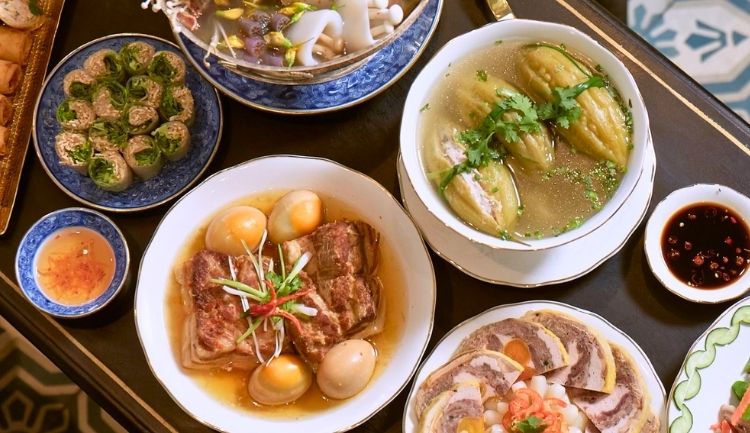
Signature dishes include bitter melon soup stuffed with meat – symbolizing the passing of hardship -braised pork with eggs representing fullness and harmony, shredded chicken salad, pickled vegetables with dried shrimp, sausages, spring rolls, coconut jam, and sweet treats. Bánh tét, in both savory and sweet versions, symbolizes abundance and optimism.
Important etiquette when preparing the Ancestral Tet Meal
Preparing food for ancestral offerings requires mindfulness and respect. Traditionally, dishes intended for worship are not tasted or altered after cooking. Raw foods and items believed to carry negative symbolism are avoided.
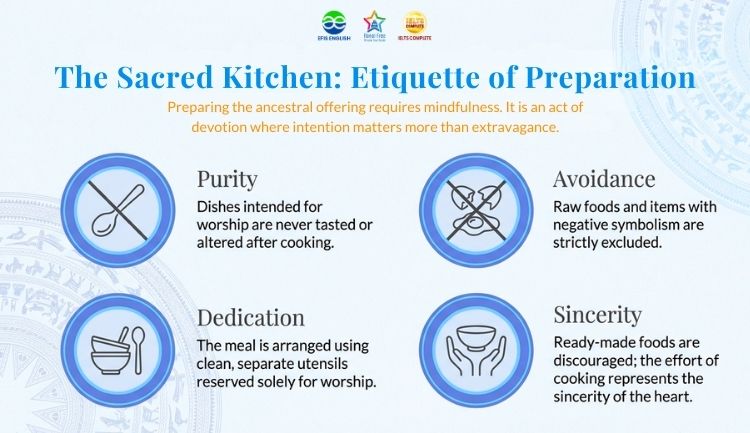
The ceremonial meal is arranged separately using clean, dedicated utensils reserved for worship. Ready-made or store-bought foods are discouraged, as cooking itself represents sincerity and devotion. Ultimately, Vietnamese belief emphasizes intention over extravagance – the heart of the offering matters more than the number of dishes.
» Lunar New Year 2026 in Vietnam: The Year of the Horse
» Iconic Figures on the Vietnamese Altar
» Hanoi Lunar New Year: Cultural Activities Tet 2026 and Beyond
A meal that preserves memory and meaning
The traditional Tet meal (Mâm Cơm Ngày Tết) is more than food – it is a living tradition that preserves Vietnamese identity across generations. Through regional flavors, symbolic dishes, and shared moments around the table, the Tet meal connects past and present while carrying hopes into the future.
Whether elaborate or simple, every Tet meal reflects timeless values: remembrance, unity, and the belief that a good beginning leads to a good year.
Book our free tour guide!

Hanoi City Tour
❤❤❤❤❤ (TripAdvisor / GetYourGuide)
Most Popular – Walking Tour – Small Group
⚑ 3 – 4 hours
✎ Free Tour – Free Cancellation

Hanoi Cultural Exchange
❤❤❤❤❤ (TripAdvisor / GetYourGuide)
Local – Most Popular – Small Group
⚑ 3 – 8 hours
✎ Free Tour – Free Cancellation
FAQ – Traditional Tet Meal (Mâm Cơm Ngày Tết)
The traditional Tet meal (Mâm Cơm Ngày Tết) is the Lunar New Year feast prepared by Vietnamese families to offer to ancestors and share with loved ones. It symbolizes gratitude, unity, and hopes for prosperity in the new year.
The Tet meal represents respect for ancestors, family bonding, and spiritual continuity. Each dish carries symbolic meaning, expressing wishes for abundance, harmony, health, and good fortune.
Yes. Northern Vietnam emphasizes structure and tradition, Central Vietnam values moderation and preservation, while Southern Vietnam highlights abundance, balance of flavors, and optimism.
While not mandatory, sticky rice cakes such as bánh chưng (North) and bánh tét (Central and South) are deeply symbolic and commonly included as representations of earth, family unity, and gratitude.
Absolutely. Modern Vietnamese families may prepare fewer dishes due to lifestyle changes, but sincerity and respect matter more than quantity. The spirit of the ritual remains unchanged.
Traditionally, raw foods, certain fish associated with bad luck, and pre-packaged meals are avoided. Home-cooked dishes prepared with care are preferred.
Yes. Travelers visiting Vietnam during Tet may experience traditional meals through homestays, cultural tours, or local family invitations—offering a rare and meaningful cultural insight.
Experience Vietnamese Tet Traditions With Locals
Curious to understand rituals like the traditional Tet meal beyond the surface?
Join a free walking tour with Hanoi Free Private Tour Guide Club, a volunteer-based organization connecting travelers with passionate young locals who serve as cultural ambassadors. Learn about ancestral worship, Tet customs, food symbolism, and everyday Vietnamese life -directly from locals. Book your free Hanoi cultural tour today and experience Vietnam through authentic local stories!
______________________________________
HANOI FREE PRIVATE TOUR GUIDE
✤ Website: Hanoi Free Private Tour Guide
✤ Adress: 158 Chua Lang, Dong Da, Hanoi
✤ Hotline: (+84) 97 63 69 796
✤ Mail: hanoifreeprivatetourguide@gmail.com
✤ English Course: Efis English
Read more
✧ Hanoi Lunar New Year: Cultural Activities Tet 2026 and Beyond
✧ Vietnamese New Year’s Eve Ritual: History & Traditions