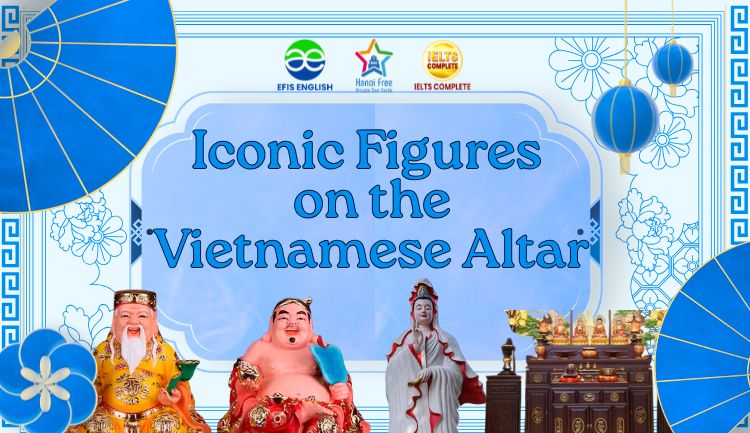
The Vietnamese altar is the spiritual heart of every home, representing a sacred bridge between the living and the invisible world. It reflects Vietnam’s unique blend of Buddhism, Taoism, Confucianism, and indigenous folk beliefs, creating a harmonious spiritual system where multiple deities, protective spirits, and ancestors coexist. Among the most Iconic Figures on the Vietnamese Altar are Ông Địa (the Earth God), Thần Tài (the God of Wealth), Ông Công – Ông Táo (the Land Genie and Kitchen Gods), Quan Âm (the Bodhisattva of Compassion), and, of course, the ancestors.
The Iconic Figures on the Vietnamese Altar are far more layered than most travel guides let on, and once you learn to read them, every home, shop, and temple in Hanoi starts telling you a story. This article breaks down who each figure is, why they sit exactly where they sit, and how to recognize them the moment you step through a doorway. By the end, you will be able to look at almost any altar in Vietnam and understand its quiet, deliberate logic.
What Are the Iconic Figures on the Vietnamese Altar?
The Iconic Figures on the Vietnamese Altar are the deities, protective spirits, and ancestors that a household or business honors together in one shared spiritual space. Vietnam’s folk religion blends Buddhism, Taoism, Confucianism, and much older indigenous beliefs, so it feels completely natural for several spiritual beings to share the same shelf. Rather than choosing one god over another, Vietnamese families build a kind of layered support system, with each figure covering a different part of life: land, wealth, household morals, compassion, and lineage.
This layered arrangement is not random. Our guide to ancestor worship in Vietnam explains how the altar itself works as a miniature universe, built on the Five Elements. The figures below are the “residents” of that universe, and knowing who they are changes how you see a doorway shrine, a shop counter, or a family’s living room.
Iconic Figures on the Vietnamese Altar at a Glance
The fastest way to understand the Iconic Figures on the Vietnamese Altar is to compare them side by side. Each figure has a distinct role, a recognizable appearance, and a specific place on the altar, and seeing them together makes the differences much clearer than reading about them one at a time. Use this table as a quick reference, then read on for the story behind each figure.
| Figure | Domain | Recognize By | Typical Offerings | Special Day | Altar Position |
| Earth God | Land, home, business flow | Round belly, bare chest, cheerful | Fruit, water, incense, rice wine | 2nd day of Tết | Low, near entrance |
| God of Wealth | Wealth, opportunity, customers | Golden robe, wealth ingot | Fruit, water, incense, rice wine | 10th day, Lunar New Year | Low, facing the door |
| Kitchen Gods | Household morality, family harmony | Three statues or symbolic paper hats | Carp, sweet xôi chè, votive paper | 23rd day, last lunar month | Near kitchen or main altar |
| Bodhisattva of Compassion | Compassion, protection, healing | White robe, lotus, water vase | Flowers, water, vegetarian snacks | 19th day, every lunar month | Highest shelf |
| Ancestors | Family protection, lineage | Photos, ancestral tablets | Incense, tea, seasonal feasts | Giỗ, Tết, 1st and 15th lunar days | Center, most honored spot |
The Earth God and the God of Wealth sit together because their jobs overlap: one protects the ground a business stands on, the other pulls customers and money toward it. You will find them almost everywhere in Hanoi, from tiny phở stalls to modern retail shops, always low to the ground and facing the front door. Vietnamese shop owners believe this pairing keeps both the physical space and its financial flow protected at the same time.
The Earth God is one of the most recognizable figures on Vietnamese altars. Originating from ancient agricultural beliefs, he represents the spirit of the land, a guardian who protects the soil, household, and community. His cheerful, round-bellied, barefoot appearance symbolizes abundance, comfort, and a grounded life. Vietnamese people believe that The Earth God maintains peace inside the home, protects its energy, and prevents wandering spirits from entering. In shops and businesses, he plays an equally important role, watching over customer flow and ensuring smooth daily operations. Offerings to the Earth God are often simple and heartfelt – fresh fruit, water, rice wine, and incense – reflecting his down-to-earth nature. He is especially honored on the 2nd day of the Lunar New Year, when families ask for luck and prosperity. His altar is always placed low to the ground, usually near the entrance, facing outward to oversee the home’s entire space.

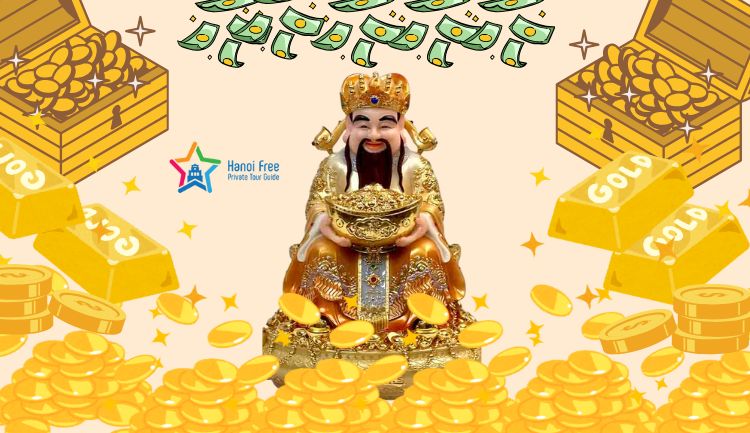
Sitting next to Ông Địa – The Earth God on the same small altar, the God of Wealth is one of the most worshipped figures in Vietnam’s commercial world. Originating from Taoist traditions and later integrated into Vietnamese folk culture, the God of Wealth represents wealth, opportunity, and success. His golden robe, wealth ingot, and bright smile make him a powerful symbol for those seeking financial prosperity. Vietnamese business owners strongly believe that The God of Wealth influences the flow of money and customer luck. That’s why cafés, restaurants, retail shops, markets, and even street vendors light incense every morning to “open the day” spiritually. The most important date associated with him is Thần Tài Day (10th day of the Lunar New Year), during which people buy gold bars to attract prosperity for the coming year
Ông Công – Ông Táo: Guardians of the home, kitchen, morality, and family order
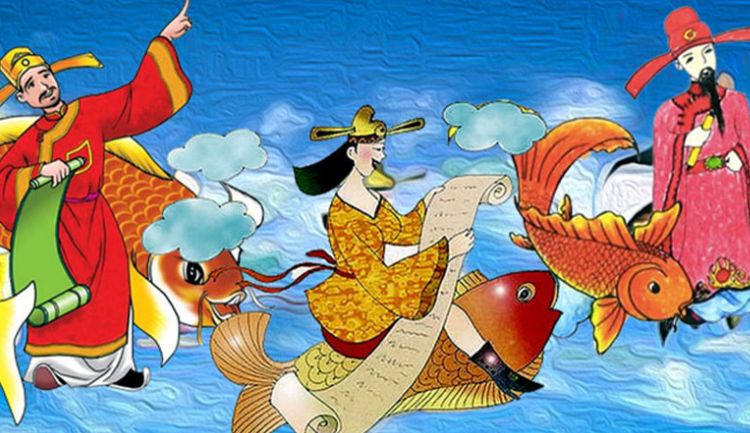
The pair known as Ông Công – Ông Táo have played an essential role in Vietnamese households for centuries. The belief system comes from a fusion of traditional Vietnamese family culture and Taoist cosmology. Ông Táo (the Kitchen Gods) are a group of three deities responsible for monitoring the family’s daily behavior, ensuring harmony in the home, and maintaining household morality. Ông Công, the Land Genie, oversees the spiritual boundary of the entire house.
Vietnamese families deeply respect these deities because the kitchen is traditionally the emotional center of the home. They believe that the Kitchen Gods observe everything that happens, from meals to family discussions, and report to the Jade Emperor once a year. This report takes place on the 23rd day of the last lunar month, marking one of the most important pre-Tet (Lunar New Year) rituals. Families clean their homes, prepare elaborate offerings, burn votive papers, and release live carp into rivers, symbolizing the journey of the Kitchen Gods to heaven.
Their images or symbolic representation are usually placed near or as part of the main family altar, and the kitchen is kept clean as an offering of respect.
Quan Âm – The Bodhisattva of compassion and protector of families
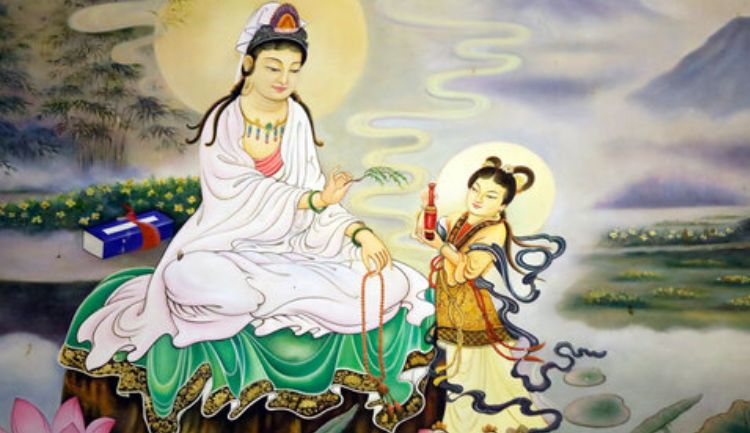
Quan Âm sits above every other figure because she represents the highest spiritual level in the household’s belief system: pure compassion, untouched by worldly desires like wealth or protection duties. In Vietnamese Mahayana Buddhism, she is shown in white robes, standing on a lotus, holding a vase of pure water, an image many households treat almost like a moral compass rather than a request line for luck. This positioning is deliberate, not decorative, and it tells you immediately which values a family considers most sacred.
Because her offerings must stay clean and vegetarian, some families give Quan Âm her own small shelf entirely separate from the ancestors and the Earth God, so meat or wine never touches her space by accident. She is especially honored on the full moon, the first day of the lunar month, and the 19th day of every lunar cycle. Many Vietnamese parents also point to her image when teaching children about patience, gentleness, and empathy, treating the altar itself as a quiet lesson in character.
» The Five Elements in Vietnamese Folk Culture
» Lunar Calendar in Vietnam: How it shapes daily life and rituals
» Traditional Tet Meal: Vietnamese Lunar New Year Traditions
How Are the Iconic Figures on the Vietnamese Altar Arranged?
Vietnamese altars follow a strict, unspoken hierarchy: the higher the shelf, the higher the spiritual rank of the figure placed there. In a typical home, Quan Âm or Buddha statues occupy the topmost shelf, ancestors hold the large central altar just below, and Ông Địa with Thần Tài sit on the floor near the entrance, facing outward toward the door. This vertical order is not just aesthetic, it mirrors how much spiritual authority a family assigns to each figure.
- Top tier: Quan Âm or Buddha, reserved for the highest spiritual figures
- Middle tier: Ancestors, in the most visually prominent and honored position
- Ground level: Ông Địa and Thần Tài, low and facing the door to “receive” luck
Business altars often skip the ancestor tier altogether and keep only Ông Địa and Thần Tài, since shop owners are usually honoring commercial success rather than family lineage. If you are curious to see this hierarchy explained in person, our club’s volunteer guides regularly point it out during free walks through Hanoi’s Old Quarter shops and temples. Once you notice the pattern, you will start spotting it in nearly every shop and home you pass.
Where Do Ancestors Fit Among the Vietnamese Altar Figures?
Ancestors hold the single most honored position on a Vietnamese altar, placed at the center and often on the tallest shelf of the household’s main cabinet. Rather than repeating that story here, our dedicated guide to ancestor worship in Vietnam covers the full belief system, the offerings, and the yearly calendar of rituals in depth. This page focuses instead on how ancestors relate to the other figures they share altar space with.
If you want to go further, our guides to Vietnamese death anniversaries, votive papers in Vietnamese culture, and Ghost Month in Vietnam, each explain a different piece of how ancestors are honored throughout the year. Together with this page, they form a fairly complete picture of how the Vietnamese altar actually works. Reading even one of them alongside this guide will make your next walk past a Hanoi altar far more meaningful.
What Other Protective Spirits Appear on Vietnamese Altars?
Beyond the five main figures, many Vietnamese homes and temples include smaller protective icons meant to guard specific spaces rather than the whole household. The Five Tigers (Ngũ Hổ) are among the most common, painted or carved in five colors that represent the five directions and the five elements, usually placed low near a temple’s entrance. They rarely receive daily offerings, but their presence is considered essential for keeping a space spiritually balanced.
Gate guardians, carved animal charms, and small zodiac figures also appear near doorways, windows, and staircases in older Hanoi homes. These smaller spirits reflect the same underlying idea found throughout Vietnamese folk belief: balancing yin and yang, and keeping negative energy from settling into a living space. Most travelers walk past them without noticing, yet locals rarely install a new door or gate without considering where one of these charms should go.
Book our free tour guide!

Hanoi Old Quarter Walking Tour
❤❤❤❤❤ (TripAdvisor / GetYourGuide)
Historical Tour – Walking Tour – Small Group
⚑ 3 – 4 hours
✎ Free Tour – Free Cancellation

Hanoi French Quarter Walking Tour
❤❤❤❤❤ (TripAdvisor / GetYourGuide)
Historical Tour – Walking Tour – Small Group
⚑ 3 – 8 hours
✎ Free Tour – Free Cancellation
Where Can Travelers See These Iconic Altar Figures in Hanoi?
You do not need an invitation into a private home to see these figures; Hanoi’s streets display them openly if you know where to look. Hàng Mã Street sells everything from painted Ông Địa statues to elaborate votive paper models, especially colorful in the weeks before Tết. Dong Xuan Market and most Old Quarter shopfronts keep a small Ông Địa and Thần Tài altar right by the entrance, easy to spot at ankle height.
For the deities placed higher up the spiritual ladder, Bạch Mã Temple and Trấn Quốc Pagoda both display Quan Âm statues in a proper devotional setting, worth a quiet ten minutes if you are already exploring the Old Quarter. Walking these streets with a local guide who can point out the small details, like why a fruit tray looks fresh or where a shop’s Thần Tài is angled, turns a normal stroll into something closer to reading a hidden language. It is the kind of detail that is easy to miss alone but impossible to unsee once someone points it out.
How Do These Altar Figures Shape Daily Life in Hanoi Today?
These figures shape ordinary mornings across Hanoi long before most tourists wake up, since shop owners light incense at their Ông Địa and Thần Tài altar to “open the day” spiritually before opening the shutters. This quiet five-minute ritual, repeated at thousands of shopfronts across the city, is one of the most consistent yet overlooked details of daily life here. You can watch it happen simply by walking through the Old Quarter around 7 or 8 in the morning.
Watching for it changes how a morning walk through the Old Quarter feels. Instead of just noticing incense smoke drifting from doorways, you will recognize exactly which figure is being honored and why, turning a small daily habit into a genuine window into Vietnamese belief. It is a small shift in attention that makes the whole city feel a little more readable.
FAQs About the Iconic Figures on the Vietnamese Altar
Ông Địa protects the physical land, home, and general household harmony, while Thần Tài specifically attracts money, opportunity, and customers. They are almost always worshipped together on the same low altar because their roles are seen as complementary rather than competing.
Altar height reflects spiritual rank, with figures like Quan Âm or Buddha placed highest, ancestors in the center, and protective deities like Ông Địa and Thần Tài closest to the floor. This hierarchy mirrors Confucian ideas of order and respect, applied to the spiritual world as much as the human one.
Yes, business altars usually focus only on Ông Địa and Thần Tài and skip the ancestor tier entirely, since shop owners are honoring commercial fortune rather than family lineage. Home altars, by contrast, almost always center on ancestors, with other figures arranged around them.
Photographing altars in public spaces like temples, markets, or shopfronts is generally fine, but always ask first inside a private home. A quick smile and a gesture toward your camera is usually enough, and most families are happy to explain a bit about their altar if you show genuine interest.
The Iconic Figures on the Vietnamese Altar work together as a kind of quiet spiritual team, each covering a different part of a family’s or a business’s wellbeing. Ông Địa and Thần Tài protect land and money, the Kitchen Gods watch over household morals, Quan Âm offers compassion from the highest shelf, and ancestors remain the most honored presence of all. Learning to spot these figures gives travelers a genuine key to reading everyday life in Hanoi, from a shop’s morning ritual to a family’s quiet gesture of respect. Once you know who is who, altars stop looking decorative and start looking deliberate. If this glimpse into Vietnamese spiritual life sparked your curiosity, a walk through Hanoi’s Old Quarter with a local guide is the easiest way to see these Iconic Figures on the Vietnamese Altar in their natural setting, explained by someone who grew up around them.