Vietnamese coffee stands among the most distinctive coffee traditions globally – intense, aromatic, slow-brewed, and deeply embedded in the rhythm of everyday Vietnamese life. From the powerful robusta beans grown in the Central Highlands to the iconic phin filter dripping patiently into condensed milk, Vietnamese coffee is a product of history, creativity, and cultural identity.
Today, it has evolved far beyond its origins, becoming both a national treasure and a global trend with a flavor profile that sets it completely apart from standard coffee around the world.
The origins of Vietnamese Coffee: From French introduction to local reinvention
Coffee came to Vietnam in the mid-19th century through French missionaries and settlers. What started as a colonial beverage quickly transformed into a local craft as Vietnamese farmers discovered that their climate favored robusta beans, higher in caffeine, richer in aroma, and more resilient than arabica. Over generations, Vietnamese growers and roasters created distinct roasting styles using butter, sugar, cocoa, and salt to produce the deep, caramelized notes now associated with Vietnamese coffee.

By the late 20th century, coffee had shifted from an imported luxury to a national crop. Today, Vietnam is the world’s #1 robusta producer and consistently among the top two coffee exporters worldwide. But beyond the statistics lies a cultural truth: coffee in Vietnam is personal, communal, and uniquely Vietnamese.
The Central Highlands: How geography created the bold taste of Coffee
The unforgettable flavor of Vietnamese coffee begins in the Central Highlands, particularly Buon Ma Thuot, Dak Lak, Gia Lai, and Lam Dong. This region’s volcanic soil, abundant sunlight, heavy rainfall, and high-altitude plateaus create ideal growing conditions for robusta beans. Unlike delicate arabica varieties, robusta thrives in this environment, producing cherries packed with caffeine, bitterness, and a signature nutty, woody richness.
Generations of farmers in the Highlands have used both traditional hand-picking and modern cultivation methods to maintain quality. Shade-grown practices, selective harvesting, and intercropping with pepper or fruit trees help preserve the ecosystem while enhancing flavor.
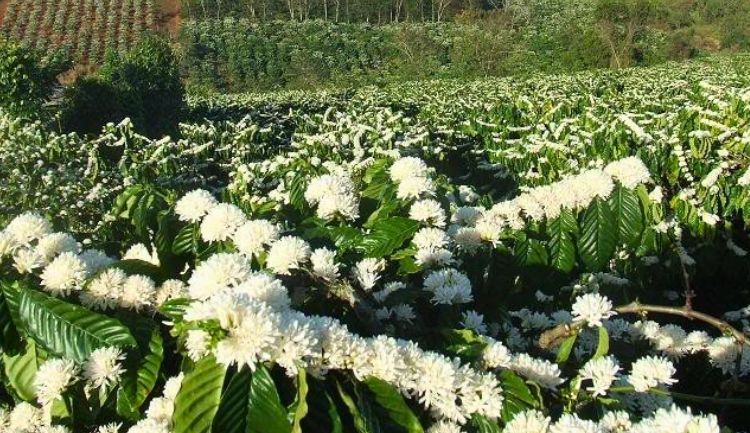
Because robusta beans contain nearly twice the caffeine of arabica and naturally produce a thicker, stronger brew, they give Vietnamese coffee its characteristic intensity, bold enough to shine through condensed milk and ideal for slow-drip phin brewing.
Why Vietnamese Coffee tastes so different from “Regular Coffee” around the World?
For many first-time drinkers, Vietnamese coffee tastes shockingly strong, almost like an espresso concentrate but with deeper, darker notes. The differences come from several factors that make Vietnamese coffee a category of its own:
1. Robusta vs. Arabica
Most global coffee (especially from cafés like Starbucks) uses arabica beans, known for their fruity, acidic, floral profiles. Vietnamese coffee uses robusta, which is:
- Earthier and more intense
- Less acidic
- More bitter
- Higher in caffeine
- Naturally chocolatey, nutty, and bold
This creates a flavor many describe as “chocolate meets charcoal meets caramel”.

2. Traditional Vietnamese roasting techniques
Roasters often add small amounts of cocoa, salted butter, or sugar during roasting. This doesn’t make the coffee sweet, but caramelizes the beans’ exterior, creating a denser, darker profile unlike typical Western roasts.
3. Brewing method: The phin filter
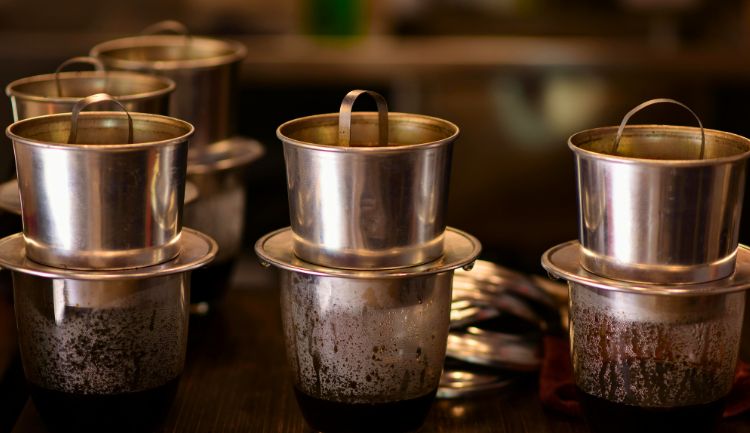
Instead of machines or espresso systems, Vietnamese coffee is brewed using a phin drip filter, which creates a slow, concentrated extraction. The result is thicker, richer, and more aromatic than regular drip coffee.
The Phin Filter: A slow ritual that defines Vietnamese Coffee culture
The phin, a small metal drip filter, is the soul of Vietnamese coffee brewing. Hot water slowly drips through tightly packed grounds into a cup or glass, creating a few intense ounces of liquid. This slow process mirrors Vietnam’s sidewalk coffee culture—unhurried, thoughtful, and social. The sound of the final drop hitting the glass marks a moment of calm appreciation. In Vietnam, brewing coffee is not merely preparation; it is ceremony.
4. Condensed milk instead of fresh milk
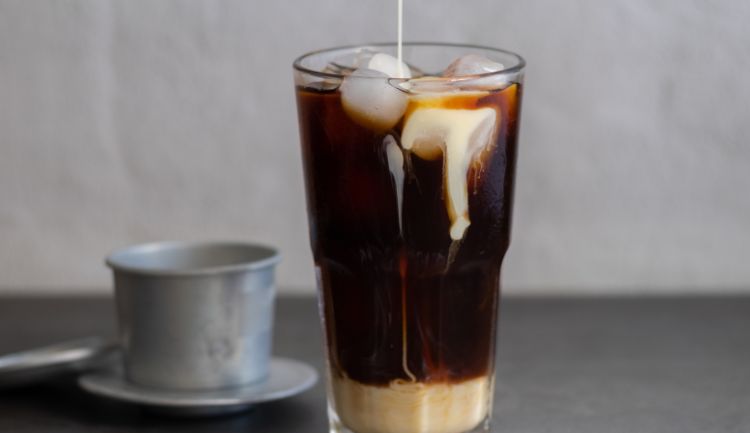
Because fresh milk was historically scarce, condensed milk became the default sweetener. It balances robusta’s intensity and creates the iconic cà phê sữa đá flavor—something rarely found outside Vietnam.
Vietnamese iced milk coffee (Cà Phê Sữa Đá): The accidental invention that became a national icon
Condensed milk became essential because Vietnam lacked fresh dairy during the early 20th century. But this necessity gave birth to one of the world’s most beloved drinks: Vietnamese iced milk coffee (cà phê sữa đá). The combination of robusta’s bitterness and condensed milk’s creamy sweetness created a perfect balance—refreshing, addictive, and uniquely Vietnamese.
5. Stronger serving sizes
A small glass of Vietnamese phin coffee can feel as strong as a double espresso. It is meant to be savored slowly, not rushed.
For all these reasons, Vietnamese coffee does not taste like “regular” coffee. It tastes like…Vietnam.
» Egg Coffee in Vietnam: A Unique Culinary Delight
» Vietnamese Egg Coffee : What is it made of? Is it Safe?
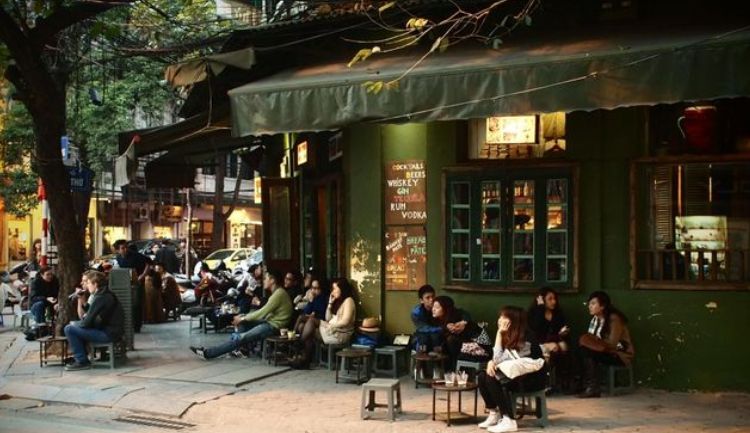
Coffee culture in Vietnam blends old and new effortlessly. Traditional phin-brewed coffee remains popular in narrow alleys and sidewalks across Hanoi, Saigon, and Hue, where locals sit on small plastic stools and watch the world move at its own pace. These cafés serve as living rooms, meeting spaces, workstations, and social hubs, proof that Vietnam doesn’t drink coffee to rush, but to connect.
At the same time, Vietnam has embraced a wave of modern innovation: coconut coffee, salted coffee, yogurt coffee, egg coffee, specialty robusta blends, and international-style roasteries. Young entrepreneurs are reimagining coffee for a global audience while honoring traditional flavors.
This fusion of sidewalk heritage and modern creativity has turned Vietnamese coffee into a worldwide phenomenon.
Must-Try Vietnamese Coffee Drinks
Vietnam offers an extraordinary variety of coffee styles, each reflecting local creativity:
- Cà phê đen – Pure black drip coffee, intense and aromatic.
- Cà phê sữa đá – Iced milk coffee, sweet and powerful.
- Cà phê trứng – Hanoi’s creamy egg coffee, like a liquid dessert.
- Cà phê muối – Salted coffee from Hue, balancing bitterness and caramel.
- Cà phê cốt dừa – Coconut coffee, smooth and tropical.
- Bạc xỉu – A milkier, lighter coffee often preferred by younger drinkers.
Each reflects the cultural diversity of Vietnam’s regions.
How travelers can experience the Coffee, especially in Hanoi
Hanoi is one of the best places to explore the full spectrum of Vietnamese coffee. Travelers can sip egg coffee overlooking Hoàn Kiếm Lake, relax in Old Quarter cafés brewing phin coffee on sidewalks, or visit trendy shops serving premium robusta and creative drinks.
To experience the culture more deeply, visitors can join Hanoi Free Private Tour Guide Club, where local student volunteers lead free walking tours, share hidden café recommendations, teach travelers how to use a phin filter, and explain coffee traditions from a local perspective.
Book our free tour guide!

Hanoi Street Food Tour
❤❤❤❤❤ (TripAdvisor / GetYourGuide)
Food & Drink – Walking Tour – Small Group
⚑ 3 – 4 hours
✎ Free Tour – Free Cancellation

Hanoi Early Morning Tour
❤❤❤❤❤ (TripAdvisor / GetYourGuide)
Local – Walking Tour – Small Group
⚑ 3 – 8 hours
✎ Free Tour – Free Cancellation
Why Vietnamese Coffee leaves a lasting impression? Vietnamese coffee is not just a beverage; it is a cultural identity shaped by history, geography, creativity, and community spirit. Its bold robusta flavors, unique brewing rituals, and rich café culture make it stand out in the global coffee world. Once you taste the deep caramel richness of a phin-brewed cup or the silky sweetness of cà phê sữa đá, it becomes clear why Vietnamese coffee is unforgettable.
Want to taste Vietnamese coffee through the eyes of a local? Join Hanoi Free Private Tour Guide Club, where friendly student volunteers take you to hidden cafés, teach you how to brew with a phin, and share stories behind Vietnam’s legendary coffee culture. Book a free tour today and sip Vietnam’s authentic flavors like a true Hanoian!
FAQ About Vietnamese Coffee
Vietnamese coffee uses robusta beans, which naturally contain nearly twice the caffeine of arabica. Combined with the slow-drip phin method, the result is a dense, concentrated brew that feels much stronger than regular coffee.
Flavor differences come from robusta beans, traditional roasting with butter or cocoa, condensed milk, and the phin filter. These elements create a bold, chocolatey, caramelized flavor that stands apart from global arabica-based coffee.
A phin filter is a small metal drip device that slowly brews concentrated coffee. It reflects the Vietnamese preference for slow drinking, conversation, and enjoying coffee as a cultural ritual rather than a quick caffeine fix.
Not always. It can be served black (cà phê đen) or with condensed milk (cà phê sữa). Sweetness depends on the drinker. Many modern shops also offer unsweetened cold brews or espresso-based drinks.
Must-try drinks include cà phê trứng (egg coffee), cà phê sữa đá, coconut coffee, salted coffee, yogurt coffee, and classic phin black coffee.
The Central Highlands—especially Buôn Ma Thuột, Đắk Lắk, Gia Lai, and Lâm Đồng—produce Vietnam’s best robusta beans. These regions have ideal volcanic soil and climate conditions.
Primarily yes, but Vietnam also grows arabica in cooler highlands like Đà Lạt. Recently, high-quality specialty robusta has also gained global attention for its unique profile.
Because it has high caffeine content, sensitive drinkers may prefer diluted versions, milk-based drinks, or arabica-based options now available in specialty cafés.
______________________________________
HANOI FREE PRIVATE TOUR GUIDE
✤ Website: Hanoi Free Private Tour Guide
✤ Adress: 158 Chua Lang, Dong Da, Hanoi
✤ Hotline: (+84) 97 63 69 796
✤ Mail: hanoifreeprivatetourguide@gmail.com
✤ English Course: Efis English
Read more
✧ Iconic Figures on the Vietnamese Altar
✧ Hanoi Old Quarter Vietnam: Iconic Streets You Should Not Miss