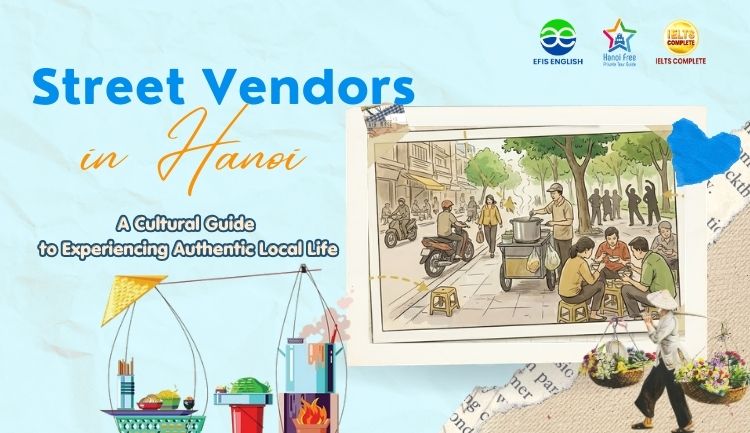
To many travelers, Hanoi is known for its Old Quarter, lakes, and colonial architecture. Yet beyond these landmarks lies a more intimate layer of the city, one that unfolds directly on the sidewalks. The presence of street vendors in Hanoi is not incidental; it is essential to how the city functions and feels.
Street vendors shape the rhythm of daily life. They provide quick meals, fresh produce, and small services exactly where people need them. For visitors, engaging with this street culture offers more than convenience, it provides a direct connection to the social fabric of Hanoi, where commerce, community, and tradition intersect.
The historical origins of street vendors in Hanoi
From Thăng Long to “Kẻ Chợ”
Hanoi’s street vendor culture originates from its early identity as Thăng Long, a political and economic center that attracted traders from across the region. By the 17th century, foreign merchants described the city as “Kẻ Chợ” or “the market city” due to its dense and dynamic trading activity.
However, commerce was not continuous. Traditional markets operated on specific days rather than daily schedules. This irregularity created a gap between supply and daily demand, especially for urban residents who needed food and goods more frequently.
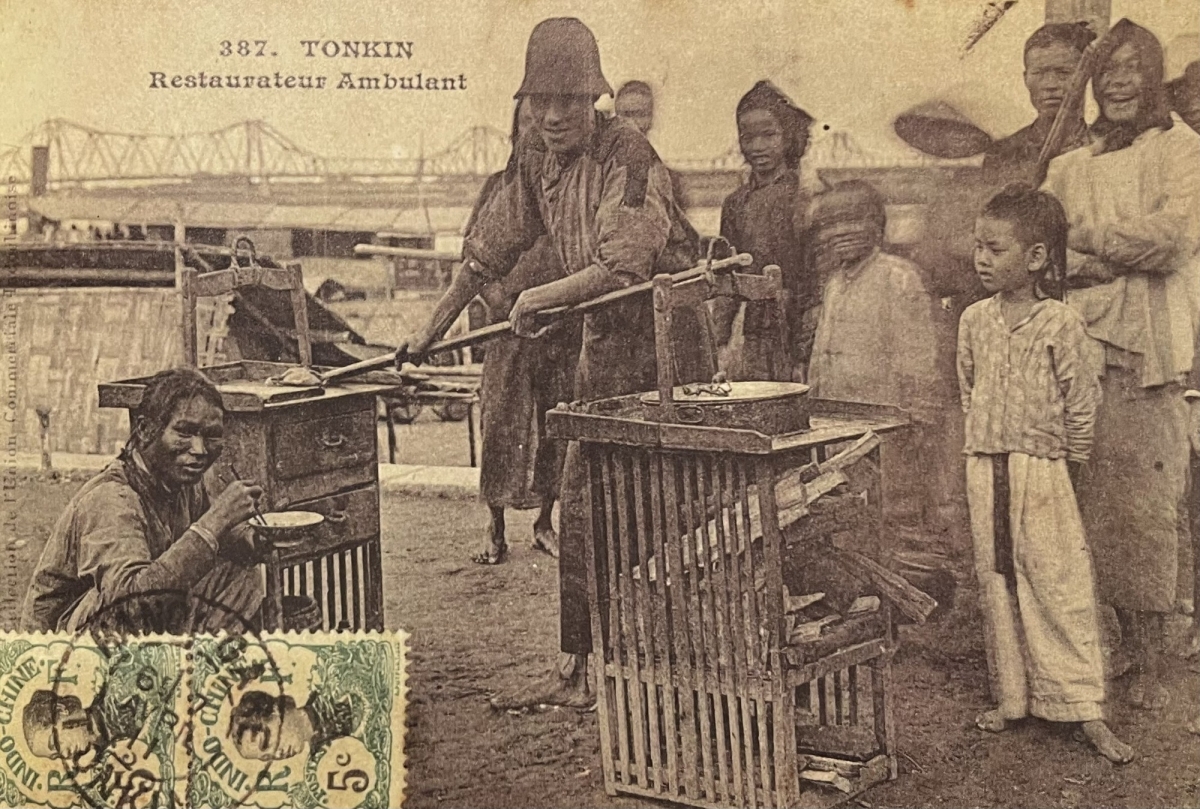
The birth of Mobile Commerce
Street vendors emerged as a practical solution to this limitation. Instead of waiting for market days, sellers began carrying goods through neighborhoods, making products accessible at any time. Many of these vendors came from rural areas, bringing agricultural products into the city.
This system of mobile commerce was not only efficient but also inclusive. It allowed individuals with limited financial means, those unable to afford permanent market stalls, to participate in the urban economy. Over time, street vending became an integral part of Hanoi’s identity.
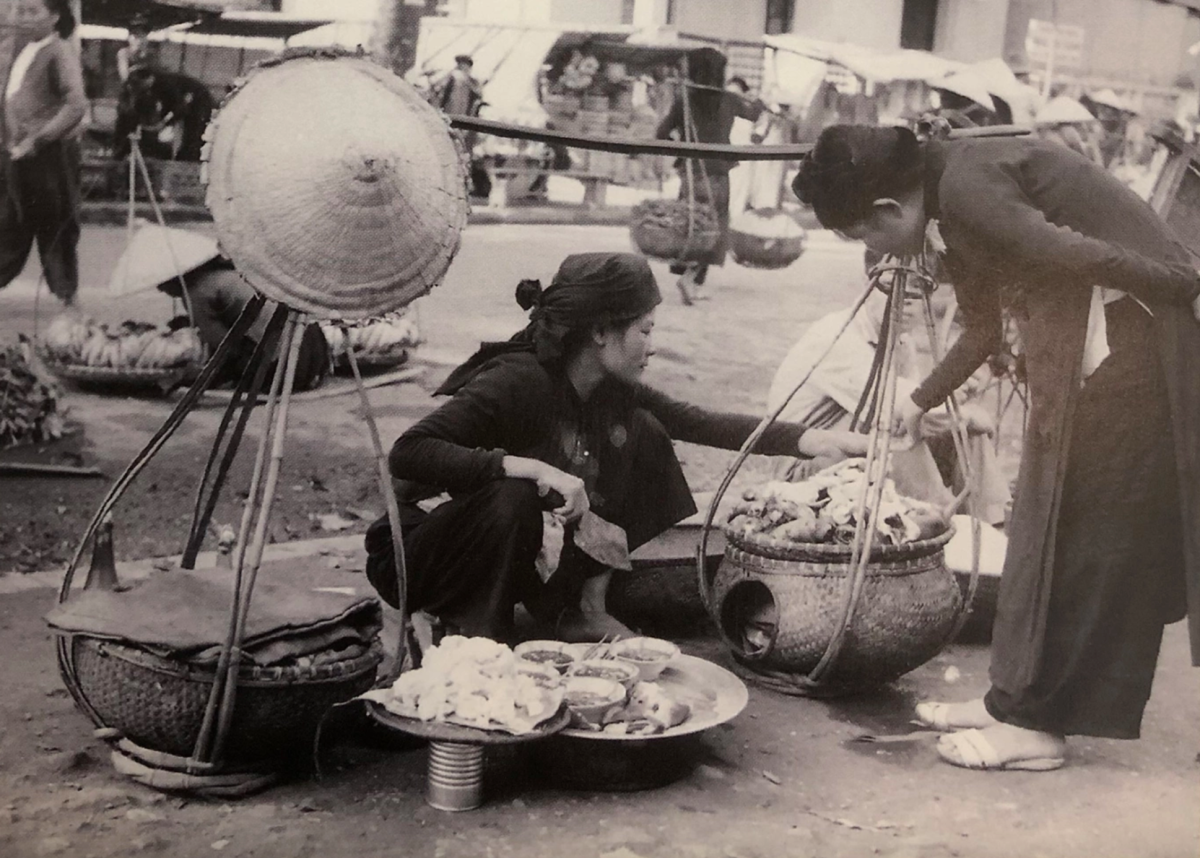
Photo courtesy of EFEO
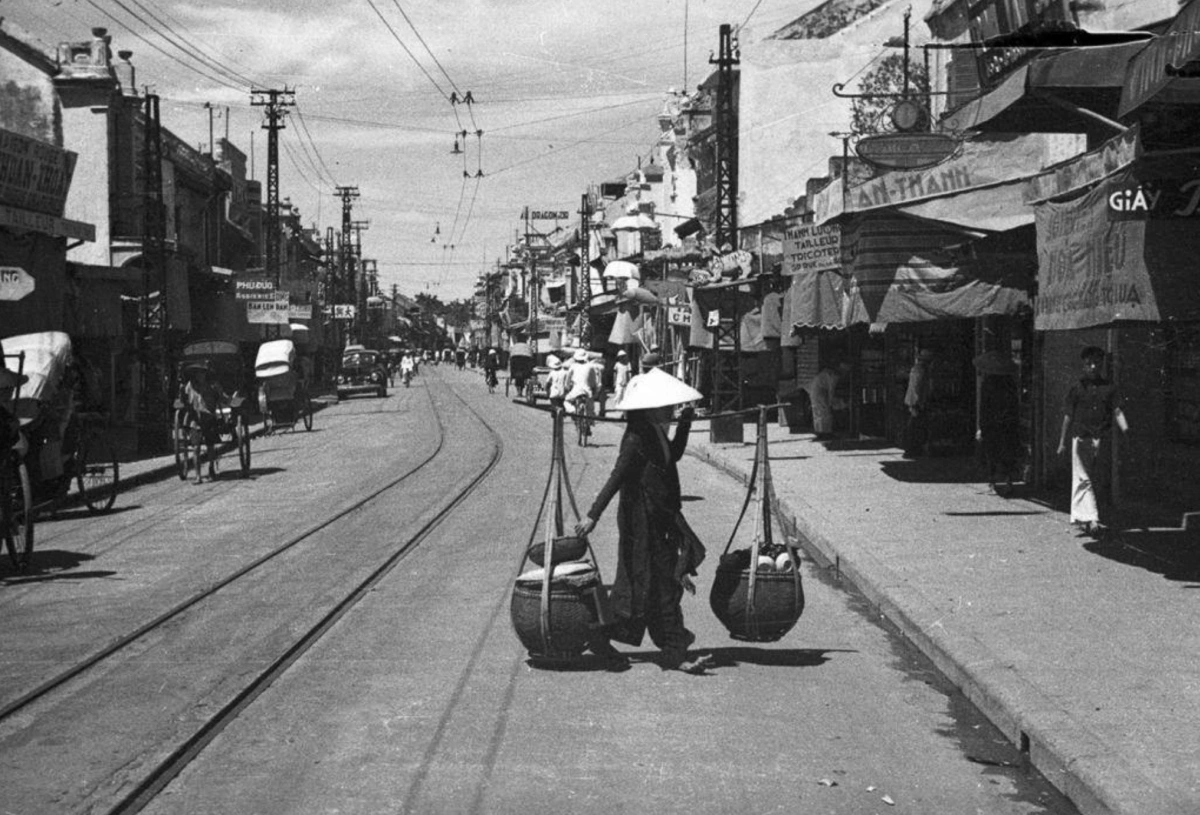
How street vendors operate in modern Hanoi
Traditional forms and modern adaptations
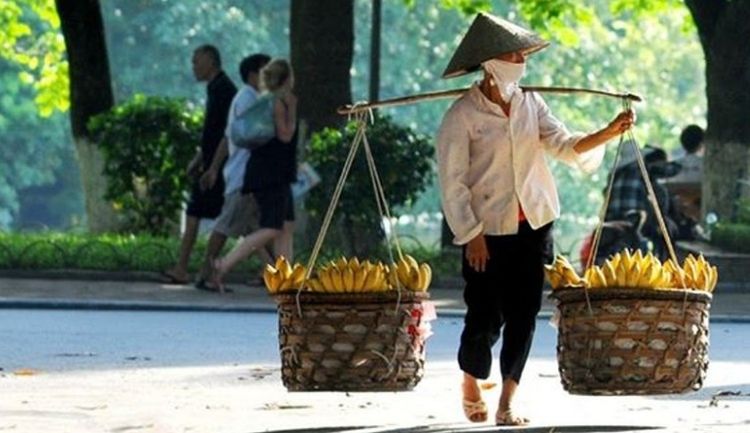
Today, the image of a vendor balancing goods on a bamboo shoulder pole still exists, but it is only one part of a broader system. Vendors now use bicycles, pushcarts, and small mobile setups, allowing them to move efficiently through the city.
Modern adaptations have also changed how vendors communicate. While traditional vocal calls once defined street selling, many vendors now rely on quieter methods or recorded announcements. Despite these changes, mobility remains the defining characteristic, vendors go to the customer, rather than waiting to be found.
A network of informal convenience
Street vendors function as a decentralized network of services. They appear where demand is highest, near offices in the morning, residential areas during the day, and busy streets in the evening. This flexibility allows them to respond quickly to the needs of the city.
For travelers, this means that authentic experiences are not confined to specific locations. Instead, they can be discovered organically, simply by walking through different neighborhoods at different times of day.
The cultural meaning and living evolution of Street Vendors in Hanoi
Street vendors in Hanoi are more than a visible feature of the city, they are a living expression of its social fabric, shaped by history, necessity, and continuous adaptation. To understand them is to understand how Hanoi functions not only as a destination, but as a place where people live, work, and sustain traditions across generations.
At the heart of this culture lies a story of resilience. Many street vendors come from rural areas, bringing agricultural products or small goods into the capital in search of opportunity. Their work demands long hours, physical endurance, and an intuitive awareness of the city’s daily rhythms, knowing where to go, when to appear, and what people need at different times of day. In this way, they reflect a broader characteristic of Hanoi itself: a city that has endured change while maintaining its cultural continuity.
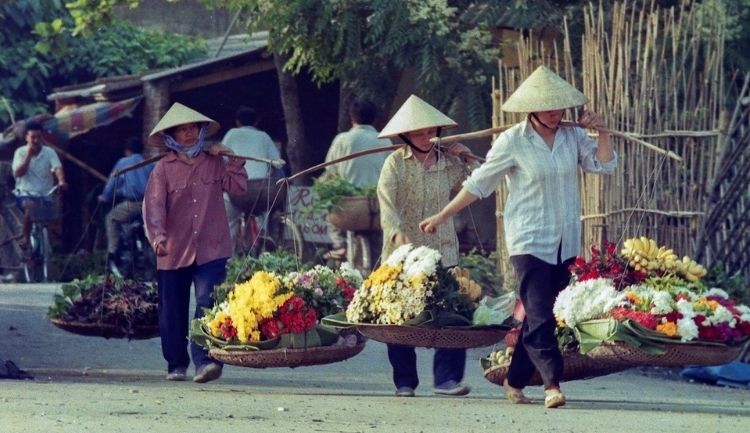
Yet for local residents, street vendors are not symbolic, they are practical. They provide affordable food, fresh produce, and everyday services in a way that fits seamlessly into daily routines. A quick breakfast on the sidewalk, a bag of fruit bought on the way home, or a short stop for tea are all part of ordinary life. For travelers, recognizing this everyday function is essential. Street vendors should not be seen merely as a cultural attraction, but as an active and necessary part of the city’s living system.
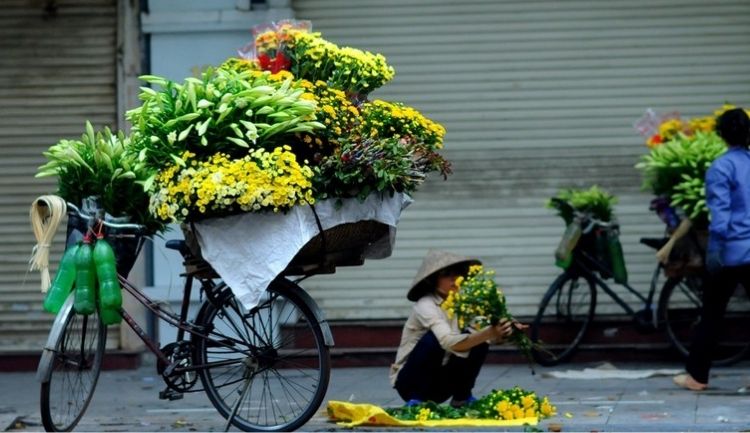
One of the most distinctive ways this system reveals itself is through the changing seasons. Street vendors act as an informal calendar of Hanoi, with their goods reflecting shifts in climate, agriculture, and cultural celebrations. In warmer months, the streets fill with fresh fruits and fragrant flowers, while cooler seasons bring warm, comforting foods. As the Lunar New Year approaches, vendors introduce festive items that carry symbolic meaning, transforming the streets into spaces of celebration and renewal. Observing these changes allows travelers to experience Hanoi not as a fixed place, but as a city that evolves throughout the year.
As Hanoi continues to modernize, the role of street vendors remains both important and complex. Urban development and regulations have reshaped where and how vendors operate, and discussions continue about their place in a rapidly changing city. Despite this, their presence endures. They provide a level of flexibility, accessibility, and human connection that formal retail systems often cannot replicate.
For visitors, this enduring presence offers something rare: an opportunity to witness a form of urban life that remains deeply rooted in human interaction. Street vendors are not simply part of Hanoi’s past or present, they are part of its ongoing story, contributing to the unique atmosphere that makes the city feel vibrant, authentic, and alive.
Experiencing street vendors: A traveler’s perspective
Morning: Everyday life in motion
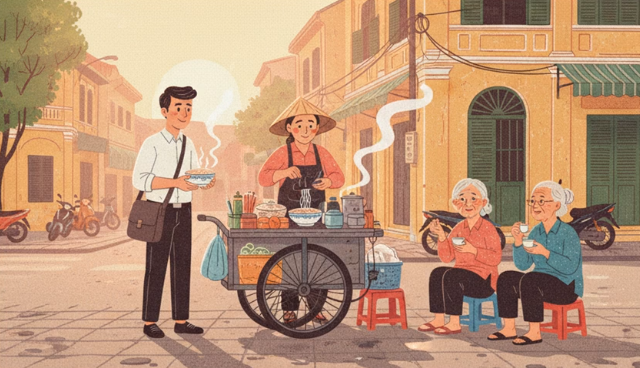
In the early morning, Hanoi reveals its most authentic rhythm. Street vendors prepare simple, nourishing dishes for locals starting their day. Office workers stop briefly for breakfast, while elderly residents gather nearby for exercise and conversation. For visitors, this is an ideal moment to observe daily life without the intensity of peak tourist hours. Sitting on a low stool and sharing space with locals offers insight into how food, time, and routine are closely connected in Vietnamese culture.
Midday: The city’s circulating market
As the day progresses, vendors move deeper into residential areas. This is when Hanoi feels less like a tourist destination and more like a lived-in city. Vendors sell fruits, vegetables, and household items directly to residents, often forming familiar relationships with regular customers. Travelers who explore beyond central districts during this time will notice a quieter, more personal side of Hanoi. It is an opportunity to witness how traditional commerce continues to support everyday life.
Evening: Social and culinary energy
In the evening, street vendors contribute to Hanoi’s vibrant street food scene. Sidewalks transform into informal dining areas, where people gather not only to eat but also to socialize. For visitors, this is the most accessible and lively time to engage with street culture. The variety of food, combined with the energy of the crowd, creates a dynamic atmosphere that reflects Hanoi’s communal spirit.

Practical insights for Travelers
Exploring street vendors in Hanoi does not require special planning, but a few considerations can enhance the experience. Carrying small cash is useful, as most vendors do not accept digital payments. Observing where locals gather is often the best indicator of quality.
Approaching vendors with a friendly attitude goes a long way. Even without a shared language, simple gestures and smiles create positive interactions. Respecting personal space and asking before taking photos is also appreciated.
Experience Hanoi through local insight
Understanding street vendors in Hanoi becomes far more meaningful when guided by local knowledge. Hanoi Free Private Tour Guide Club is a group of young, dynamic volunteers who are passionate about sharing the cultural and historical values of Hanoi. They aim to preserve these traditions and introduce them to international visitors in an authentic and engaging way. Walking through the city with them, you will not only discover hidden street food spots but also learn the stories behind each scene, how history, culture, and daily life come together in Hanoi’s streets.
Book our free tour guide!

Hanoi Old Quarter Walking Tour
❤❤❤❤❤ (TripAdvisor / GetYourGuide)
Historical Tour – Walking Tour – Small Group
⚑ 3 – 4 hours
✎ Free Tour – Free Cancellation

Hanoi Street Food Tour
❤❤❤❤❤ (TripAdvisor / GetYourGuide)
Food & Drink – Walking Tour – Small Group
⚑ 3 – 4 hours
✎ Free Tour – Free Cancellation
Join a free walking tour and explore Hanoi through local perspectives that go beyond guidebooks.
_____________________________________
HANOI FREE PRIVATE TOUR GUIDE
✤ Website: Hanoi Free Private Tour Guide
✤ Adress: 158 Chua Lang, Dong Da, Hanoi
✤ Hotline: (+84) 97 63 69 796
✤ Mail: hanoifreeprivatetourguide@gmail.com
✤ English Course: Efis English
Read more
✧ Hanoi Flag Tower: Discover the historic symbol of Vietnam’s Capital
✧ Ba Dinh Square: Discover the Historic Heart of Hanoi