Every Lunar New Year, as Vietnam awakens to the sounds of firecrackers, laughter, and heartfelt greetings, one small red object quietly carries the greatest wishes of the season – the red envelope tradition, known in Vietnamese as lì xì Tết. More than a gift of money, the Red Envelope tradition is a ritual of blessing, protection, and emotional connection that has shaped the spirit of Vietnamese New Year celebrations for generations.
From grandparents to grandchildren, from hosts to guests, the exchange of red envelopes turns the first days of the year into a shared moment of hope, kindness, and goodwill.
What is the Red Envelope Tradition – Lì Xì Tết?
Lì xì, also called hồng bao (red envelope), is the tradition of giving money wrapped in a red envelope during Tết Nguyên Đán, the Vietnamese Lunar New Year. It is most commonly given to children, but also to elders, unmarried young adults, and sometimes employees or service workers as a gesture of appreciation and good fortune.
The value of the money is not the focus. What truly matters is the symbolic meaning – a wish for health, happiness, success, and peace in the year ahead. The red envelope itself represents luck, prosperity, and protection from misfortune.

The origin of the Red Envelope Tradition
The practice of giving red envelopes originated in ancient China and gradually spread throughout East and Southeast Asia, including Vietnam. According to folklore, harmful spirits once appeared during Lunar New Year nights to disturb sleeping children. To protect them, elders placed coins wrapped in red cloth under pillows, believing the color red and the sound of metal could ward off evil.
Over time, this act of protection evolved into the tradition of gifting money in red envelopes, symbolizing safety, longevity, and blessings. The Vietnamese term “lì xì” is derived from the Chinese phrase “lợi thị” – meaning “profit”, “benefit” and “good fortune”.
When the custom reached Vietnam, it was embraced and localized, becoming an essential part of Tết culture and family life.

The cultural meaning of the Red Envelope tradition during Vietnamese New Year
In Vietnamese culture, lì xì is a gesture of giving blessings rather than money. Adults give red envelopes to children to wish them growth, intelligence, and good health. Children receive lì xì with both hands as a sign of respect and gratitude.
Elders, in turn, are often given red envelopes by younger family members as a symbol of longevity, filial piety, and deep respect. This exchange strengthens family bonds and reinforces traditional values of gratitude and harmony.
The Red Envelope Tradition usually begins on the morning of the first day of Tết and may continue until the ninth or tenth day of the Lunar New Year, extending the flow of good fortune throughout the festive period.
» Iconic Figures on the Vietnamese Altar
» Lunar New Year 2026 in Vietnam: About the Year of the Horse
How the Red Envelope is given in modern Vietnam
While the essence of lì xì Tết remains rooted in tradition, the way it is practiced in modern Vietnam has evolved gracefully alongside changing lifestyles, technology, and social relationships. Today, the Red Envelope tradition is no longer limited to cash in red envelopes, it has become a broader expression of love, respect, and thoughtful intention.
Traditional Red Envelopes: Still the Heart of Tết
Despite modern innovations, physical red envelopes remain the most cherished form of Lì Xì. The act of personally handing an envelope, accompanied by warm New Year wishes, carries emotional value that digital transfers cannot fully replace.
Modern red envelopes come in countless designs – ranging from classic calligraphy and zodiac symbols to contemporary illustrations and humorous messages. Yet, regardless of appearance, the symbolism remains the same: a fresh start, good fortune, and heartfelt blessings.

Beyond Money: Gold and Meaningful Gifts for Elders
In recent years, especially among families with stronger financial stability, the Red Envelope tradition for parents and grandparents has taken on deeper and more practical forms. Rather than symbolic cash amounts, many children now offer:
- Gold rings, gold bars, or gold pendants, symbolizing longevity, security, and enduring prosperity
- Savings books or bank deposits, representing long-term care and stability
- Health-related gifts, such as herbal supplements or wellness packages, paired with red envelopes
These offerings reflect a shift in values – from ritual obligation to filial devotion. For elders, receiving gold or meaningful gifts during Tết is not about wealth, but about reassurance, gratitude, and the continuity of family bonds.
Digital Lì Xì: Convenience meets Tradition
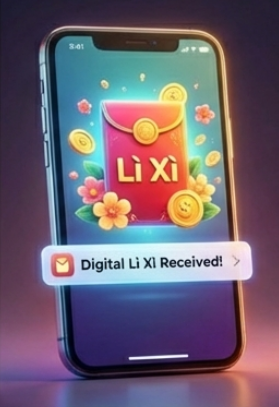
With the rise of e-wallets and mobile payment apps, digital lì xì has become increasingly popular, particularly among younger generations and long-distance family members. Sending a festive amount with animated red envelopes and digital blessings is fast and practical.
However, most Vietnamese still consider digital lì xì a supplement, not a replacement. For important relationships, especially within the family, the physical act of giving remains irreplaceable, as it embodies presence, sincerity, and shared joy.
The Red Envelope Tradition as a moment of connection
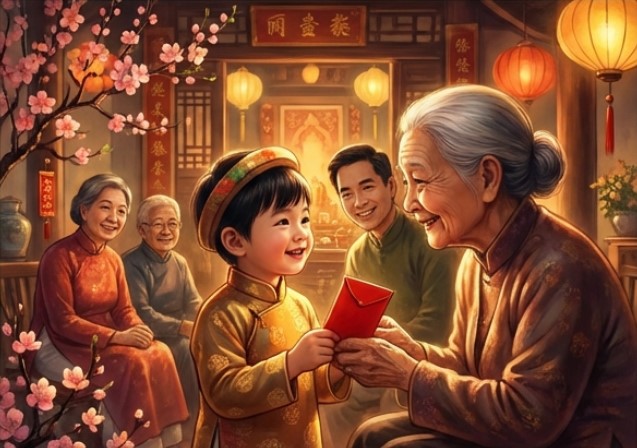
More than a transaction, the Red Envelope tradition is a moment of exchange. It is often accompanied by laughter, playful rituals, and New Year greetings. Children bow slightly, receive the envelope with both hands, and reply with cheerful wishes. Elders smile, offering blessings in return. These small gestures weave emotional warmth into the fabric of Tết.

Things to avoid When giving or receiving the Red Envelope
In Vietnamese culture, Tết is a sacred threshold between the old and the new. Every action during this time is believed to influence the year ahead. Therefore, lì xì etiquette is taken seriously, and certain behaviors are traditionally avoided to preserve harmony and good fortune.
Avoid unlucky or inappropriate amounts
The number inside the envelope matters symbolically. Odd numbers or amounts associated with bad luck, especially the number 4, which sounds similar to the word “death” in Sino-Vietnamese pronunciation, are generally avoided.
Instead, people favor:
- Even numbers, symbolizing balance and completeness
- Numbers like 6 (prosperity), 8 (growth and wealth), and 9 (longevity)
- The exact value is less important than the positive meaning behind it.
Do not use old, torn, or wrinkled money
Lì xì represents a fresh beginning, so worn-out or damaged banknotes are considered inauspicious. Clean, crisp bills, preferably new, symbolize clarity, renewal, and respect.
Similarly, old, reused, or torn red envelopes should never be used, as they imply carelessness or lack of sincerity.
Avoid giving or receiving with one hand
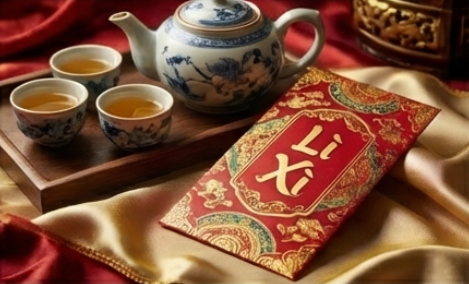
In Vietnamese etiquette, both giving and receiving the Red Envelope should be done with two hands. This gesture expresses politeness, gratitude, and mutual respect. Using one hand may be perceived as dismissive or rude, even if unintentionally.
Do not open the Red Envelope immediately
Opening a red envelope in front of the giver or commenting on the amount inside is considered highly inappropriate. Such behavior shifts attention from blessings to money, contradicting the spiritual meaning of the Red Envelope.
The proper response is to thank the giver warmly, accept the envelope respectfully, and open it later in private.
Avoid giving the Red Envelope without words of Blessing
Handing over a red envelope without saying anything is seen as incomplete. the Red Envelope must always be accompanied by verbal New Year wishes, such as health, success, happiness, or peace.
The words carry the soul of the gift; without them, the ritual loses its depth.
Be mindful of timing and context
Traditionally, the Red Envelope is given during the first days of Tết, usually from the first to around the tenth day of the Lunar New Year. Giving lì xì before New Year’s Eve or too late into the year may be seen as lacking cultural sensitivity.
For children, it is also polite to coordinate with parents before giving the Red Envelope, especially in formal or unfamiliar settings.
» Five-Fruit Tray for Tet in Vietnamese Culture | Mâm Ngũ Quả
» Traditional Tet Meal: Vietnamese Lunar New Year Traditions
Why the Red Envelope Tradition still matters today
In a rapidly modernizing society, the Red Envelope remains a cherished tradition because it preserves emotional warmth and cultural continuity. It teaches children about gratitude, elders about respect, and families about generosity. More than money, it is a ritual of shared hope – small in form, yet profound in meaning.
Lucky Numbers and Meaningful Amounts in the Red Envelope Tradition:
While there is no fixed amount for the Red Envelope, certain numbers are considered especially auspicious. Even numbers symbolize balance and completeness, while specific digits carry cultural meanings. Numbers such as 6 represent prosperity, 8 symbolizes growth and success, and 9 signifies longevity.
Some people choose special combinations like 168 for wealth, 188 for rapid prosperity, or 888 for continuous success. The intention behind the number matters more than its monetary value.
Experience Vietnamese Tết Traditions With Locals
Discover the meaning behind the Red Envelope Tradition and More: Want to understand Vietnamese New Year customs beyond guidebooks?
Join Hanoi Free Private Tour Guide Club, a volunteer-based organization connecting travelers with passionate locals who act as cultural ambassadors.
✨ Learn about lì xì Tết – the Red Envelope Tradition, ancestral rituals, food symbolism, and everyday Vietnamese life through authentic local stories.
👉 Book your free cultural walking tour in Hanoi today and experience Vietnam through the eyes of its people.
Book our free tour guide!

Hanoi Old Quarter Walking Tour
❤❤❤❤❤ (TripAdvisor / GetYourGuide)
Historical Tour – Walking Tour – Small Group
⚑ 3 – 4 hours
✎ Free Tour – Free Cancellation

Hanoi French Quarter Walking Tour
❤❤❤❤❤ (TripAdvisor / GetYourGuide)
Historical Tour – Walking Tour – Small Group
⚑ 3 – 8 hours
✎ Free Tour – Free Cancellation
______________________________________
HANOI FREE PRIVATE TOUR GUIDE
✤ Website: Hanoi Free Private Tour Guide
✤ Adress: 158 Chua Lang, Dong Da, Hanoi
✤ Hotline: (+84) 97 63 69 796
✤ Mail: hanoifreeprivatetourguide@gmail.com
✤ English Course: Efis English
Read more
✧ Kitchen God Ritual in Vietnam: Beauty of a Cultural Tradition
✧ First Footing Tradition: Welcoming Luck at Lunar New Year