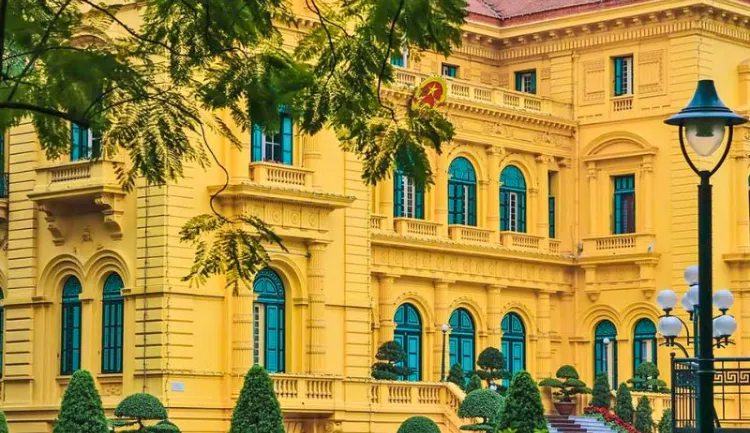
The Presidential Palace Hanoi tells one of Vietnam’s most quietly powerful stories, a nation’s leader choosing a wooden stilt house over a gilded French mansion. Built between 1900 and 1906 as the crowning symbol of colonial rule, this mustard-yellow palace was offered to President Ho Chi Minh after independence in 1954. He refused. That single act of humility transformed an icon of oppression into a monument of principle, and today, the contrast between the grand palace and Uncle Ho’s modest home next door is one of the most moving experiences in all of Hanoi.
A Palace built to Remind you who was in charge
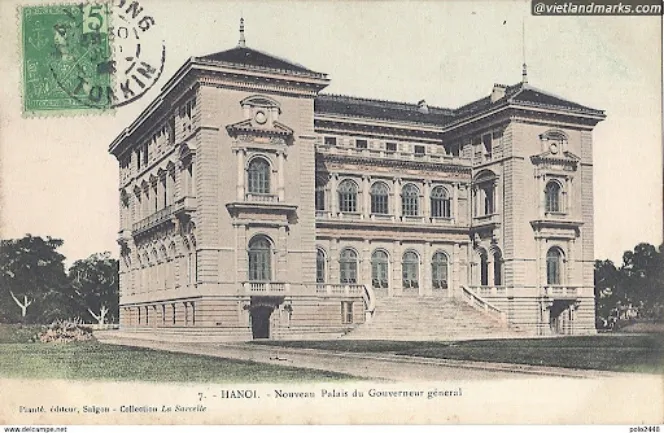
The Presidential Palace Hanoi was not built for Vietnamese people, it was built above them. Designed by French architect Auguste Henri Vildieu and constructed between 1900 and 1906, it served as the official residence of the Governor-General of French Indochina, the man who ruled over Vietnam, Laos, and Cambodia on behalf of Paris. The building was a deliberate architectural declaration of power: look up at this, and remember who governs you.
The structure is unmistakably European, a grand three-storey building spanning nearly 1,300 square metres with 30 rooms, each designed in a different style. Its symmetrical Renaissance and Beaux-Arts façade, ornate balconies, classical columns, and sweeping grand staircase were designed to impress and intimidate. The only concessions to the local environment were practical ones: high ceilings and wide corridors to manage Hanoi’s sweltering humidity, and a surrounding garden of mango trees that would eventually become one of the complex’s most beloved features.
Standing today behind iron gates on Hung Vuong Street in Ba Dinh District, the palace still radiates that old colonial gravity. Even now, visitors are not permitted inside, it remains an active government building used for official state receptions. But you don’t need to enter to feel its weight.
What is the History of the Presidential Palace Hanoi?
The palace’s history unfolds in three distinct chapters. From 1906 to 1954, it functioned as the nerve centre of French Indochina, a place where colonial policy was made and enforced. When the French were decisively defeated at the Battle of Dien Bien Phu in 1954, the palace was handed over to the new Vietnamese government and offered to President Ho Chi Minh as his official residence.
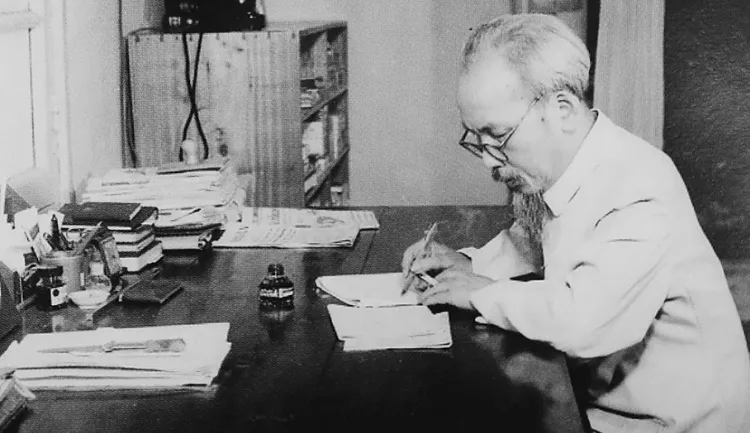
Chapter two is where history pivots. Ho Chi Minh refused. He felt, and reportedly stated, that it would be inappropriate to live in such a large and opulent building while the Vietnamese people were homeless and starving after decades of war and colonial exploitation. This wasn’t a political gesture calculated for public relations. By all accounts, it was a deeply personal conviction that a leader must live as his people live.
Chapter three began in 1975, when the surrounding grounds were opened to the public as the Presidential Palace Historical Site. In 2009, the entire complex was officially designated a Special National Relic, recognising its irreplaceable historical and cultural significance. Today it attracts over 200,000 visitors annually, drawn not just to the grand yellow building, but to the quiet, shaded grounds where Uncle Ho actually lived.
Why did Ho Chi Minh refuse to Live in the Presidential Palace?
This decision, simple on its surface, is one of the most discussed aspects of Ho Chi Minh’s character. Vietnam in 1954 was emerging from nearly a century of colonial rule and a brutal war for independence. Millions were displaced, infrastructure was shattered, and ordinary people lived in conditions of severe hardship. For Ho Chi Minh to move into a 30-room European palace, the very building that had housed the architects of Vietnamese subjugation, would have sent a devastating symbolic message.
Instead, he first stayed in House No. 54, a modest French-era residence on the palace grounds. Then, in 1958, a simple two-storey stilt house was built for him on the northern edge of the garden, inspired by the traditional homes of Vietnam’s ethnic minority communities in Thai Nguyen. Made of Menghundor wood, measuring just 10.5 metres in length and 6.2 metres in height, with two upstairs rooms of approximately 10 square metres each, it was the antithesis of the palace 200 metres away.
Ho Chi Minh lived in this stilt house, working and receiving senior officials, until his death on September 2, 1969. That date, Vietnam’s National Day, carries an almost mythic symmetry: the man who read the Declaration of Independence to a free Vietnam on September 2, 1945, died exactly 24 years later, in a wooden house he had chosen over a colonial palace.
The Presidential Palace Hanoi Complex: What you’ll actually see
The Presidential Palace Hanoi is not just one building, it is a 14.7-hectare complex containing some of the most historically charged spaces in Vietnam. Here’s what awaits you on a visit.
- The Palace Itself (Phủ Chủ Tịch)
The grand mustard-yellow building fronting Hung Vuong Street is the centrepiece. Though visitors cannot enter, the exterior alone is worth contemplating: the symmetrical façade, the iron-fenced courtyard, and the manicured gardens give it a stately, almost melancholy grandeur. It continues to host official state receptions and diplomatic meetings for Vietnam’s current president.
- Mango Alley
From the palace’s entrance, a 91-metre-long boulevard lined with mango trees, known as Mango Alley, leads you deeper into the grounds. Walking it in Hanoi’s dappled morning light is one of those unexpectedly peaceful experiences that stays with you. Our club’s younger guides often say this is their favourite 90 seconds in all of Hanoi.
- Ho Chi Minh’s Stilt House (Nhà Sàn Bác Hồ)
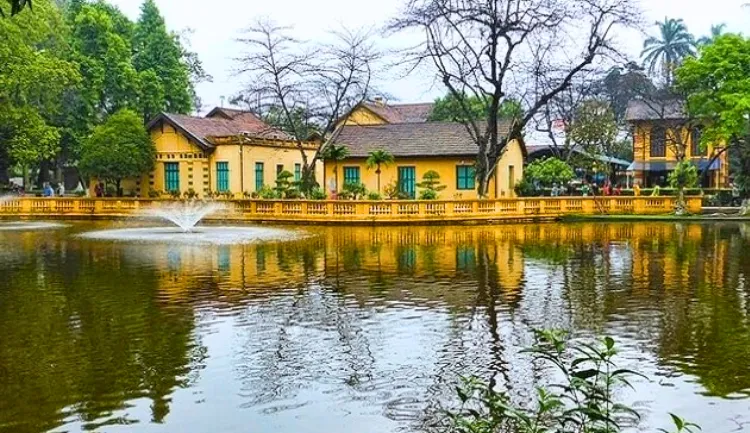
This is the emotional heart of the complex. The simple wooden house on stilts sits beside a carp pond, surrounded by fruit trees, hibiscus, frangipani, and flame trees. The first floor served as Ho Chi Minh’s summer working space and a meeting room for senior officials; the upper floor contained his study and bedroom, two rooms, each about 10 square metres, furnished with only the essentials. Over 50 million visitors from more than 150 countries have come to stand before this house and contemplate what it means.
- House No. 54
This was Ho Chi Minh’s first home on the grounds after 1954, before the stilt house was built in 1958. It is a more modest French-era structure that reveals another layer of his deliberate step-by-step retreat from colonial comfort.
- House No. 67
Built in 1967 as a bomb shelter during the American war, this is where Ho Chi Minh spent his final months. It is preserved with over 250 personal documents and objects that offer an intimate window into his final years.
Detailed Visitor Information:
| Detail | Information |
| Full Name | Presidential Palace Historical Site (Khu di tích Phủ Chủ tịch) |
| Address | No. 2, Hung Vuong Street, Ngoc Ha Ward, Ba Dinh District, Hanoi |
| Architect | Auguste Henri Vildieu (French) |
| Built | 1900–1906 |
| Area | 14.7 hectares |
| Relic Status | Special National Relic (designated 2009) |
| Summer Hours (Apr–Oct) | 7:30–11:00 AM & 1:30–4:00 PM |
| Winter Hours (Nov–Mar) | 8:00–11:00 AM & 1:30–4:00 PM |
| Closed | Monday & Friday afternoons |
| Entrance Fee | ~40,000–50,000 VND (~USD 1.50–2.00) |
| Palace Interior | Not open to visitors |
| Stilt House & Grounds | Open to visitors with ticket |
| Nearest Landmark | Ho Chi Minh Mausoleum (adjacent) |
| Recommended Visit Time | 1.5–2.5 hours |
| Dress Code | Modest dress required (covered shoulders and knees) |
What makes this site different from other Hanoi Historical Attractions?
The Presidential Palace Hanoi is unique among Hanoi’s major historical sites because it presents two worlds in direct confrontation, separated by only a few hundred metres. You stand in front of a 30-room French colonial palace built to project imperial dominance, and then you walk down a mango-lined avenue to a 20-square-metre wooden house on stilts, where the man who defeated that empire chose to live and die.
No museum exhibit, no documentary, no lecture can communicate that contrast as powerfully as standing in the actual space where it existed. It is the most visceral history lesson Hanoi offers. Other sites, the Hoa Lo Prison, Temple of Literature, Ho Chi Minh Mausoleum, are profound in their own right, but none delivers this particular gut-punch of juxtaposition.
The complex also has a quietness and greenery that is rare in central Hanoi. The 14.7-hectare grounds feel like a protected world, shaded paths, fruit gardens, flower beds, the pond with its famous carp, a place that genuinely invites reflection rather than just sightseeing.
How do you get to the Presidential Palace Hanoi?
Getting there is straightforward:
The complex is located in Ba Dinh District, about 15 minutes from the Old Quarter by taxi or ride-hailing app (Grab or Xanh SM), and is easily combined with visits to the Ho Chi Minh Mausoleum, Ba Dinh Square, and the One Pillar Pagoda, all within easy walking distance.
Your options include:
Grab taxi or motorbike (most convenient, typically 40,000–70,000 VND from the Old Quarter), public bus (lines 9, 22, 33, and 45 stop near Ba Dinh Square), or bicycle/cyclo for the more adventurous, the flat streets of this area are well-suited to cycling. The complex entrance is on Hung Vuong Street; for the stilt house and grounds, a separate entrance is sometimes used on Hoang Hoa Tham Street, check signage on arrival.
Insider tip from Hanoi Free Private Tour Guide: Arrive when the gates open in the morning. The complex is quieter, the light through the mango trees is extraordinary, and you’ll have the carp pond to yourself for a few peaceful minutes before the tour groups arrive.

Practical Tips for Visiting the Presidential Palace Hanoi
Before you go, a few things will make your visit significantly smoother.
Dress modestly: This is a site of deep national reverence. Covered shoulders and knees are required, guards will turn visitors away who don’t comply. A light scarf or layer works perfectly.
Go in the morning: The complex is beautiful at any time, but morning light through the mango trees is something else entirely. Crowds also build as the day progresses, especially on weekends and Vietnamese public holidays. The palace and the stilt house next to it tell a story that only makes sense when visited together, which is how our guides sequence them on a private Hanoi city tour.
Budget your time wisely: The palace grounds alone reward an easy 90 minutes to 2.5 hours, more if you combine it with the adjacent Ho Chi Minh Mausoleum (note: the Mausoleum has its own separate opening hours and is closed Monday and Friday mornings). Many visitors do the full Ho Chi Minh complex, Mausoleum, Presidential Palace, One Pillar Pagoda, and Ho Chi Minh Museum, in a rewarding half-day.
Photography rules: Photography is generally permitted on the grounds, but prohibited inside the stilt house and certain other structures. Follow signage and staff instructions carefully.
What else is near the Presidential Palace Hanoi?
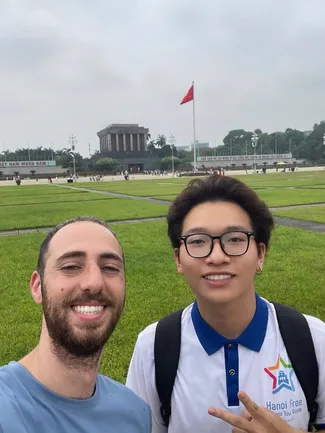
The Ba Dinh District is Hanoi’s political and historical heartland, visiting the Presidential Palace Hanoi means you’re already surrounded by some of the city’s most significant landmarks. Ba Dinh Square is immediately adjacent, the vast open plaza where Ho Chi Minh proclaimed Vietnamese independence on September 2, 1945. The Ho Chi Minh Mausoleum, where his embalmed body lies in state and is open to the public most mornings, is directly beside the palace complex. The delicate One Pillar Pagoda, one of Vietnam’s most iconic structures, is a two-minute walk away. The Ho Chi Minh Museum, with its extensive exhibits on his life and the independence movement, rounds out what is genuinely one of the most historically dense neighbourhoods in Southeast Asia.
FAQs: Presidential Palace Hanoi
No. The palace interior is not open to the public. It remains an active government building used for official state receptions and diplomatic meetings. However, visitors can freely explore the surrounding grounds, Mango Alley, the carp pond, Ho Chi Minh’s Stilt House, House No. 54, and House No. 67, all with a ticket purchased at the entrance.
Ho Chi Minh felt it was morally unacceptable to live in a large, luxurious colonial building while the Vietnamese people faced poverty and hardship after decades of war. He chose instead to live in a simple stilt house on the grounds, reflecting his deep commitment to living as an equal among his people, not above them.
The complex opens 7:30–11:00 AM and 1:30–4:00 PM (April–October) and 8:00–11:00 AM and 1:30–4:00 PM (November–March). It is closed on Monday and Friday afternoons. Entrance fees are approximately 40,000–50,000 VND (~USD 1.50–2.00). Always verify current hours before visiting, as they may change during national holidays.
Plan for at least 1.5 to 2.5 hours to explore the grounds properly. If you combine it with the adjacent Ho Chi Minh Mausoleum (which has its own separate ticketing and hours), Ba Dinh Square, the One Pillar Pagoda, and the Ho Chi Minh Museum, you can easily spend half a day in this part of Hanoi, and it’s time very well spent.
More Than a Palace, More Than a Refusal
The Presidential Palace Hanoi is ultimately a story about the relationship between power and principle, and what a leader chooses to do when no one can stop him from choosing comfort. Ho Chi Minh could have lived in 30 lavishly appointed rooms. He chose 20 square metres and a pond of carp. That choice, preserved in wood and mango shade on Hung Vuong Street, speaks louder than any monument. For anyone visiting Hanoi, this complex is not optional, it is essential. Come with curiosity, leave with perspective, and let the contrast between that golden colonial façade and that quiet wooden stilt house do what great history always does: make you think.