The Ho Chi Minh Museum in Hanoi is one of the most unique architectural and historical landmarks in Vietnam. Opened in 1990 to mark the centenary of President Ho Chi Minh’s birth, this white lotus-shaped building offers a deep look into the life, thought, and revolutionary journey of Vietnam’s national hero.
While most tourists only spend a few minutes walking through, taking the time to understand the symbolism inside will give you a completely different perspective on modern Vietnamese history.
What Is the Ho Chi Minh Museum and Why Should You Visit?
While the Ho Chi Minh Mausoleum next door is a place of quiet reverence, the Ho Chi Minh Museum is an educational and cultural space designed to tell the story behind the man.
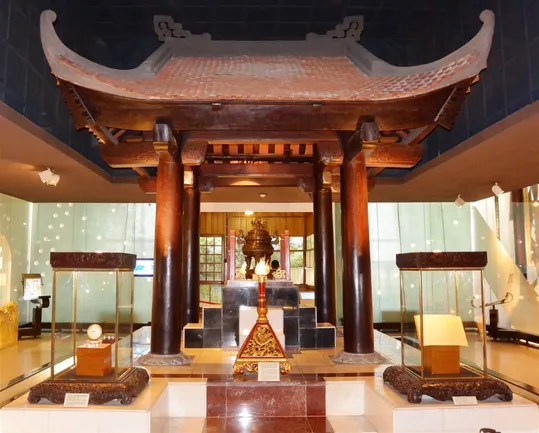
Inaugurated on May 19, 1990, the museum was designed by a joint Soviet-Vietnamese architectural team. It sits within the Ho Chi Minh Complex, a historic area on the edge of Ba Dinh Square that also houses the Presidential Palace, the iconic Stilt House, and the ancient One Pillar Pagoda.
Visiting the museum provides the essential context you need to understand how a small, war-torn nation shaped its identity and why “Uncle Ho” remains such an influential figure to this day. The museum’s layout confuses most first-time visitors, and having someone explain the order of the rooms is one reason people include it in a private Hanoi city tour.

The Architecture: A Lotus in Concrete
Before stepping inside, take a moment to look at the building’s exterior. Designed to resemble a giant white lotus flower, the structure stands nearly 20 meters high, stretching over 13,000 square meters. In Vietnamese culture, the lotus symbolizes purity, resilience, and rising above adversity, a metaphor often used by locals to describe Ho Chi Minh’s life.
The building is a striking example of late-Soviet modernism mixed with Vietnamese cultural motifs. The sharp, bold angles outside contrast with the flowing, circular pathways of the interior, creating an expansive space flooded with natural light from the central atrium.

Inside the Museum: A 3-Space Exhibition
Unlike traditional history museums that rely solely on rows of glass cases and text-heavy panels, the Ho Chi Minh Museum is designed as an architectural and sensory journey. The exhibition layout is highly deliberate, structured into three distinct yet interconnected spaces that run parallel to one another.
Instead of just showing you what happened, the museum uses a mix of historical archives, environmental recreations, and avant-garde art to make you feel the atmosphere of the 20th century.
1. The Biographical Space (The Main Chronicle)
This space forms the central backbone of the museum. It is a chronological journey that walks you through the 79 years of Ho Chi Minh’s life, meticulously divided into 8 core historical stages:
- Stage 1 (1890–1911): Birth and Upbringing. Focuses on his childhood in Nghe An Province, his family roots, and the early colonial environment that shaped his fierce patriotism.
- Stage 2 (1911–1920): The Quest for a Path. Documents his departure from Nha Trang on the French merchant ship Amiral Latouche-Tréville, and his decade-long travels across Europe, Africa, and the Americas working odd jobs while studying global political systems.
- Stage 3 (1920–1930): Embracing Marxism and Building Foundations. Covers his pivotal moment in Paris voting for the Third International, his time in Moscow, and his years in Guangzhou training the first generation of Vietnamese revolutionaries.

- Stage 4 (1930–1945): Leading the Struggle for Independence. Tracks the founding of the Indochinese Communist Party, his years in colonial prisons, his return to the Pac Bo caves in northern Vietnam, and the dramatic August Revolution of 1945.
- Stage 5 (1945–1954): Defending the Young Republic. Highlights the reading of the Declaration of Independence and the subsequent 9-year resistance war against French colonial forces, culminating in the victory at Dien Bien Phu.
- Stage 6 (1954–1969): Building the North, Fighting for the South. Showcases his years as President, balancing the socialist construction of North Vietnam with the escalating war for reunification in the South.
- Stage 7 (1969): The final days of his life, his historic Testament, and the country’s national mourning.
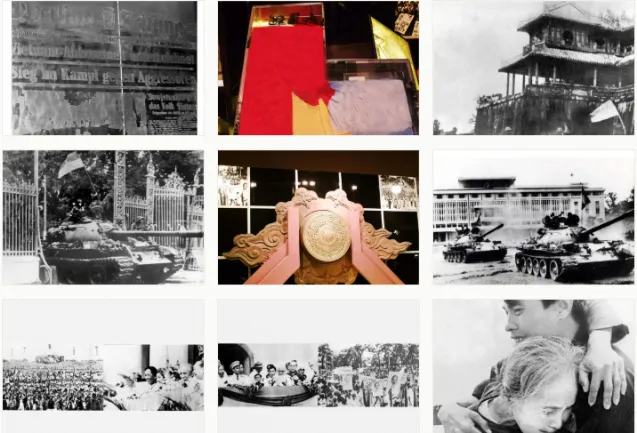
- Stage 8 (After 1969 – Present Day): The continuous legacy of his thought and how the people of Vietnam carry out his final wishes.
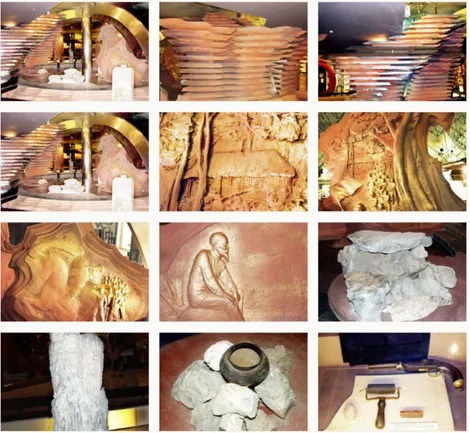
What you will see here: This area is rich in tangible history. It holds the actual handwritten letters, passport forgeries, his trusted typewriter, his iconic faded khaki suit, and the famous rubber sandals cut from old car tires.
2. The Contextual Space (History & The World)
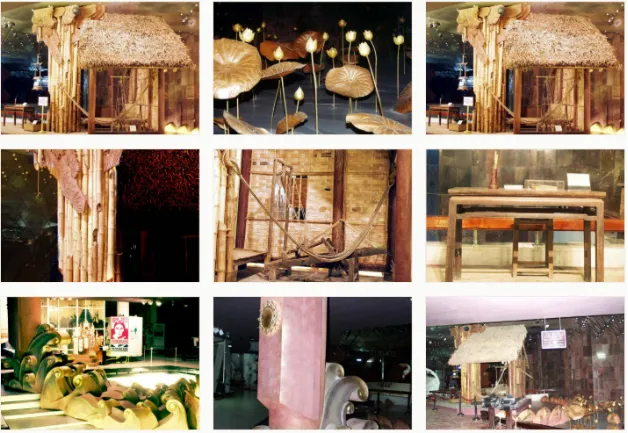
This is what makes the museum truly unique, and sometimes a bit puzzling for first-time visitors. Encircling the biographical chronicle is a series of large-scale, symbolic art installations designed by Soviet and Vietnamese artists. They don’t represent Ho Chi Minh directly; instead, they represent the massive global forces, cultural movements, and geopolitical conflicts that collided during his lifetime.
The installations are highly conceptual, using bold angles, theatrical lighting, and striking metaphors:
- The Pac Bo Cave Installation: Instead of a simple photo of the cave where Ho Chi Minh hid in 1941, the museum features a massive, stylized rock-work installation. It blends natural stone textures with sharp modernist geometry, symbolizing how the raw, untamed nature of Vietnam protected the seeds of the revolution.
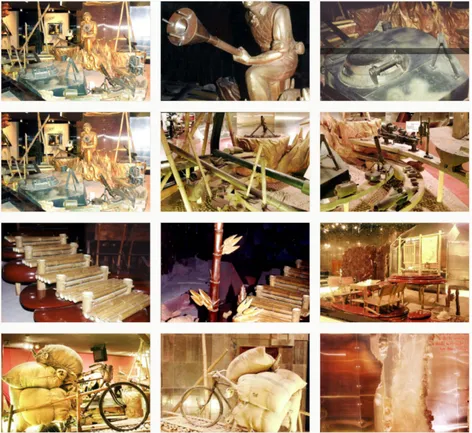
- The Grotesque “War Machine” Displays: To portray the devastation of World War I and World War II, events that opened windows of opportunity for Vietnamese independence – the artists built imposing, distorted metal structures. These displays use fractured mirrors, jagged iron spikes, and dark lighting to evoke the chaos and industrial scale of mid-century global warfare.
- The Table of Peace and Geopolitics: A surrealist display featuring giant symbolic shapes like a volcano (representing the boiling anger of oppressed colonial peoples) and a peaceful wooden table, illustrating the intense diplomatic chess games played behind closed doors during the Cold War.
Why it matters: These rooms ask you to look at history through an artistic lens. They give you a visceral sense of the weight of the era, helping you understand why Ho Chi Minh made specific strategic choices based on what was happening in Washington, Moscow, Paris, and Beijing.
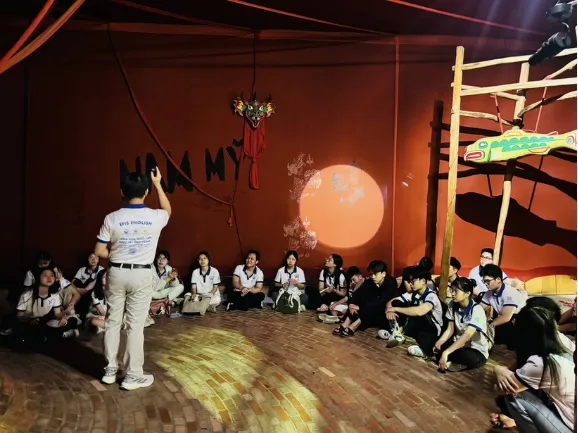
3. Special Thematic Exhibits
The third space functions as the museum’s bridge to the wider world and the future. Rather than focusing on a fixed timeline, this area is split into specialized zones and rotating galleries that dive into specific, deep-dive topics:
- International Solidarities: A dedicated space highlighting the relationships between Vietnam and the rest of the world. It displays photographs, treaties, and cultural exchanges that show how international anti-war movements—including those within the United States and France, supported Vietnam’s quest for sovereignty.
- The Artifacts of Gratitude: A fascinating collection showcasing the gifts sent to President Ho Chi Minh over the decades. These aren’t just formal diplomatic gifts from foreign heads of state; many are incredibly touching, handmade items from regular Vietnamese farmers, ethnic minority groups, and international admirers. They range from hand-woven fabrics to small pieces of art made under wartime conditions.
- Modern Rotating Exhibitions: The museum regularly updates its temporary galleries to sync with national holidays, historical anniversaries, or newly declassified archival materials, ensuring that there is always something new to see even for returning locals.
Up-Close with Personal Artifacts
Among the thousands of items, visitors are usually drawn to the simplest ones:
- His typewriter: A simple tool he used to draft historic political documents and personal letters.
- His rubber sandals (Dép cao su): Crafted from old car tires, these durable sandals became a national symbol of his modest lifestyle and his journey through rugged mountain terrains during the war.
- His iconic khaki uniform: The simple suit he wore during major state events, including the declaration of independence.
Practical Visitor Information
| Detail | Information |
| Address | 19 Ngoc Ha Street, Ba Dinh District, Hanoi |
| Morning Hours | 8:00 AM – 12:00 PM (Every day) |
| Afternoon Hours | 2:00 PM – 4:30 PM (Closed Mon & Fri afternoons) |
| Foreigner Ticket | 40,000 VND |
| Vietnamese Ticket | Free |
| Dress Code | Smart casual (Shoulders and knees should be covered out of respect for the complex area) |
| Photography | Permitted in most exhibition halls (No flash allowed on original documents) |
| Getting There | A 15-minute taxi or Grab ride from Hoan Kiem Lake. Bus lines 09, 22, 33, and 45 stop nearby. |
Tips to Get the Most Out of Your Visit
To make your trip smooth and meaningful, keep these local tips in mind:
- Mind the Midday Gap: Because the museum closes between 12:00 PM and 2:00 PM, timing is everything. A great strategy is to visit the Mausoleum early in the morning, explore the Stilt House, and finish your morning at the museum around 10:30 AM.
- Take Time with the English Signage: Most major exhibits have English translations. Reading the context behind the art installations will prevent the upper floors from looking like just an abstract art gallery.
- Combine and Compare: The museum explains what Ho Chi Minh thought and fought for. The nearby Stilt House (a short walk away) shows how he actually lived in his daily life. Visiting both gives you a complete picture.
Comparing Hanoi’s Major Museums
If you are trying to balance your itinerary, here is how the Ho Chi Minh Museum compares to other major spots in the city:
- Ho Chi Minh Museum: Focuses on political history, personal biography, and symbolic art. (Time: 1.5 hours | Fee: 40,000 VND for foreigners)
- Vietnam Military History Museum: Focuses on weaponry, tactical battles, and military hardware from the French and American wars. (Time: 2 hours)
- Vietnam Museum of Ethnology: Focuses on the daily life, architecture, and cultures of Vietnam’s 54 ethnic groups. (Time: 2 hours | Fee: 40,000 VND)
- Vietnamese Women’s Museum: Focuses on the role of women in family life, culture, and wartime history. (Time: 1 hour | Fee: 40,000 VND)
FAQs: Ho Chi Minh Museum
It is open on Monday mornings (8:00 AM – 12:00 PM) but closed on Monday afternoons. The same rule applies to Fridays.
Yes, photography is allowed inside the museum. This is a big contrast to the Ho Chi Minh Mausoleum next door, where cameras and phones must be packed away and photography is strictly forbidden.
While the English signs are helpful, having a local guide or using the audio guide at the entrance will help decode the heavy political symbolism used in the art displays.

The Ho Chi Minh Museum is more than just a regular stop on a city tour; it is a gateway to understanding the pride, history, and mindset of modern Vietnam. By looking past the concrete walls and spending an hour engaging with the exhibits, you will walk away with a much clearer understanding of why this country values its history so deeply.