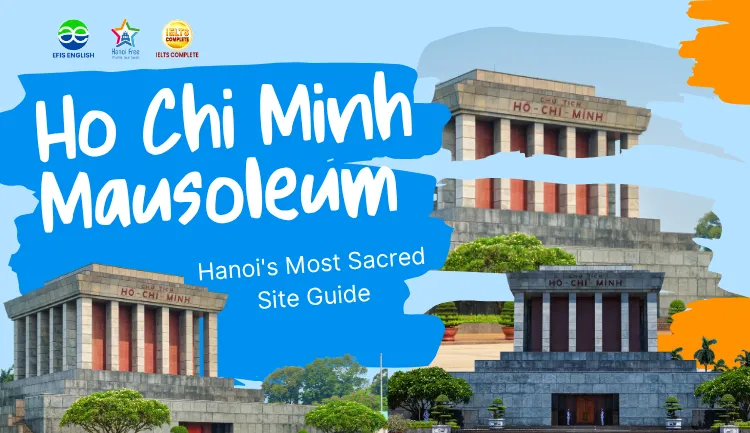
The Ho Chi Minh Mausoleum in Hanoi is not just a monument, it is the beating heart of Vietnamese national identity. Standing at the center of Ba Dinh Square, this solemn granite structure holds the embalmed body of Vietnam’s most revered leader, “Uncle Ho,” and draws millions of locals and travelers who come to pay their deepest respects.
This guide covers everything you need to know before visiting: history, architecture, opening hours, dress code, what to expect inside, and the hidden gems of the surrounding complex.
Why is the Ho Chi Minh Mausoleum Hanoi’s Most Sacred Site?
Ho Chi Minh, affectionately known as “Uncle Ho”, led Vietnam’s fight for independence and remains a deeply revered figure. For Vietnamese people, visiting is not tourism, it is pilgrimage.
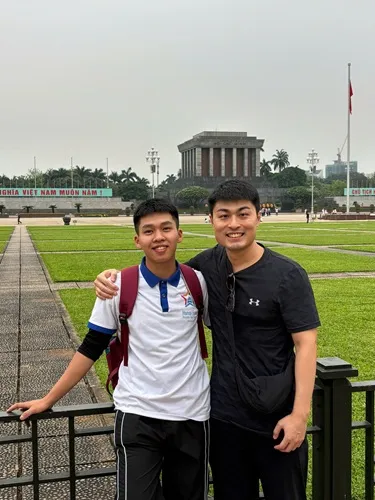
The mausoleum is located at Ba Dinh Square, the very place where Ho Chi Minh read the Declaration of Independence on September 2, 1945, establishing the Democratic Republic of Vietnam. That historical echo makes the ground beneath your feet feel electric. Every morning, ordinary Vietnamese citizens, farmers, students, soldiers, elderly grandmothers, join the queue in absolute silence, many with tears in their eyes. This is not a tourist stop, this is where Vietnamese people remember who they are.
A Brief History: From Ba Dinh Square to National Monument
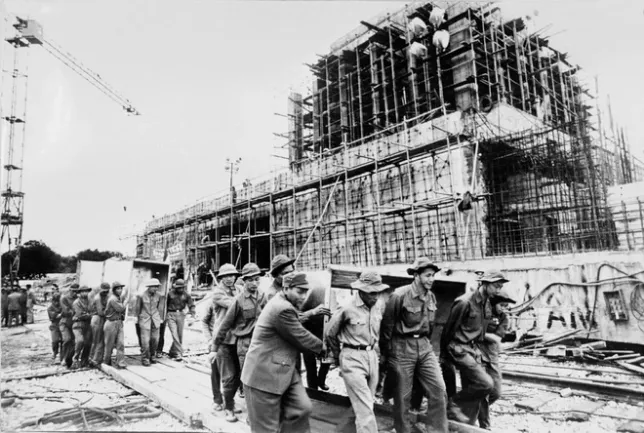
In his will, President Ho Chi Minh wanted to be cremated and had his ashes laid in the three regions of the country after his death, but according to the will of the Party and the people at that time, the government decided to keep his body intact and place it in the Mausoleum so that people could come to commemorate and visit him. Construction began on September 2, 1973, and the Mausoleum, located in the center of Ba Dinh Square, was formally inaugurated on August 29, 1975. That construction start date, September 2nd, was deliberately chosen: it marked exactly four years after Ho Chi Minh’s death and mirrored the anniversary of Vietnamese Independence Day. In January 1970, the Government of the Soviet Union and Vietnam met to discuss the design and construction techniques of the Mausoleum, with major support from Soviet experts. Materials from all parts of Vietnam, mainly granite, were used for its construction. That detail matters, the building is literally made of Vietnam, every stone a symbol of national unity.
What Does the Ho Chi Minh Mausoleum Look Like? Architecture Explained
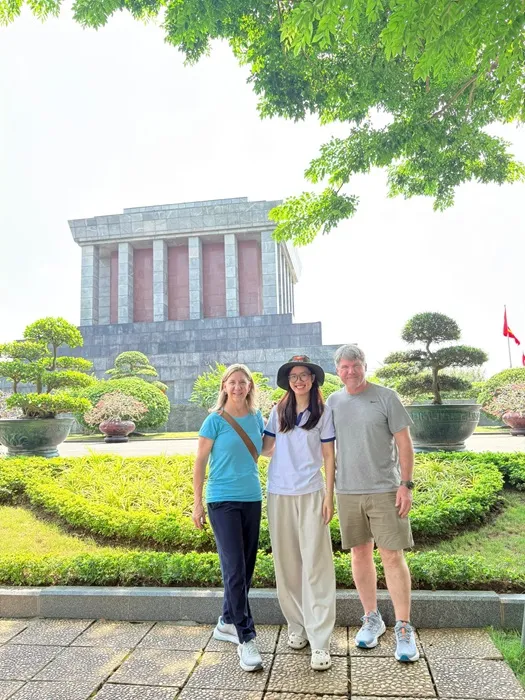
The Mausoleum was inspired by Lenin’s Mausoleum in Moscow but incorporates distinct Vietnamese architectural elements, such as the sloping roof. The exterior is comprised of grey granite, while the interior features grey, black, and red polished stone. The overall architecture is a solid square block, consisting of 3 layers with a height of 21.6 meters and a width of 41.2 meters. The structure is designed to be very sturdy, able to withstand floods, bombings, and earthquakes of magnitude 7. In other words, it was built to endure, much like the legacy of the man inside. The 200 sets of doors in the mausoleum are made from rare woods collected from all over the country. The surrounding gardens contain nearly 250 different species of plants and flowers, all from different regions of Vietnam, a quiet metaphor for national unity blooming in one place.
Inside, visitors can witness the preserved body of Ho Chi Minh in a glass sarcophagus. The lobby bears the profound inscription: “Nothing is more precious than Independence and Freedom.” It is one of the most quietly powerful moments any visitor to Hanoi will experience.
Ho Chi Minh Mausoleum Opening Hours, Fees & Key Details
The Ho Chi Minh Mausoleum operates on a seasonal schedule, with hours varying between the hot season and the cool season, as well as between weekdays and weekends. Plan carefully, arriving outside these windows means the visit simply will not happen.
| Detail | Information |
| Address | 2 Hung Vuong St, Ba Dinh District, Hanoi |
| Open Days | Tuesday–Thursday, Saturday–Sunday |
| Closed Days | Monday & Friday (every week) |
| Entrance Fee | Free |
| Photography Inside | Strictly prohibited |
| Time Needed | 30–60 min (mausoleum only); 2–3 hours (full complex) |
| Nearest Bus Routes | 09, 22, 33, 45, 50 |
| Taxi from Old Quarter | ~50,000–100,000 VND (approx. $2–$4) |
Seasonal Opening Hours
| Season | Period | Weekdays (Tue–Thu) | Weekends & Holidays |
| 🌞 Hot season | April 1 – October 31 | 7:30 AM – 10:30 AM | 7:30 AM – 11:00 AM |
| 🌤 Cool season | November 1 – March 31 | 8:00 AM – 11:00 AM | 8:00 AM – 11:30 AM |
Annual Maintenance Closure
Official update: the Ministry of National Defence has confirmed the mausoleum’s periodic maintenance for 2026 will run from September 4 to November 2, 2026. The complex reopens to the public and to international visitors on November 3, 2026.
Every year, the mausoleum closes for roughly two months so that Ho Chi Minh’s embalmed body can undergo specialist preservation procedures. This year’s window sits in the historic September–November pattern rather than the mid-year closure seen in some recent years. If your trip lands anywhere in this stretch, the mausoleum chamber itself is closed, but the rest of the complex stays open, Ba Dinh Square, Uncle Ho’s Stilt House, the Presidential Palace grounds, the Ho Chi Minh Museum, and the One Pillar Pagoda are all unaffected.
One timing detail worth flagging if you’re visiting around National Day: since the closure only begins September 4, the mausoleum is still open on September 2 itself. If you want to combine National Day with a visit, plan to go by September 3 at the latest.
Exact dates are announced by the Mausoleum Management Board each year and can shift, so always confirm against the latest official notice before finalizing your itinerary. Mausoleum opening hours are the single biggest constraint on any Hanoi day plan, and working around them is part of what you get with a private Hanoi city tour.
Insider Tip from Our Club:Aim to arrive 30 minutes before opening. You’ll witness the ceremonial changing of the guards, a precisely choreographed ritual of deep respect that most visitors miss entirely. On weekends during the hot season, the queue builds fast; arriving early is the single best way to enjoy a calmer, more meaningful visit.
What Is the Dress Code and What Rules Must You Follow?
The dress code and behavior rules at the Ho Chi Minh Mausoleum are strict and non-negotiable. This is a place of national reverence, not a casual sightseeing stop, and the Vietnamese authorities enforce all regulations firmly.
Shorts and sleeveless shirts are not allowed in the mausoleum. No talking or stopping is permitted inside the mausoleum. Entry to the square is through checkpoints with inspection of all items, tank tops, short skirts and shorts, revealing clothing, lighters, knives, weapons, and items resembling weapons are all prohibited. The security process is thorough and systematic, comparable in rigor to airport screening, expect bag X-rays and body checks.
Regarding cameras and phones: you may carry your phone or camera inside your bag, but it must be switched off or completely stowed away. Holding a device in your hand, filming, or photographing inside the mausoleum, particularly in the chamber housing Ho Chi Minh’s remains, is strictly forbidden. Guards monitor this closely and will intervene immediately. Large backpacks and bulky luggage must be deposited at the cloakroom before you enter the viewing queue. Plan accordingly and travel light on the day of your visit.
| ✅ Allowed | ❌ Not Allowed |
| Long trousers/skirts | Shorts or miniskirts |
| Covered shoulders | Sleeveless tops / tank tops |
| Respectful silence | Talking loudly or stopping inside |
| Phone/camera in your bag (off) | Holding or using a camera inside |
| Small personal bags | Large backpacks (must be checked) |
| Hats removed before entering | Lighters, knives, weapons |
Many visitors on our club’s tours have been turned away at the checkpoint for wearing casual beach clothing, and many more have been surprised by the baggage rules. Pack a light scarf or long trousers in your day bag if you’re exploring Hanoi in summer, and leave the big rucksack at the hotel.
How to Get to the Ho Chi Minh Mausoleum from Hanoi’s Old Quarter
Getting to the Ho Chi Minh Mausoleum from the Old Quarter is straightforward, with several convenient options.
By taxi, it is a quick and hassle-free way to reach the mausoleum, costing approximately 50,000–100,000 VND (USD $2–$4) from the Old Quarter. By motorbike, renting one costs around 100,000–150,000 VND ($4–$6) per day. If you take the bus, routes number 09, 22, 33, 45, and 50 all pass by Ba Dinh Square. Walking from the Old Quarter takes about 30–35 minutes and is a pleasant route through the French Quarter, highly recommended in the cool morning air.
What Else Can You Explore at the Ho Chi Minh Mausoleum Complex?
The mausoleum itself is just the beginning. The entire Ho Chi Minh Mausoleum complex is a rich, walkable site that rewards those who linger.

The complex includes Ba Dinh Square, where Vietnam’s First Independence Day was celebrated; Ho Chi Minh’s Mausoleum, which still holds his embalmed remains; and several other historically significant structures. Here is what to add to your itinerary:
- Ba Dinh Square The open plaza stretching in front of the mausoleum is where Ho Chi Minh declared independence in 1945. Standing here at dawn, with the red flag rising over the square, is genuinely goosebump-inducing.
- Uncle Ho’s Stilt House & Fish Pond One of the most charming parts of the complex. Ho Chi Minh chose to live in a modest wooden house on stilts in the Presidential Palace grounds — not the grand colonial palace itself. It speaks volumes about the man’s character.
- The Presidential Palace built between 1900 and 1906 by French architect Auguste Henri Vildieu, this neoclassical-style building was ranked among the 13 most beautiful palaces in the world by the American magazine Architecture Digest. The interior is not open to the public, but the gardens and exterior are stunning.
- Ho Chi Minh Museum A must for history lovers. The museum houses a vast collection of artifacts, photographs, and documents related to Ho Chi Minh’s life, the Vietnamese Revolution, and the country’s struggle for independence.
- One Pillar Pagoda (Chùa Một Cột) This small, historic temple is built on a single stone pillar emerging from a lotus pond, resembling a lotus blossom. Originally constructed in the 11th century, it is considered one of Vietnam’s most iconic temples, symbolizing the purity and resilience of the Vietnamese spirit.
Nearby Attractions Worth Combining With Your Visit
Once you’ve explored the complex, Hanoi’s west side has much more to offer within a short distance:
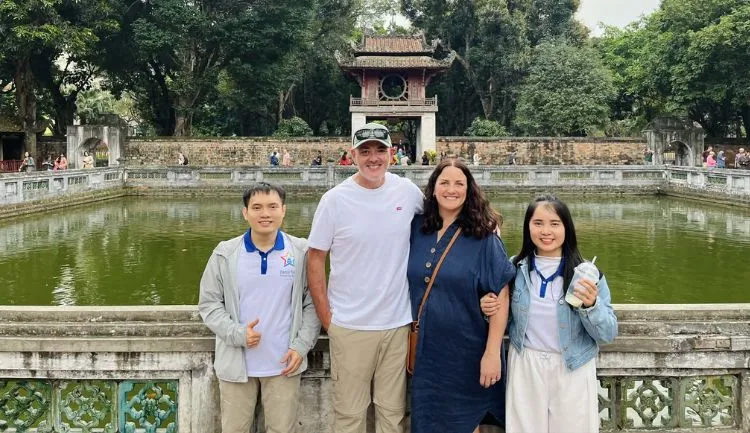
The Temple of Literature is about 10 minutes away – Vietnam’s first university, built in 1070. West Lake and Tran Quoc Pagoda are about 15 minutes away, a scenic lake with Hanoi’s oldest pagoda.
Pair these with the Old Quarter (20 minutes), and you have a full, meaningful day in Hanoi’s most historically significant neighborhoods.
A Visit You Will Never Forget
The Ho Chi Minh Mausoleum is more than a landmark on a Hanoi itinerary, it is an encounter with the soul of Vietnam. From the grey granite walls built to endure centuries, to the hushed procession of visitors moving in reverent silence, to the gardens blooming with flowers from every corner of the country, every detail here carries meaning. Whether you are a history enthusiast, a curious traveler, or someone simply trying to understand what makes Vietnam tick, this site will move you in ways you don’t expect.
Plan your visit using the correct seasonal hours, dress respectfully, deposit your large bags at the cloakroom, and give yourself time not just inside the mausoleum, but in the whole extraordinary complex around it. The Ho Chi Minh Mausoleum deserves more than a hurried checkbox, it deserves your full attention.
FAQs Ho Chi Minh Mausoleum
Yes. Entry to the Ho Chi Minh Mausoleum is completely free of charge for all visitors, both domestic and international. No reservation is required, simply join the queue during opening hours.
Hours depend on the season. During the hot season (April 1 – October 31): weekdays 7:30–10:30 AM, weekends and holidays 7:30–11:00 AM. During the cool season (November 1 – March 31): weekdays 8:00–11:00 AM, weekends and holidays 8:00–11:30 AM. The mausoleum is closed every Monday and Friday.
No. Photography and videography are strictly prohibited inside the mausoleum. You may carry your phone or camera in your bag, but it must be switched off and kept out of your hands, especially in the chamber where Ho Chi Minh’s remains are displayed. Guards enforce this rigorously.
For 2026, the confirmed closure runs from September 4 to November 2, with the mausoleum reopening to the public on November 3. This is the mausoleum’s regular annual maintenance, during which Ho Chi Minh’s embalmed body undergoes specialist preservation procedures. Exact dates are announced by the Mausoleum Management Board each year and may shift, so always verify the current schedule before planning your trip.