Vietnamese customs and etiquette shape nearly every interaction you’ll have in Hanoi, from the handshake at your hotel to the way you hold your chopsticks at dinner. Get them right, and doors open, elders smile, and street vendors treat you like a neighbor instead of a wallet. This guide breaks down the ten rules that matter most, explained by the local guides who watch travelers navigate them every single day.
What are Vietnamese Customs and Etiquette, and Why do they matter?
Vietnamese customs and etiquette are the unwritten social rules, built on Confucian respect for age and community, that guide greetings, dining, dress, and behavior in public and private spaces. They matter to travelers because a single small gesture, like handing someone a business card with one hand, can read as careless even when no offense was meant. Vietnam’s customs are shaped by centuries of Confucian family structure, Buddhist and Taoist spiritual practice, and a farming culture where community harmony came before individual preference. Understanding the logic behind the rules, rather than just memorizing them, makes it far easier to adapt on the fly.
Reading about etiquette gets you part of the way. Asking a Vietnamese person directly gets you the rest, which is what a cultural exchange with Hanoi students is designed for.
Number 1. Greetings and Social Etiquette: How Do You Greet People in Vietnam?
Vietnamese greetings favor a slight nod or a light handshake over hugging or cheek-kissing, and titles matter more than first names. Older generations sometimes prefer a small bow instead of a handshake, and physical contact with strangers, even a friendly shoulder pat, is far less common than in Western cultures. Save the enthusiastic hug for people you already know well.
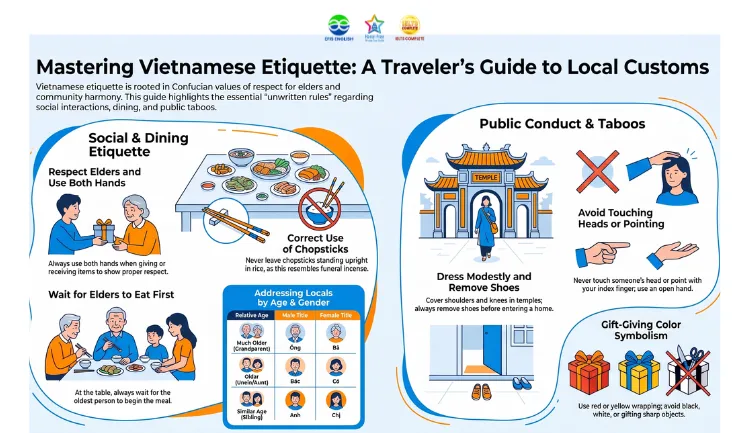
Addressing someone correctly is where most travelers stumble first. Vietnamese people use kinship titles based on age and gender instead of first names: an older man is “Ông” (grandfather) or “Bác” (uncle), an older woman is “Bà” (grandmother) or “Cô” (aunt), and someone closer to your own age is “Anh” (older brother) or “Chị” (older sister). One of our volunteer guides likes to tell new visitors that getting the title wrong is never rude, it’s actually a great icebreaker, because locals are always happy to correct you with a laugh.
Number 2. Vietnamese Dining Etiquette and Table Manners
Vietnamese dining etiquette runs on two simple ideas: elders eat first, and chopsticks are never stuck upright in your rice bowl. Wait for the oldest person at the table to begin, pass dishes with both hands or your right hand, and rest your chopsticks on the holder or the edge of your bowl between bites, since standing them upright resembles the incense used at funerals.
Drinking culture has its own small rituals too. If someone raises a glass and calls out “một, hai, ba, dzô!” (one, two, three, cheers!), it’s polite to clink and drink along, and to let someone else pour your next round rather than serving yourself. For the full breakdown of dish order, seating hierarchy, and toasting customs, see our complete guide to the Vietnamese family meal.
Number 3. Dress Code and Modesty: What Should You Wear in Vietnam?
Modest, clean clothing is the safest choice anywhere in Vietnam, and shoulders and knees should always be covered inside temples and pagodas. Hanoi and Ho Chi Minh City are relatively relaxed compared to rural areas, but revealing outfits still draw unwanted attention at religious sites and in smaller towns.
You’ll also need to slip off your shoes before stepping inside, which we cover in detail in the home-visit section below. Beyond religious sites, well-kept, tidy clothing is simply read as a sign of self-respect in daily Vietnamese social life, so it’s worth packing a few modest, presentable outfits even for a casual trip.
Number 4. Visiting a Vietnamese Home: Dos and Don’ts
Being invited into a Vietnamese home is a genuine honor, and the two non-negotiables are removing your shoes at the door and bringing a small gift such as fruit, tea, or sweets. Skip handkerchiefs, yellow flowers, or anything black, since these are associated with funerals rather than celebration.
At the table, wait for your host to invite you to start eating, and try to finish what’s on your plate, since leftover food can be read as a sign you didn’t enjoy the meal. A simple “Cảm ơn” (thank you) at the end goes a long way, and so does a warm smile when you first take your shoes off at the entrance.

Number 5. Respect for Elders and Family Values
Respect for elders is the backbone of Vietnamese customs and etiquette, and it shows up in small physical cues: a slight bow of the head, letting elders sit first, and using both hands when giving or receiving anything from a gift to a business card. Family remains the center of social life in Vietnam, and an older person’s opinion typically carries real weight in group decisions.
In conversation, avoid interrupting elders and give them space to finish their thoughts before responding. If you’d like a local friend to walk you through these customs in real time rather than just reading about them, our volunteer guides build every free Hanoi tour around exactly this kind of cultural context.

Number 6. Bargaining and Market Etiquette in Vietnam
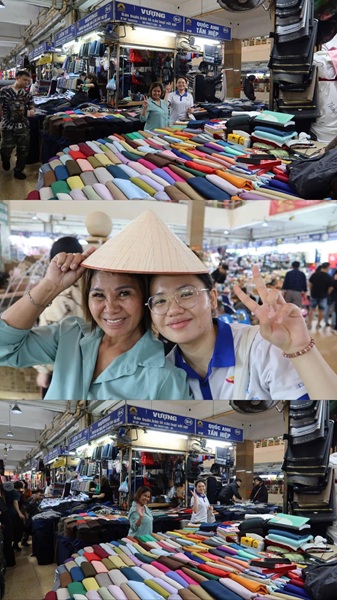
Bargaining is expected in markets and small shops, but it should always stay friendly rather than aggressive. Open with a polite counter-offer, smile, and treat the exchange as a conversation rather than a fight, since a warm attitude usually gets you a better price than a hard stare.
Once you’ve agreed on a price, walking away without buying is considered rude, so only settle if you’re genuinely ready to purchase. Fixed-price stores and supermarkets are the exception, where bargaining isn’t appropriate at all. Our guide to the Hanoi Old Quarter covers exactly which markets are best for practicing this etiquette in person.
Number 7. Superstitions and Taboos: What Should You Avoid in Vietnam?
Avoid pointing with your index finger, touching someone’s head, and gifting or referencing the number four, since these are the taboos travelers run into most often. An open hand or a small nod is the polite way to indicate direction or a person, and the number four (“tứ”) sounds close to the Vietnamese word for death, while nine is considered lucky.
Superstition runs especially deep around Tet, Vietnam’s Lunar New Year, when the first visitor to cross a family’s threshold is believed to set the tone for their entire year. It’s considered a genuine honor to be that first guest, so if a Vietnamese friend invites you over on the first morning of Tet, know that they’re paying you a real compliment.

Number 8. Public Behavior and Personal Space
Vietnamese people tend to be warm but reserved in public, so public displays of affection like hugging or kissing are uncommon even between couples, while holding hands among close friends is completely normal. Speaking loudly in temples, on public transport, or at formal gatherings tends to draw disapproving looks.
When seated, try not to point the soles of your feet toward another person, since feet are considered the least respectful part of the body in Vietnamese custom. Always ask before photographing someone directly, particularly in rural areas and ethnic minority communities, where some believe a photograph can take away a piece of a person’s spirit.

Number 9. Gift-Giving Customs and Etiquette in Vietnam
Vietnamese gift-giving etiquette has three quick rules: skip knives or anything sharp, wrap gifts in red or yellow rather than black or white, and never open a gift immediately in front of the giver. Sharp objects symbolically “cut” a relationship, dark wrapping is reserved for funerals, and opening gifts later spares the giver any awkwardness if you’re not thrilled with their choice.
Gift-giving takes on extra ritual weight during Tet Holiday, when Vietnamese families exchange lucky money in red envelopes known as lì xì. If you’re visiting during the holiday, our dedicated guide to the red envelope tradition walks through exactly how and when it’s given.

Number 10. Religious and Spiritual Customs and Etiquette
Vietnam blends Buddhism, Confucianism, Taoism, and local folk belief, and the shared etiquette across all of them is simple: dress modestly, speak softly, and never place a single incense stick alone in a holder, since that’s reserved for funerals. Temples and pagodas remain active places of daily worship rather than museum pieces, so treat them with the same quiet respect you’d show a working place of prayer.
Ancestor worship sits at the heart of this spiritual life, with families offering food, incense, and prayer to honor relatives who’ve passed. If this side of Vietnamese culture interests you, our deep dives into ancestor worship in Vietnam and Vietnamese cosmology unpack the beliefs behind these everyday rituals.
Vietnamese Customs and Etiquette at a Glance: A Dos and Don’ts Table
| Situation | Do | Don’t |
| Greeting elders | Nod, or offer a light handshake | Hug or kiss on the cheek |
| Eating rice | Rest chopsticks on the holder or bowl’s edge | Stand chopsticks upright in the bowl |
| Entering a home or temple | Remove your shoes at the door | Walk in with your shoes on |
| Visiting a pagoda | Cover your shoulders and knees | Wear shorts, tank tops, or short skirts |
| Wrapping a gift | Use red or yellow paper | Use black or white paper |
| Indicating direction | Gesture with an open hand | Point with your index finger |
| Sitting in company | Keep your feet flat on the floor | Point your feet at another person |
| Fixed-price shop | Pay the listed price | Try to bargain |
| Receiving a gift | Say thank you and open it later | Open it immediately in front of the giver |
| First guest at Tet | Treat the invitation as an honor | Show up uninvited as the first visitor |
FAQs About Vietnamese Customs and Etiquette
Yes. Pointing with your index finger is considered impolite in Vietnamese etiquette. Use an open hand or a small nod to indicate direction or a person instead.
Yes, shoes should always come off before entering someone’s home and most temples or pagodas. Look for a shoe rack or a row of sandals by the door as your cue.
Avoid overly revealing clothing, especially at religious sites, where shoulders and knees should stay covered. Everyday city wear can be more relaxed, but clean, modest clothing is always well received.
Tipping isn’t a deep-rooted local custom, but it’s increasingly appreciated in restaurants, hotels, and with tour guides in tourist-heavy areas like Hanoi. A small tip is a kind gesture rather than an obligation.