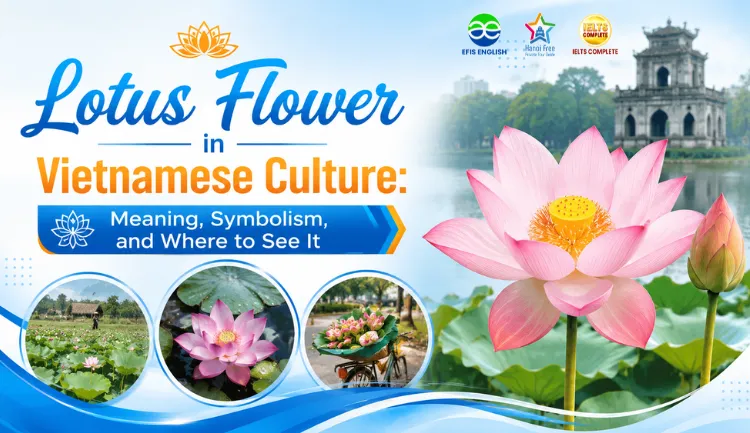
The lotus flower in Vietnamese culture is the single image most people associate with Vietnam, and once you understand why, the whole country starts to make a little more sense. It is Vietnam’s best-loved flower, a Buddhist symbol of enlightenment, and a fixture in poetry, temple art, and the family dinner table. This guide explains what the lotus means, where its symbolism comes from, and exactly where to see it bloom during your trip to Vietnam.
In this article, we’ll explore the powerful symbolism of the lotus, its role in tradition and religion, how it appears in daily life, and where you can see it during your journey through Vietnam. We’ll also show you how the Hanoi Free Private Tour Guide Club can help you experience this iconic flower and its cultural significance firsthand.
What is the Lotus Flower in Vietnamese Culture?
The lotus flower in Vietnamese culture is a national symbol of purity, resilience, and spiritual growth, known locally as hoa sen. It grows rooted in muddy pond water yet opens every morning as a clean, fragrant bloom, and Vietnamese people have long read that contrast as a lesson in character. A well-known saying puts it simply: “Gần bùn mà chẳng hôi tanh mùi bùn”, which translates to “it grows in the mud but never smells like mud“. Parents still quote this line to teach children about staying honest and dignified through hard times. In that sense, the flower is less a decoration than a compact piece of moral philosophy that almost every Vietnamese person recognizes on sight.
» Cultural Symbols of Vietnam: A Local’s Complete Guide

Why is the Lotus considered Vietnam’s National Flower?
Vietnam has never passed a law formally declaring a national flower, but the lotus has functioned as one in everything but name since a nationwide public vote in 2011. Organized by the Ministry of Culture, Sports and Tourism, the campaign asked citizens to choose among candidates including the apricot blossom, peach blossom, and bamboo, and the pink lotus won by a wide margin, with over 80 percent support in the final round. Voters judged each flower on how well it reflected Vietnamese character, and the lotus checked every box: it grows in almost every province, it is genuinely useful as food, tea, and medicine, and it carries centuries of meaning in art and religion. That mix of everyday familiarity and deep symbolism is exactly why the lotus, rather than a rarer or showier flower, became the nation’s unofficial emblem.
The Lotus Flower in Vietnamese Culture: Religion and Buddhist Symbolism
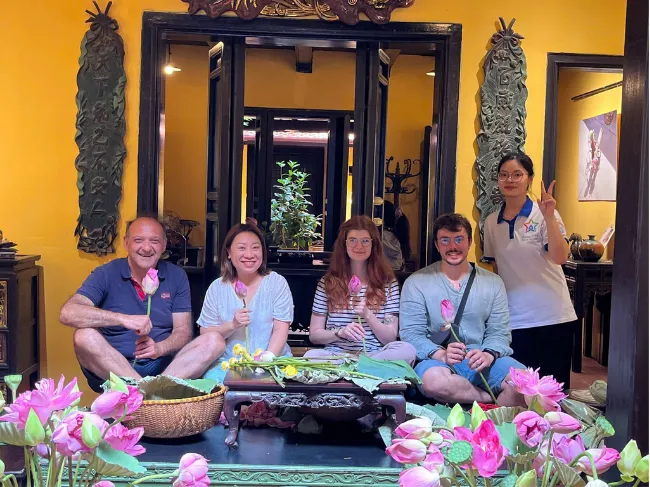
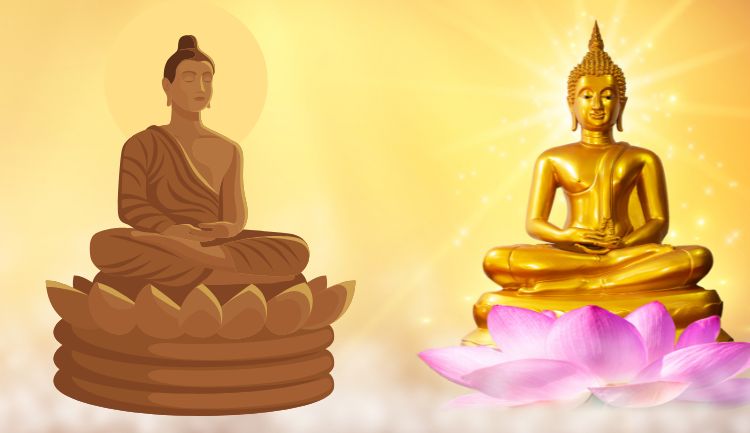
The lotus flower in Vietnamese culture is inseparable from Buddhism, the country’s most influential spiritual tradition. In Buddhist teaching, the lotus represents enlightenment because it rises through murky water to bloom untouched above the surface, mirroring the mind’s journey out of suffering and illusion. Statues across Vietnam show the Buddha seated on a lotus throne, and monks place lotus buds on altars and offering trays as a gesture of devotion. Confucian and Taoist thought, both influential in Vietnamese life, also praise the lotus for its association with honesty and harmony with nature. You’ll find lotus carvings in nearly every pagoda in Hanoi, from small neighborhood shrines to major sites like Tran Quoc Pagoda on West Lake.
» Buddhism in Vietnam: Influence on culture and daily life
» Ao Dai Vietnam: History, Meaning & Where to Wear One
How does the Lotus appear in Vietnamese Art, Poetry, and Daily Life?
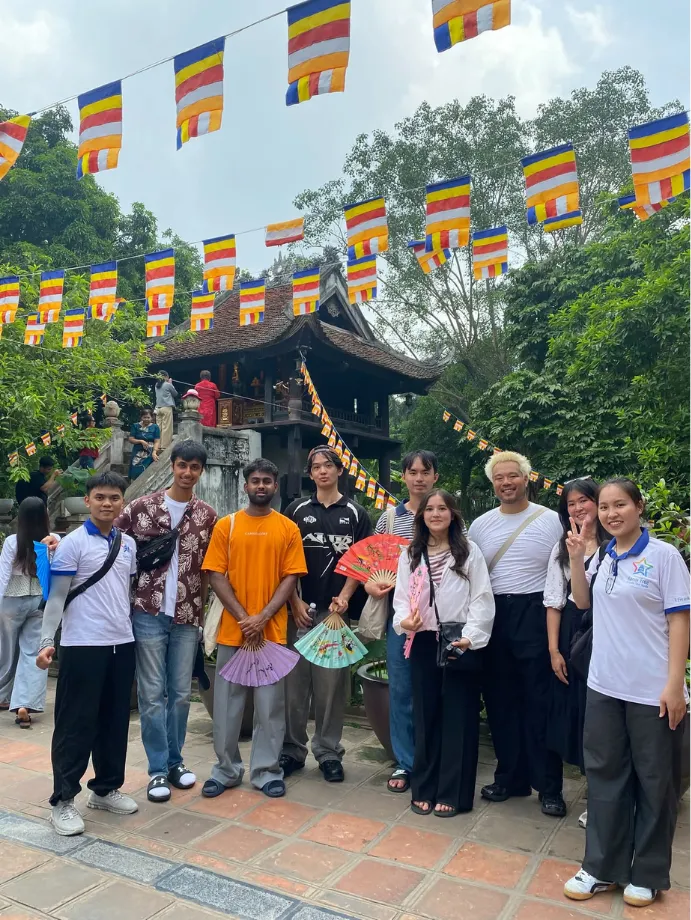
The lotus flower in Vietnamese culture shows up everywhere in Vietnam, not only inside temples but in architecture, fashion, literature, and everyday objects. Hanoi’s One Pillar Pagoda, one of the city’s most photographed landmarks, was deliberately built to resemble a lotus blossom rising from a pond. Lotus motifs are carved into wooden altars, painted on ceramics, and stitched into ao dai fabric, Vietnam’s traditional dress. In poetry and folk song, the flower is shorthand for feminine grace and moral strength, and in wartime verse it became quiet code for endurance under pressure. Even outside the arts, the lotus appears on the Vietnam Airlines logo, on coins, and in several government emblems, which says a lot about how deeply the symbol runs.
What do Vietnamese People use the Lotus for?
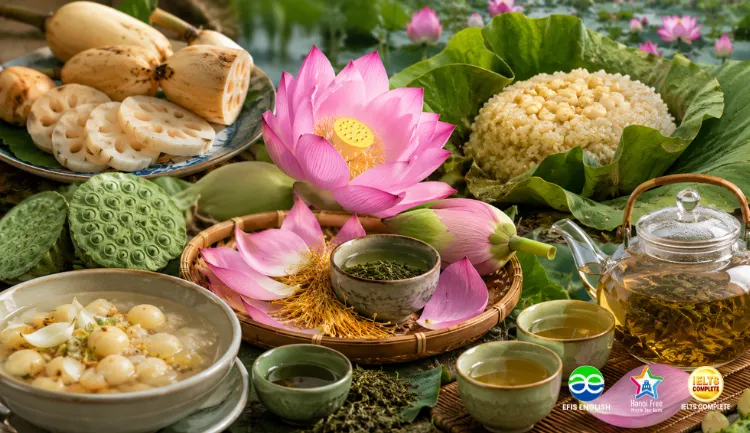
Vietnamese people eat, drink, and even weave the lotus, since almost every part of the plant has a practical use beyond its symbolism. Lotus seeds go into chè sen, a lightly sweet dessert soup served at festivals and family gatherings, while lotus root is stir-fried or added to soups for its crunchy texture. The most famous product is trà sen, lotus tea made by scenting green tea leaves with fresh lotus stamens, a technique historically associated with Hanoi’s Quang An village on West Lake. One of our long-time volunteer guides likes to tell first-time visitors that a single small batch of true Quang An lotus tea can take a full day of hand-scenting to prepare, which is why it was once reserved for the royal court. Even the lotus leaf gets used, traditionally as a natural wrapper for sticky rice and other street food.
Where to see Lotus Flowers in Vietnam
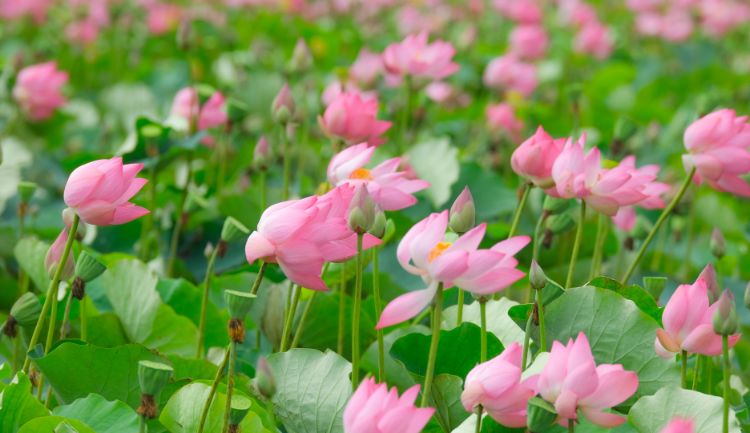
The best time to experience the lotus flower in Vietnamese culture firsthand is between May and August, when ponds and lakes fill with pink and white blossoms across the country. Hanoi is one of the easiest places to catch this, since West Lake and the smaller Quang An lotus ponds sit right in the city and are especially striking at sunrise. Further afield, Hue’s imperial moats and Ninh Binh’s limestone valleys pair lotus ponds with historic architecture, while the Mekong Delta offers the most immersive experience with boat rides through working lotus farms.
| Location | Best Season | What Makes It Worth Visiting | Distance from Hanoi |
| West Lake & Quang An, Hanoi | June to August | City-center lotus ponds, sunrise photos, lotus tea village | In Hanoi |
| Hue Imperial City moats | May to July | Lotus ponds set against Nguyen dynasty architecture | ~2 hrs by flight |
| Ninh Binh (Tam Coc / Trang An) | June to July | Lotus fields against karst mountains and river caves | ~2 hrs by road |
| Dong Thap, Mekong Delta | July to September | Boat trips through large working lotus farms | ~1.5 hrs by flight |
If you’re in Hanoi during lotus season, our volunteer guides can usually build a short detour to Quang An into almost any walking tour, since it barely takes them out of their way and visitors are glad they asked.
The Lotus Flower in Vietnamese Culture: A Living National Identity
The lotus flower in Vietnamese culture captures the qualities Vietnamese people most want to be known for: dignity under pressure, quiet hope, patience, and unity. Those aren’t abstract ideas here; they show up in how people talk about hardship, in wartime poetry that used the flower as a stand-in for resilience, and in the way lotus imagery still appears on government emblems and national campaigns today. Because the flower grows in nearly every province rather than one region, it also works as a rare symbol that feels equally Vietnamese whether you’re in Hanoi, Hue, or the Mekong Delta. Understanding the lotus, in other words, is a genuinely useful shortcut to understanding the country itself.
FAQs About the Lotus Flower in Vietnamese Culture
The lotus flower in Vietnamese culture symbolizes purity, resilience, and Buddhist enlightenment, capturing the idea of staying honest and graceful despite difficult surroundings.
There is no law making it official, but the pink lotus won a nationwide public vote in 2011 with over 80 percent support and has served as Vietnam’s de facto national flower ever since.
Lotus season in Hanoi generally runs from June to August, with West Lake and the Quang An ponds offering the most accessible viewing, especially in the early morning.
Lotus tea, or trà sen, is green tea scented with fresh lotus stamens using a labor-intensive technique traditionally practiced in Hanoi’s Quang An village.
Book our free tour guide!

Hanoi Old Quarter Walking Tour
❤❤❤❤❤ (TripAdvisor / GetYourGuide)
Historical Tour – Walking Tour – Small Group
⚑ 3 – 4 hours
✎ Free Tour – Free Cancellation

Hanoi City Tour
❤❤❤❤❤ (TripAdvisor / GetYourGuide)
Most Popular – Walking Tour – Small Group
⚑ 3 – 8 hours
✎ Free Tour – Free Cancellation