
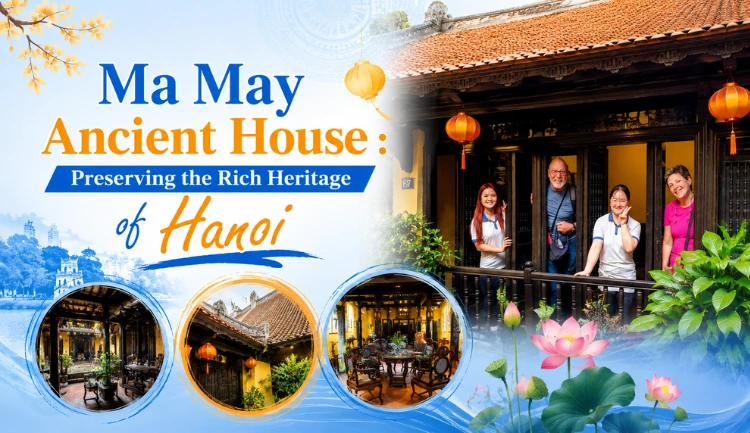
The bustling city of Hanoi, Vietnam, with its vibrant culture and rich history, is home to numerous architectural gems that hold the stories of the past. Among these hidden treasures is Ma May Ancient House, a historic house that has stood the test of time and remains a testament to the country’s architectural heritage.
Situated in the heart of Hanoi’s Old Quarter, this ancient house is a living museum that invites visitors to step back in time and experience the charm and grandeur of traditional Vietnamese architecture.
A glimpse into the Past
Ma May Ancient House, built in the late 19th century, is a representative example of the traditional domestic architecture once common in Hanoi’s Old Quarter. Originally home to a trading family, it reflects the everyday lifestyle of urban residents during a period of active commercial growth. After careful restoration in the late 1990s, the house has been preserved as a heritage site, allowing visitors to observe an authentic living environment from Hanoi’s past.

How the Ma May Ancient House was used through different periods ?
Originally built in the late 19th century, 87 Mã Mây functioned as a traditional merchant’s home typical of Hanoi’s Old Quarter. The front section served as a small shop where the family conducted trade, while the deeper interior spaces were reserved for daily living, cooking, and worship. Over the decades, several generations lived under the same roof, and the interior layout evolved to meet their needs, though the essential structure remained intact. By the late 20th century, the house had deteriorated significantly, prompting a major restoration in 1998 under a cooperation program between the city of Hanoi and the city of Toulouse (France). Since then, the building has been preserved as a heritage house rather than a private residence, offering the public an authentic glimpse into the lifestyle and domestic arrangement of Hanoi’s traditional urban families.
Ma May Ancient House: Practical Visitor Information (Updated 2026)
Before you go, here’s everything you need to plan your visit, current as of early 2026, since the house recently updated both its ticketing system and its opening hours.
| Detail | Information |
| Address | 87 Ma May Street, Hang Buom Ward, Hoan Kiem District |
| Entrance fee | 20,000 VND (~USD 0.85) per person, via electronic ticket |
| Discounts | Free for children and people with disabilities; 50% off for seniors, students and pupils |
| Opening hours | Daily, 8:00 AM–12:00 PM and 1:30–5:30 PM |
| Evening hours | Friday, Saturday, Sunday: 7:00–9:30 PM |
| Managed by | Management Board of Hoan Kiem Lake and Hanoi Old Quarter |
| Suggested visit time | 20–30 minutes (add extra time if a cultural performance is on) |
| Best time to visit | Early morning for quiet photos, or a weekend evening for the atmosphere and occasional performances |
Good to know: In January 2026, Ma May Ancient House reopened after a period of restoration work, timed with Tet Holiday (Lunar New Year) celebrations. The same electronic ticketing system now also covers the nearby Cantonese Assembly Hall at 22 Hang Buom Street, so if you’re visiting both, you’ll go through the same simple ticket process at each entrance.
Ma May is usually one stop among several on a hanoi old quarter walking tour, and it makes far more sense when you have already seen the narrow streets it sits behind.
How to get to Ma May Ancient House?
The house sits deep inside the pedestrian-friendly core of the Old Quarter, so walking is by far the easiest way in.
- On foot from Hoan Kiem Lake (~10 minutes): Le Thai To → Hang Khay → Dinh Tien Hoang → Hang Dau → Hang Thung → Hang Tre → Luong Ngoc Quyen → Ma May Street.
- By bus: Routes 04, 08, 11, 14 and 18 all stop within a short walk, near Nguyen Huu Huan Street and Hang Muoi Street.
- By taxi or Grab: Ask for “87 Ma May Street, Hoan Kiem”, most drivers know it as “Ngôi nhà Di sản 87 Mã Mây.”
Architecture and Design of Ma May ancient house
One of the most captivating aspects of Ancient House 87 Ma May is its architectural design. The house follows the traditional “tube house” layout, which is a common design found in Hanoi’s Old Quarter. The narrow, elongated structure takes full advantage of limited space and is built on multiple levels, each serving different purposes.
The façade of the house is adorned with delicate wooden carvings that depict symbols of luck, prosperity, and protection, showcasing the intricate craftsmanship of the past. Inside, visitors are greeted with a central courtyard, offering an oasis of serenity amidst the bustling streets outside. The house is meticulously designed to maximize natural light and ventilation, creating a comfortable living environment despite the compact space.
Why the the Ma May Ancient House has a Tube-shaped form ?
The narrow-fronted, elongated structure of the house reflects the spatial logic of Vietnam’s traditional trading streets rather than any single historical event. In the Old Quarter, land was scarce and highly valued, especially along commercial streets where every meter of frontage was important for business. As a result, families built houses with a modest width facing the street – sufficient for a storefront, while extending the building deep into the plot to create additional living and working space. To ensure ventilation and natural light throughout these long interior spaces, the house incorporates one or more internal courtyards, an architectural solution that has been characteristic of Vietnamese urban homes for centuries.

Architectural features blending Vietnamese and French influences
The architecture of 87 Mã Mây is rooted primarily in traditional Vietnamese urban house design, yet it subtly incorporates certain materials and details that became common during the late 19th and early 20th centuries. Vietnamese characteristics are dominant: a wooden structural frame, tiled roofs sloping toward internal courtyards, a sequence of rooms arranged along a central axis, and clearly separated spaces for commerce, living, worship, and service functions. Complementing these are modest French-period influences, visible in the use of cement and plaster in selected structural elements, patterned floor tiles on the ground level, and some decorative details and balustrades made with modern techniques introduced during the colonial era. Together, these features illustrate how traditional Vietnamese architecture adapted to new materials and urban conditions while preserving its essential spatial organization and cultural identity.
Enriching Cultural Experience at Ma May Ancient House
As visitors step into this Ancient House, they are transported back in time. The house has been meticulously restored to its former glory, allowing guests to immerse themselves in the authentic atmosphere of the past. The interior is tastefully furnished with antique furniture, traditional artworks, and historical artifacts, all carefully curated to reflect the lifestyle of the previous occupants.
What You’ll See, Room by Room?
Unlike many restored houses that feel staged, Ma May keeps its original working logic intact, each room still sits exactly where a 19th-century merchant family would have used it.
- Ground floor: You enter through the old shopfront, open directly onto the street the way trading houses were designed to display goods. Behind it, a small dry courtyard channels light and air into the house before leading to the rear living quarters, then the kitchen and washing area at the very back, a sequence that moves from public commerce to private domestic life the deeper you go.
- Upstairs: The staircase leads to the ancestral altar room, deliberately placed in the most formal position at the front of the second floor, facing the street. Behind it sits the family bedroom, and between the two, an open drying courtyard doubles as a small garden for potted plants, the same trick used downstairs to keep the narrow house ventilated and bright.
It’s a compact walk-through, but it tells you more about how a 19th-century Hanoi trading family actually lived than almost any museum plaque could.
Visitors can explore the different sections of the house, gaining insights into the daily lives of the families who once called this place home. From the kitchen filled with traditional utensils to the living quarters decorated with ornate lacquerware. Every corner of Ancient House 87 Ma May tells a story of a bygone era.

Connecting with Local Culture
The Ancient House offers more than just a window to the past. It also serves as a cultural hub, connecting visitors with the rich traditions and heritage of Hanoi. The house frequently hosts workshops, exhibitions, and cultural performances, allowing guests to engage with local artisans and performers.
Through these interactive experiences, visitors can learn about traditional crafts such as silk weaving, pottery, and calligraphy. They can also witness mesmerizing performances of traditional music and dance, gaining a deeper appreciation for the cultural tapestry that defines Hanoi.

Combine Your Visit: What’s Nearby
Ma May Ancient House is small enough to see in half an hour, which makes it easy to fold into a short walking loop through this corner of the Old Quarter.
- Cantonese Assembly Hall (22 Hang Buom Street): just a few minutes’ walk away, and covered by the same electronic ticket and entrance fee. Founded nearly 400 years ago by Hanoi’s Cantonese trading community, it’s a striking mix of Vietnamese, Chinese and French influences that most tourists walk straight past.
- Historical Relic House, 48 Hang Ngang Street: about a 5-minute walk. This is where Ho Chi Minh drafted Vietnam’s Declaration of Independence in 1945, and it pairs well with Ma May as a second, very different kind of “house museum” stop.
- Bach Ma Temple, Hang Buom Street: one of the four sacred guardian temples of old Thang Long, a short stroll from both houses above.
- Ta Hien “Beer Corner”: if you’re finishing your loop in the late afternoon or evening, this is the closest spot to sit down with a cheap bia hoi and watch the street settle into its evening rhythm.
Together, these four stops make a compact, walkable 60–90 minute detour without ever needing a taxi.
Ma May Ancient House: Preserving Heritage for Future Generations
The preservation of Ancient House 87 Ma May is a testament to the dedication of the local community to safeguarding their cultural heritage. The government and various organizations have invested significant efforts to ensure the conservation of this historic site.
By opening its doors to the public, Ma May Ancient House not only educates visitors about Vietnam’s architectural heritage but also generates awareness and support for the preservation of similar sites in Hanoi and beyond. The house stands as a living reminder of the importance of preserving the past for the benefit of future generations.
BOOK OUR FREE TOUR GUIDE!

Hanoi Old Quarter Walking Tour
❤❤❤❤❤ (TripAdvisor / GetYourGuide)
Historical Tour – Walking Tour – Small Group
⚑ 3 – 4 hours
✎ Free Tour – Free Cancellation

Hanoi French Quarter Walking Tour
❤❤❤❤❤ (TripAdvisor / GetYourGuide)
Historical Tour – Walking Tour – Small Group
⚑ 3 – 8 hours
✎ Free Tour – Free Cancellation
Ancient House 87 Ma May encapsulates the charm and essence of Hanoi’s rich heritage. From its architectural design to its cultural experiences, this historic gem invites visitors to unravel the stories woven into its walls. As we continue to move forward in a rapidly changing world, it is crucial to cherish and protect the remnants of our past. Ancient House 87 Ma May serves as a tangible link to history, ensuring that the cultural legacy of Vietnam remains alive and vibrant for years to come. So, let’s find yourself wandering through the vibrant streets of Hanoi. And don’t miss the opportunity to step back in time and experience the enchantment of Ancient House 87 Ma May.
FAQs: Ma May Ancient House
The entrance fee is 20,000 VND per person, paid via electronic ticket at the entrance. Children and people with disabilities enter free; seniors, students and pupils receive a 50% discount.
The house is open daily from 8:00 AM to 12:00 PM and 1:30 PM to 5:30 PM, with extended evening hours from 7:00 to 9:30 PM on Friday, Saturday and Sunday.
Most visitors spend 20 to 30 minutes inside, since the house is compact, a narrow tube house with a handful of rooms across two floors.
Yes, especially if you want a concrete sense of how a 19th-century Hanoi trading family actually lived. It’s one of only 14 surviving ancient houses in the Old Quarter, and one of the few open to the public in restored, walkable condition.
Yes. The Cantonese Assembly Hall at 22 Hang Buom Street is a few minutes away and uses the same ticket system, and the Historical Relic House at 48 Hang Ngang Street is about a 5-minute walk.