When visiting Hanoi, most travelers are drawn to the charm of Hoan Kiem Lake; a peaceful oasis in the heart of the bustling capital. Yet beyond the scenic beauty of the lake lies a deeper cultural story, told through one of its most symbolic landmarks: the Pen Tower Hanoi.
Standing gracefully near the entrance to Ngọc Sơn Temple, the Pen Tower is more than just an architectural feature. It represents the intellectual spirit, cultural identity, and historical resilience of Hanoi, a must-visit site for travelers seeking meaningful experiences beyond sightseeing.
The history behind Pen Tower: A cultural revival
The Pen Tower Hanoi, together with the Ink Slab (Đài Nghiên), was built in 1865 during the reign of Emperor Tu Duc. It was designed by the renowned scholar Nguyen Van Sieu, a respected intellectual and cultural figure of Hanoi at the time.
This period marked a time of great transformation and uncertainty in Vietnam, as the country faced increasing external pressures and internal challenges. Hanoi’s cultural and moral values were perceived to be in decline. In response, Nguyen Van Sieu constructed the Pen Tower and Ink Slab not merely as architectural works, but as a powerful statement, a call to revive knowledge, ethics, and national identity.
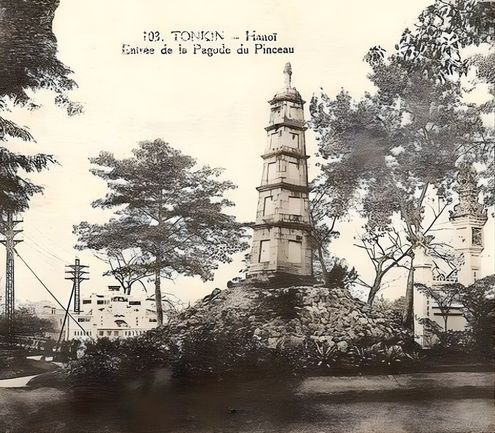
Rather than being decorative monuments, these structures were intended to inspire future generations, emphasizing the importance of education, wisdom, and cultural preservation.
Architectural beauty and symbolism of Pen Tower
The Pen Tower is built on a small artificial mound known as Doc Ton Hill, a symbolic “mountain” created centuries earlier. Though modest in size, this hill carries historical significance, once associated with ceremonial rituals following military victories.
Rising approximately 28 meters high, the tower has a five-story square structure. At its peak sits a stone pen nib pointing upward toward the sky, an image both simple and deeply meaningful. The design conveys the idea of “writing onto the blue sky”, symbolizing ambition, knowledge, and the human desire to reach higher intellectual and spiritual levels.
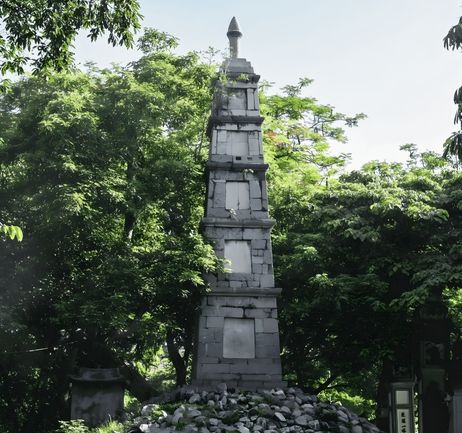
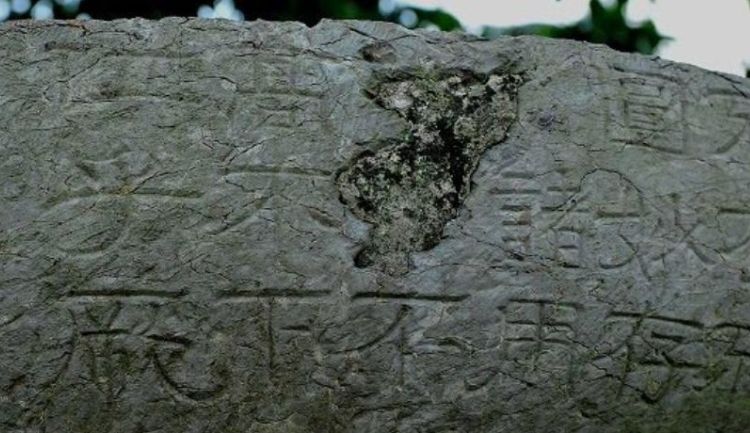
Engraved on the tower are three Chinese characters meaning “Write on the Blue Sky”, expressing the bold spirit and scholarly pride of Vietnam’s past intellectuals. The structure itself reflects a harmonious relationship between nature and human creativity: the mountain elevates the tower, while the tower gives lasting meaning to the mountain, a philosophy often summarized as mutual enhancement between foundation and aspiration.
The Ink Slab: A symbol of knowledge and balance
Just a short walk from the Pen Tower, near the iconic red Thê Húc Bridge, visitors will find the Ink Slab, an equally fascinating structure.
Carved from a single piece of green stone, the Ink Slab resembles a traditional ink stone used in calligraphy. It is supported by three stone toads, symbols of stability and endurance in Vietnamese culture. The surface of the slab contains a 64-character inscription composed by Nguyen Van Sieu, conveying philosophical reflections on education, leadership, and the importance of valuing talent.
Together, the Pen Tower and Ink Slab form a symbolic pair: the pen represents expression and creativity, while the ink represents knowledge and foundation. This combination reflects the traditional values of learning and wisdom in Vietnamese society.
A unique cultural Landscape at Hoan Kiem Lake
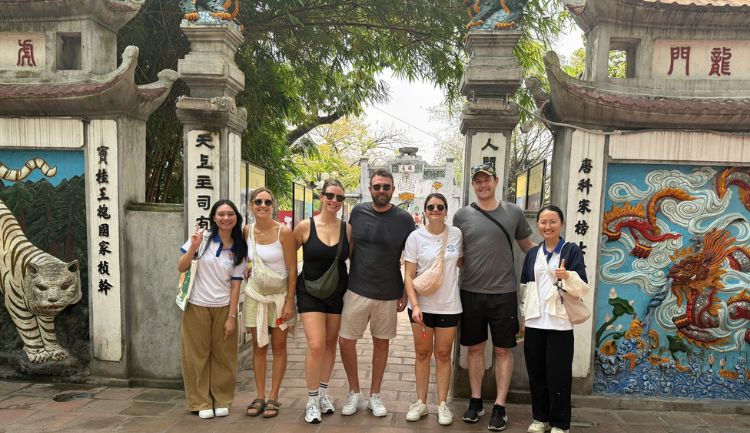
The Pen Tower and Ink Slab are not standalone monuments, they are part of a larger cultural ensemble that includes Ngoc Son Temple and The Huc Bridge. Together, they create a harmonious landscape blending architecture, spirituality, and natural beauty. The Pen Tower and the temple were designed as one composition, and that only really reads at night, which is what a ngoc son temple night tour is for.
Locals often liken this arrangement to the “four essential tools of scholars”: pen, ink, paper (the sky), and water (the lake). This poetic interpretation elevates the entire area into a living representation of Vietnamese philosophy, where nature and human intellect exist in balance.
Even today, this area remains one of the most photographed and visited spots in Hanoi, attracting both domestic and international travelers.
Legends and Curiosities around Pen Tower Hanoi
Like many historical landmarks in Vietnam, the Pen Tower is surrounded by intriguing legends. One popular story suggests that on a specific day of the lunar calendar, the shadow of the pen aligns perfectly with the Ink Slab.
While modern science has shown that this alignment is unlikely due to astronomical factors, the legend continues to capture the imagination of visitors. It adds a layer of mystery and charm, enriching the overall experience of exploring the site.
Hidden Stories: The Forgotten Doc Ton Hill
Beneath the Pen Tower lies Doc Ton Hill, an often-overlooked feature with its own fascinating history. Originally formed from a mound of earth and later reinforced with natural stone, it dates back nearly 300 years to the time of Lord Trinh Doanh.
Though not a mountain in the conventional sense, it holds symbolic meaning in traditional Vietnamese geomancy. At its base, visitors can find a small shrine dedicated to the mountain spirit, reflecting ancient beliefs in nature worship.

Today, conservation efforts have increased to protect this historic structure, as some visitors were previously unaware of its significance. Taking a moment to observe this “hidden” element offers a deeper appreciation of the site’s layered history.
Why Pen Tower is a must-visit in Hanoi ?
More than 150 years after its construction, the Pen Tower remains a powerful cultural symbol in Hanoi. It stands as a reminder of the importance of knowledge, morality, and national identity, values that continue to shape Vietnamese society today.
For travelers, visiting the Pen Tower Hanoi is not just about seeing a landmark. It is about understanding the deeper meaning behind Hanoi’s cultural heritage. It offers a quiet yet profound contrast to the city’s modern energy, allowing visitors to connect with Vietnam’s intellectual and spiritual roots.

Travel Tips for visiting Pen Tower Hanoi
The Pen Tower is located at the northern edge of Hoan Kiem Lake and is easily accessible on foot. Early morning or late afternoon is the best time to visit, when the atmosphere is calm and the lighting is ideal for photography.
There is no entrance fee to view the tower from outside, but visitors can combine the visit with a trip to Ngoc Son Temple for a more complete cultural experience.
Remember to respect the site, avoid climbing on the structures and follow local guidelines to help preserve this important heritage for future generations.
To truly understand the cultural depth of landmarks like the Pen Tower, exploring with local guides makes all the difference. Hanoi Free Private Tour Guide Club is a team of young, dynamic, and passionate volunteers who love sharing their knowledge of Hanoi’s history and culture. Their mission is not only to guide travelers but also to preserve and pass on Vietnam’s cultural values to future generations. By joining them, you will go beyond typical tourism, discover hidden stories, gain local perspectives, and experience Hanoi in a way that is authentic, meaningful, and unforgettable.
Let them show you the soul of Hanoi through its most iconic symbols.
Book our free tour guide!

Hanoi Old Quarter Walking Tour
❤❤❤❤❤ (TripAdvisor / GetYourGuide)
Historical Tour – Walking Tour – Small Group
⚑ 3 – 4 hours
✎ Free Tour – Free Cancellation

Hanoi City Tour
❤❤❤❤❤ (TripAdvisor / GetYourGuide)
Most Popular – Walking Tour – Small Group
⚑ 3 – 8 hours
✎ Free Tour – Free Cancellation
FAQs: Pen Tower Hanoi (Tháp Bút Hoàn Kiếm)
Pen Tower (Tháp Bút) is a historic monument located near Hoàn Kiếm Lake. It symbolizes knowledge, education, and Vietnamese cultural identity, designed to resemble a pen writing into the sky.
Pen Tower is situated at the entrance of Ngoc Son Temple, right by Hoan Kiem Lake in central Hanoi, making it easily accessible for visitors.
Pen Tower represents the intellectual spirit of Vietnam and reflects the country’s respect for learning and cultural values. It was built as a symbol to revive education and moral values during a challenging historical period.
Pen Tower was constructed in 1865 during the Nguyen Dynasty by scholar Nguyen Van Sieu as part of the restoration of Ngoc Son Temple.
“Tả Thanh Thiên” means “Write on the Blue Sky.” It expresses ambition, wisdom, and the desire to contribute knowledge to the world.
The Pen Tower and Ink Slab (Đài Nghiên) symbolize the tools of scholars: pen and ink, representing knowledge, education, and intellectual achievement in Vietnamese culture.
Yes, visitors can view Pen Tower for free from outside. However, there is a small entrance fee if you want to visit Ngoc Son Temple nearby.
Read more
✧ Hanoi Weather in April: Temperature, Tips & Best Things to Do
✧ Hung Kings’ Commemoration Day: Vietnam’s Sacred Roots