French colonial architecture in Hanoi is unlike anything else in Southeast Asia, and after guiding thousands of visitors through these streets, we can tell you: seeing it in person takes your breath away. Hanoi spent 70 years under French rule (1884–1954), and the result is a city skyline layered with grand neoclassical palaces, Gothic cathedrals, Art Deco banks, and Indochine-style museums that refuse to be forgotten. This article is your definitive guide to the 15 most iconic French colonial buildings in Hanoi, complete with addresses, architectural details, and local insider tips.
When you visit Hanoi, you will find out more about these buildings. Scattered across the city, these buildings are a testament to the artistic and decorative styles brought by the French. From grand cathedrals to charming markets, each structure has its own story, reflecting the blending of French and Vietnamese cultures. Here are the top 15 iconic French colonial buildings in Hanoi that you shouldn’t miss on your visit.
Why is Hanoi’s French Colonial Architecture so unique?
The result is a fascinating architectural conversation between two cultures, visible in every yellow-plastered façade and lotus-motif column capital.
What separates Hanoi from other colonial-era cities like Saigon (Ho Chi Minh City) is the remarkable preservation rate. Hoan Kiem and Ba Dinh districts still hold over 900 pre-1954 French-era buildings, many of which remain in active use as government offices, hotels, and cultural institutions. Walking past the Hanoi Opera House at dusk, when the lights turn golden and motorbikes swirl around it like a living current, is a genuinely cinematic experience that no photograph fully captures.
The French also introduced a deliberate urban planning logic to Hanoi: wide tree-lined boulevards, a grid street system around Hoan Kiem Lake, and designated residential, administrative, and commercial zones. That spatial logic is still felt today, making the French Quarter one of the most walkable and visually coherent neighborhoods in all of Vietnam.
What Architectural Styles Did the French Bring to Hanoi?
The French introduced four main architectural styles to Hanoi, each representing a different era and intent:
| Style | Period | Key Features | Best Example in Hanoi |
| French Neoclassical | 1880s–1910s | Symmetry, columns, grand façades, Italian marble | Hanoi Opera House, Presidential Palace |
| Gothic Revival | 1880s–1900s | Pointed arches, bell towers, stained glass | St. Joseph’s Cathedral |
| Art Deco | 1920s–1930s | Geometric forms, streamlined ornament, bold horizontals | State Bank of Vietnam |
| Indochine (Hybrid) | 1920s–1940s | French structure + Vietnamese motifs (lotus, dragons, tiled roofs) | Vietnam National Museum of History, Ministry of Foreign Affairs |
The Indochine style is arguably the most interesting, representing a moment when French architect Ernest Hébrard consciously tried to respect Vietnamese aesthetics rather than erase them. Buildings like the Ministry of Foreign Affairs and Cua Bac Church carry this hybrid DNA in every tile and cornice.
The 15 Best French Colonial Architecture Buildings in Hanoi
1. Hanoi Opera House
Address: 1 Trang Tien Street, Hoan Kiem District, Hanoi
The Hanoi Opera House is the single most iconic example of French colonial architecture in Hanoi and the undisputed crown jewel of the French Quarter. Built between 1901 and 1911 by architects Harley and Broyer, it draws direct inspiration from the Palais Garnier in Paris (not the current Opéra Bastille), replicating its tiered façade, Corinthian columns, and ornate ironwork balustrades. Inside, Italian marble floors, French ceiling murals, and original bronze chandeliers have been meticulously preserved.
What most visitors don’t know: the Opera House played a pivotal political role. On August 19, 1945, Vietnamese revolutionaries gathered on its steps to announce the August Revolution, a moment that changed the country’s history. Our club guides love sharing this detail, because it transforms the building from a pretty façade into a living witness of history. Performance tickets start from around 200,000 VND; even if you don’t attend a show, linger on the front steps at night when the whole structure is flood-lit gold.
Insider tip: The best photo angle is from the end of Trang Tien Street, roughly 150 meters back, which captures the full façade with the tree canopy framing it perfectly.

2. Government Guest House
Address: 12 Ngo Quyen – 2 Le Thach, Hoan Kiem, Hanoi
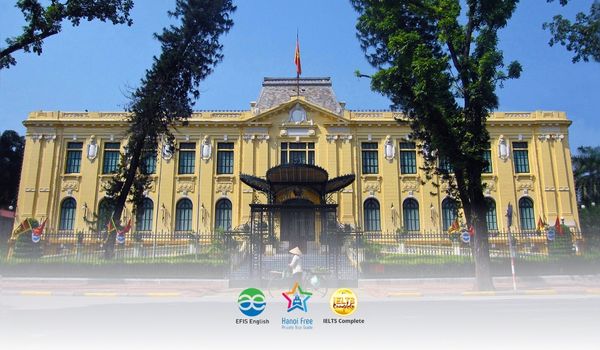
The Government Guest House is a refined example of early 20th-century French colonial architecture in Hanoi, built in 1918 as the official residence of the Governor of Tonkin. Its immediately recognizable feature is the bright cadmium-yellow exterior, a color that became the signature palette of French administrative buildings across Indochina, topped with the Vietnamese national flag. The building continues its diplomatic role today, hosting foreign heads of state and official delegations, which means public access is restricted.
However, the exterior is entirely visible from Ngo Quyen Street, and the building’s proportions, the arched ground-floor arcade, symmetrical window bays, and corner pavilions, are best appreciated from the pavement. This is a building that rewards slow observation: the decorative ironwork on the upper balconies, the classical pilasters, and the rhythm of the shuttered windows are all masterfully composed.
3. St. Joseph’s Cathedral, Hanoi
Address: 40 Nha Chung Street, Hoan Kiem, Hanoi
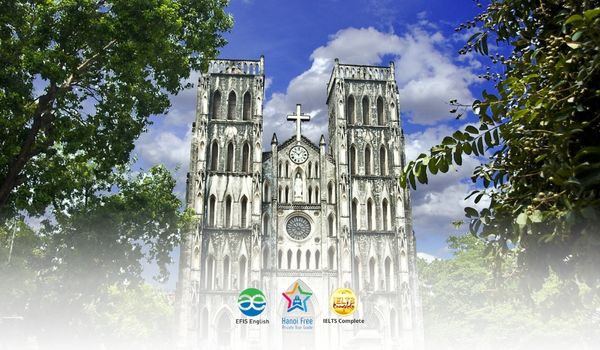
St. Joseph’s Cathedral is the oldest Catholic church in Hanoi, completed in 1886 (with the interior fully furnished by 1888), and it remains one of the most striking Gothic Revival structures in all of Southeast Asia. Modeled loosely on Notre-Dame de Paris, it features twin bell towers, pointed arches, elaborate stained-glass windows, and an ornate high altar. It was built on the site of the Bao Thien Pagoda, a fact that adds a layer of historical complexity to this beautiful space.
The cathedral faces a small square (Nha Tho Street) that has evolved into one of Hanoi’s most charming café and boutique districts, meaning a visit here fits naturally into a half-day French Quarter walk. Mass is held regularly and the church is open to respectful visitors outside of service times. The exterior is most photogenic at dusk, when the Gothic stonework catches the warm light and the square fills with locals and travelers alike.
4. State Bank of Vietnam – Art Deco on Ly Thai To Street
Address: 49 Ly Thai To, Trang Tien, Hoan Kiem, Hanoi
The State Bank of Vietnam building is Hanoi’s most accomplished example of Art Deco colonial architecture, originally built in 1928 as the Banque de l’Indochine (Bank of Indochina) and redesigned in the 1930s with full Art Deco ornamentation. Its defining features include bold horizontal banding, geometric relief decoration, streamlined window surrounds, and a monumental central portal. The wide, symmetrical façade projects institutional authority while the decorative detailing adds visual richness.
The building is not open to casual visitors, but its exteriors are fully appreciable from Ly Thai To Street, just around the corner from Hoan Kiem Lake. It forms part of a remarkable streetscape alongside the Sofitel Metropole, making this block one of the highest concentrations of quality French colonial architecture in Hanoi.

5. Visit Hanoi : Presidential Palace
Address: 2 Hung Vuong, Ba Dinh, Hanoi
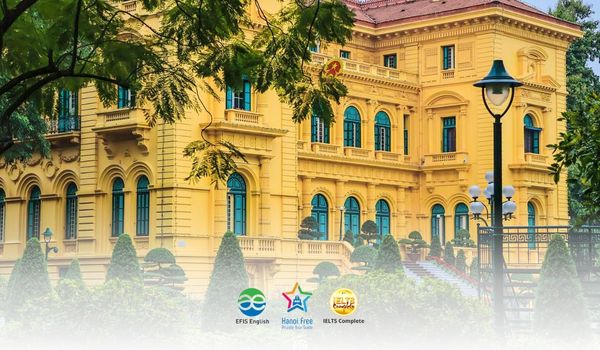
The Presidential Palace is one of the most grand examples of French Neoclassical design in Hanoi, built between 1900 and 1906 as the official residence of the Governor-General of French Indochina. Its distinctive yellow ochre exterior, colonnaded portico, and manicured gardens make it one of the most photographed colonial buildings in the city. The building is enclosed within the Ba Dinh Complex alongside Ho Chi Minh’s Mausoleum and Stilt House, forming a historically dense neighborhood worth several hours of exploration.
Note that the palace interior is not open to the public, but the surrounding grounds and exteriors are fully accessible. The contrast between this symbol of French imperial power and the deliberately humble wooden stilt house where Ho Chi Minh chose to live, just meters away, is one of the most quietly powerful visual statements in all of Hanoi.
6. Former Vietnam Military History Museum: Colonial Building, Revolutionary Contents
Address: 28A Dien Bien Phu, Ba Dinh, Hanoi
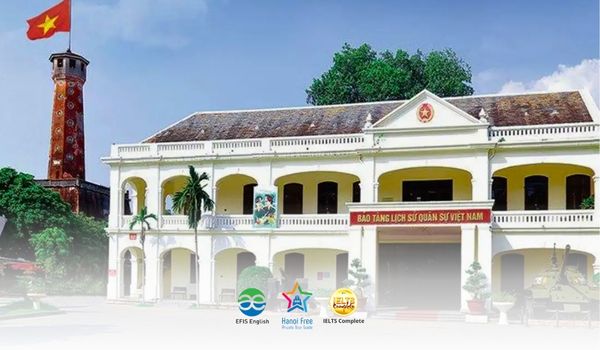
The former site of the Vietnam Military History Museum occupies a two-story French colonial building that dates from the early 20th century, featuring the characteristic yellow-plastered walls, louvred shutters, and colonnaded entrance of the administrative colonial style. While the museum’s main operations and massive collection have relocated to a modern facility in Nam Tu Liem district, this historic downtown location remains a significant landmark, deeply tied to the city’s military heritage and the iconic Hanoi Flag Tower (Cot Co Hanoi) located on its grounds.
For decades, this colonial building housed thousands of artifacts, weapons, photographs, and maps documenting Vietnam’s military achievements. Its most dramatic outdoor exhibit was the Dien Bien Phu Trophy, an enormous pile of debris from French military hardware captured at the decisive Battle of Dien Bien Phu in 1954, which ended French colonial rule in Vietnam. The symbolic weight of French colonial wreckage displayed in a French colonial building has long left a powerful impression on visitors.
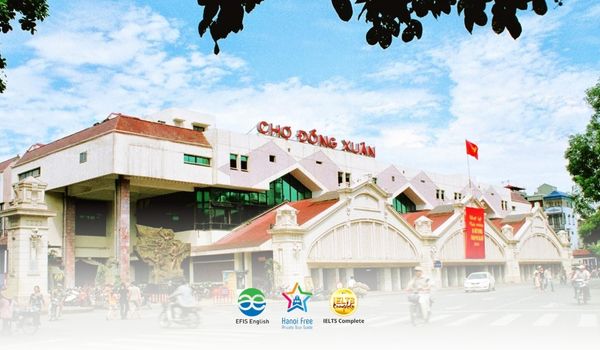
7. Dong Xuan Market: French Market Architecture Still Thriving
Address: 15 Cau Dong, Hoan Kiem, Hanoi
Dong Xuan Market is the largest covered market in Hanoi, established in 1889 during the early French colonial period and rebuilt in its current form in the 1990s following a devastating fire in 1994. The original French-era structure featured five distinctive arched entrance halls, a characteristic of French municipal market architecture, and the rebuilt version retained this design logic. The market is an excellent example of how French colonial architecture in Hanoi was not limited to monuments and palaces: it also shaped the commercial and daily life of the city.
Today, Dong Xuan spans four floors and hundreds of stalls selling everything from wholesale clothing and household goods to fresh produce and street food. It’s most atmospheric at dawn when wholesale trading is in full swing. For travelers, the night market on weekends on Hang Dao Street directly in front of the market entrance is a wonderful way to end a French Quarter walking day.
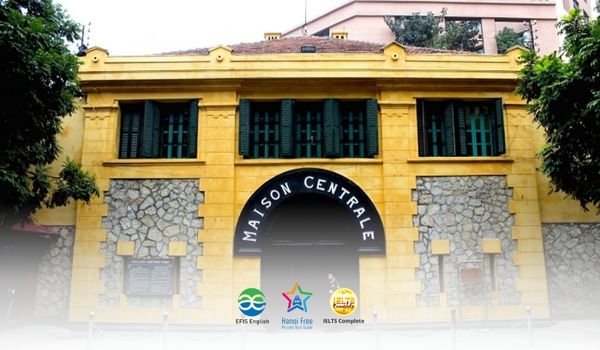
8. Hoa Lo Prison: The Dark Chapter in Stone
Address: 1 Hoa Lo, Hoan Kiem, Hanoi
Hoa Lo Prison, originally called Maison Centrale, is one of the most historically charged examples of French colonial architecture in Hanoi, built by the French between 1886 and 1901 to imprison Vietnamese political activists. The thick stone walls, high watchtowers, and guillotine chamber tell a story of colonial oppression that the architecture makes viscerally real. During the Vietnam War (1964–1973), the prison gained international notoriety as the “Hanoi Hilton”, where American pilots including Senator John McCain were held.
Today, roughly one-third of the original prison survives (much was demolished for the construction of Hanoi Towers), and it operates as a compelling museum. Admission is 30,000 VND. The experience is sobering, thought-provoking, and essential context for understanding how French colonial architecture in Hanoi served not only aesthetic and administrative purposes, but also coercive ones. Our guides always recommend pairing this visit with the Military History Museum nearby for fuller historical perspective.
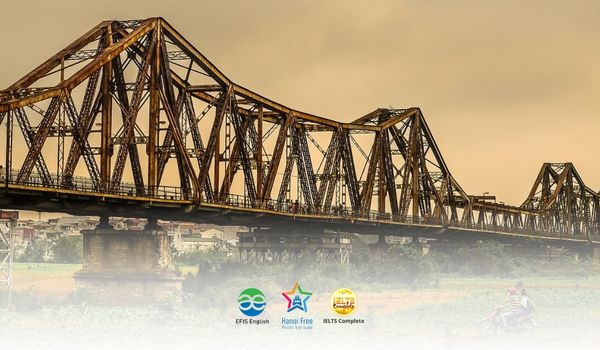
9. Long Bien Bridge: An Engineering Icon Over the Red River
Address: Ngoc Thuy Ward, Long Bien, Hanoi
Long Bien Bridge is one of the most remarkable feats of French colonial engineering in all of Vietnam, constructed between 1899 and 1902 by the Daydé & Pillé engineering firm (not Gustave Eiffel, as the popular myth claims, though the design shares the same iron truss aesthetic of the Eiffel era). Originally named the Paul Doumer Bridge after the Governor-General of Indochina, it stretches 1,682 meters across the Red River and was, at the time of its completion, one of the longest bridges in Asia.
The bridge survived American bombing campaigns in the 1960s and 70s, partly through remarkable repair work by Vietnamese engineers who kept it operational despite repeated strikes. Walking or cycling across Long Bien Bridge at sunrise or sunset is one of Hanoi’s most memorable experiences. The iron lattice frame creates extraordinary geometric shadows on the bridge deck, and the views of the Red River, with fishing boats and vegetable gardens below, feel genuinely timeless.
Insider tip: The best photo of the bridge is from the west bank embankment at Phuc Tan ward at golden hour, you’ll get the full span silhouetted against the sky, and in the wet season, a brilliant reflection in the water.
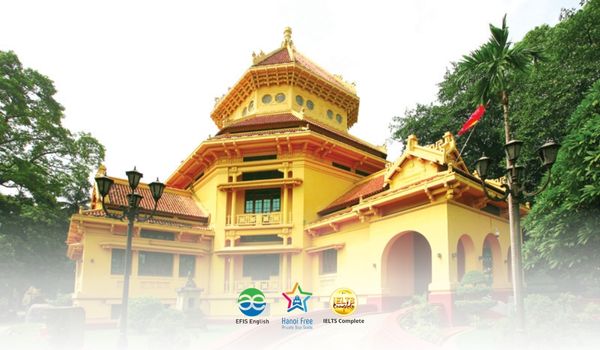
10. Vietnam National Museum of History – Indochine Architecture at Its Finest
Address: 1 Pham Ngu Lao Street, Hoan Kiem District
The Vietnam National Museum of History is one of the finest surviving examples of Indochine-style architecture in Hanoi, designed by French architect Ernest Hébrard and completed in 1932. Hébrard deliberately fused French structural logic with Vietnamese decorative elements, tiled upturned eaves, lotus motifs on the column capitals, and a double-skin wall system designed to combat the tropical heat, creating a building that feels both grand and rooted in its place.
The museum houses over 200,000 artifacts spanning Vietnam’s history from prehistoric times through the 1945 August Revolution. Admission is approximately 40,000 VND for adults. Do not miss Room 1, which contains bronze drums from the Dong Son culture (circa 500 BC), some of the most remarkable objects in all of Vietnamese archaeology, displayed inside one of the most beautiful colonial buildings in the country.
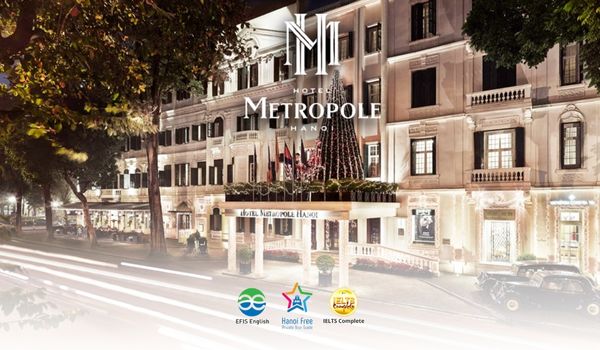
11. Sofitel Legend Metropole Hanoi
Address: 15 Ngo Quyen, Hoan Kiem, Hanoi
The Sofitel Legend Metropole Hanoi is the oldest operating five-star hotel in Vietnam, opened in 1901 by two French entrepreneurs, André Ducamp and Gustave-Émile Dumoutier. Its white neoclassical façade, dark wood-paneled lobby, and lush internal courtyard have hosted an extraordinary roster of guests: Charlie Chaplin, Graham Greene (who reportedly wrote parts of The Quiet American here), Jane Fonda, and numerous world leaders. The hotel is a living museum of Hanoi’s French colonial architecture.
A WWII-era bunker beneath the hotel was discovered during renovations and is now open for tours, an astonishing subterranean contrast to the luxury upstairs. Even if you’re not staying here, the hotel welcomes visitors to its lobby bar and brasserie. Pro tip from our guides: have a late-afternoon Bamboo Bar cocktail in the courtyard garden, it’s one of the most atmospheric spots in Hanoi, and the ambient price is lower than you’d expect for a legendary property.
12. Hang Dau Water Tank: The Forgotten Colonial Relic
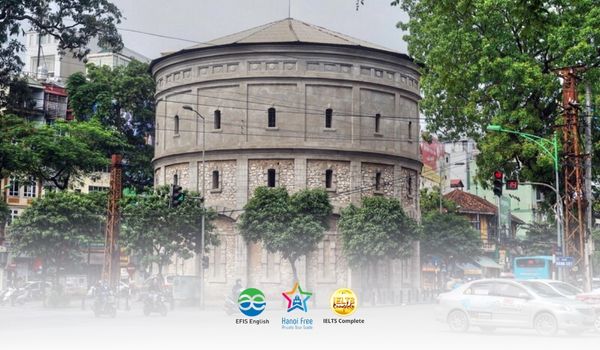
Address: Quan Thanh, Ba Dinh, Hanoi
The Hang Dau Water Tank is one of the least-known but most visually striking pieces of French colonial infrastructure in Hanoi, built in 1894 to supply clean water to the Old Quarter and French concession areas. This cylindrical brick tower stands 25 meters high and once held 5,000 cubic meters of water, an engineering achievement for its era. Its fortress-like form, with its corbelled brickwork and narrow slit windows, looks more like a medieval keep than a water utility structure.
No longer in use, the water tank is preserved as a heritage structure and can be viewed from the surrounding streets. It sits in the gap between the Old Quarter and Ba Dinh, and most visitors walk past it without realizing what it is. This is exactly the kind of hidden gem that our club’s guides love to include on walking tours, a building that tells the story of colonial urban infrastructure rather than just political power.
13. Cua Bac Church: Where French and Vietnamese Architecture Meet
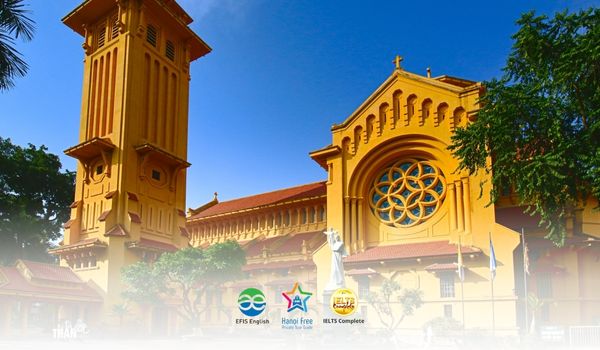
Address: 56 Phan Dinh Phung, Ba Dinh, Hanoi
Cua Bac Church is one of the most architecturally sophisticated examples of the Indochine style in Hanoi, designed by Ernest Hébrard and built between 1925 and 1931. Unlike the Gothic severity of St. Joseph’s Cathedral, Cua Bac is gentler and more hybrid: its asymmetrical bell tower, sloping tiled roofs, and decorative ceramic panels reflect a sincere attempt to blend Catholic ecclesiastical form with Vietnamese architectural sensibility.
The church is also historically significant: Vietnamese patriots Nguyen Thai Hoc and his companions were memorialized here following their execution by French authorities in 1930 after the Yen Bai uprising. A plaque inside commemorates them, adding a layer of historical poignancy to this beautiful space. The church is active, and visitors are welcome during non-service hours; the interior is cool, quiet, and decorated with extraordinary craft.
14. University of Science, VNU Hanoi: Academia in Indochine Style
Address: 19 Le Thanh Tong, Hoan Kiem, Hanoi
The University of Science building (part of Vietnam National University, Hanoi) is another masterwork by Ernest Hébrard, constructed between 1923 and 1926. It represents the mature Indochine style: a French Beaux-Arts structural framework dressed in Vietnamese decorative vocabulary, upturned eaves, ventilated loggias designed for the tropical climate, and carved stone panels incorporating indigenous motifs. The campus design reflected Hébrard’s belief that colonial architecture should adapt to its environment rather than impose alien forms on it.
The building remains in active educational use, and while access to the interior is limited, the street-facing façade on Le Thanh Tong is fully visible and easily one of the most elegant streetscapes in Hanoi’s French Quarter. It forms a natural pairing with the nearby National Museum of History (also Hébrard) for those interested in understanding the development of the Indochine style.

15. Ministry of Foreign Affairs: A National Monument of Hybrid Design
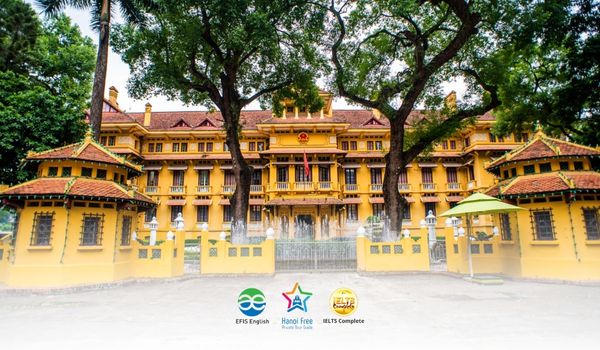
Address: 1 Ton That Dam, Ba Dinh, Hanoi
The Ministry of Foreign Affairs building is perhaps the purest expression of the mature Indochine style in Hanoi, designed by Ernest Hébrard in the early 1930s and officially recognized as a Vietnamese National Monument in 2016. The building synthesizes Western Classicism with Vietnamese architectural traditions in a way that feels neither forced nor superficial: its central pavilion, flanking wings, and decorative tiled rooflines create a composition that is simultaneously monumental and humane.
The building sits in the administrative heart of Ba Dinh District and is not open to the public, but its exteriors are visible from Ton That Dam Street. For anyone with a serious interest in French colonial architecture in Hanoi, particularly the Indochine sub-style, this building alongside Cua Bac Church and the Museum of History forms a trio that shows Hébrard’s genius at its peak.
How to Explore French Colonial Architecture in Hanoi: A Practical Walking Guide
The most efficient way to see French colonial architecture in Hanoi is to organize your visit into two half-day walks, one focused on Hoan Kiem and one on Ba Dinh.
- Hoan Kiem Loop (3–4 hours): Start at the Hanoi Opera House on Trang Tien Street, walk south-west past the State Bank and Government Guest House on Ngo Quyen, continue to the Metropole Hotel, then loop back through Nha Tho Street to St. Joseph’s Cathedral, finishing at Hoa Lo Prison. This route covers 9 of the 15 buildings in this guide within a compact 3 km circle.
- Ba Dinh Loop (2–3 hours): Begin at the Presidential Palace and Military History Museum complex on Hung Vuong, continue to the Ministry of Foreign Affairs on Ton That Dam, visit Cua Bac Church on Phan Dinh Phung, and finish at the Hang Dau Water Tank. This route is quieter and less touristed than the Hoan Kiem loop, and our guides consider it the more “local” French colonial experience in Hanoi.
Best time: Early morning (7–9 AM) for cooler temperatures and softer light. Most buildings photograph beautifully at golden hour (5:30–7 PM).
Fifteen buildings is a long walk in Hanoi heat. A hanoi french quarter walking tour usually covers six or seven of them properly instead.
Detailed Quick-Reference Table: 15 French Colonial Buildings in Hanoi
| # | Building | District | Style | Built | Open to Public | Entry Fee |
| 1 | Hanoi Opera House | Hoan Kiem | Neoclassical | 1901–1911 | Exterior / Shows | From 200K VND |
| 2 | Presidential Palace | Ba Dinh | Neoclassical | 1900–1906 | Exterior only | Free |
| 3 | St. Joseph’s Cathedral | Hoan Kiem | Gothic Revival | 1886–1888 | Yes (non-service) | Free |
| 4 | Government Guest House | Hoan Kiem | Neoclassical | 1918 | Exterior only | Free |
| 5 | Sofitel Metropole | Hoan Kiem | Neoclassical | 1901 | Lobby/Bar | Free |
| 6 | Former Vietnam Nat’l Museum of History | Hoan Kiem | Indochine | 1926–1932 | Yes | |
| 7 | State Bank of Vietnam | Hoan Kiem | Art Deco | 1928 | Exterior only | Free |
| 8 | Hoa Lo Prison | Hoan Kiem | Colonial Utilitarian | 1886–1901 | Yes | 30K VND |
| 9 | Long Bien Bridge | Long Bien | Iron Truss Engineering | 1899–1902 | Yes (walk/cycle) | Free |
| 10 | Dong Xuan Market | Hoan Kiem | French Market | 1889 | Yes | Free |
| 11 | Military History Museum | Ba Dinh | Colonial Administrative | Early 1900s | Yes | 40K VND |
| 12 | Hang Dau Water Tank | Ba Dinh | Colonial Industrial | 1894 | Exterior only | Free |
| 13 | Cua Bac Church | Ba Dinh | Indochine | 1925–1931 | Yes (non-service) | Free |
| 14 | University of Science, VNU | Hoan Kiem | Indochine | 1923–1926 | Exterior only | Free |
| 15 | Ministry of Foreign Affairs | Ba Dinh | Indochine | 1930s | Exterior only | Free |
French Colonial Architecture Hanoi Is a Living History Lesson
French colonial architecture in Hanoi is not a museum exhibit behind velvet ropes, it is the living skin of the city, breathed in on every walk through the French Quarter and Ba Dinh. These 15 buildings span engineering triumphs, spiritual spaces, sites of oppression, and experiments in cultural fusion, and together they tell the story of 70 years that permanently shaped Hanoi’s identity. Understanding this architecture means understanding Hanoi itself: its resilience, its complexity, and its extraordinary capacity to absorb history without being defined entirely by it. Whether you have a single afternoon or a full week, these landmarks deserve your time and your curiosity.
FAQs French Colonial Architecture in Hanoi
The Hanoi Opera House (1 Trang Tien Street) is widely considered the finest single example of French colonial architecture in Hanoi. Built between 1901 and 1911 in the French Neoclassical style, it draws direct inspiration from the Palais Garnier in Paris and has been meticulously maintained.
No. The Hanoi Opera House was designed by French architects Harley and Broyer, not Gustave Eiffel. Long Bien Bridge is also commonly misattributed to Eiffel; it was actually designed by the Daydé & Pillé engineering firm, though it shares the iron truss aesthetic of the era.
You can see all 15 from the outside in one long day (8–10 hours) with good planning. However, for a more enriching experience, including the interiors of Hoa Lo Prison, the National Museum of History, and the Military History Museum, we recommend splitting across two half-days.