The Hanoi French Quarter is one of Southeast Asia’s finest surviving examples of French colonial urbanism, wide, tree-canopied boulevards, mustard-yellow villas, and grand public buildings that tell a century of layered history in a single stroll. If you have ever stood beside Hoan Kiem Lake and wondered what lies to the south and east, you have been standing on the doorstep of one of Hanoi’s greatest secrets.
What exactly is the Hanoi French Quarter?
The Hanoi French Quarter is a historic urban district located southeast of Hoan Kiem Lake, developed primarily between the late 1800s and 1954 as the administrative and residential heart of French Indochina. It spans roughly 800 hectares across two central districts, Hoan Kiem and Ba Dinh, laid out on a logical east–west and north–south grid, a deliberate contrast to the organic maze of the Old Quarter just minutes away.
French planners replaced traditional Vietnamese tube houses with grand neoclassical public buildings, wide tree-lined avenues, and residential villas for colonial officials and wealthy merchants. Today, many of those villas serve as embassies, government offices, or boutique hotels, while the public landmarks remain vibrant cultural anchors. The result is a neighborhood that feels genuinely different from anywhere else in Vietnam: calmer, more spacious, and soaked in an elegance that rewards the slow traveler.
The quarter is best understood building by building rather than from a list, which is the argument for taking a hanoi french quarter walking tour with someone who can point at the details.

Hanoi French Quarter vs. Old Quarter: Key Differences
Both districts cluster around Hoan Kiem Lake, but they offer completely different experiences. The Old Quarter sits north and west of the lake; the Hanoi French Quarter extends south and east. Where the Old Quarter dazzles with narrow alley chaos, century-old guildhalls, and sensory overload, the French Quarter seduces with boulevard calm, architectural grandeur, and a more refined pace.
| Feature | Hanoi French Quarter | Hanoi Old Quarter |
| Atmosphere | Calm, spacious, elegant | Vibrant, dense, sensory |
| Streets | Wide, grid-pattern boulevards | Narrow, winding alleys |
| Architecture | French neoclassical & colonial | Vietnamese tube houses, guild streets |
| Primary draw | Landmarks, fine dining, history | Markets, street food, nightlife |
| Best for | Architecture lovers, history buffs, leisurely walkers | Foodies, culture explorers, night owls |
| Crowd level | Relatively quiet | Busy, especially evenings & weekends |
| Walking time from lake | 5–10 minutes south/east | 5 minutes north/west |
The good news: you can combine both in a single day. Many travelers do the French Quarter in the morning and the Old Quarter in the late afternoon for a perfectly balanced Hanoi experience.
The history and development of Hanoi’s French Quarter
The Hanoi French Quarter, often referred to as the Former Administrative District, was developed during the French colonial period in the late 19th and early 20th centuries. Unlike the organic and chaotic growth of the Old Quarter, the French Quarter was meticulously planned to reflect European urban design principles. The French colonial administration sought to create a district that would serve as the political, economic, and cultural hub of Indochina, a miniature Paris in the heart of Vietnam.
The transformation of this area began in earnest under Paul Doumer, the Governor-General of French Indochina from 1897 to 1902. During his tenure, massive infrastructure projects reshaped Hanoi’s landscape. Swamps and lakes were drained to make way for broad tree-lined avenues, government buildings, and luxurious residences. Major streets such as Trang Tien, Ly Thuong Kiet, Hai Ba Trung, Phan Chu Trinh, and Ngo Quyen were developed, and soon, the district became home to the French elite, high-ranking officials, and wealthy businessmen.
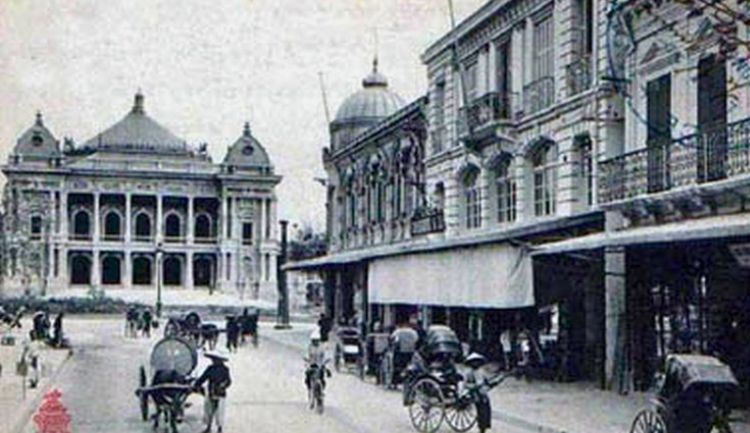
Architecturally, the French Quarter was defined by Neoclassical and Art Deco styles. Grand mansions with spacious gardens, elaborate facades, and tiled rooftops stood proudly along the boulevards. Unlike the dense, commercial streets of the Old Quarter, the French Quarter was designed with wide sidewalks, open public spaces, and carefully placed landmarks to create a harmonious urban landscape.
The French Quarter After 1954: Transformation and Preservation
With the end of French colonial rule in 1954, the French Quarter underwent a transformation. Many of its grand mansions and government buildings were repurposed for the new socialist administration. Some became embassies, museums, hotels, and offices, while others remained residential villas, now occupied by Vietnamese elites.
Despite modern developments, the district has retained much of its colonial charm. Unlike many other parts of Hanoi, where rapid urbanization has erased traces of the past, the French Quarter remains a well-preserved reminder of Vietnam’s colonial era. Today, it stands as a district of diplomatic importance, high-end commerce, and cultural prestige, attracting both locals and international visitors who wish to experience its unique blend of history and elegance.
Iconic landmarks of Hanoi French Quarter
Hanoi Opera House: A symbol of colonial grandeur
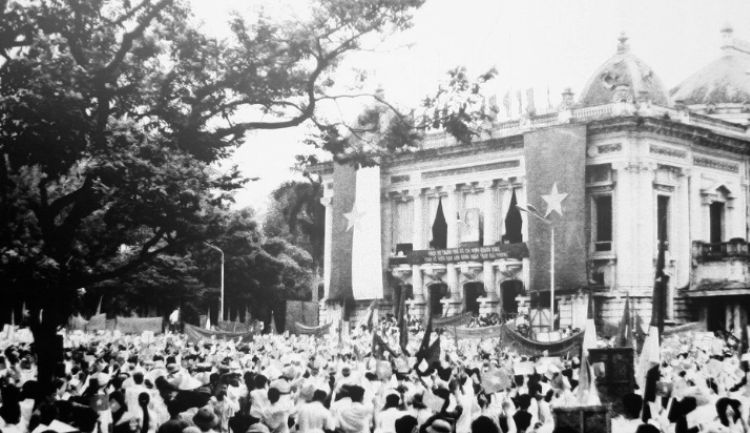
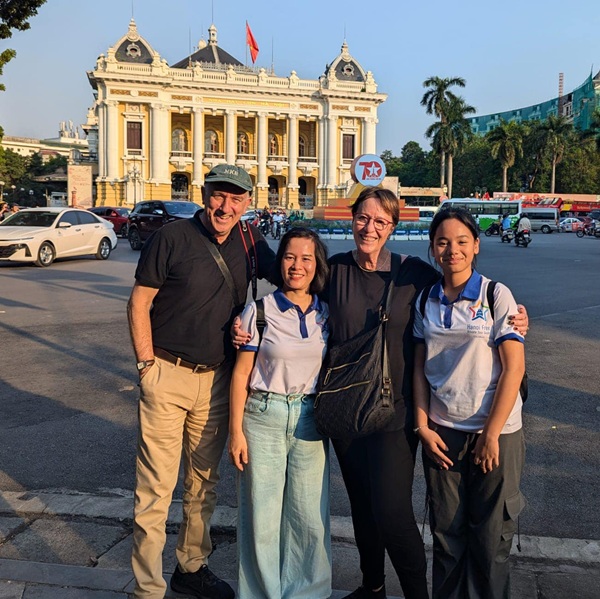
The Hanoi Opera House (1 Trang Tien Street) is the architectural crown jewel of the quarter and arguably of the entire city. Constructed between 1901 and 1911 by French architects Broyer and Harley, its design drew heavily from the Palais Garnier in Paris while adopting a warm, creamy Indochinese exterior palette. It remains a working performance venue hosting traditional Vietnamese music, contemporary concerts, and national events. Even if you do not attend a show, the building’s façade at dusk, lit up against the darkening sky, is one of Hanoi’s most iconic sights.
Hoa Lo Prison Museum (“The Hanoi Hilton”)
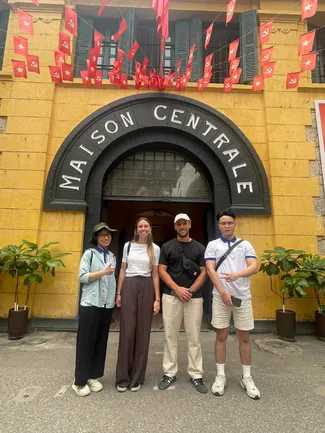
Hoa Lo Prison, known to locals as “Maison Centrale”, was built by the French between 1886 and 1889 to hold Vietnamese political prisoners. During the Vietnam War, it became infamous as the detention center for American prisoners of war, who sardonically nicknamed it the “Hanoi Hilton”. Today it operates as one of the most sobering and important museums in the city, offering unflinching insight into colonial exploitation and wartime hardship. Entry is just a few dollars, and the exhibits are genuinely compelling. Located at 1 Hoa Lo Street, it is a must-visit for anyone serious about understanding Vietnam’s history.
Sofitel Legend Metropole Hanoi: A timeless luxury hotel
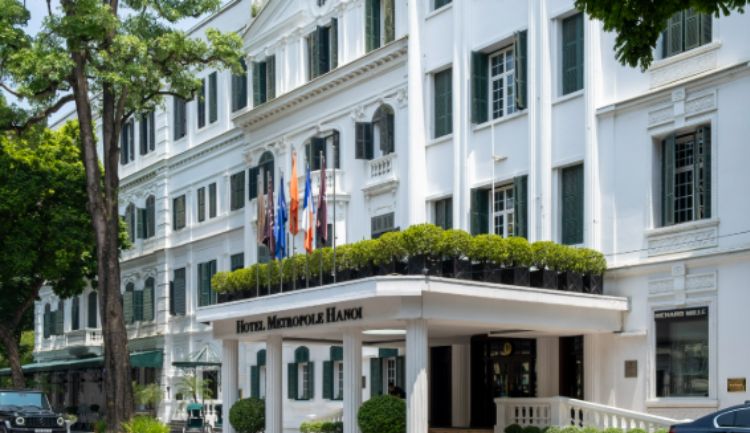
The Sofitel Legend Metropole Hanoi (15 Ngo Quyen Street) is not just a hotel, it is a living piece of the city’s story. Built in 1901, it has hosted an extraordinary roster of guests including Charlie Chaplin, Somerset Maugham, and Ho Chi Minh himself. The hotel’s wartime bunker, only rediscovered in 2011, sheltered guests including actress Jane Fonda during the 1972 Christmas bombings. Even if you are not staying, stop for a pastry at the Le Club Bar or simply linger in the white-colonnaded courtyard to absorb the atmosphere of Old Indochina at its most refined.
Vietnam National Museum of History: A treasure trove of the past
Housed in a beautiful French colonial building on Trang Tien Street, the Vietnam National Museum of History presents the country’s arc from prehistoric times through the modern era in a series of richly detailed galleries. The building itself, a graceful example of the “Indochinese” architectural style, is almost as impressive as the collection inside. Admission is inexpensive and the museum provides invaluable context for everything else you will see in the quarter.
St. Joseph’s Cathedral
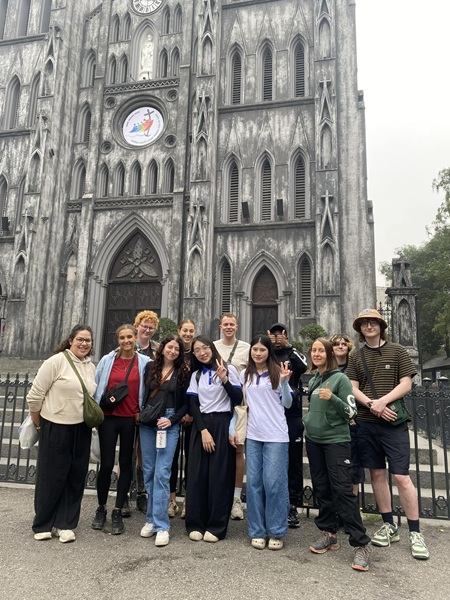
Although it sits just on the boundary between the Old Quarter and the Hanoi French Quarter, St. Joseph’s Cathedral (40 Nha Chung Street) is architecturally part of the same colonial legacy. Completed in 1886, its neo-Gothic design echoes Notre-Dame de Paris, with twin bell towers rising 31.5 meters and an interior blending Catholic iconography with Vietnamese decorative sensibilities. The square in front is a beloved local gathering spot, especially on weekend evenings when young Hanoians congregate with cups of Cà Phê Trứng (egg coffee) and iced lemon tea.
Insider tip from our club’s volunteers: On Sunday mornings, arrive at St. Joseph’s around 9:00–9:30 AM to catch an outdoor Mass in full swing, with the congregation spilling into the square. The atmosphere is intimate, colorful, and one of the most genuine local moments you can witness in central Hanoi.
The Governor-General’s Palace (Now the Presidential Palace)
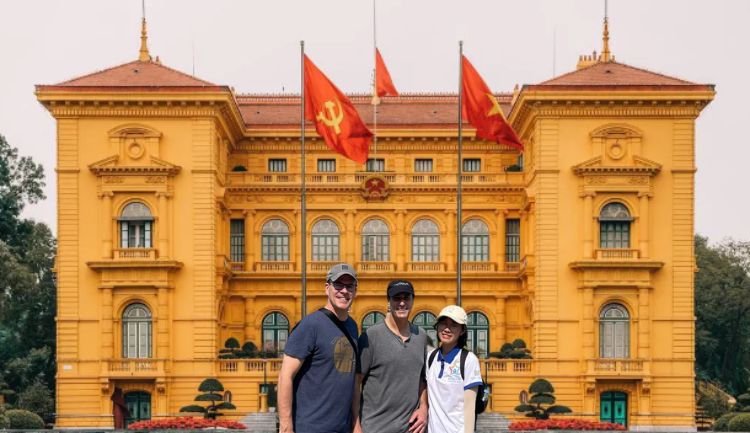
Originally the residence of the Governor-General of Indochina, this impressive Beaux-Arts-style mansion was built in the early 20th century. Its yellow facade, grand columns, and manicured gardens reflect the opulence of French colonial rule. Today, it serves as the Presidential Palace of Vietnam and is not open to the public, but visitors can admire its beauty from outside.
French Colonial Architecture in Hanoi: What Makes It Unique?
French colonial architecture in Hanoi is distinctive precisely because it is not purely French. The most interesting buildings in the Hanoi French Quarter belong to what architects call the “Indochinese style”, a deliberate hybrid created when French planners recognized that purely European designs performed poorly in Hanoi’s humid tropical climate and looked culturally incongruous.
The hybrid solution combined French structural logic, high ceilings, thick walls, tall shuttered windows, with Vietnamese roof-line decorations, terracotta tiling, louvred screens, and tropical gardens. The result is buildings that breathe: deeply shaded verandas, interior courtyards for airflow, and facades finished in the warm ochre-yellow that has become synonymous with Vietnamese colonial architecture. The Hanoi Opera House represents the grander neoclassical tradition, while the quieter residential streets of Phan Dinh Phung exemplify the more intimate Indochinese hybrid.

What are the Best Streets to Walk in the Hanoi French Quarter?
The three streets that best capture the soul of the Hanoi French Quarter are Trang Tien, Ly Thuong Kiet, and Tran Hung Dao. Start your walk at the Opera House on Trang Tien, where the boulevard is flanked by the elegant Trang Tien Plaza shopping center (occupying a beautiful colonial building) and the National Museum of History. Continue south along Ngo Quyen past the Metropole, then west along Ly Thuong Kiet, one of the longest and most atmospheric tree-lined streets in the city. The shade of its old tamarind trees, the yellow villa facades, and the quiet hum of bicycle traffic make it feel genuinely cinematic.
Phan Dinh Phung Street in the Ba Dinh section of the quarter is equally rewarding and far less visited by tourists. Here, the architecture leans toward the official, French colonial villas now occupied by embassies and government offices, and the street has a stately, unhurried feel that is a world away from the tourist crowds. The Presidential Palace complex is also in this zone, offering a glimpse of the grand Governor-General’s residence that once sat at the heart of colonial power in Indochina.
How to Do the Perfect Hanoi French Quarter Walking Tour
A well-planned Hanoi French Quarter walking tour takes 3–4 hours and is best done in the early morning or late afternoon. Here is a logical, tested route that our club’s volunteer guides have refined through hundreds of tours.
Suggested Route:
Start: Hoan Kiem Lake (north side): walk clockwise around the lake to warm up.
Stop 1: Hanoi Opera House (1 Trang Tien St): admire the façade, check the events board inside.
Stop 2: Trang Tien Street walk south: stop at Trang Tien Ice Cream for the famous green sticky-rice flavour (a Hanoi institution).
Stop 3: Vietnam National Museum of History (1 Trang Tien St): allow 45–60 minutes inside.
Stop 4: Sofitel Legend Metropole (15 Ngo Quyen St): walk the courtyard, consider a coffee.
Stop 5: Ly Thuong Kiet Street: stroll under the tamarind trees, admire the villas.
Stop 6: Hoa Lo Prison Museum (1 Hoa Lo St): allow 45–60 minutes.
Finish: Head back north via Trang Thi Street to St. Joseph’s Cathedral for iced lemon tea in the square.
Practical details:
Distance: Approximately 4–5 km total.
Duration: 3–4 hours at a relaxed pace.
Best time: 7:00–10:00 AM or 4:00–6:30 PM (cooler, better light for photos).
Footwear: Comfortable walking shoes are essential; the district is large and you will cover significant ground.
Dress code: Carry a light scarf if entering religious sites.
Transport back: Grab (Vietnam’s Uber equivalent) is quick and inexpensive from anywhere in the quarter.
Where to Eat and Drink in the Hanoi French Quarter
The Hanoi French Quarter offers a dining landscape that genuinely surprises: fine French-Vietnamese fusion sits beside brilliant street food stalls, all within a few minutes’ walk.
For street food and local eats:
- Bun Cha Huong Lien (24 Le Van Huu St): Nicknamed “Bun Cha Obama” since Barack Obama dined here with Anthony Bourdain in 2016. The grilled pork patties with vermicelli noodles are excellent, and the walls are plastered with photographs of that famous evening.
- Trang Tien Ice Cream (35 Trang Tien St): A decades-old Hanoi institution. Try the green sticky-rice (com) flavour, unusual, delicious, and completely local.
- Lemon tea outside St. Joseph’s Cathedral: Not a restaurant but an unmissable ritual. Dozens of vendors cluster around the cathedral square serving fresh-squeezed lemon tea over ice, often with honey. It costs almost nothing and is one of the most refreshing things you can drink in this city.
For mid-range dining:
- Quan An Ngon (18 Phan Boi Chau St): Set inside a French colonial villa, this beloved concept restaurant gathers street food vendors from across Vietnam under one beautiful roof. Outstanding value and atmosphere.
- Indochine (16 Nam Ngu St): A long-standing fine-dining icon in the quarter with elegant colonial interiors, live traditional music, and refined Vietnamese-French cuisine.
For coffee culture:
- Habakuk Café (close to the Opera House): Arguably the best specialty coffee in the French Quarter. Quiet, well-designed, and the evening lasagna menu has a devoted local following.
Club volunteer tip: If you want the most authentic egg coffee experience in the French Quarter zone, ask a local guide rather than searching online, the best spots are in unmarked doorways that no algorithm has indexed yet. This is exactly the kind of hyper-local knowledge our club’s volunteers carry.
Why the Hanoi French Quarter Deserves More Time Than Most Itineraries Give It
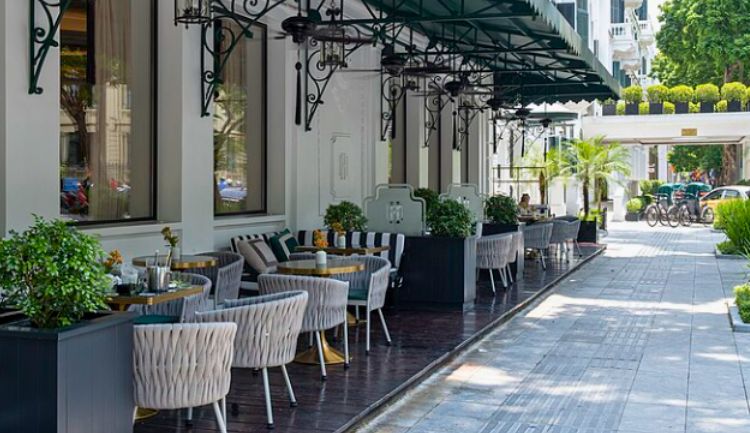
Most first-time visitors to Hanoi spend the majority of their time in the Old Quarter and allocate only a few hours, or none at all, to the Hanoi French Quarter. This is a genuine mistake. The quarter’s value is not just in its landmarks but in its pace: it is one of the few places in central Hanoi where you can sit on a café terrace, hear birdsong in the tamarind trees, and feel the city breathing slowly.
It is also the district that makes Hanoi’s complex history most legible. Strolling from the Opera House, built to project French cultural supremacy, to the gates of Hoa Lo Prison, where that supremacy was resisted at enormous human cost, you trace in your feet the arc from colonial power to Vietnamese independence. No museum exhibit conveys that narrative as viscerally as the walk itself. One of our club’s most experienced volunteer guides, Minh, puts it simply: “Every first-timer comes to the Old Quarter for the chaos. But it’s always the French Quarter that stays with them.”
Practical Travel Tips for Visiting the Hanoi French Quarter
Before you head out, a few details will make your visit significantly smoother.
Getting there:
- From the Old Quarter: 10–15 minutes on foot heading south from Hoan Kiem Lake.
- From Noi Bai Airport: ~45 minutes by taxi or Grab depending on traffic.
- By public bus: Lines 09 and 14 stop near the Opera House.
Admission fees (approximate):
| Site | Entry Fee |
| Hoa Lo Prison Museum | ~40,000 VND (~$1.60 USD) |
| Vietnam National Museum of History | ~40,000 VND (~$1.60 USD) |
| Hanoi Opera House (tour) | ~200,000 VND (~$8 USD) |
| St. Joseph’s Cathedral | Free |
| Sofitel Metropole courtyard | Free (for non-guests) |
| Street walking | Free |
Best time to visit:
- Season: October through April (dry season, mild temperatures).
- Time of day: Early morning (7–9 AM) for cool air and minimal crowds; late afternoon (4–6 PM) for golden light and the cathedral square buzz.
- Avoid midday in summer (May–September) when heat and humidity peak.
What to bring:
- Comfortable walking shoes
- A light scarf or shawl for religious sites
- Cash in Vietnamese Dong, many local eateries and ice cream vendors do not accept cards
- Sunscreen and a water bottle if visiting between May and September.
FAQs About Hanoi French Quarter
The Hanoi French Quarter is known for its exceptionally well-preserved French colonial architecture, including the Hanoi Opera House, Hoa Lo Prison, and the Sofitel Legend Metropole Hotel. It is celebrated for wide, tree-lined boulevards, upscale dining, important government buildings, and a calmer atmosphere compared to the nearby Old Quarter.
A focused walking tour of the Hanoi French Quarter covering the main landmarks takes 3–4 hours. To include museum visits (Hoa Lo Prison and the National Museum of History), budget a full half-day, ideally 4–5 hours. Combining it with the Old Quarter in a single day is very achievable.
Yes, the Hanoi French Quarter is considered very safe for tourists. Its wide sidewalks, lower traffic density compared to the Old Quarter, and relatively quiet atmosphere make it particularly comfortable for solo travelers and families. Standard urban precautions apply: watch your belongings in crowded spots and be aware of traffic when crossing streets.
The Hanoi French Quarter is south and east of Hoan Kiem Lake, characterized by wide French colonial boulevards, neoclassical landmarks, and an elegant, relaxed atmosphere. The Old Quarter is north and west of the lake, defined by narrow medieval alley streets, bustling markets, and traditional Vietnamese guild architecture. Both are walkable from each other and represent completely different chapters of Hanoi’s history.
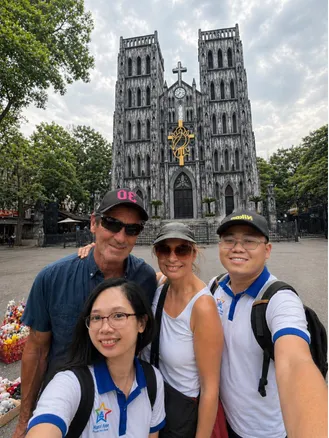
Explore the Hanoi French Quarter With a Free Local Guide
You have just read the most detailed guide to the Hanoi French Quarter available online, but reading about these streets and actually walking them with someone who grew up here are two entirely different experiences.
That is where the Hanoi Free Private Tour Guide club comes in. We are a community of over 5,000 university student volunteers who have proudly led more than 100,000 free tours for foreign visitors, earning over 5,200 five-star reviews on TripAdvisor. Every tour is completely free, fully personalized to your interests, history, colonial architecture, street food, local customs, or all of the above, and led by a passionate young local who genuinely loves sharing their city.
When you walk the French Quarter with one of our guides, you will not just see the Opera House from the outside. You will hear the stories behind its walls, know which café in the alley behind the Metropole serves the best egg coffee, and understand why Hoa Lo Prison represents something deeply personal for Vietnamese people, context no guidebook can fully provide.