
Vietnam currency exchange is one of the first real challenges every traveler faces, and getting it wrong can cost you more than you think. This guide gives you everything you need: the best places to swap your cash, how to avoid tourist traps, and how to spend smarter once you’re on the ground. Whether you’re stepping off the plane at Noi Bai or wandering Hanoi’s Old Quarter for the first time, read this before you hand over a single dollar.
What is the Official Currency of Vietnam?
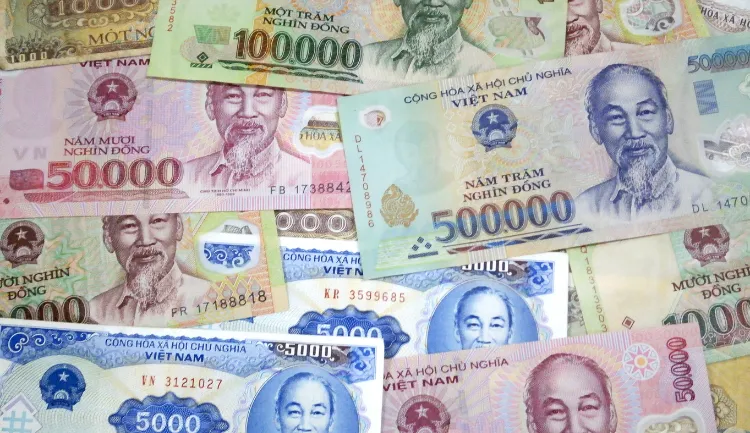
Vietnam’s official currency is the Vietnamese Dong (VND), abbreviated as ₫. The term “dong” originates from dong tien, literally meaning “money”. It is a non-convertible currency, meaning you cannot trade it on international forex markets, you must exchange your home currency inside Vietnam. Note denominations in common circulation include 10,000₫, 20,000₫, 50,000₫, 100,000₫, 200,000₫, and 500,000₫ banknotes; coins are rarely used in daily transactions.
One key thing that trips up first-timers: the zeroes. When a street food vendor says “25 nghìn” (25,000₫), that’s roughly one US dollar, not twenty-five. Give yourself a day to get comfortable with the scale, and you’ll never be overcharged again. Our club volunteers at Hanoi Free Private Tour Guide always walk newcomers through a quick “dong math” exercise on their first hour of tour, and it genuinely saves people money.
» Planning a Trip to Hanoi: The Complete 2026 Guide
» Hanoi Scams to Avoid: The Ultimate Tourist Survival Guideµ
Vietnam Currency Exchange Rates: What to Expect in 2026
The short answer: as of late June 2026, 1 USD exchanges for approximately 26,362 VND. Here’s a snapshot of current approximate rates to help you budget:
| Foreign Currency | Approx. VND Rate (May 2026) |
| 1 USD (US Dollar) | ~26,350 VND |
| 1 EUR (Euro) | ~30,400 VND |
| 1 GBP (British Pound) | ~34,850 VND |
| 1 AUD (Australian Dollar) | ~18,300 VND |
| 1 JPY (Japanese Yen) | ~175 VND |
| 1 CAD (Canadian Dollar) | ~19,300 VND |
| 1 NZD (New Zealand Dollar) | ~15,050 VND |
Rates change daily; so always verify on Vietcombank’s website or a live app like Wise or MoneyGram before exchanging.
Historically, the USD/VND rate reached an all-time high of 26,457 in August 2025, and analysts estimate the dong will gradually strengthen to around 26,150 in the next 12 months. For travelers, this means relatively stable purchasing power, but it’s always worth checking before a large exchange.
Where is the Best Place for Vietnam Currency Exchange in Hanoi?
The best Vietnam currency exchange rates in Hanoi are found at licensed gold and jewelry shops in the Old Quarter, specifically on Hang Bac Street and Ha Trung Street, not at the airport, and usually not at hotels.

Here’s a breakdown of your main options:
1. Old Quarter Gold & Jewelry Shops (Best Rates)
Gold dealers and tour operators in the Old Quarter mainly offer forex services, and as a result, their rates are often better than bank rates. You can find these gold shops along Ha Trung and Hang Bac streets. The cheapest strategy is to bring clean, large-denomination foreign currency (like $100 USD bills) and exchange at a reputable gold shop in the Old Quarter. Most of these shops handle USD, EUR, and other major currencies. Bring crisp, undamaged notes, torn or worn bills may be refused or exchanged at a worse rate.
2. Banks (Safe but Slightly Lower Rates)
In Hanoi’s Old Quarter, the majority of bank branches are conveniently located around Hoan Kiem Lake and Dong Kinh Nghia Thuc Square. Vietcombank, BIDV, Techcombank, and Vietinbank are all reliable choices. Vietcombank’s Cau Go branch (110 Cau Go, Hoan Kiem District) is a popular choice, English-speaking staff and multilingual capabilities make transactions easy for foreign visitors. Banks are the safest option for large sums, and they also authenticate notes. Hours are typically Monday–Friday, 8 AM–5 PM.
3. Noi Bai Airport (Convenient but Costly)
Exchange counters are available at both terminals at Noi Bai Airport, but rates are generally 0.8–3.6% worse than in the city. The recommendation: exchange just enough for a taxi and SIM card ($50–$100), then exchange the rest in the city. This is perfectly sound advice, a short-term trade-off in convenience for immediate needs.
4. ATMs (Good for Flexibility)
Look for VPBank or TPBank ATMs as they often have higher withdrawal limits, or international banks like HSBC and Citibank (though fewer locations) for reliability. ATMs are found throughout the Old Quarter and near Hoan Kiem Lake and are your best backup outside banking hours.
Comparison: Vietnam Currency Exchange Options at a Glance
| Exchange Method | Rate Quality | Safety | Convenience | Best For |
| Old Quarter Gold Shops | ⭐⭐⭐⭐⭐ | ✅ (use reputable shops) | ⭐⭐⭐⭐ | Best overall value |
| Banks (Vietcombank, BIDV) | ⭐⭐⭐⭐ | ⭐⭐⭐⭐⭐ | ⭐⭐⭐ | Large sums, security |
| ATMs (VPBank, TPBank) | ⭐⭐⭐ | ⭐⭐⭐⭐ | ⭐⭐⭐⭐⭐ | Quick access, flexibility |
| Airport Counters | ⭐⭐ | ⭐⭐⭐⭐⭐ | ⭐⭐⭐⭐⭐ | Immediate arrival needs only |
| Hotels | ⭐⭐ | ⭐⭐⭐⭐⭐ | ⭐⭐⭐⭐ | Last resort small amounts |
How do ATMs Work for Tourists in Hanoi?
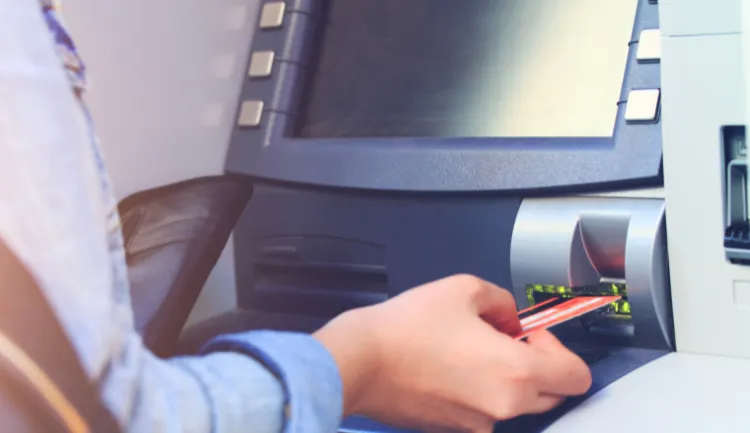
ATMs are widely available in Hanoi and are a reliable way to access Vietnamese Dong, especially outside business hours. They accept Visa, Mastercard, and UnionPay cards. ATM fees vary: most local Vietnamese banks charge 30,000–80,000 VND per transaction (approximately $1–$3 USD), and your home bank may also apply an international withdrawal fee of 2–4% of the amount withdrawn.
To minimize fees, withdraw larger amounts less frequently rather than small amounts often. Many Vietnamese banks set daily withdrawal limits of 2–5 million VND (≈ $80–$200 USD) per transaction, while international banks like Citibank, HSBC, and Shinhan Bank allow higher limits, up to 8 million VND or more. Always choose to be charged in VND (not your home currency) when prompted, this avoids dynamic currency conversion (DCC), which can cost you an extra 2–5%.
Pro tip from our guides: Always notify your bank before leaving home. Card blocks due to “suspicious foreign activity” are a very common, and very avoidable, problem for tourists in Hanoi.
Cash vs. Card in Vietnam: Which should you use?
The honest answer: both, but carry cash as your primary option. Vietnam has traditionally been a cash-first economy, but the picture is shifting fast. In major cities like Hanoi, Ho Chi Minh City, and Da Nang, you can now pay by card or mobile wallet at most restaurants, hotels, convenience stores, and shopping centres.
That said, cash remains essential for the experiences that make Vietnam truly special:
- Street food stalls: bánh mì, phở, bún bò Huế
- Local markets: Đồng Xuân Market, Hàng Da Market
- Small guesthouses and homestays
- Xe ôm (motorbike taxis) and local cycle rickshaws
Visa and Mastercard are the most widely accepted international cards in Hanoi. American Express and Discover cards have more limited acceptance, so carry a backup. Where cards usually work: hotels, shopping malls, larger restaurants, supermarkets, and international chain stores. Where cards often don’t: street food, small cafés, markets, and smaller independent shops.
If you’d love a local’s help navigating all of this in real time, from the best money changers to the tastiest street food stalls, check out a free walking tour with Hanoi Free Private Tour Guide. Our guides know every corner of the Old Quarter.

Why you should never exchange Money at suspicious stalls or the “Black Market”
Simply put: don’t do it. Don’t change money on the black market, as it is probably just the lead-up to a scam. Unofficial changers often use sleight-of-hand tricks with those large-denomination notes, folding bundles deceptively or swapping genuine notes for damaged or counterfeit ones after you’ve agreed to a rate. The “good deal” quickly becomes a costly lesson.
Stick to licensed gold shops, banks, and ATMs. Always check the polymer material, hidden image elements, and embossing on notes to ensure you receive genuine banknotes. If you’re ever unsure, a bank teller will authenticate notes for you at no charge. Genuine 500,000₫ and 200,000₫ polymer notes have a distinct feel and micro-print security features that are very hard to fake.
Smart Tips for Handling Cash in Hanoi
Getting your Vietnam currency exchange right is only half the battle, using your dong wisely is the other half. Here are field-tested tips from our 100,000+ tours:
- Carry small denominations: Carry small denominations (₫10,000–₫50,000) for taxis, street food, and tips. Vendors at street stalls often struggle to break ₫500,000 notes.
- Don’t overshoot your exchange: VND is non-convertible abroad, so you can’t easily change it back home. Exchange in stages based on your spending.
- Count your change every time: New polymer notes are slippery and stick together. The new polymer notes easily stick to each other, so count your money carefully after every transaction.
- Separate your cash: Keep ₫1–2 million in your wallet for daily spending and store the rest securely at your hotel.
- Don’t pay in USD unless asked: If you pay in US dollars instead of VND, vendors will convert at a lower rate and you’ll end up paying more.
- Refuse damaged notes: Don’t accept damaged notes from others, as it will be hard to use them again. Torn, taped, or heavily soiled notes are frequently rejected by vendors.
How much Cash Should you Bring to Vietnam?
A reasonable daily cash budget in Hanoi for a mid-range traveler runs between 500,000₫ and 1,500,000₫ (roughly $20–$60 USD) per day, depending on your style. Here’s a rough breakdown:
| Expense | Estimated Cost (VND) |
| Street breakfast (phở/bánh mì) | 30,000–60,000₫ |
| Local lunch at a com binh dan | 50,000–80,000₫ |
| Grab/taxi ride within Old Quarter | 30,000–80,000₫ |
| Entry to Hoan Kiem Lake area (free!) | 0₫ |
| Afternoon coffee at a local café | 25,000–45,000₫ |
| Dinner at a mid-range restaurant | 150,000–300,000₫ |
| Souvenir shopping (budget) | 100,000–200,000₫ |

As of late 2025, $100 USD is over 2.5 million VND. For a budget traveler, this could easily last 2–3 days covering food, transport, and attractions. Hanoi is exceptionally affordable by any international standard.
FAQs: Vietnam Currency Exchange
Most payments are made in Vietnamese Dong, but US dollars can be directly used at some hotels, restaurants, and tour operators. However, it is not recommended to pay with US dollars, because they will be converted at a lower exchange rate and you will end up paying more.
It is almost always better to exchange after arriving. You will get a much better rate by exchanging your money after you land in Hanoi. If you need local currency immediately, exchange a small amount at the airport ($50–$100) and then do the bulk of your exchange at an Old Quarter gold shop or reputable bank in the city.
Credit cards are widely accepted in major cities like Hanoi, especially in hotels, upscale restaurants, and large shopping centres. However, in local markets and street food areas, cash remains the preferred payment method. Visa and Mastercard are your best bets; American Express is less commonly accepted.
Most major currencies can be exchanged in Vietnam. US Dollars can easily be changed in banks, hotels, airport currency exchange stalls, and jewelry shops. Other currencies including Euros, Australian Dollars, and British Pounds can be changed at banks and the larger authorized gold shops in the Old Quarter. USD and EUR are by far the easiest to exchange everywhere.
Your Vietnam Currency Exchange Game Plan
Mastering Vietnam currency exchange is simpler than it looks once you know the rules. Bring clean, large-denomination foreign bills. Exchange the minimum at the airport, then head to the Old Quarter’s gold shops on Hang Bac or Ha Trung Street for the best rates. Use ATMs as a flexible backup, always choosing to pay in VND to dodge costly conversion markups. Carry a mix of small denomination notes for daily street-level spending, and keep your cards handy for hotels and larger venues. Follow these tips, and you’ll spend less time stressing about money, and more time savoring every incredible moment Vietnam has to offer.