The history of Vietnamese education is one of the most captivating stories you’ll ever hear in Hanoi. For over a thousand years, this nation has placed scholars above warriors, and the proof stands right in the heart of the city. Walk through the gates of the Temple of Literature, and you’re literally stepping into the birthplace of Vietnamese intellectual life, a living monument to the idea that knowledge is power.
What Is the Temple of Literature and Why Does It Matter?
The Temple of Literature (Văn Miếu – Quốc Tử Giám) in Hanoi is the single most important symbol of Vietnamese education history. Built in 1070 by Emperor Lý Thánh Tông to honor Confucius, it became the intellectual soul of the nation just six years later when his son, King Lý Nhân Tông, established Quốc Tử Giám (the Imperial Academy), Vietnam’s first university, within its grounds in 1076. For nearly 700 years, this institution trained the mandarins, scholars, and administrators who governed the country.
What makes it so remarkable is its longevity. The academy remained in operation from 1076 to 1779, producing generation after generation of national talent. In 1253, King Trần Thái Tông took a pivotal step by founding a new institution called Quốc Học Viện and explicitly opening it to talented students from across the general population, not just the nobility. Alongside it, he established the Giảng Võ Đường for military training. This expansion of access to education for commoners of exceptional ability was a landmark in the democratization of Vietnamese learning.

Today, the complex spans a stunning 54,331 m² and features five courtyards, the iconic Khuê Văn Các pavilion (a symbol of Hanoi, even featured on the 100,000 VND banknote), and 82 stone doctoral stelae mounted on turtle statues, recording the names of 1,307 doctoral graduates from 1442 to 1779. The stelae were first erected in 1484 under King Lê Thánh Tông. The turtle, in Vietnamese culture, symbolizes wisdom and longevity, a fitting pedestal for the names of the nation’s greatest scholars. Today, protective barriers surround the stelae to preserve these UNESCO-recognized treasures, and visitors are asked to admire them without touching.
Insider Tip: When our Hanoi Free Private Tour Guide volunteers bring guests here, we always pause at the stelae courtyard. One of our senior guides, Minh (age 34), loves pointing out that the Temple of Literature predates Harvard University by more than 500 years and shares a similar near-millennium history with ancient institutions like Oxford. Watching foreign visitors react to that fact never gets old.
The Confucian Era: How Education Shaped Vietnamese Society (11th–19th Century)
The entire system revolved around mastery of classical Chinese texts, the Four Books and Five Classics, and a rigorous imperial examination system (khoa cử) that determined social mobility. To pass was to transform your family’s destiny.
The curriculum at Quốc Tử Giám focused on Chinese philosophy, literature, and history. Students were expected to compose poetry and engage in scholarly debate. The most celebrated figure of this era was Chu Văn An, the beloved 14th-century rector who served under King Trần Minh Tông. His integrity and dedication to education were legendary; after his death in 1370, King Trần Nghệ Tông honored him alongside Confucius at the Temple of Literature itself; a distinction accorded to no other Vietnamese.
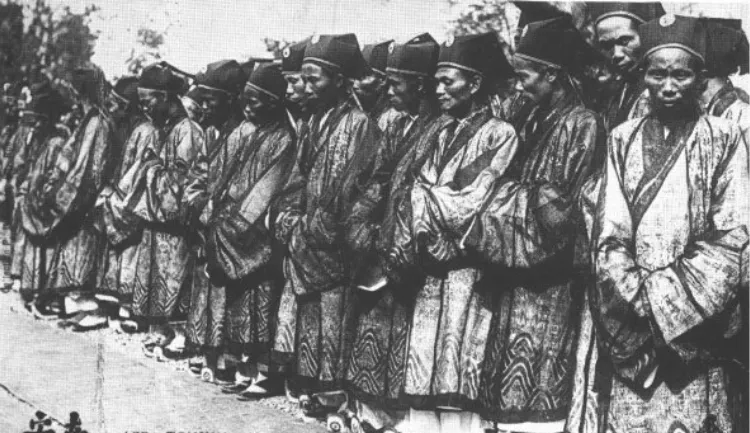
Under the Lê Dynasty (15th–18th century), Confucian education reached its peak. King Lê Thánh Tông held 12 examinations over his reign, each conducted every three years, establishing a meritocratic system that was sophisticated for its time. When Emperor Gia Long founded the Nguyễn Dynasty in 1802, he chose Phú Xuân (Huế), already the former capital of the Nguyễn lords and the Tây Sơn dynasty, as his official imperial capital. Thăng Long (Hanoi) was renamed Bắc Thành, a new Imperial Academy was established in Huế, and the Hanoi temple gradually evolved into a regional institution. But its symbolic power never faded.
How Did French Colonialism Transform Vietnamese Education?
The impact was severe. Before French colonization, Vietnam had an estimated 20,000 private schools teaching classical Chinese characters, though it is important to note that literacy in this era meant mastery of complex Hán script, largely accessible only to men of means, not the general population by modern standards. By the time colonial rule ended in 1945, even that limited scholarly tradition had been suppressed, with the overall literacy rate (in any script) having collapsed to just around 10 percent.
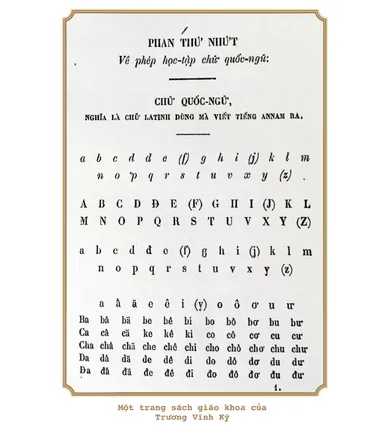
The French introduced a new Latin-script writing system, chữ Quốc ngữ, which, ironically, would later become one of the most powerful tools for post-independence literacy campaigns. Three lycées (secondary schools) were opened in Hanoi, Huế, and Saigon in the early 1900s, using French as the language of instruction. A handful of Vietnamese from wealthy families were educated in France. But for the vast majority, education was inaccessible by design.
This era also sparked intellectual resistance. Figures like Phan Châu Trinh and Phan Bội Châu challenged the colonial education model and advocated for a modern, independent Vietnamese curriculum. Their influence helped plant the seeds for the radical educational transformation that would follow independence in 1945.
| Era | Language of Instruction | Literacy Rate | Primary Goal |
| Confucian (1076–1858) | Classical Chinese (Hán script) | Limited to scholarly elite | Train mandarins & elite |
| French Colonial (1858–1945) | French / limited quốc ngữ | ~10% by 1945 | Produce colonial administrators |
| Post-Independence (1945–1954) | Vietnamese (quốc ngữ) | Rising rapidly | Eradicate illiteracy |
| Modern Era (1975–present) | Vietnamese | ~95%+ | National development & global integration |
1945: The Revolutionary Moment That Changed Everything
The day after Ho Chi Minh declared independence on September 2, in the very first cabinet meeting on September 3, he declared illiteracy a national enemy, as dangerous as poverty or foreign invasion. His call: “An illiterate nation is a powerless nation.“
On September 8, 1945, a mass education movement was officially launched. The government issued three rapid executive orders: establishing the Administration Institute of Mass Education (Nha Bình Dân Học Vụ), creating literacy classes in every village across the country, and making literacy education compulsory for all Vietnamese aged eight and older.
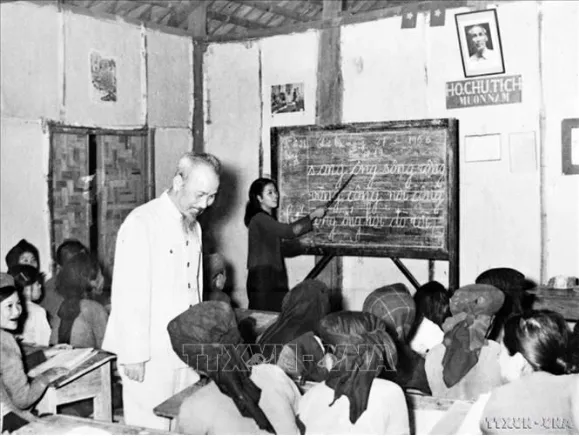
The results were staggering. Within just one year, 75,000 literacy classes had been established, staffed by approximately 96,000 teachers, helping 2.5 million people learn to read and write. Women, long excluded from formal education under the Confucian system, were explicitly called upon to participate. Ho Chi Minh’s October 1945 proclamation specifically highlighted their right and duty to be educated, an equal part of the new nation.
Visiting the Temple of Literature and then reflecting on 1945 is a powerful experience our guides love to offer, the contrast between the ancient stone stelae honoring doctoral scholars and the image of ordinary farmers learning to read by candlelight during wartime captures the full sweep of Vietnamese educational history.
The Road from Reunification to Modern Schools (1975 to Today)
The third major wave of educational reform focused on building a single national curriculum. This was not a simple administrative task; it meant reconciling different philosophical approaches, textbooks, and teaching cultures.
Through the 1980s and 1990s, Vietnam’s education system underwent further reforms, gradually shifting from a Soviet-influenced model toward one that could compete in the global economy. By 2003, the national literacy rate had climbed to an impressive 94 percent. Today, Vietnam consistently ranks among the highest-performing developing nations in international education assessments, a fact that surprises many visitors who don’t expect it.
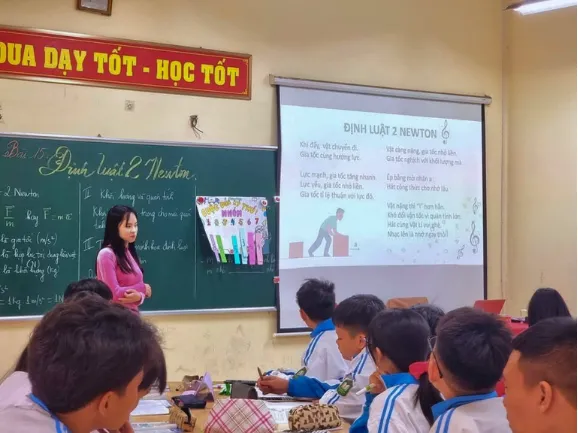
The Renovation economic reforms of 1986 accelerated investment in education. Universities multiplied. Vocational training expanded. And Resolution 29 (2013) marked the most comprehensive education reform in modern Vietnamese history, emphasizing critical thinking, creativity, and global competitiveness over rote memorization, a direct philosophical echo, some might say, of Chu Văn An’s teaching methods at Quốc Tử Giám seven centuries earlier.
Key Milestones: History of Vietnamese Education at a Glance
| Year | Milestone | Significance |
| 1070 | Temple of Literature (Văn Miếu) founded | First dedicated center of learning in Vietnam |
| 1076 | Quốc Tử Giám (Imperial Academy) established | Vietnam’s first university; runs for ~700 years |
| 1253 | King Trần Thái Tông founds Quốc Học Viện | New institution opens education to talented commoners; Giảng Võ Đường also established |
| 1484 | First doctoral stelae erected | 82 stone stelae (on turtle bases) record 1,307 scholars |
| 1802 | Emperor Gia Long establishes Nguyễn Dynasty, chooses Huế as imperial capital | New Imperial Academy founded in Huế; Hanoi temple becomes a regional institution |
| 1858–1945 | French colonial education system | Literacy collapses; quốc ngữ introduced |
| Sep 3, 1945 | Ho Chi Minh declares illiteracy an “enemy” | Launch of mass literacy campaign |
| 1950 | First post-independence education reform | Vietnamese-language curriculum; 9-year system |
| 1975 | Reunification; curriculum unification | North-South education systems merged |
| 2013 | Resolution 29 on Education Reform | Shift to critical thinking; global standards |
Why Is Hanoi the Spiritual Heart of Vietnamese Education?
The Temple of Literature is not a relic that has been frozen in time. It is a living site where university students come to pray before exams, where calligraphy performances fill the courtyards, and where the 950th anniversary of Quốc Tử Giám’s founding in 2026 was celebrated with major cultural events including international art exhibitions. The education story is told through the buildings themselves, and hearing it in the evening quiet is a different experience, see the temple of literature night tour for times.
The city is home to Vietnam’s top universities, including Vietnam National University, Hanoi. The Old Quarter, where many of our tour guides lead visitors, still has streets named after the trades and crafts that once supplied scholars, paper, ink, and brushes. Even the street address of the Temple of Literature, 58 Quốc Tử Giám Street, Đống Đa District, carries the name of the ancient academy.
For anyone who wants to understand Vietnam deeply, Hanoi offers an unbroken thread: from the ancient stone stelae of the Lê Dynasty to the chalk-smudged classrooms of 1945, right through to the modern schools of the 21st century.
FAQs History of Vietnamese Education
Vietnam’s first university, Quốc Tử Giám (the Imperial Academy), was founded in 1076 under King Lý Nhân Tông, adjacent to the Temple of Literature in Hanoi. It operated for nearly 700 years, making it one of the oldest higher-learning institutions in the world, older than Harvard University by more than 500 years and sharing a similar near-millennium heritage with institutions like Oxford.
The Temple of Literature (Văn Miếu) was built in 1070 by Emperor Lý Thánh Tông primarily to honor Confucius and other Confucian sages. It initially served as a royal school for the Crown Prince before expanding into the full Imperial Academy six years later.
Immediately after independence, Ho Chi Minh declared illiteracy a national enemy and launched a mass literacy campaign. Within one year, 75,000 classes were established, teaching 2.5 million people to read and write. He made literacy education compulsory for all Vietnamese aged 8 and over, using Vietnamese (chữ Quốc ngữ) as the national language of instruction for the first time.
The 82 doctoral stelae at the Temple of Literature record the names of 1,307 scholars who passed Vietnam’s royal doctoral examinations between 1442 and 1779. First erected in 1484 under King Lê Thánh Tông, each stele is mounted on a stone turtle, a Vietnamese symbol of wisdom, longevity, and knowledge. While students traditionally touched the turtles’ heads for good luck, today protective barriers are installed to preserve these UNESCO-recognized stelae, and visitors are encouraged to admire them from a respectful distance, though the site remains deeply spiritual for students ahead of important exams.
A Nation That Has Always Valued Learning
The history of Vietnamese education is, at its core, the story of a people who have always believed that knowledge is the highest form of power. From the stone stelae carved at the Temple of Literature in 1484, to the candlelit literacy classes of 1945, to the reform-driven modern schools of today, Vietnam has never stopped investing in its greatest resource: its people. Hanoi stands as the living archive of this journey, every courtyard, every ancient gate, every name etched in stone speaks to a civilization that chose the scholar’s brush over the warrior’s sword. Understanding this history transforms a visit to the Temple of Literature from a sightseeing stop into something far more profound.
Book our free tour guide!

Hanoi French Quarter Walking Tour
❤❤❤❤❤ (TripAdvisor / GetYourGuide)
Historical Tour – Walking Tour – Small Group
⚑ 3 – 4 hours
✎ Free Tour – Free Cancellation

Hanoi City Tour
❤❤❤❤❤ (TripAdvisor / GetYourGuide)
Most Popular – Walking Tour – Small Group
⚑ 3 – 8 hours
✎ Free Tour – Free Cancellation