Hanoi traffic, the ultimate rite of passage for any visitor to Vietnam’s captivating capital. You’ve heard the stories: thousands of motorbikes weaving through narrow streets, the constant symphony of honking horns, pedestrians gliding across roads like seasoned dancers in a high-speed ballet. But here’s the truth that surprises every traveler: beneath the apparent chaos lies a mesmerizing self-organizing system that actually works.
This isn’t reckless disorder, it’s organized chaos, a uniquely Vietnamese dance that tells the real story of how Hanoi moves, breathes, and thrives. Whether you’re crossing your first street or joining a guided walking tour with locals, Hanoi traffic is more than just movement; it’s an immersive cultural experience that captures the soul of the city.
Understanding the Organized Chaos of Hanoi Traffic
The streets aren’t lawless, they’re governed by an unspoken code based on constant awareness, predictability, and mutual cooperation. Organized chaos is a mesmerizing ballet of motorbikes, cars, and pedestrians vying for space, yet this system has emerged organically over decades of urban evolution.
The fundamental principle is strikingly simple: predictability is everything. When you move slowly, steadily, and deliberately, whether on foot or on a motorbike, other road users can anticipate your movements and adjust accordingly. If you suddenly slam on your brakes, riders behind you have already calibrated their speed to yours, adjusting subtly to your steady forward motion. When you disrupt that rhythm with sudden changes, you risk creating exactly the kind of accident that headlines predict.
This isn’t unique to Hanoi. It’s the foundation of how millions of Vietnamese people navigate daily life, adapting, negotiating space, and keeping forward momentum. The traffic reflects Vietnam’s cultural DNA: flexibility within structure, individual agency within community consciousness.
What Makes Hanoi Traffic So Different from Western Cities?
The greatest difference is the absence of enforcement-based rules and the presence of trust-based flow. In Western cities, traffic laws are enforced through visible infrastructure: lane markings, traffic lights, signs, and police. In Hanoi, these exist, but they’re treated as guidelines rather than absolutes. The real control mechanism isn’t external, it’s internal and collective.
Here are the core differences:
| Aspect | Western Traffic | Hanoi Traffic |
| Primary Control | Traffic laws & enforcement | Mutual awareness & predictability |
| Communication | Signals, hand gestures, lane positions | Horn signals, eye contact, subtle speed adjustments |
| Vehicle Hierarchy | Equal (theoretically) | Size matters, larger vehicles have “priority” |
| Lane Discipline | Strict, marked lanes | Fluid, vehicles share space fluidly |
| Speed Consistency | Variable, with sudden stops | Steady, continuous motion (no sudden braking) |
| Pedestrian Behavior | Wait for signals at crossings | Walk slowly and confidently into traffic |
| Density | Designed for moderate flow | 5+ million motorbikes in constant motion |
The result? Hanoi traffic moves more continuously than many Western cities, despite appearing more chaotic. The traffic forms a self-organizing system that works brilliantly, even during rush hours when hundreds of thousands move simultaneously.
The Heart of Hanoi Traffic: Why Motorbikes Rule the Streets
Why? Motorbikes offer speed, maneuverability, and affordability that cars cannot match in a densely packed city. A family of four can pile onto one bike to reach work, school, and markets. Street vendors use motorbikes as mobile shops. Delivery services rely entirely on two-wheelers. For locals, the motorbike isn’t exotic, it’s ordinary, everyday, and utterly essential.
For visitors, this motorbike culture represents the most authentic slice of Hanoi life. Every ride is a lesson in adaptation, trust, and moving with the flow. There is definitely something strangely addictive about the traffic experience in Hanoi for foreigners, capturing a truly familiar feature of this city.

The Language of Honking: Understanding Horn Culture in Hanoi Traffic
The constant honking you hear in Hanoi isn’t aggression; it’s communication, a vital safety mechanism woven into the city’s traffic language. To first-time visitors, the symphony of car horns feels overwhelming. But locals understand each honk as meaningful information, not a sign of frustration or danger.
Drivers use horns not out of aggression but as a communication tool, meaning “I’m here”, “I’m passing”, or “Be careful”. In Hanoi’s dense, multidirectional traffic, where vision is often obscured and vehicles frequently move in unexpected directions, the horn serves as an auditory warning system far more effective than any traffic sign.
The Types of Honks and What They Mean:
A quick honk to get attention prevents them from opening a door into your path or pulling out in front of you, while rapid-fire blasts on the horn create an urgent and inescapable sound for true emergencies. Understanding these distinctions transforms the experience from terrifying noise to logical communication.
- Short, single beep: “I’m here” / announcement of presence
- Slightly longer honk (1 second): Warning of an impending overtake or blind corner
- Rapid-fire honking: A panic situation requiring immediate attention
- Long, continuous blast: True emergency (rare) or extreme frustration (best avoided)
Horns play a crucial role in ensuring road safety, helping prevent accidents and protecting pedestrians and other vehicles. In fact, riders and drivers use horns proactively, before a collision is imminent, rather than reactively in anger.

Where Honking Is Discouraged:
Areas near hospitals or schools might have “no honking” signs, and while these aren’t always strictly followed, it’s good practice to minimize horn use in these sensitive zones. Generally, excessive honking directly at traffic police is avoided, as it can be seen as disrespectful.
Why Honking Seems Excessive to Outsiders:
In Vietnam, horns are simply a form of communication used to say “I’m here”, it’s polite, even friendly, and the sound means presence, not aggression. Westerners conditioned to see horns as hostile will find this shocking. But the Vietnamese perspective is fundamentally different: in a system where visibility is limited and dense, sound becomes essential infrastructure.
Learning to hear honking not as confrontation but as information is the key to emotional comfort in Hanoi traffic. Once you make that mental shift, the chaos becomes rhythm, and the rhythm becomes music.
Motorbike Riding in Hanoi: Is It Right for You?
For experienced riders with dense-urban traffic experience, motorbike riding in Hanoi is exhilarating. For first-timers, it’s genuinely risky. This deserves honest assessment because tourism marketing often romanticizes something that requires genuine skill.
The greatest danger statistically comes from road traffic accidents, with Vietnam having one of the highest motorbike ownership rates in the world, and traffic-related injuries being common nationwide.
If you’re considering renting a motorbike in Hanoi:
- Wear appropriate safety gear: Full-face helmet (mandatory by law), armored jacket, gloves, and sturdy pants. The asphalt doesn’t forgive skin contact.
- Avoid rush hours: 7–9 AM and 4–7 PM are peak congestion. Practice during quieter morning or mid-afternoon hours.
- Understand licensing requirements: Most tourists riding motorbikes in Hanoi are technically breaking the law. Insurance may not cover accidents if you lack proper documentation. Check your coverage beforehand.
- Start in quieter areas: Ninh Binh (1.5 hours south) has lighter traffic and stunning scenery. Use it as practice ground before returning to Hanoi.
- Consider joining a motorbike tour instead: Many visitors find guided riding more enjoyable than the stress of navigating unfamiliar rules alone.
Honest truth? Most first-time visitors to Hanoi shouldn’t rent motorbikes. Use Grab (ride-hailing), taxis, buses, or walking tours instead. Your safety, and peace of mind, is worth more than the savings.
How to Cross Hanoi Streets Safely: The Insider’s Guide
Here’s what actually works:
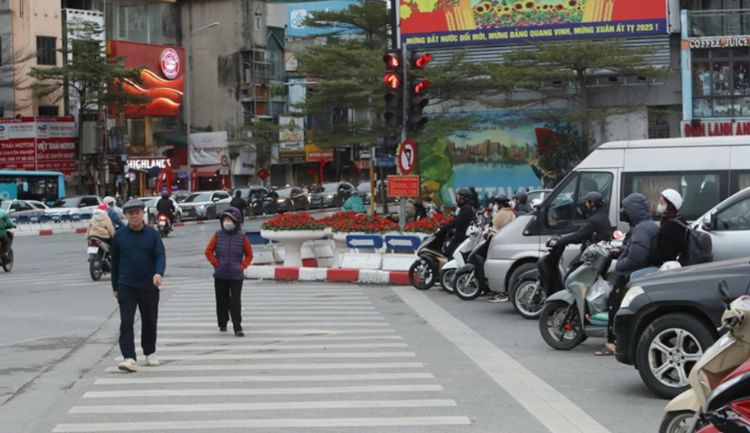
1. Commit to Your Crossing: Once you decide to cross, do it. Hesitation confuses drivers who’ve already calculated your path. Your uncertainty disrupts their anticipation, increasing risk.
2. Move Deliberately and Slowly: Constant, slow speed allows motorbike riders to predict where you’ll be in the next second. This mutual awareness is the system’s safety mechanism. Drivers literally adjust their path around you, like water flowing around a stone.
3. Maintain Eye Contact: Lock eyes with approaching riders and drivers. A brief glance communicates “I see you, and I’m aware of my position.” This shared acknowledgment is powerful communication in Hanoi’s unspoken language.
4. Walk in a Straight Line: Avoid weaving or changing direction suddenly. Directional consistency helps drivers gauge your intentions and adjust their speed accordingly.
5. Don’t Stop Halfway: Once you’ve started, complete your crossing. Stopping mid-street creates unpredictability that can trigger accidents. The flow depends on everyone moving together.
Avoid sudden bursts of speed or abrupt stops, as a consistent, slow pace allows drivers to anticipate your movements. This principle applies whether you’re crossing a narrow Old Quarter alley or a wider boulevard near the city center.
Why Hanoi Traffic Works: The Psychology Behind the Chaos
You start working your way over, little by little, dealing with one opposing rider at a time, and the result is a system based on ingenious cooperation among individual riders.
This isn’t luck. It’s cultural conditioning. Vietnamese people grow up in this traffic, learning from infancy to be hyper-aware of their environment and adaptable to changing circumstances. By the time they’re old enough to ride a motorbike, the system is second nature.
For visitors, the key insight is this: The system breaks down only when people abandon predictability. Sudden movements, hesitation, and attempts to “fight” the flow are what cause accidents, not the inherent danger of the traffic itself.
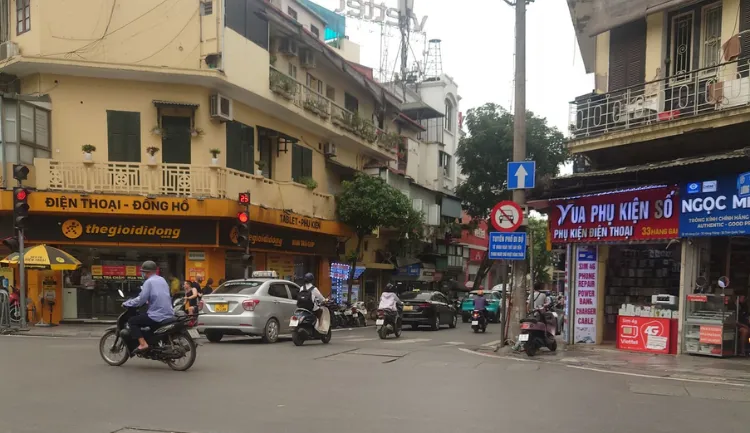
Beyond motorbikes, Hanoi offers diverse transportation choices suited to different travel styles, budgets, and comfort levels. Understanding each option empowers you to move through the city with confidence while adapting to the city’s rhythm.
» Getting Around Hanoi: The Complete Transportation Guide
» Hanoi Hop on Hop off bus: The ultimate way to explore Hanoi
Ride-Sharing Apps: The Modern Solution to Hanoi Traffic
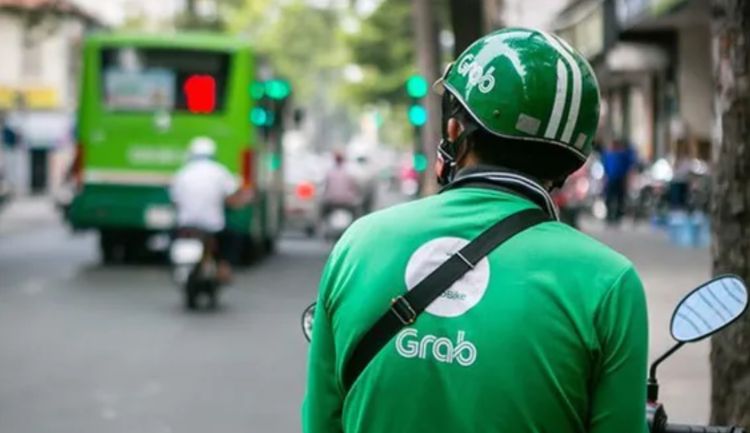
Grab, Be, and Xanh SM have revolutionized how visitors navigate Hanoi, offering safety, transparency, and affordability in one app. Since Uber’s departure from Vietnam, Grab has dominated the ride-sharing market, making it the default choice for most tourists and many locals.
Traditional Taxis: The Tried-and-True Option
Metered taxis from reputable companies remain a reliable choice, especially if you prefer the security of regulated services. While slightly pricier than Grab, taxis offer a human interaction component that some travelers prefer.
Public Buses: The Ultra-Budget Option
Hanoi’s public bus system is extraordinarily affordable, costing just 7,000–9,000 VND (approximately 30–40 US cents) per journey. For budget-conscious travelers willing to navigate language barriers and crowded conditions, buses unlock hidden neighborhoods and local experiences unavailable to motorized tourists.
Hanoi Metro: The Modern, Traffic-Free Option
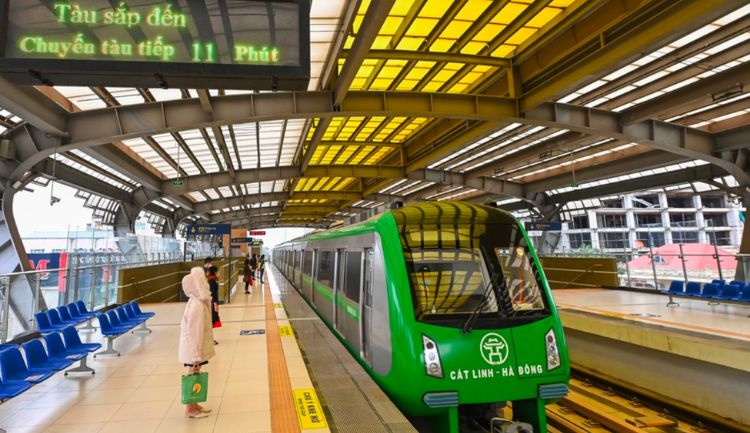
The Hanoi Metro represents the city’s push toward modernized public transport. Currently, Line 2A (Cat Linh–Ha Dong) and Line 3 (Nhon–Hanoi Railway Station) are operational, with more lines planned.
Motorbike Taxis (Xe Ôm): The Local Experience
Xe ôm—informal motorbike taxis operated by individual drivers, remain ubiquitous, particularly around bus stations, markets, and areas with limited app coverage. These offer a uniquely Vietnamese experience but require caution.
Cyclos: The Nostalgic Option
Three-wheeled bicycle taxis provide a leisurely, scenic tour of Hanoi’s vibrant streets, perfect for Old Quarter exploration and tourist photo opportunities. Invented in 1939, cyclos are iconic but slow and increasingly rare as motorized transport dominates.
Bicycles: The Independent Explorer’s Choice
Renting a bicycle is incredibly affordable (50,000 VND per day) and offers flexibility to explore at your own pace. Early morning rides before traffic peaks are particularly peaceful.
| Transport Method | Cost (Example) | Speed | Comfort | Best For | Safety Rating |
| Walking | Free | Slow | Varied | Old Quarter exploration | Very High |
| Grab (Car) | 45,000–100,000 VND | Fast | Excellent | Door-to-door, luggage | Excellent |
| Grab (Bike) | 15,000–40,000 VND | Very Fast | Fair | Short trips, agility | Good (helmet provided) |
| Traditional Taxi | 60,000–150,000 VND | Fast | Good | Safety-conscious travelers | Good (reputable companies only) |
| Public Bus | 7,000–9,000 VND | Slow | Fair | Budget travelers, local experience | Adequate (crowded, pickpockets) |
| Hanoi Metro | 8,000–15,000 VND | Fast | Excellent | Traffic avoidance, efficiency | Excellent |
| Xe Ôm (Informal) | 20,000–70,000 VND | Fast | Fair | Adventurous, local feel | Fair (unregulated) |
| Bicycle | 50,000 VND/day | Moderate | Fair | Independent exploration, parks | Fair (traffic hazards) |
| Cyclo | 50,000–200,000 VND | Very Slow | Good | Photo ops, romantic, short distances | Good (scenic) |
Understanding practical safety measures transforms anxiety into preparedness. Here’s how to move through Hanoi’s streets with genuine confidence:
For Pedestrians:
- Walk slowly and deliberately; sudden movements confuse drivers
- Make consistent eye contact with approaching motorbike riders
- Walk in straight lines; avoid weaving or direction changes
- Commit fully once you start crossing; hesitation increases risk
- Choose well-lit, busy areas at night; avoid isolated streets
- Wear bright clothing to increase visibility
For Motorbike Riders (If You Insist):
- Full-face helmet is non-negotiable and mandatory
- Ride defensively and predictably; maintain steady speed
- Cover your brakes constantly, ready to stop unexpectedly
- Use horn and lights to signal your presence
- Avoid riding at night or during peak rush hours initially
- Never ride under the influence of alcohol (Vietnam has zero-tolerance policy)
For All Transportation Methods:
- Avoid distractions; don’t use phones while moving through traffic
- Stay aware of surroundings, especially in crowded buses and stations
- Keep valuables secure and visible; pickpocketing is the most common theft
- Use Grab or trusted taxis rather than unmarked vehicles
- Download offline maps; rely on GPS for navigation
- Carry small bills for taxis, buses, and street transactions

Why This Experience Matters: The Deeper Meaning of Hanoi Traffic
Hanoi traffic isn’t just a transportation challenge; it’s a window into Vietnamese culture. The traffic represents the most vivid images and experiences of living in Hanoi, capturing a truly familiar feature of this city. It reveals how Vietnamese people think, adapt, and create order from apparent disorder.
For visitors, Hanoi traffic becomes a metaphor. It teaches flexibility, trust, and the acceptance that Western logic doesn’t always apply. Moving through Hanoi’s streets, you learn to let go of control, embrace uncertainty, and find safety in flow rather than rules.
This transformative experience is at the heart of why people fall in love with Hanoi. The traffic, once terrifying, becomes a beloved memory, proof that you navigated not just a city, but a completely different way of being.

Hanoi traffic is far more than what meets the eye; or assaults the ear with its symphony of honking horns. What initially appears as chaotic madness reveals itself as a sophisticated, self-organizing system built on mutual awareness, predictability, and cultural values that prioritize flow over control. The experience of navigating Hanoi’s streets, whether crossing as a pedestrian, mastering the honking language, using Grab or public buses, or riding a motorbike, becomes a metaphor for adaptation, trust, and finding order within apparent disorder.
This is precisely why Hanoi traffic remains one of the city’s most defining characteristics and an unforgettable experience for visitors. Once you understand that safety comes from moving with purpose and predictability rather than against the flow, crossing Hanoi streets transforms from terrifying to meditative. The key lies not in fighting the system but in respecting its invisible logic, understanding the language of horns as communication rather than aggression, and choosing transportation methods that match your comfort and travel style.
For the deepest understanding and safest experience, join a local guide from the Hanoi Free Private Tour Guide club who can transform your perception of Hanoi traffic from anxiety to appreciation. Because at its heart, Hanoi traffic isn’t about danger; it’s about humanity in motion, Vietnamese ingenuity, the language of horns woven into daily culture, diverse transportation options serving millions, and the beautiful dance of thousands moving as one toward a shared future.
FAQs Hanoi Traffic for Tourists
Yes, crossing Hanoi streets is safe if you follow the principle of predictability. Walk slowly, steadily, maintain eye contact, and don’t hesitate once you’ve committed. The danger comes from sudden movements, not the traffic itself. Join a local guide for your first crossing to build confidence through observation and experience.
Absolutely. Helmet-wearing is mandatory by Vietnamese law, and enforcement is increasing. More importantly, accidents happen, helmets save lives. Invest in a proper full-face helmet, not a decorative plastic one. Insurance won’t cover you without a helmet.
Use extreme caution. Phone snatching from passing motorbikes is the most common theft targeting tourists. When using your phone, stand inside shop doorways or position yourself with your back against a wall. Never hold it loosely while walking near traffic. This isn’t just about safety, it’s about not becoming a target.
Early morning (6–8 AM) shows the city waking up and workers commuting. Mid-morning (9–11 AM) is moderate. Lunch time (12–1 PM) offers a brief calm. Afternoon (3–5 PM) is busy but manageable. Avoid rush hours (7–9 AM and 4–7 PM) unless you’re with an experienced guide. Night riding should be avoided unless you’re in a taxi or on a guided tour.