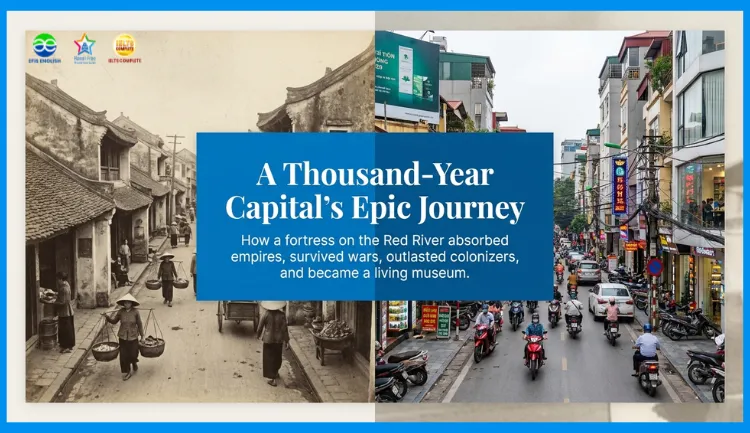
The history of Hanoi is one of the most extraordinary urban stories in all of Southeast Asia. For over a thousand years, this city on the banks of the Red River has absorbed empires, survived wars, outlasted colonizers, and reinvented itself again and again – without ever losing its soul.
If you want to truly understand Vietnam, you have to start here. Hanoi is not just a capital; it is a living museum where every alley, temple, and lake carries the memory of a dynasty, a battle, or a revolution. This article is your complete, historically accurate guide to how Hanoi became what it is today.
The Origins: Dai La – The Chinese Fortress That Became Vietnam’s Capital
The fortress of Dai La, built during China’s millennium-long occupation (111 BC to 938 AD), stood on the western bank of the Red River as a seat of colonial administration – not a Vietnamese city, but the seed of one.
In 938 AD, the Vietnamese general Ngo Quyen defeated the Southern Han fleet at the legendary Battle of Bach Dang River, ending over a thousand years of Chinese domination. The fortress of Dai La did not disappear; it simply waited for new masters. The Dinh and early Le dynasties chose to rule from Hoa Lu, deep in the southern limestone mountains – a defensible choice for a fragile, newly independent state.
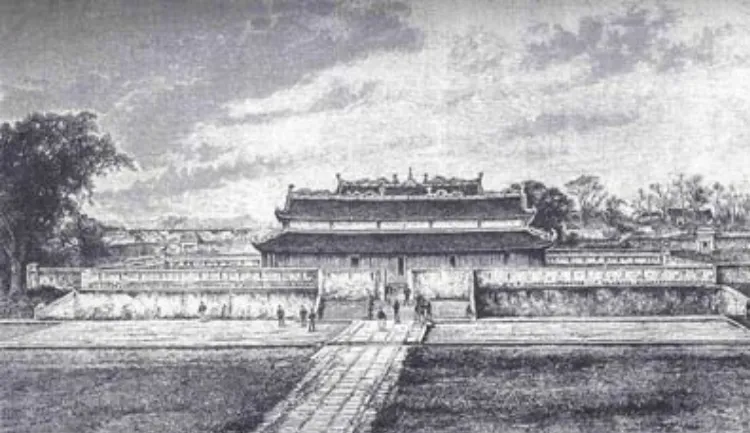
But the city in the north kept calling. The Red River Delta, with its rich alluvial soil and central position, was too strategically important to ignore for long. When a strong, confident dynasty finally arose, they came back to Dai La – and reimagined it entirely.
Insider Tip from our volunteers: When you visit the Vietnam National Museum of History in Hanoi today, look for the bronze artifacts from the Dong Son culture (500 BC-100 AD). These are the earliest ancestors of Hanoi’s civilization, long predating the Chinese fortress.
Thang Long: How King Ly Thai To Built Vietnam’s Imperial Capital in 1010
This was not simply a change of address; it was a declaration of ambition, identity, and permanence.
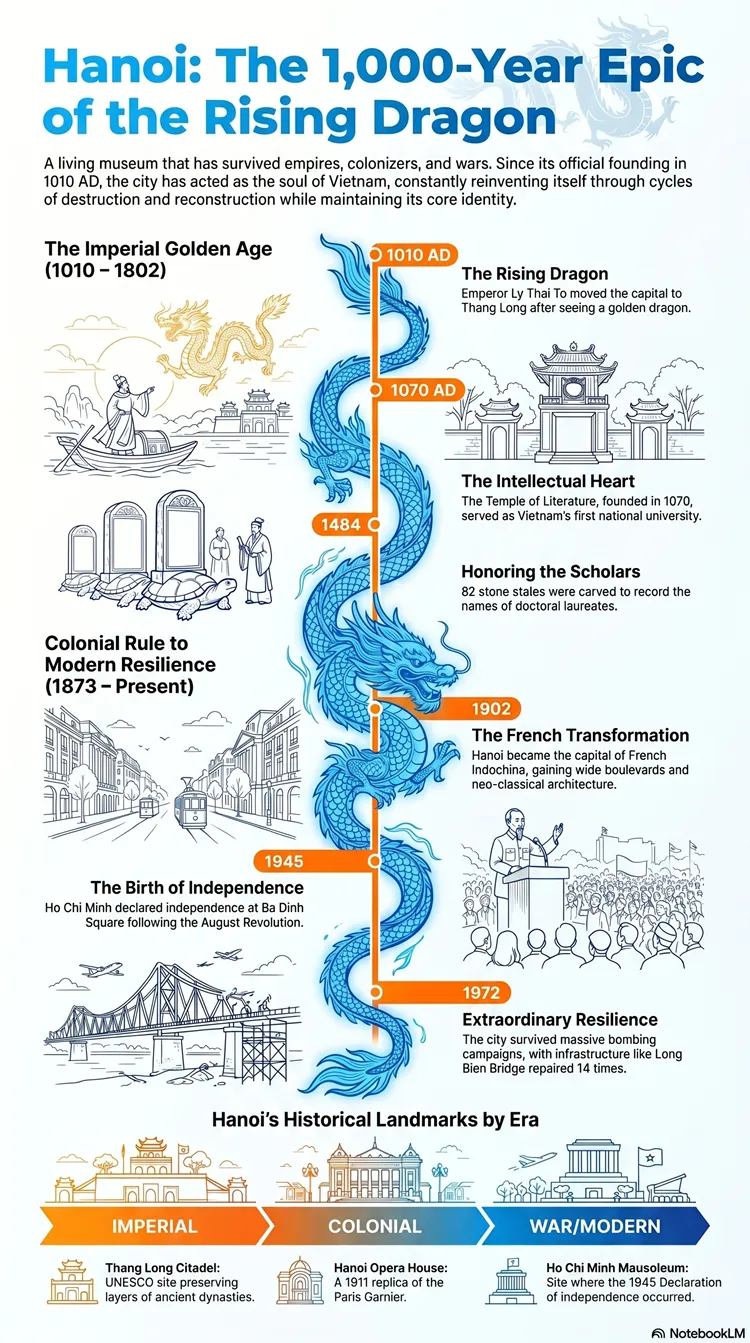
According to the royal chronicles, when the emperor’s boat arrived at the city, he witnessed a golden dragon ascending into the clouds above the river – an omen so powerful that he enshrined it in the city’s new name. Whether legend or history, the story captures something real: Thang Long was meant to be eternal.
The Ly Dynasty (1009-1225) transformed the muddy fortress of Dai La into a walled imperial citadel. They built the Temple of Literature (Van Mieu) in 1070 as Vietnam’s first national university, constructed grand Buddhist temples, and organized the city into a clear administrative structure. The citadel sat at the center, surrounded by commercial quarters, craft guilds, and a dense urban population – the skeleton of what would become Hanoi’s famous 36 Streets Old Quarter.
The Tran Dynasty (1225-1400) that followed inherited this imperial masterpiece and, crucially, defended it three times against the Mongol invasions of Kublai Khan (1258, 1285, 1287-1288). Each time, the court temporarily evacuated Thang Long rather than surrender it, and each time, the Mongols were driven out. The city’s resilience against overwhelming force was not accidental; it was a pattern that would repeat across centuries.
Dynasties, Feudal Power, and the Golden Age of the Imperial City
The city was burned, rebuilt, expanded, and embellished in each era, accumulating layers of culture like geological strata.
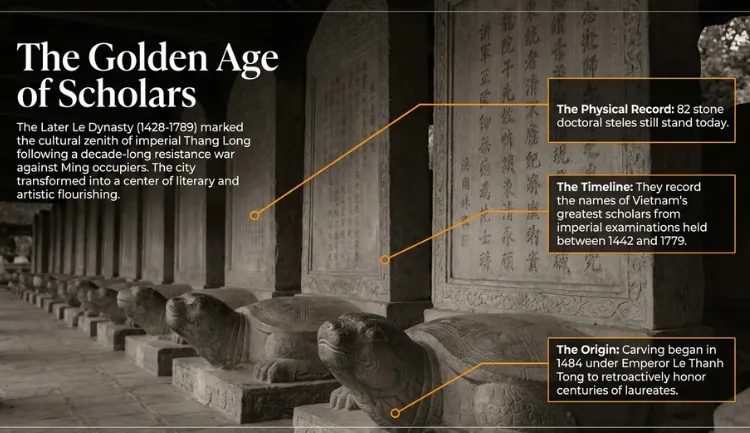
The Later Le Dynasty (1428-1789) represents perhaps the cultural zenith of imperial Thang Long. After Le Loi expelled the Ming Chinese occupiers in 1428 following a decade-long resistance war, the city entered a period of literary and artistic flourishing. The Imperial Examination System at the Temple of Literature reached its peak, with 82 stone doctoral steles – still standing today – recording the names of Vietnam’s greatest scholars from examinations held between 1442 and 1779. The physical carving of the steles began in 1484, when Emperor Le Thanh Tong ordered them made to honor all previous laureates back to 1442.
The 17th and 18th centuries brought internal fragmentation. The Trinh Lords controlled the north and Thang Long, while the Nguyen Lords ruled the south from Hue. The city remained the nominal capital but was increasingly caught between rival power centers. When the Tay Son rebellion swept through in the 1780s, the brilliant general Nguyen Hue used Thang Long as the stage for his most famous military triumph: the Tet Offensive of 1789, when his forces launched a lightning attack on Chinese Qing invaders during the Lunar New Year, liberating the city in a single night.
| Dynasty | Period | Key Contribution to Hanoi |
| Ly | 1009-1225 | Founded Thang Long; built Temple of Literature |
| Tran | 1225-1400 | Expanded the citadel; defeated Mongol invasions x3 (1258, 1285, 1287-1288) |
| Later Le | 1428-1789 | Cultural golden age; Imperial Examinations |
| Tay Son | 1788-1802 | Expelled Qing Chinese invaders |
| Nguyen | 1802-1945 | Moved capital to Hue; renamed city multiple times |
Why did Hanoi lose its Capital Status under the Nguyen Dynasty?
Nguyen Anh had spent years fighting the Tay Son in the south. His power base was southern Vietnam, and Hue’s central location allowed him to govern the newly unified country without appearing to favor either north or south. More importantly, choosing Hue was a symbolic break from the Trinh Lords, who had controlled Thang Long for generations. A new dynasty needed a new capital.
Hanoi – renamed Bac Thanh (“Northern Citadel”) and later Ha Noi (“Inside the Rivers”) in 1831 by Emperor Minh Mang, remained Vietnam’s largest northern city and commercial hub. But it was now a regional administrative center, not the throne of empire. The great Nguyen Citadel, a French-influenced military fortress, replaced the older Ly-Tran-Le imperial complex as the city’s dominant structure.
This demotion proved temporary but consequential. When the French arrived in force in the 1870s, they found a major Vietnamese city without the full weight of imperial protection, and they took advantage of it.
Hanoi under French Rule: How Colonialism Transformed a Vietnamese Imperial City (1873-1954)
The French did not simply occupy the city; they systematically demolished large parts of it and rebuilt it as a European colonial showcase.
Francis Garnier seized Hanoi in 1873, and after the 1884 Treaty of Hue formalized French control over the entire country, the colonial administration chose Hanoi – not Hue, not Saigon, as the capital of French Indochina (1902). The decision was partly pragmatic: Hanoi’s position in the Red River Delta made it a natural hub for railway and road networks connecting to Yunnan in southern China.
What the French built was genuinely impressive – and genuinely destructive. They drained pestilential lakes, filled in canals, and demolished the ancient citadel’s inner walls to build a barracks. In their place arose the iconic French Quarter: wide tree-lined boulevards, neo-classical government buildings, the Hanoi Opera House (modeled on the Paris Garnier), the Sofitel Metropole Hotel (1901), and an elegant urban grid that Hanoians still walk through today.
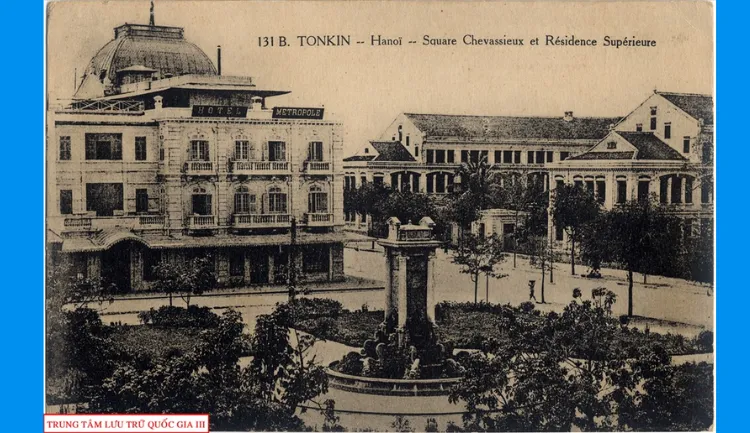
The colonizers also introduced systems that permanently shaped Vietnamese society: a Western-style educational system (which produced the revolutionary generation of Ho Chi Minh), a modern press, European medicine, and – crucially – the Romanized Vietnamese script (Quoc Ngu), which replaced Chinese characters and made literacy accessible to far more people.
Yet beneath the beautiful boulevards, resistance was always simmering. Vietnamese intellectuals educated in French schools began turning their learning against their teachers. By the 1930s, the Indochinese Communist Party, founded in Hong Kong in 1930 by Ho Chi Minh, was operating clandestine cells in Hanoi’s narrow alleys.
A note from our tour guides: Walking the French Quarter today, around Hoan Kiem Lake, Trang Tien Street, and the Opera House, is one of the most atmospheric experiences in the city. Our volunteers love showing guests how French colonial architecture sits literally across the street from 15th-century Vietnamese temples. The visual tension tells the whole story of Hanoi’s layered identity.
The August Revolution 1945: How Hanoi Became the Capital of an Independent Vietnam
It remains one of the most dramatic moments in Asian 20th-century history.
Japan had occupied French Indochina since 1940, tolerating the Vichy French administration until March 1945, when Japanese forces finally disarmed and imprisoned French colonial troops. When Japan surrendered to the Allies in August 1945 following the atomic bombs on Hiroshima and Nagasaki, a power vacuum opened. The Viet Minh, Ho Chi Minh’s nationalist-communist coalition, had spent years building underground networks precisely for this moment.
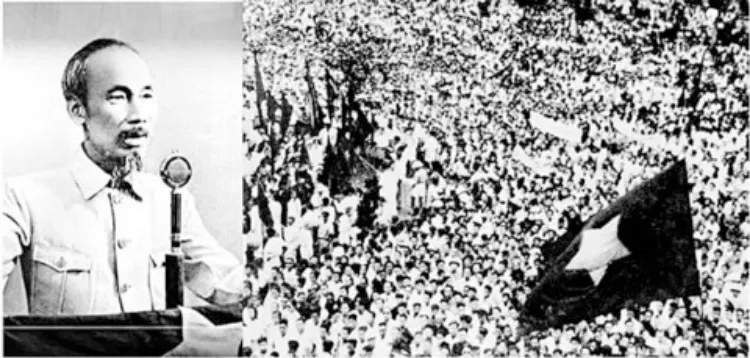
On August 19, 1945, Viet Minh forces and a massive crowd of civilians took control of Hanoi’s key government buildings in a near-bloodless popular uprising. The Imperial Governor surrendered. Emperor Bao Dai, the last Nguyen monarch, abdicated on August 25. On September 2, 1945, standing before half a million people at Ba Dinh Square, Ho Chi Minh read the Declaration of Independence of the Democratic Republic of Vietnam – opening with words borrowed directly from Thomas Jefferson’s American Declaration.
The speech began: “All men are created equal. They are endowed by their Creator with certain inalienable rights; among these are Life, Liberty, and the pursuit of Happiness”. The choice was deliberate; Ho Chi Minh knew American journalists were present and hoped for U.S. support against the returning French. That support never came. War came instead.
Hanoi at War: The Bombing Campaigns, Resistance and Survival of a Capital City (1946-1975)
First came nine years of the First Indochina War against France (1946-1954), then two decades of the Second Indochina War, what Vietnamese call the American War, culminating in the devastating Christmas Bombing Campaign (Operation Linebacker II) of December 1972.
The French War (1946-1954) began in Hanoi itself. On the night of December 19, 1946, following weeks of escalating tension, Ho Chi Minh issued a call to national resistance. Hanoi’s civilian militia – young men and women armed with whatever weapons they could find – held the French for 60 days in brutal urban combat before the Viet Minh retreated to the mountains. Those 60 days bought precious time for the revolutionary government to establish itself in the countryside. After Dien Bien Phu (1954), when Viet Minh forces defeated the French Army in a stunning siege in the northwestern mountains, the Geneva Accords divided Vietnam at the 17th parallel. Hanoi became the capital of North Vietnam.
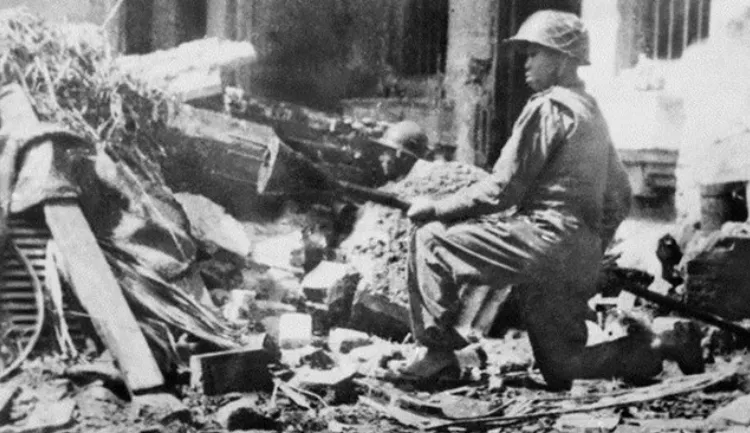
The American War (1964-1975) brought destruction from the air on a scale the city had never seen. Between 1965 and 1968, and again in 1972, American bombing campaigns targeted Hanoi’s bridges, railways, power plants, and military infrastructure. The Kham Thien Street bombing of December 26, 1972, during Operation Linebacker II, killed over 280 civilians in a residential neighborhood in a single night, a tragedy still commemorated annually.
Yet the city survived and the war effort continued. Citizens built underground shelters beneath every street. Schools and factories were evacuated to the countryside. The iconic Long Bien Bridge, bombed 14 times by American aircraft, was repaired 14 times by Vietnamese workers – often within days. It still stands today, a monument to a kind of stubborn, almost-supernatural resilience.
| Conflict | Period | Impact on Hanoi |
| First Indochina War | 1946-1954 | 60-day urban battle; city partially destroyed |
| Geneva Division | 1954 | Hanoi becomes capital of North Vietnam |
| Rolling Thunder Bombing | 1965-1968 | Infrastructure heavily targeted |
| Operation Linebacker II | December 1972 | Residential areas bombed; 2,000+ civilian deaths |
| Reunification | April 1975 | Hanoi declared capital of unified Vietnam |
If you want to feel this history viscerally, visit the Hoa Lo Prison (the “Hanoi Hilton”) and the Vietnam Military History Museum. Our guides grew up hearing these stories from grandparents who lived them – and that personal connection makes every artifact come alive.
Hanoi After Reunification: From a War-Scarred City to a Modern Capital
The city was scarred by war, economically exhausted, and politically isolated as the U.S. embargo took hold.
The period from 1975 to 1986 was one of austerity and ideological rigidity under a centrally planned Soviet-style economy. Hanoi was grey, quiet, and short of almost everything. But the Doi Moi economic reforms of 1986 changed everything. By opening Vietnam to foreign investment and market forces, Doi Moi unleashed an extraordinary economic transformation. Hanoi went from a city of bicycles to a city of motorbikes to, increasingly, a city of cars, all within a generation.
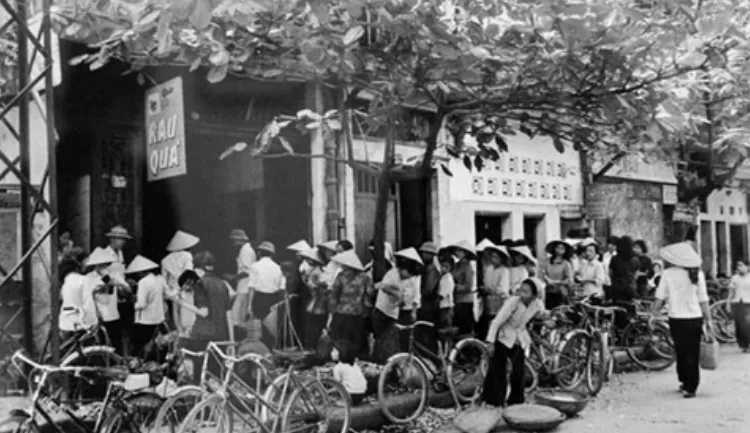
Today’s Hanoi is a metropolis of over 8 million people, with a gleaming new urban district (My Dinh, Cau Giay, Long Bien) expanding alongside an ancient core that the city has worked hard to preserve. The 36 Streets Old Quarter, Hoan Kiem Lake, the Ho Chi Minh Mausoleum, and hundreds of communal houses (dinh), temples, and pagodas make the history of Hanoi physically present in ways few cities in the world can match.
The challenge now is balance: how to grow a dynamic, modern capital without losing the atmospheric streets, the thousand-year-old temples, and the quiet lakes that make Hanoi irreplaceable. It is a question the city is still actively answering.
Key Historical Sites you must Visit in Hanoi Today
Here is a curated guide to the essential historical sites, organized chronologically by the era they represent.
Ancient & Imperial Era (Pre-1873)
Temple of Literature (Van Mieu – Quoc Tu Giam) is Vietnam’s oldest university, founded in 1070 during the Ly Dynasty. Walk through its five courtyards and read the 82 doctoral steles – each one records scholars who passed the Imperial Examinations between 1442 and 1779. The physical stele carving began in 1484 under Emperor Le Thanh Tong, who ordered steles made retroactively for every laureate since 1442. The stone turtles carrying the steles are among the most powerful symbols of Vietnamese intellectual heritage.
Thang Long Imperial Citadel (UNESCO World Heritage Site) preserves the archaeological layers of Vietnam’s ancient capital. Excavations begun in 2003 revealed foundations, artifacts, and royal objects spanning the Ly, Tran, Le, and Nguyen dynasties. The underground display is extraordinary.
Tran Quoc Pagoda is Hanoi’s oldest pagoda, originally founded in 544 AD on the banks of the Red River (then called Khai Quoc) during the reign of Emperor Ly Nam De – predating the founding of Thang Long by over 400 years. When the Red River banks began eroding dangerously, the pagoda was carefully relocated to its current island on West Lake in 1615, where it has stood ever since. This small journey across the city’s landscape mirrors Hanoi’s own constant process of adaptation and survival.
Colonial Era (1873-1945)
Hanoi Opera House (1911) is the crown jewel of French Indochina architecture, a near-perfect replica of the Paris Garnier on a smaller scale. Catch a performance here if you can; the interior is stunning.
Hoa Lo Prison (“Hanoi Hilton”) was built by the French in 1896 to imprison Vietnamese political prisoners – and later, ironically, used by North Vietnam to hold American POWs including Senator John McCain. The exhibition inside is sobering and essential.
Sofitel Metropole Hotel (1901) is one of Asia’s legendary colonial hotels. Graham Greene, Charlie Chaplin, and Ho Chi Minh himself reportedly all stayed here at various points. The underground bomb shelter beneath the hotel is open for tours.
Revolutionary & War Era (1945-1975)
Ho Chi Minh Mausoleum and Ba Dinh Square mark the exact spot where independence was declared on September 2, 1945. The mausoleum houses Ho Chi Minh’s embalmed body and is one of the most visited sites in Vietnam. Dress conservatively and arrive early, lines can be long.
Vietnam Military History Museum holds the country’s most comprehensive collection of war artifacts, including a famous sculpture made from the wreckage of shot-down American aircraft.
Long Bien Bridge (1902, designed and built by the French firm Daydé & Pillé, not Gustave Eiffel’s firm, despite a widespread myth) is the bridge that was bombed 14 times and rebuilt 14 times. Walking or cycling across it at dawn remains one of Hanoi’s most quietly moving experiences.
| Site | Era | Why Visit |
| Temple of Literature | 1070-present | Vietnam’s intellectual soul; 82 doctoral steles |
| Thang Long Citadel | 1010-present | UNESCO site; 10 centuries of layered history |
| Hoa Lo Prison | 1896-present | Colonial brutality + American War narrative |
| Ba Dinh Square | 1945-present | Birth of modern Vietnam |
| Long Bien Bridge | 1902-present | Symbol of wartime resilience |
| Tran Quoc Pagoda | Founded 544 AD; moved to West Lake 1615 | Hanoi’s oldest surviving religious site |
| Hanoi Opera House | 1911 | Peak French colonial architecture |
Why the History of Hanoi still Lives and Breathes
The history of Hanoi is not something you find only in museums. It is in the taste of a bowl of pho at a pavement stall that has occupied the same corner for three generations. It is in the geometry of a French-era balcony overlooking a 15th-century guild street. It is in the eyes of an elderly woman who remembers the sound of American B-52s over the city she was born in.
Hanoi has been a Dai La fortress, a dragon capital, an imperial citadel, a colonial showcase, a wartime target, and a modern metropolis. Through every transformation, the city has maintained a thread of identity – proud, resilient, intensely local, that no dynasty, no colonial power, and no bombing campaign has ever fully broken.
To walk Hanoi’s streets with that history in mind is to experience something rare: a city where the past is not separate from the present, but alive inside it.
FAQs: History of Hanoi
Hanoi was officially established as a Vietnamese capital in 1010 AD when Emperor Ly Cong Uan founded Thang Long on the site of the older Chinese fortress of Dai La. This makes the city over 1,000 years old. However, human settlement in the Red River Delta area dates back at least 2,000 years to the Dong Son culture (500 BC-100 AD).
The city has carried several names across its history. It was Dai La under Chinese occupation, then Thang Long (“Rising Dragon”) from 1010, briefly Dong Do (“Eastern Capital”) and Dong Kinh during the Le Dynasty, then Bac Thanh and Ha Noi (“Inside the Rivers”) under the Nguyen Dynasty from 1831. The name “Hanoi” in its modern spelling was standardized during the French colonial period.
During the American War (1964-1975), Hanoi served as the capital of North Vietnam and the strategic nerve center of the war effort. The city was subjected to intense American bombing campaigns, most devastatingly during Operation Linebacker II in December 1972, which targeted civilian and military infrastructure. Despite severe destruction, Hanoi’s government and population maintained resistance, and the city became a global symbol of wartime endurance.
This depends on the era you are most interested in, but the Thang Long Imperial Citadel (UNESCO World Heritage Site) is arguably the single most historically significant location, as it has been the seat of Vietnamese political power for over 1,000 years, with archaeological layers spanning from the 7th century to the 20th century. Ba Dinh Square and the Temple of Literature are close rivals for their roles in Vietnam’s independence and intellectual heritage respectively.
Article written by the editorial team of Hanoi Free Private Tour Guide. All historical information has been verified against Vietnamese academic sources, UNESCO documentation, and cross-referenced with the Vietnam National Museum of History.